Image: NASA
STS-95
Mission Profile
| Launch date | 1998-10-29 |
|---|---|
| Launch site | Kennedy Space Center, Launch Complex 39B, Florida |
| Launch vehicle | Space Shuttle |
| Spacecraft | Space Shuttle Discovery (OV-103) |
| Target | Low Earth Orbit |
| Type | Crewed |
| End date | 1998-11-07 |
| Recovery | Runway landing — Kennedy Space Center Shuttle Landing Facility, Runway 33, Florida |
| Duration | 8 days, 21 hours, 44 minutes |
| Partners | ESA, NASDA (Japan), National Institute on Aging |
Overview
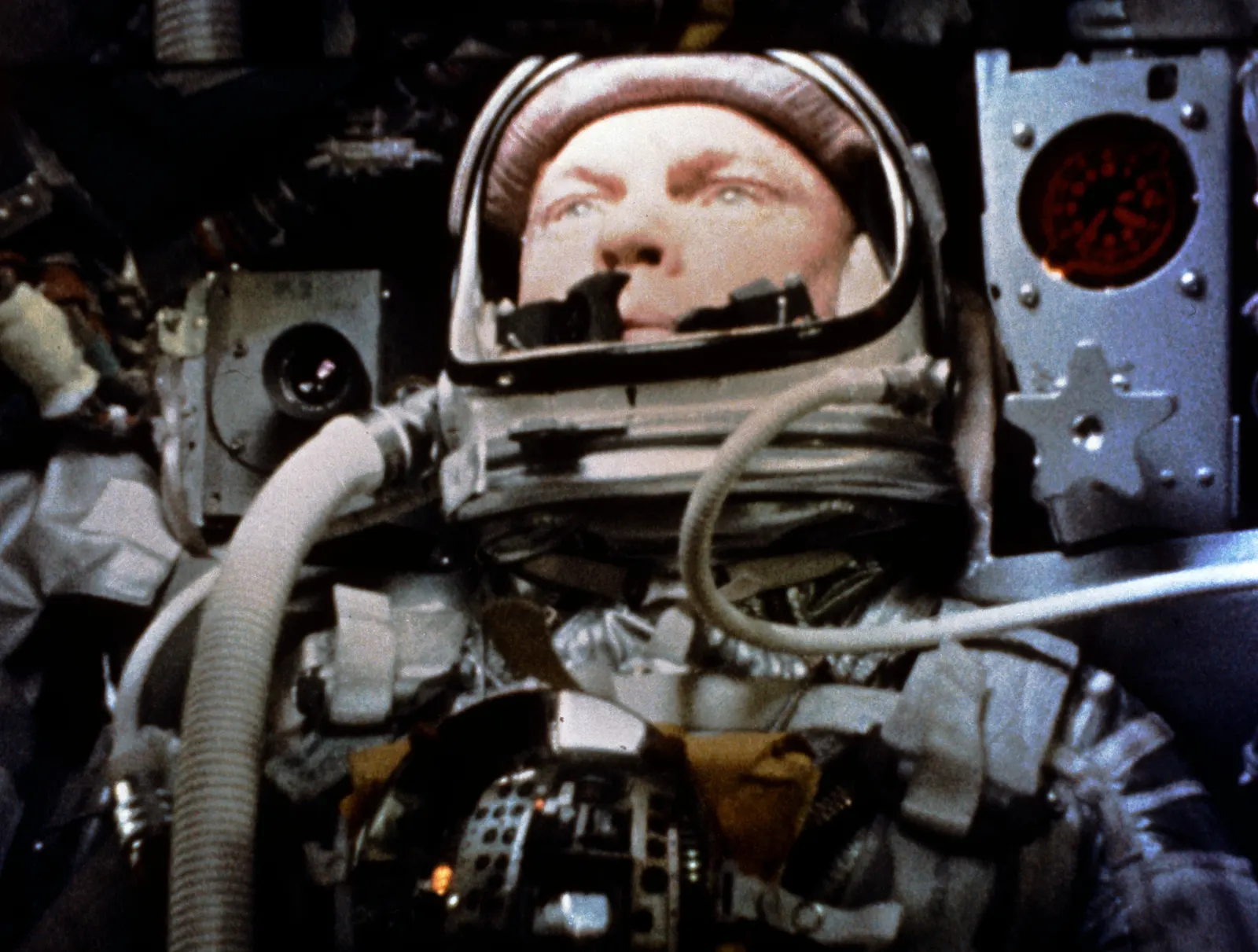
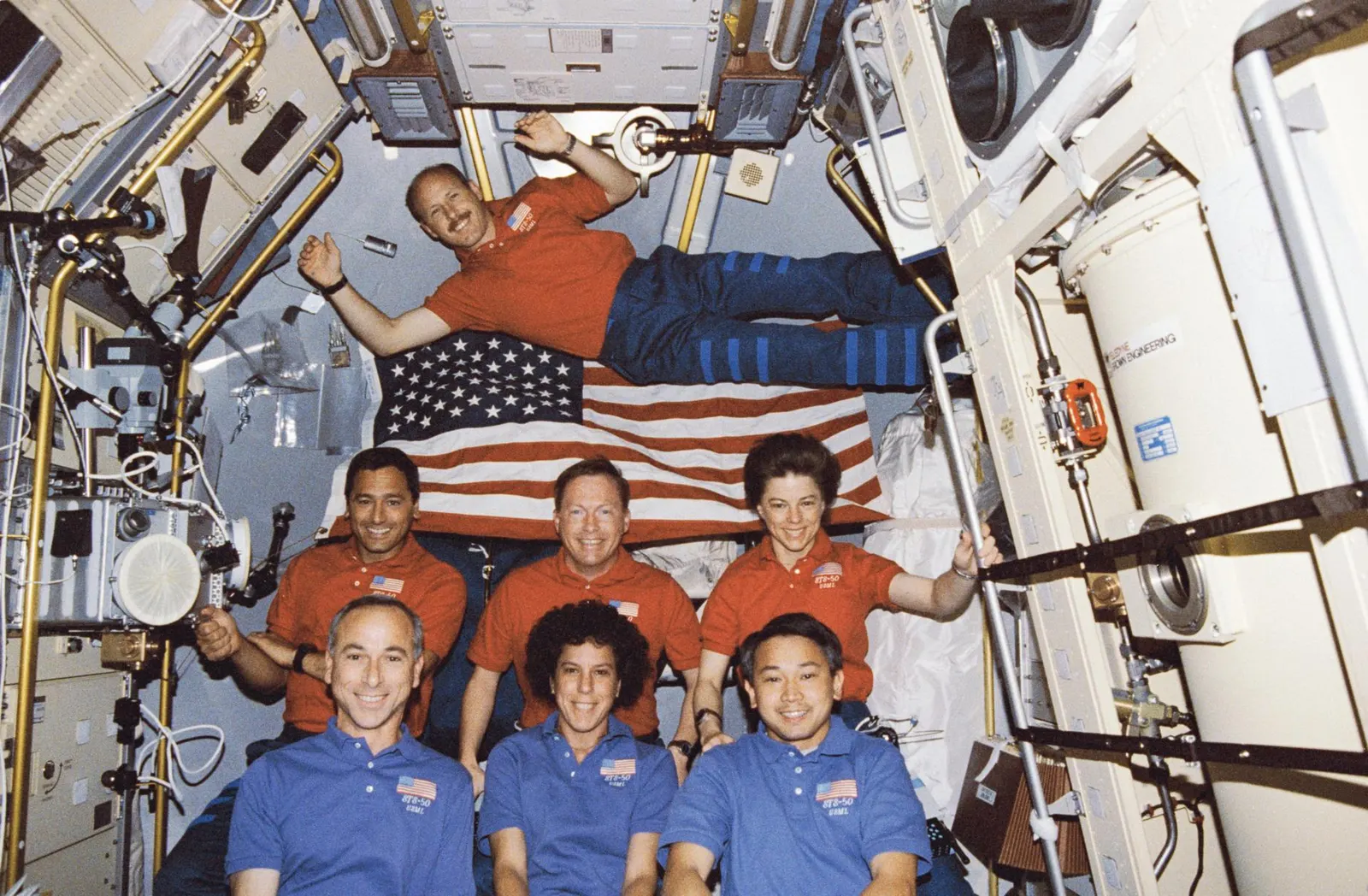
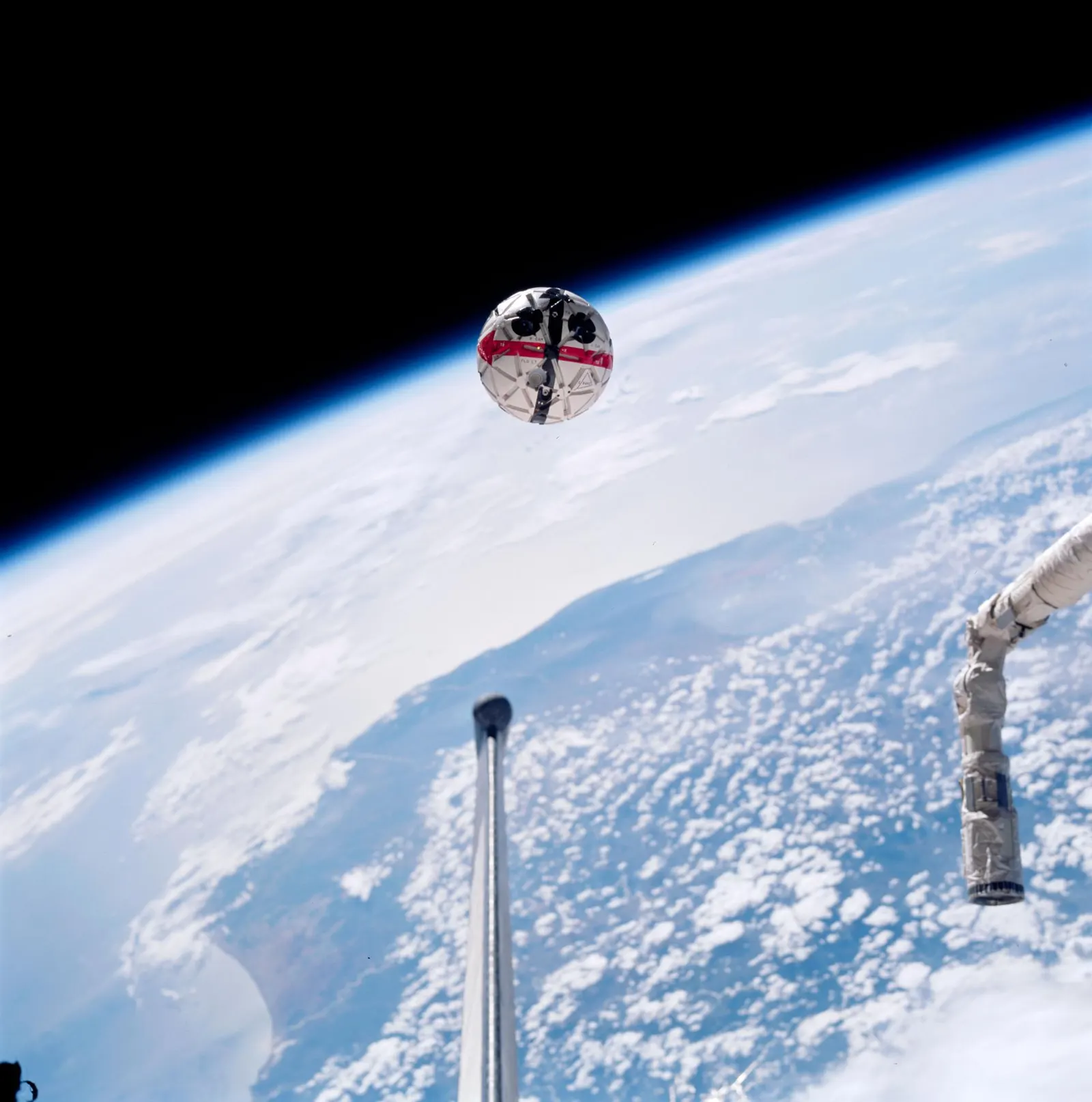
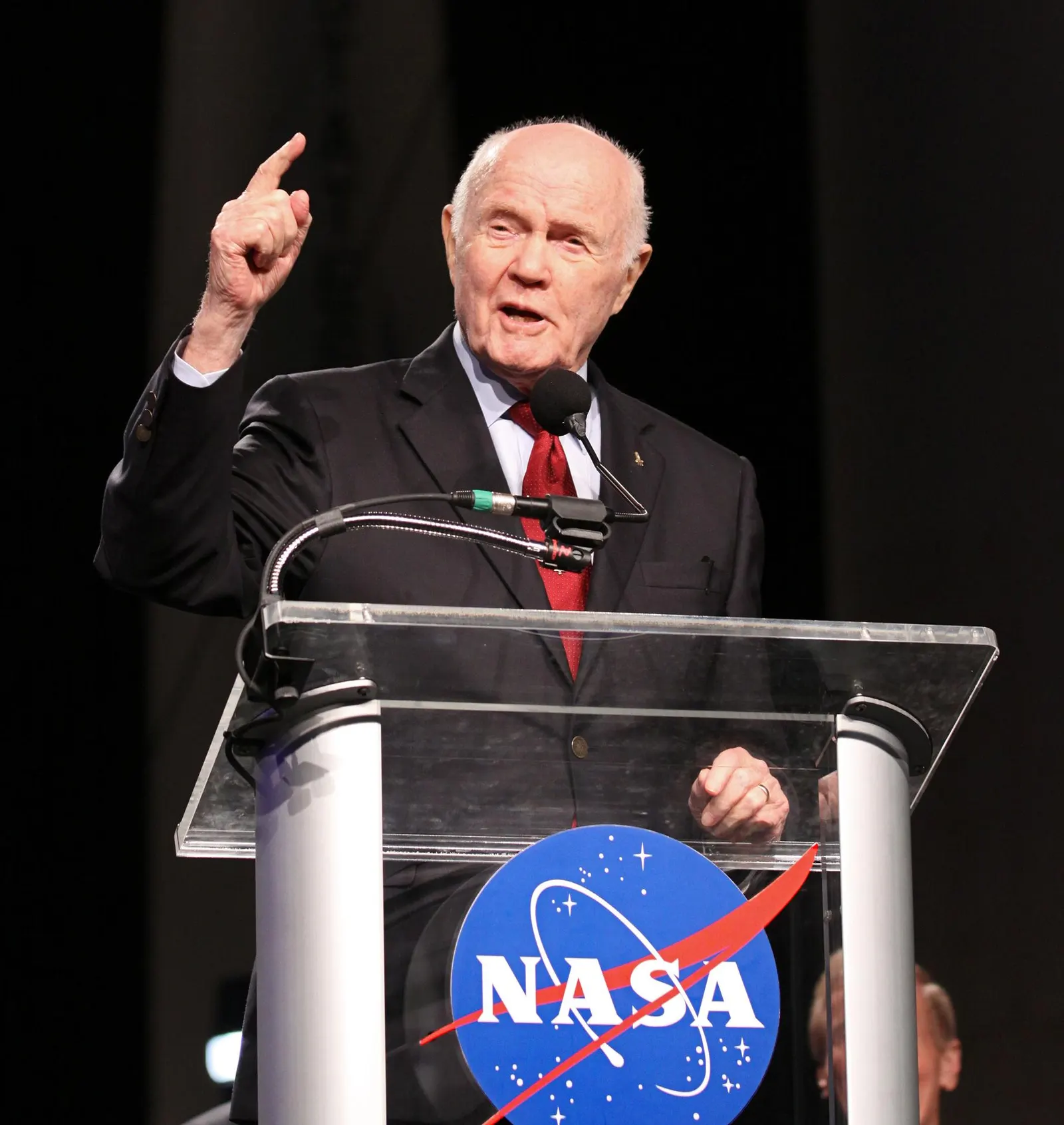
On October 29, 1998 — thirty-six years after Friendship 7 — 77-year-old Senator John Glenn strapped into Discovery and returned to orbit, becoming the oldest person ever to fly in space and the only Mercury astronaut to ride the Shuttle. The launch drew enormous crowds and a live commentary reunion with Walter Cronkite; the mission later beamed down the first HDTV broadcast from space. Glenn flew as a payload specialist and research subject: inside the SPACEHAB module, more than 80 experiments included studies comparing his sleep, balance, bone and muscle data against both his 1962 baseline and younger crewmates, probing the parallels between spaceflight deconditioning and aging. The crew carried more firsts — Pedro Duque became the first Spanish citizen in space, and Chiaki Mukai the first Japanese person to fly in space twice. On November 1 the crew released the Spartan 201-5 solar observatory, a reflight of the satellite hand-captured on STS-87; it spent two days measuring the solar corona and wind before retrieval on November 3, gathering data used to recalibrate the SOHO observatory. A drag-chute compartment door fell off at main-engine ignition, so commander Curtis Brown landed Discovery without the chute on November 7, closing a flawless 8-day, 21-hour flight.
Crew
Curtis Brown
Commander
Fifth of six Shuttle flights; landed Discovery safely without the drag chute
Steven Lindsey
Pilot
Second flight, after STS-87
Scott Parazynski
Mission Specialist
Physician; supported the life-sciences program on Glenn's aging studies
Stephen Robinson
Mission Specialist
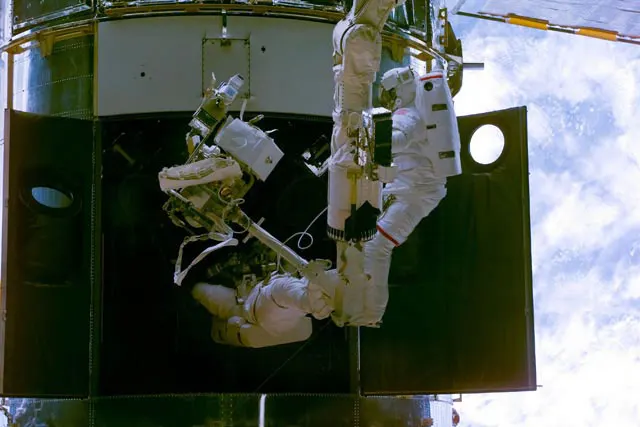
Later performed the first in-flight heat-shield repair EVA on STS-114
Pedro Duque
Mission Specialist
ESA astronaut; first Spanish citizen in space
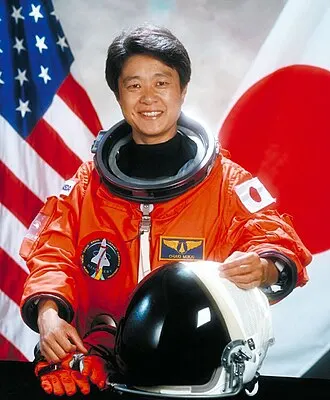
Chiaki Mukai
Payload Specialist
NASDA physician; first Japanese person to fly in space twice
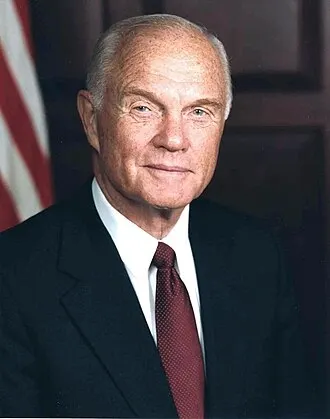
John Glenn
Payload Specialist
Sitting U.S. Senator and Mercury Friendship 7 veteran; at 77 the oldest person to fly in space, serving as subject for aging research
Key Milestones
1998-10-29
Discovery launches from LC-39B; John Glenn, 77, becomes the oldest person to fly in space; the drag-chute compartment door falls away at main-engine ignition
1998-11-01
Spartan 201-5 solar observatory released for two days of solar corona and solar wind observations
1998-11-03
Spartan 201-5 retrieved; its data later used to recalibrate the SOHO solar observatory
1998-11-07
Discovery lands at Kennedy Space Center Runway 33 without its drag chute after 8 days, 21 hours, 44 minutes
Key Achievements
John Glenn, at 77, became the oldest person to fly in space, 36 years after Friendship 7
Chiaki Mukai became the first Japanese person to fly in space twice
Pedro Duque became the first Spanish citizen in space
Deployed and retrieved Spartan 201-5, whose solar data recalibrated the SOHO observatory
Conducted more than 80 experiments, including landmark research linking spaceflight deconditioning and aging
Legacy & Significance
STS-95 reignited public passion for spaceflight in a way no mission had since Apollo: an American legend completing a journey interrupted by politics in the 1960s, when Glenn was deemed too valuable to risk on a second flight. His role as a willing 77-year-old research subject opened a research thread on aging and weightlessness that continues on the ISS, and his flight remains the benchmark every senior spacefarer is measured against — he is still the oldest person ever to reach Earth orbit. The mission also marked Europe's and Japan's deepening human-spaceflight integration on the eve of ISS assembly, which began just weeks later.