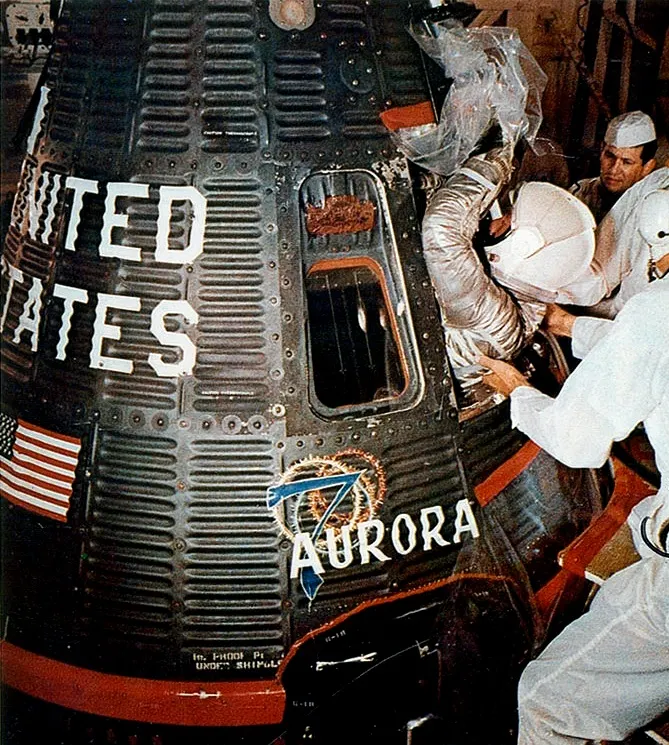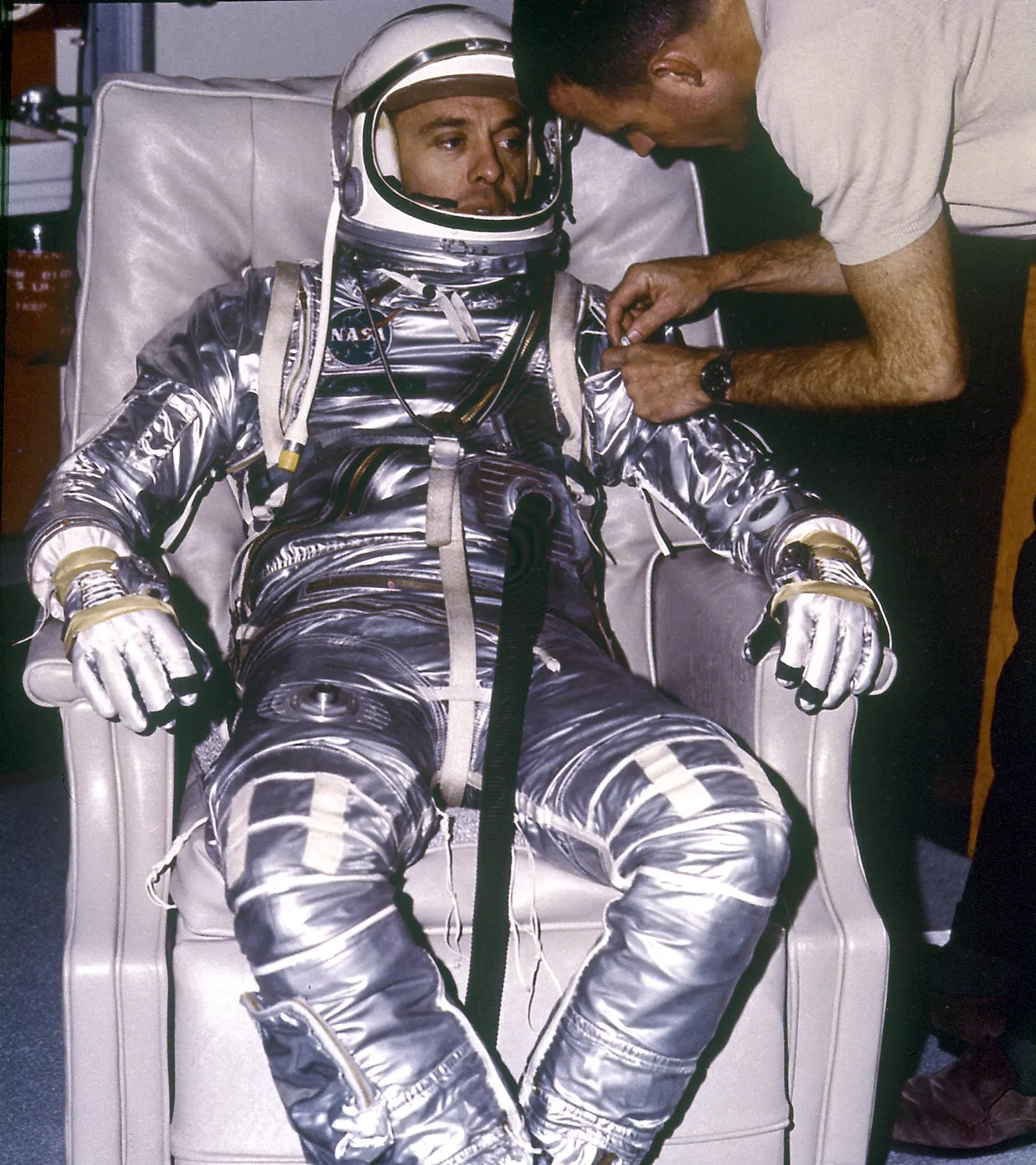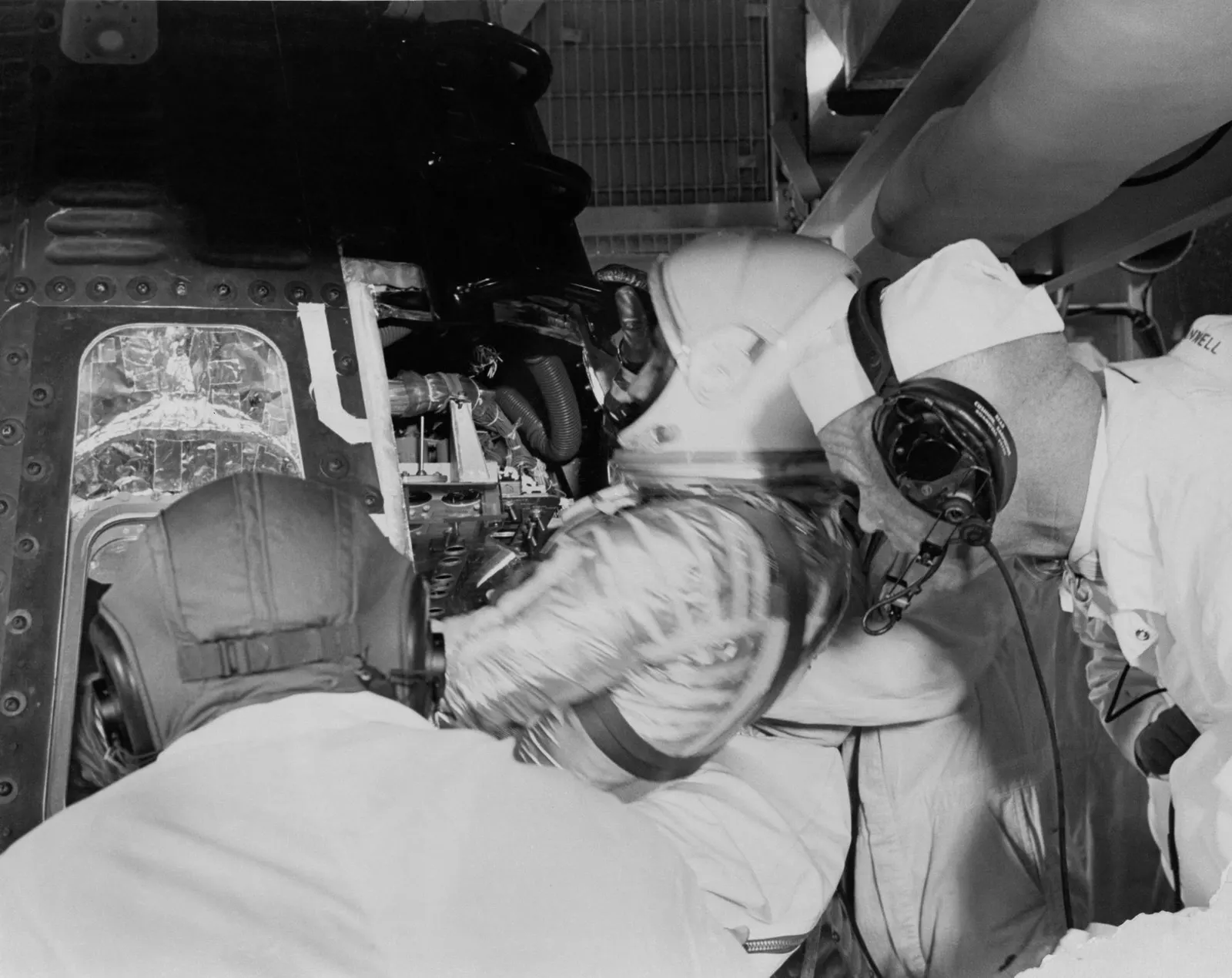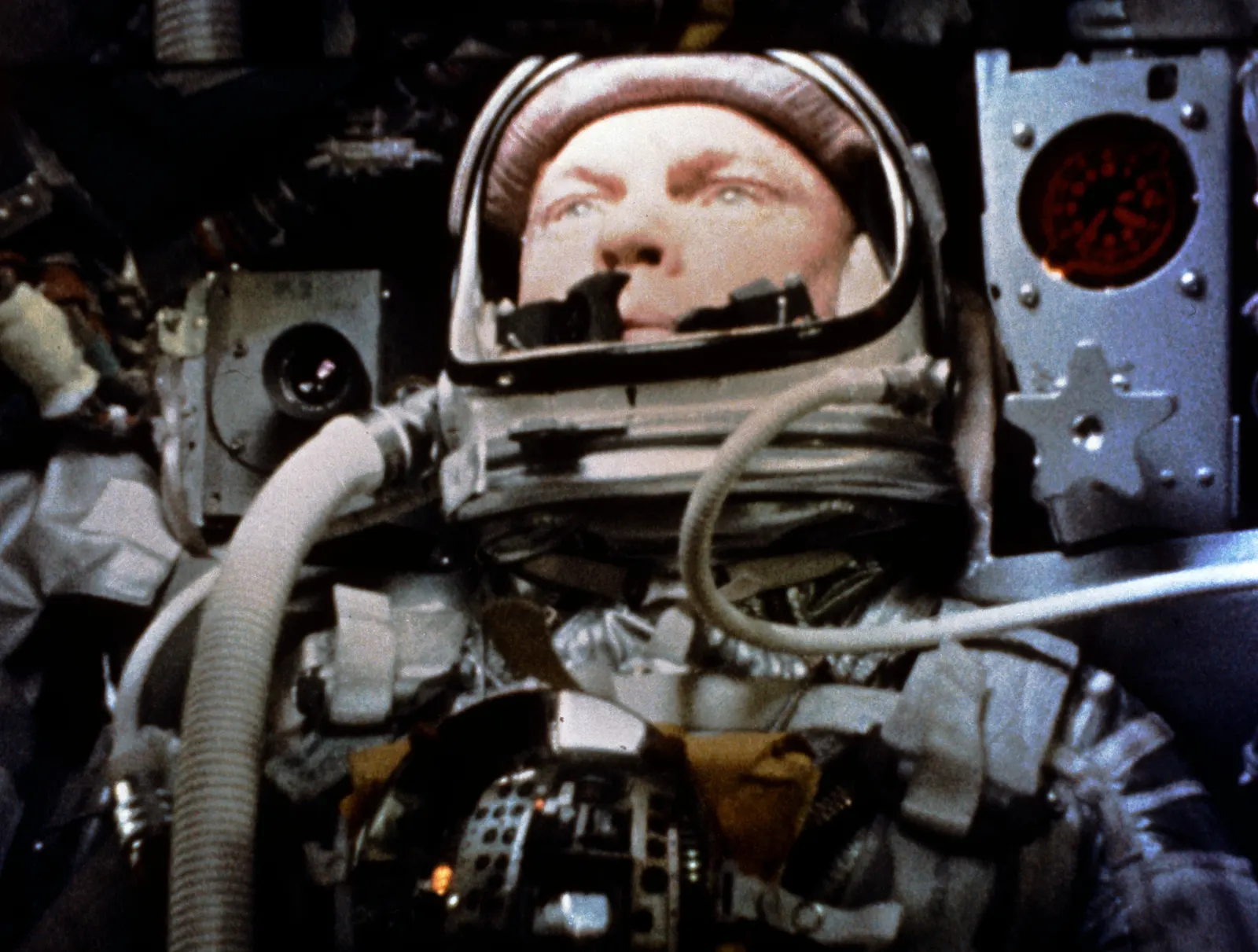
Image: NASA
Mercury-Atlas 6 (Friendship 7)
Mission Profile
| Launch date | 1962-02-20 |
|---|---|
| Launch site | Cape Canaveral Air Force Station Launch Complex 14 (LC-14), Florida |
| Launch vehicle | Atlas LV-3B (109-D) |
| Spacecraft | Mercury capsule No. 13 (Friendship 7) |
| Target | Low Earth Orbit |
| Type | Crewed |
| End date | 1962-02-20 |
| Recovery | USS Noa (DD-841), Atlantic Ocean near Grand Turk Island |
| Mass | 1,352 kg (2,981 lb) |
| Duration | 4 hours, 55 minutes, 23 seconds |
Overview
After ten postponements for weather and hardware, John Glenn finally rode Atlas 109-D off Launch Complex 14 at 14:47:39 UTC on February 20, 1962, becoming the first American to orbit the Earth. Over 4 hours, 55 minutes, and 23 seconds, Friendship 7 circled the globe three times between roughly 148 and 248 kilometers altitude, covering some 65,763 nautical miles while an estimated audience of millions followed every word of the air-to-ground loop. Glenn reported the famous luminous 'fireflies' drifting past his window at orbital sunrise, and when his automatic attitude-control system developed a thruster fault, he flew much of the mission manually — vindicating the astronauts' insistence on pilot control. The flight's defining drama came from a faulty 'Segment 51' telemetry signal suggesting the heat shield and landing bag had come loose. Mission Control ordered Glenn to keep his spent retrorocket package strapped over the shield during reentry as a precaution, and he watched flaming chunks of the retropack stream past his window as he plunged through the atmosphere. The signal proved erroneous: the shield was sound. Friendship 7 splashed down near Grand Turk Island and was hoisted aboard the destroyer USS Noa with Glenn still inside, twenty-one minutes after landing.
Crew
John Glenn
Pilot
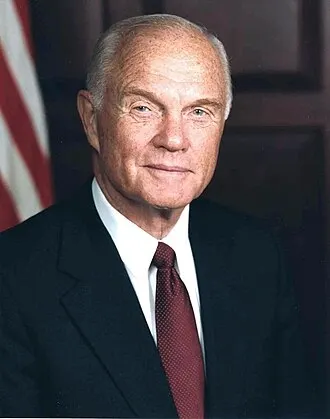
First American to orbit the Earth. Later a U.S. Senator; returned to space aboard STS-95 in 1998 at age 77, the oldest person to fly in orbit at that time.
Key Milestones
1962-02-20
Liftoff from Cape Canaveral LC-14 at 14:47:39 UTC atop Atlas 109-D
1962-02-20
Glenn becomes the first American to orbit the Earth as Friendship 7 enters a 148 x 248 km orbit
1962-02-20
Faulty Segment 51 telemetry suggests a loose heat shield; controllers direct Glenn to retain the retropack through reentry
1962-02-20
Glenn flies portions of the mission on manual control after an automatic thruster malfunction
1962-02-20
Splashdown in the Atlantic at 19:43 UTC after three orbits; USS Noa recovers the capsule with Glenn aboard 21 minutes later
Key Achievements
Made John Glenn the first American to orbit the Earth, completing three orbits
First crewed flight of the Mercury-Atlas launch vehicle combination
Demonstrated pilot takeover after automatic attitude-control failure, validating human control in orbit
Survived a reentry flown with the retropack retained over a suspect heat shield
Restored U.S. standing in the space race after the Soviet orbital flights of Gagarin and Titov
Legacy & Significance
Friendship 7 was the psychological turning point of the early space race: with three orbits, the United States finally matched the essence of the Soviet achievement, and John Glenn became a national hero on a scale unmatched by any astronaut since. The mission proved the Atlas booster safe for human flight and demonstrated that a pilot could diagnose and work around failures in orbit — an argument that shaped cockpit design through Apollo. The capsule itself now resides at the Smithsonian National Air and Space Museum, and Glenn's flight remains the benchmark against which every 'first orbit' by a new spacefaring nation is measured.