Image: NASA
SpaceX Crew-3
Mission Profile
| Launch date | 2021-11-11 |
|---|---|
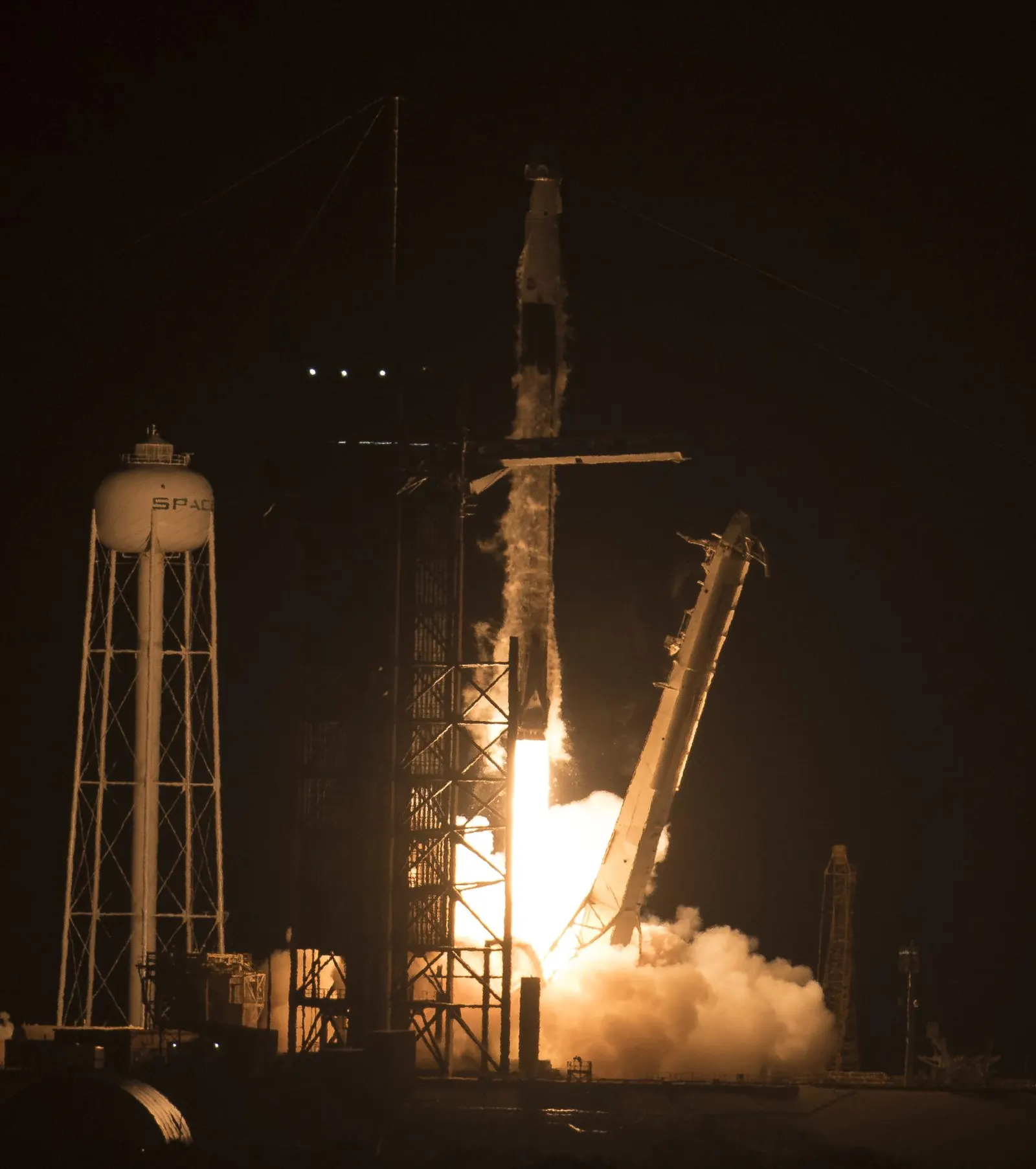
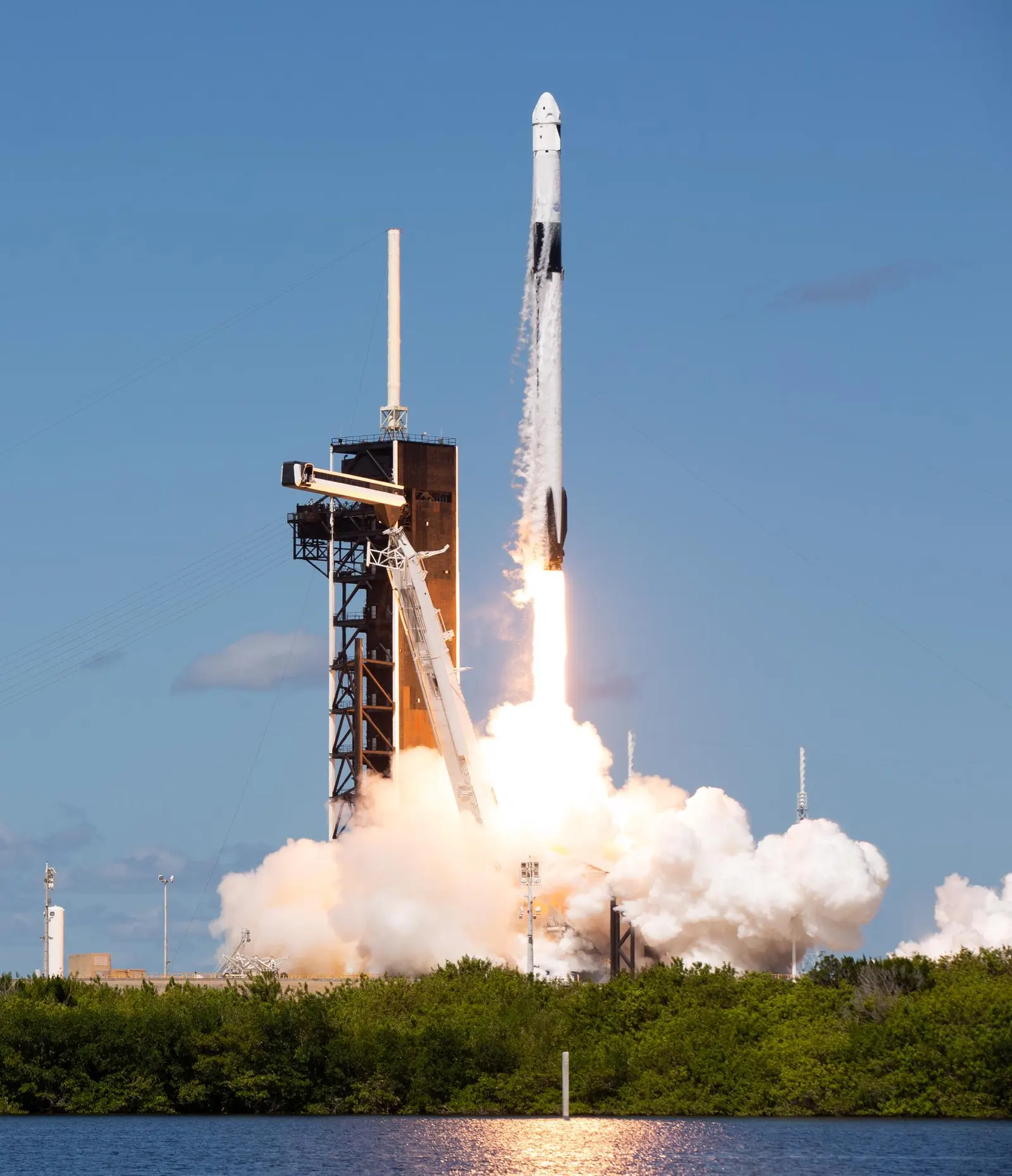
| Launch site | Launch Complex 39A, Kennedy Space Center, Florida |
| Launch vehicle | Falcon 9 Block 5 (B1067.2) |
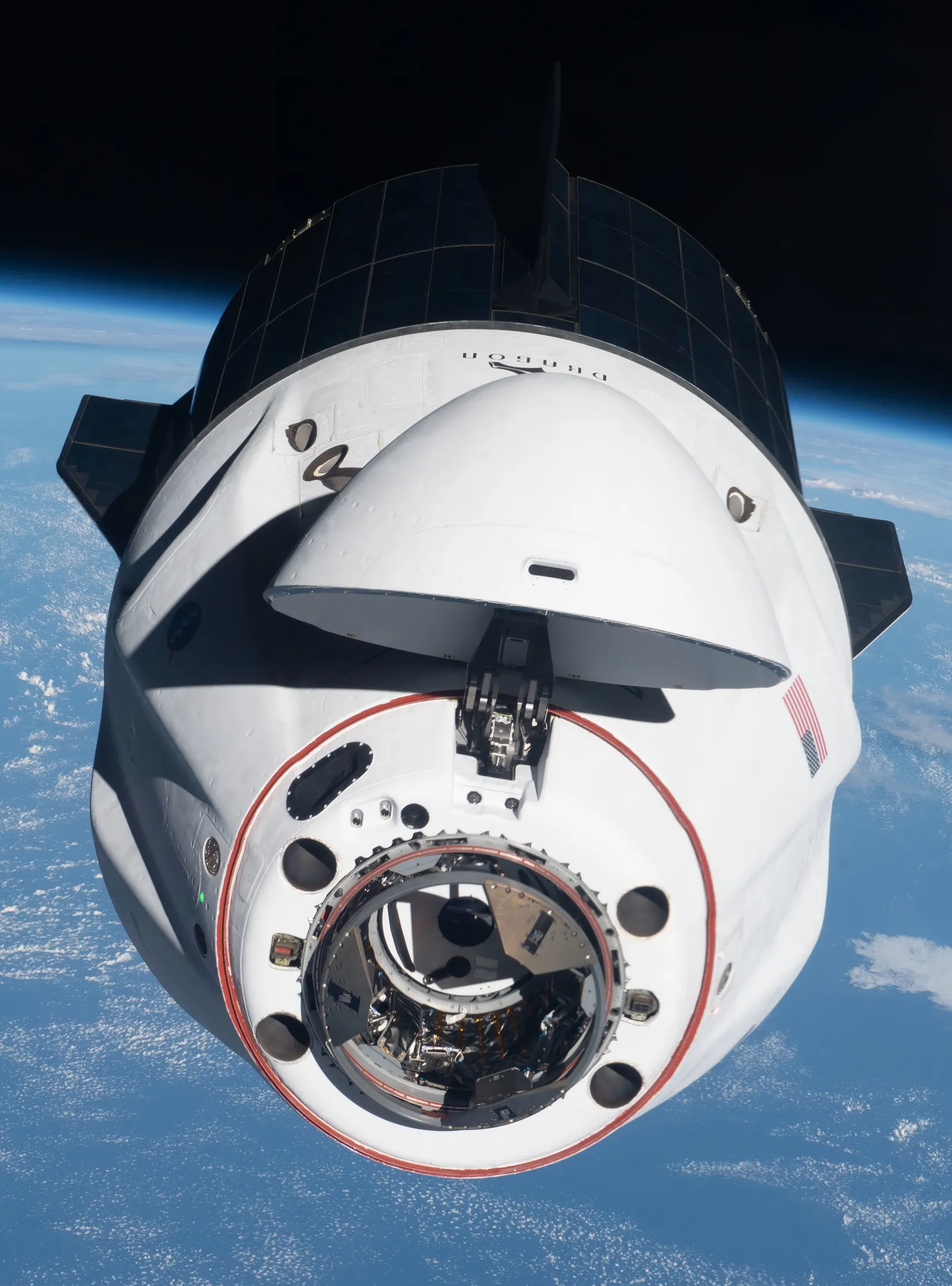
| Spacecraft | Crew Dragon Endurance (C210.1) |
| Target | Low Earth Orbit |
| Type | Crewed |
| End date | 2022-05-06 |
| Recovery | Gulf of Mexico near Clearwater, Florida (SpaceX Dragon recovery vessel) |
| Duration | 176 days, 2 hours, 40 minutes |
| Partners | NASA, SpaceX, ESA |
Overview
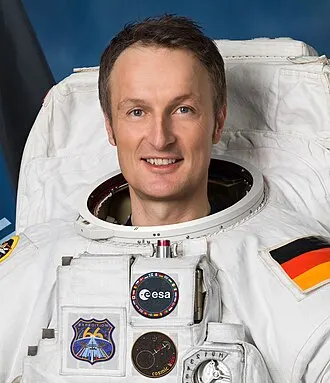
Crew-3 introduced the third capsule in SpaceX's crew fleet — Endurance — and carried one of the greenest rosters of the program: three of its four astronauts were first-time flyers. NASA's Raja Chari commanded on his rookie flight, joined by veteran physician-astronaut Tom Marshburn as pilot, first-flight submariner Kayla Barron, and ESA's Matthias Maurer flying his Cosmic Kiss mission as the twelfth German in space. After weather and a minor crew medical issue delayed the launch past the original Halloween target, Endurance lifted off on 11 November 2021 at 02:03 UTC and docked to the Harmony module's zenith port the same UTC day, roughly 21 hours after launch. The crew anchored Expeditions 66 and 67 through a busy increment: Marshburn and Barron replaced a failed S-band communications antenna in December, the crew weathered the debris event from Russia's November 2021 anti-satellite test, and in March 2022 Maurer and Chari conducted a 6-hour-54-minute spacewalk to prepare station power and thermal systems. Endurance returned on 6 May 2022, splashing down in the Gulf of Mexico near Clearwater at 04:43 UTC after 176 days — just days after handing over to the newly arrived Crew-4.
Crew
Raja Chari
Commander
NASA; commanded the mission on his first spaceflight; member of NASA's Artemis cadre
Tom Marshburn
Pilot
NASA; third spaceflight, having flown the Space Shuttle (STS-127) and Soyuz; the mission's lone veteran
Kayla Barron
Mission Specialist
NASA; first spaceflight; former U.S. Navy submarine officer
Matthias Maurer
Mission Specialist
ESA (Cosmic Kiss mission); first spaceflight; twelfth German in space and first German to fly on Crew Dragon
Key Milestones
2021-11-11
Liftoff from LC-39A at 02:03 UTC — maiden flight of Crew Dragon Endurance
2021-11-11
Endurance docks to the Harmony zenith port at 23:32 UTC, about 21 hours after launch
2021-12-02
Marshburn and Barron perform an EVA to replace a failed S-band communications antenna
2022-03-23
Maurer and Chari conduct a 6-hour-54-minute spacewalk — Maurer's first, on ESA's Cosmic Kiss mission
2022-05-06
Splashdown in the Gulf of Mexico near Clearwater at 04:43 UTC after 176 days in space
Key Achievements
Maiden flight of Crew Dragon Endurance, the third capsule in SpaceX's crew fleet
Flew three first-time astronauts, including ESA's Matthias Maurer on his Cosmic Kiss mission
Replaced the ISS's failed S-band antenna and completed multiple maintenance EVAs across Expeditions 66 and 67
Safely managed operations through the debris field created by the November 2021 Russian anti-satellite test
Completed a 176-day increment with a direct in-orbit handover to Crew-4
Legacy & Significance
Crew-3 demonstrated that the Commercial Crew pipeline could absorb rookie-heavy rosters — a sign the program had matured from test-pilot territory into a true crew-rotation system able to train and fly the next generation. It expanded SpaceX's reusable crew fleet to three capsules, deepened ESA's stake in Dragon flights through Maurer's mission, and its increment, which spanned the ASAT debris crisis and the start of the war in Ukraine, proved the ISS partnership's operational resilience under geopolitical strain.