All Astronauts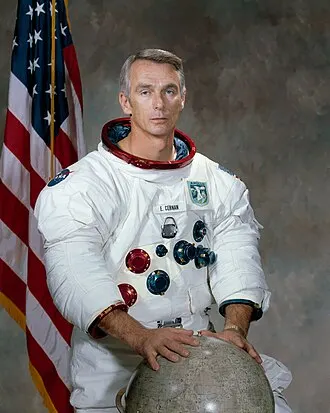 VETERANIn MemoriamNASA
VETERANIn MemoriamNASANASA·🇺🇸 United States·Born 1934
Gene Cernan
Commander of Apollo 17 and the last human to walk on the Moon, in December 1972.
Hours in Space
3
Missions
4
EVAs
24h
EVA Time
Biography
Commander of Apollo 17 and the last human to walk on the Moon, in December 1972. He died in 2017.
Before NASAU.S. Navy aviator who earned a Bachelor of Science in electrical engineering from Purdue University, flew jets including the FJ-4 Fury and A-4 Skyhawk in attack squadrons, logged over 5,000 flight hours and about 200 carrier landings, and earned a Master's in aeronautical engineering from the Naval Postgraduate School before NASA selected him in 1963.
Life & career
Eugene Andrew Cernan was born on March 14, 1934, in Chicago, and would become one of the defining figures of the Apollo Moon program. He earned a Bachelor of Science in electrical engineering from Purdue University and joined the U.S. Navy, flying jets such as the FJ-4 Fury and A-4 Skyhawk in attack squadrons and logging more than 5,000 flight hours and roughly 200 carrier landings. He also completed a master's degree in aeronautical engineering at the Naval Postgraduate School. NASA selected him in 1963 with the third astronaut group, bringing him into the program at the moment Gemini was maturing and Apollo was taking shape.
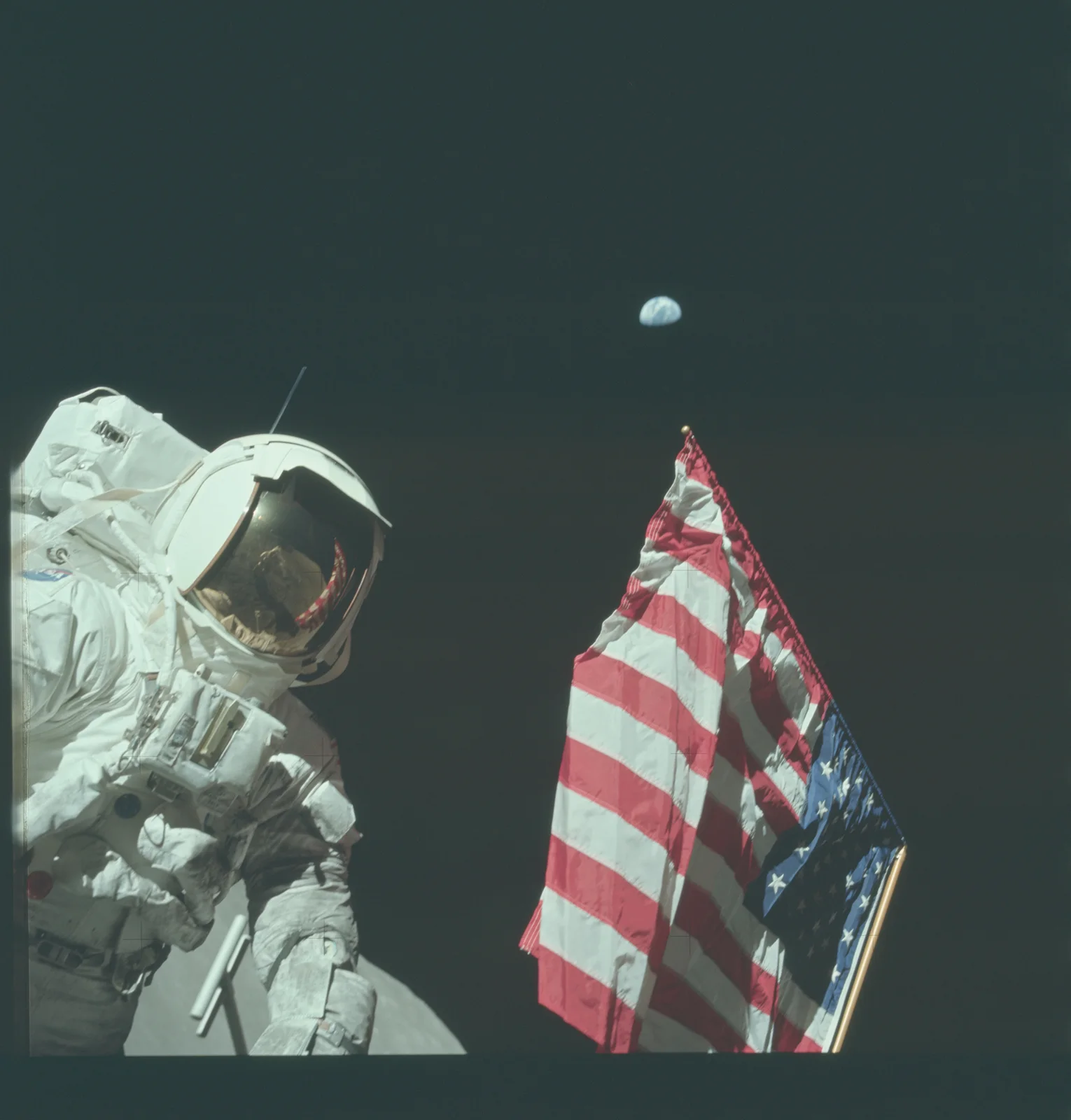
Cernan flew three missions and traveled to the Moon twice. On Gemini 9A in June 1966 he became the second American to walk in space, but his roughly two-hour spacewalk turned into an exhausting ordeal—his heart racing, his visor fogging, his exertion far exceeding expectations. That difficult EVA became a turning point, forcing NASA to overhaul how it trained astronauts for spacewalks, including the shift to extensive underwater practice. On Apollo 10 in May 1969 he served as lunar module pilot, joining Tom Stafford in flying the lander 'Snoopy' to within about 15 kilometers of the lunar surface during the final rehearsal before Apollo 11. His third and most famous flight was Apollo 17 in December 1972, which he commanded. Landing in the Taurus–Littrow valley with geologist Harrison Schmitt, Cernan spent three days conducting the longest and most scientifically ambitious lunar surface exploration of the program, with about 22 hours of moonwalks between the two men. As the last to re-enter the lunar module, he became the eleventh—and, to this day, the last—human to walk on the Moon, pausing to scratch his daughter Tracy's initials into the lunar dust before he climbed the ladder.
Cernan logged 566 hours in space, including some 24 hours of spacewalking across his missions. After leaving NASA and the Navy—retiring as a captain—he moved into business and became one of the era's most eloquent public voices for space exploration, appearing frequently as a commentator and the subject of the acclaimed documentary 'The Last Man on the Moon.' He spoke openly about the weight of that title and his hope that humanity would return, testifying before Congress in defense of ambitious human spaceflight. He died on January 16, 2017, at the age of 82, still carrying the distinction of being the last person to have stood on another world.
Mission Timeline
- Pilot
Gemini spacecraft
Gemini 9A
Launch: Jun 3, 1966Landing: Jun 6, 1966Duration: 3 days- Grueling two-hour EVA that reshaped NASA spacewalk training
- Lunar Module Pilot
Apollo LM Snoopy
Apollo 10
Launch: May 18, 1969Landing: May 26, 1969Duration: 8 days- Flew the LM to within 15 km of the lunar surface
- Commander
Apollo CSM America / LM Challenger
Apollo 17
Launch: Dec 7, 1972Landing: Dec 19, 1972Duration: 12 days- Last human to walk on the Moon (December 1972)
Don't just read it — fly it
Relive Gene's missions
Step into the missions Gene Cernan flew — chapter by chapter, from ignition to splashdown.
Beyond the Mission
Hobbies & Interests
flyingpublic speakingwriting
Languages
English
Fun fact
As the last person to walk on the Moon, Cernan paused before climbing back into the lunar module on Apollo 17 and scratched his daughter Tracy's initials — T D C — into the lunar dust, where they remain undisturbed to this day.
More Astronauts
Other space travelers from NASA