USA · NASA/JPLrobotic
July 20, 1976
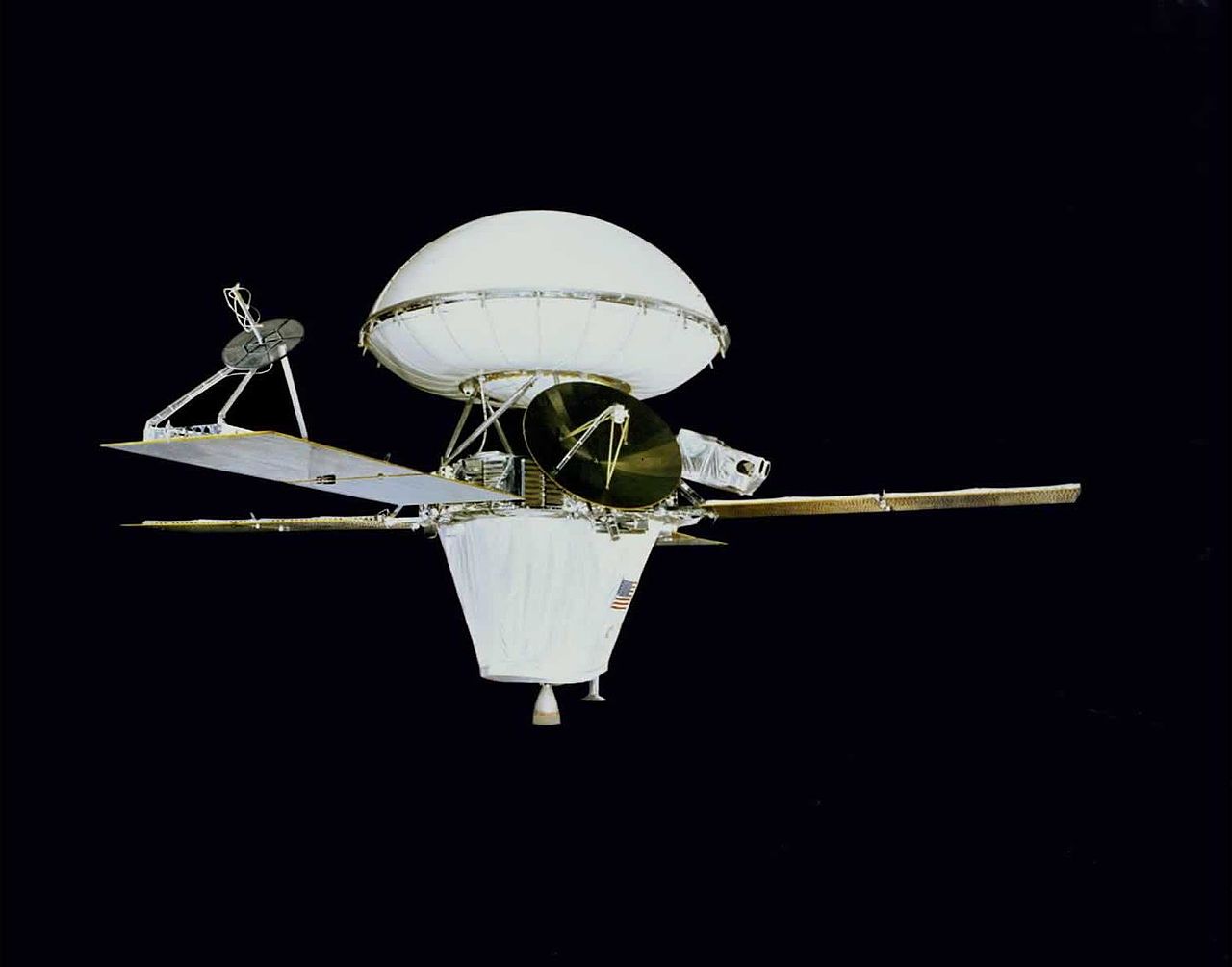
Viking 1 — first US Mars landing
Just before dawn at the Jet Propulsion Laboratory on 20 July 1976, seven years to the day after Apollo 11 touched down on the Moon, a room full of scientists watched a picture of Mars assemble itself a few lines at a time. Viking 1 had landed minutes earlier on Chryse Planitia, the Plain of Gold, and its first act was to photograph its own footpad, deliberate proof that it was standing on solid ground. The image crossed roughly nineteen light-minutes of space and arrived so crisp that engineers could count the rivets in the pad.
Getting there had taken eleven months and one hard decision. Launched on 20 August 1975, Viking 1 entered Mars orbit in June 1976 with a landing planned for the Fourth of July, the American Bicentennial. Then the orbiter's cameras revealed the chosen site to be dangerously rough, and project managers gave up the holiday to spend weeks hunting for safer ground. The caution paid off: the lander settled onto the western slopes of Chryse Planitia on 20 July, about seventeen miles from its target, and the first successful US Mars landing was complete.
Viking 1 was built to ask the biggest question in science. Its robotic arm scooped soil into three miniature biology laboratories, and one of them, the Labeled Release experiment, returned a signal that looked tantalisingly like metabolism. But the onboard chemistry instrument found no organic molecules, and most scientists concluded the soil's strange reactivity was chemistry, not life. Fifty years on, researchers still argue about what Viking measured. Meanwhile the lander simply kept working, sending weather reports and panoramas until 11 November 1982, when a faulty command sent from Earth silenced an otherwise healthy machine.
Together with its orbiter and its twin, Viking redrew Mars. The two Viking orbiters returned 52,663 images and mapped about 97 percent of the planet; the two landers sent back 4,500 pictures from the surface. In January 1982 the lander was renamed the Thomas A. Mutch Memorial Station, honouring the imaging team leader who had watched that first picture arrive line by line. Every Mars landing since, from Pathfinder to Perseverance, has descended through an atmosphere Viking characterised and navigated by maps Viking made.
“It's just incredible to see that Mars, you know, is really there.”
Mission Data
Launch
20 Aug 1975, Titan IIIE-Centaur
Mars landing
20 Jul 1976, Chryse Planitia
Lander operated until
11 Nov 1982
Orbiter images (Viking 1 & 2)
52,663, mapping ~97% of Mars
Lander surface images (both landers)
~4,500
Program cost
~$1 billion (1970s dollars)
Key Facts
The landing was meant for 4 July 1976, the US Bicentennial, but orbiter images showed the site was strewn with hazards, so NASA gave up the patriotic date for a safer plain.
Touchdown came exactly seven years to the day after Apollo 11's lunar landing, giving 20 July a double place in space history.
The first photograph from the surface of Mars was, by design, a picture of the lander's own footpad, sharp enough to count individual rivets.
The lander outlived its design life by years and was killed in November 1982 not by Mars but by a faulty command transmitted from Earth.
The Labeled Release biology experiment returned a positive-looking signal that scientists still debate half a century later.
Why It Mattered
Viking 1 turned Mars from a flyby target into a workplace. It was the first spacecraft to operate long-term on the Martian surface, the first to directly search for life on another planet, and the source of the global maps and atmospheric data on which every later Mars mission depended. Its ambiguous biology results taught planetary science a lasting lesson about how hard the life question really is, pushing the field toward the patient, layered strategy of orbiters, rovers and sample return that defines Mars exploration today. The six-year endurance of its lander set an expectation of longevity that NASA's Mars hardware has honoured ever since.
NASA
Official sourceContinue your journey

From the same era
Moment
Apollo-Soyuz — first international docking in space
From the same era

From the same era
Moment
Venera 9 — first images from the surface of another planet
From the same era

From the same era
Moment
Voyager 2 launches — only spacecraft to visit Uranus and Neptune
From the same era

From the same era
Moment
Voyager 1 launched on grand tour
From the same era
Continue your mission
More tools to explore next