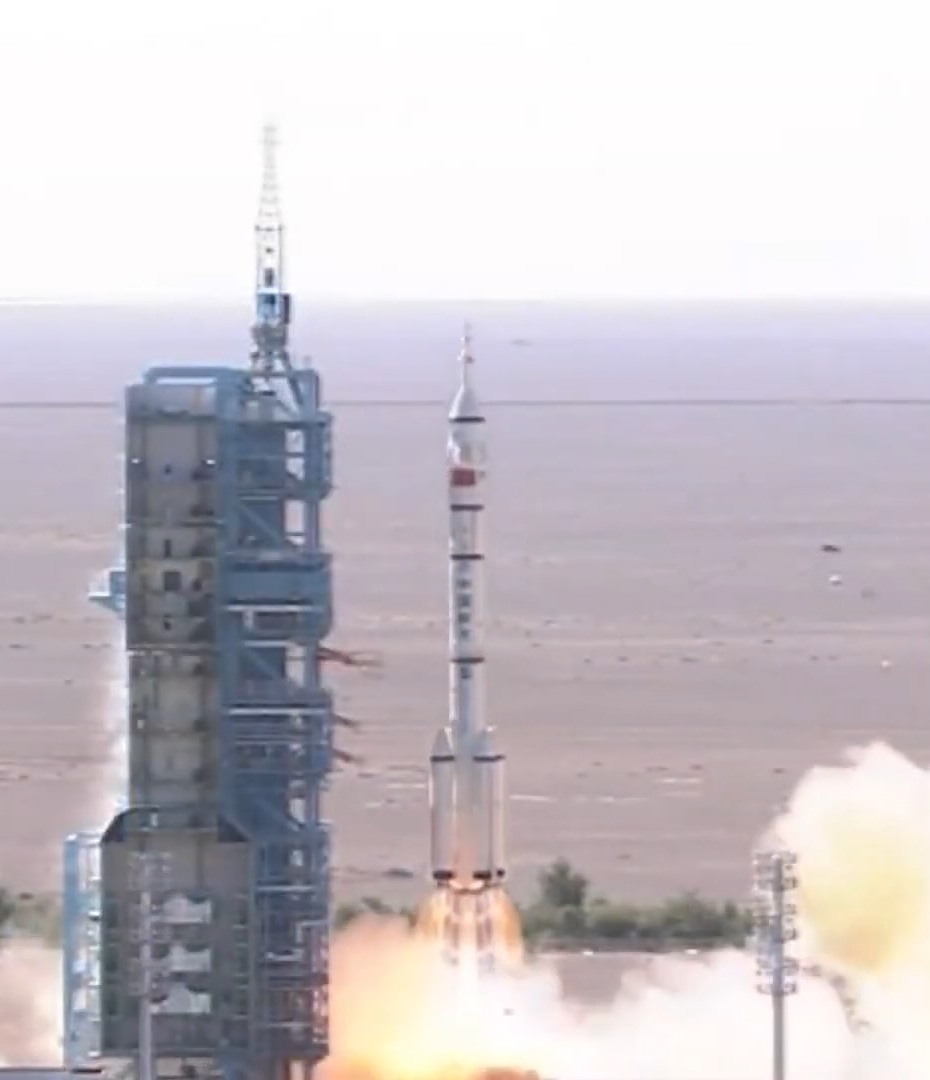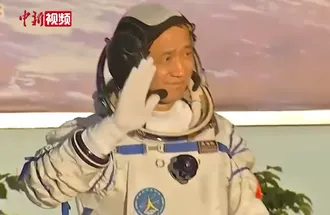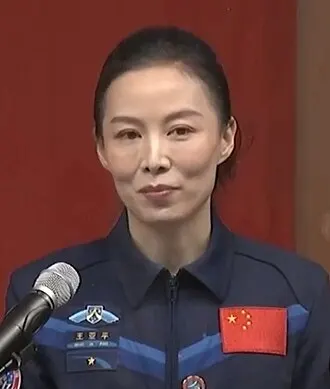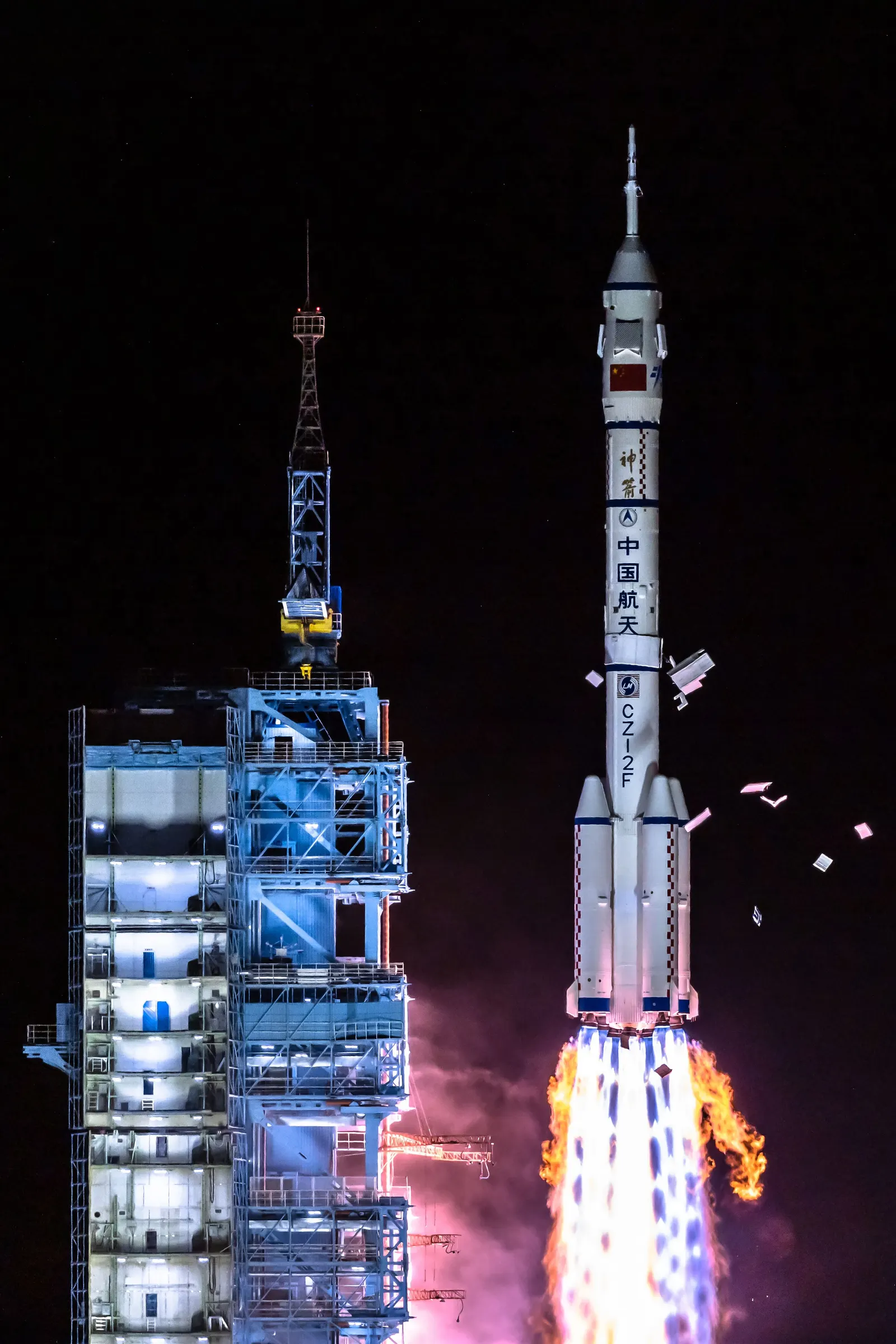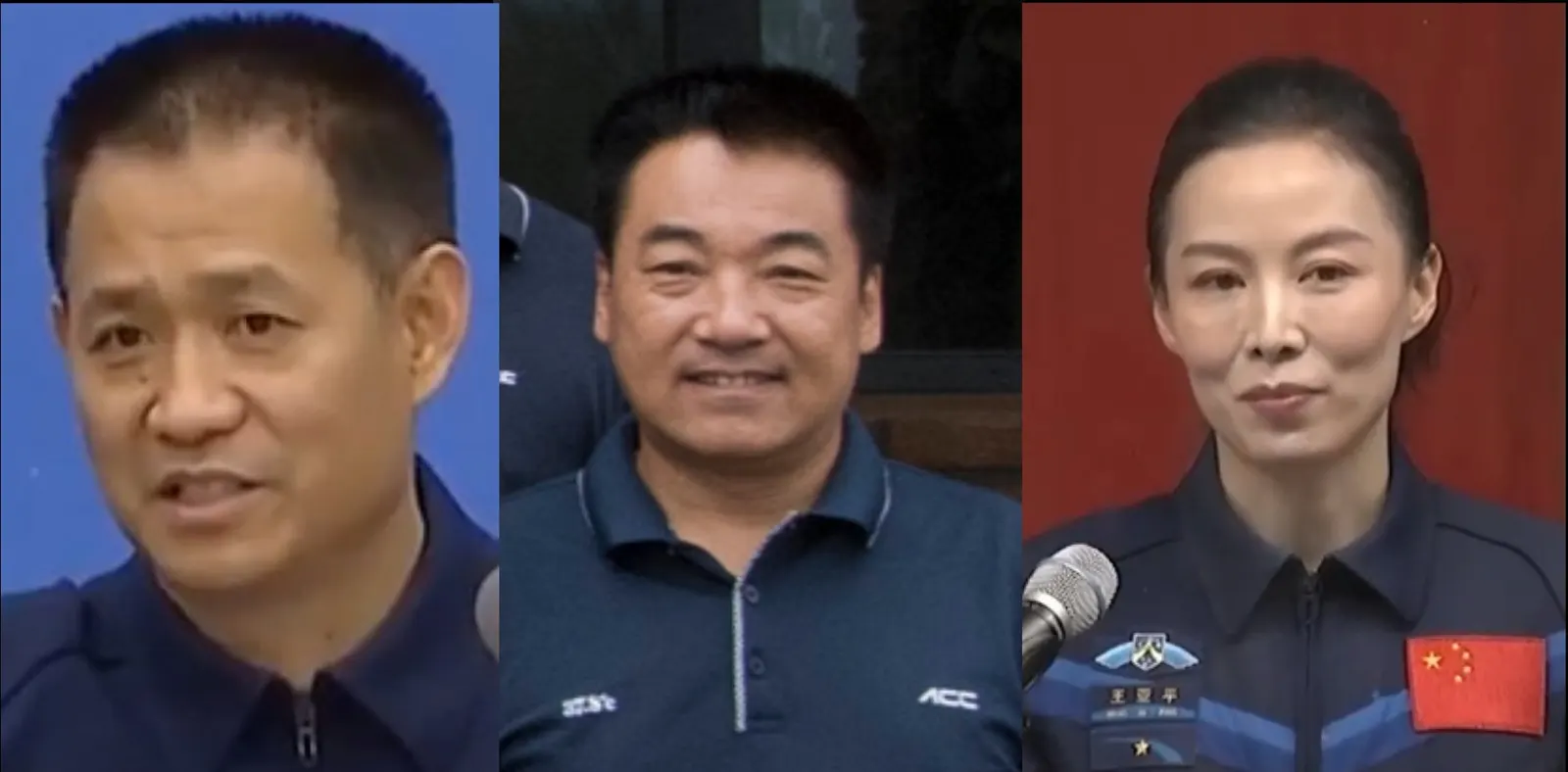
Image: China News Service via Wikimedia Commons (CC BY 4.0)
Shenzhou 10
Mission Profile
| Launch date | 2013-06-11 |
|---|---|
| Launch site | Jiuquan Satellite Launch Center, LA-4/SLS-1 |
| Launch vehicle | Long March 2F (Y10) |
| Spacecraft | Shenzhou 10 |
| Target | Low Earth Orbit |
| Type | Crewed |
| End date | 2013-06-26 |
| Recovery | Land recovery — Siziwang Banner main landing site, Inner Mongolia |
| Duration | 14 days, 14 hours, 29 minutes |
Overview
Shenzhou 10 was the flight on which China's rendezvous-and-docking machinery stopped being an experiment and became a service. Commander Nie Haisheng — flying again eight years after Shenzhou 6 — operator Zhang Xiaoguang and Wang Yaping launched from Jiuquan at 09:38 UTC on 11 June 2013, 5:38 p.m. Beijing time, and docked automatically with Tiangong-1 two days later, on 13 June. Over roughly twelve days aboard the laboratory the crew ran medical, technical and pedagogical programs. The mission's most celebrated moment came on 20 June, when Wang Yaping delivered China's first lecture from space, a 48-minute live physics class on mass, motion and water-surface tension in microgravity broadcast to more than 60 million schoolchildren. On 23 June the crew separated and re-docked manually, reinforcing the hand-flown technique pioneered by Shenzhou 9, and after final undocking on 25 June the spacecraft performed a fly-around of Tiangong-1 before heading home. The descent module landed in Inner Mongolia at 00:07 UTC on 26 June — 8:07 a.m. Beijing time — after 14 days, 14 hours and 29 minutes, then China's longest human spaceflight, closing out crewed operations with Tiangong-1.
Crew
Nie Haisheng
Commander
Second spaceflight (after Shenzhou 6); later commanded Shenzhou 12
Zhang Xiaoguang
Operator
First spaceflight
Wang Yaping
Laboratory Assistant
Second Chinese woman in space; delivered China's first space lecture; later became first Chinese woman to walk in space on Shenzhou 13
Key Milestones
2013-06-11
Liftoff from Jiuquan at 09:38:02 UTC (17:38 Beijing time)
2013-06-13
Automated docking with Tiangong-1 at 05:11 UTC; crew begins about 12 days aboard the laboratory
2013-06-20
Wang Yaping delivers China's first space lecture, broadcast live to over 60 million students
2013-06-23
Crew completes a manual separation and re-docking with Tiangong-1
2013-06-25
Final undocking and fly-around of Tiangong-1
2013-06-26
Descent module lands in Inner Mongolia at 00:07 UTC after 14 days 14.5 hours — then China's longest spaceflight
Key Achievements
First operational 'application' flight of the Shenzhou crew transport after the test-flight phase
Wang Yaping's live physics lecture from Tiangong-1 reached more than 60 million students
Completed both manual re-docking and a fly-around rendezvous test of Tiangong-1
Second and final crewed expedition to Tiangong-1, with about 12 days docked
Set China's spaceflight duration record at the time — 14 days, 14.5 hours
Legacy & Significance
Shenzhou 10 marked the moment routine entered Chinese human spaceflight: the same vehicle, pad and docking choreography as before, executed with operational confidence rather than test-flight caution. Wang Yaping's space classroom became a cultural touchstone — repeated from the Tiangong station years later — and bound the program to public education in a way few space agencies have matched. With Tiangong-1's crewed career complete, the program pivoted to Tiangong-2 and the long-duration stays that Shenzhou 11 would demonstrate.