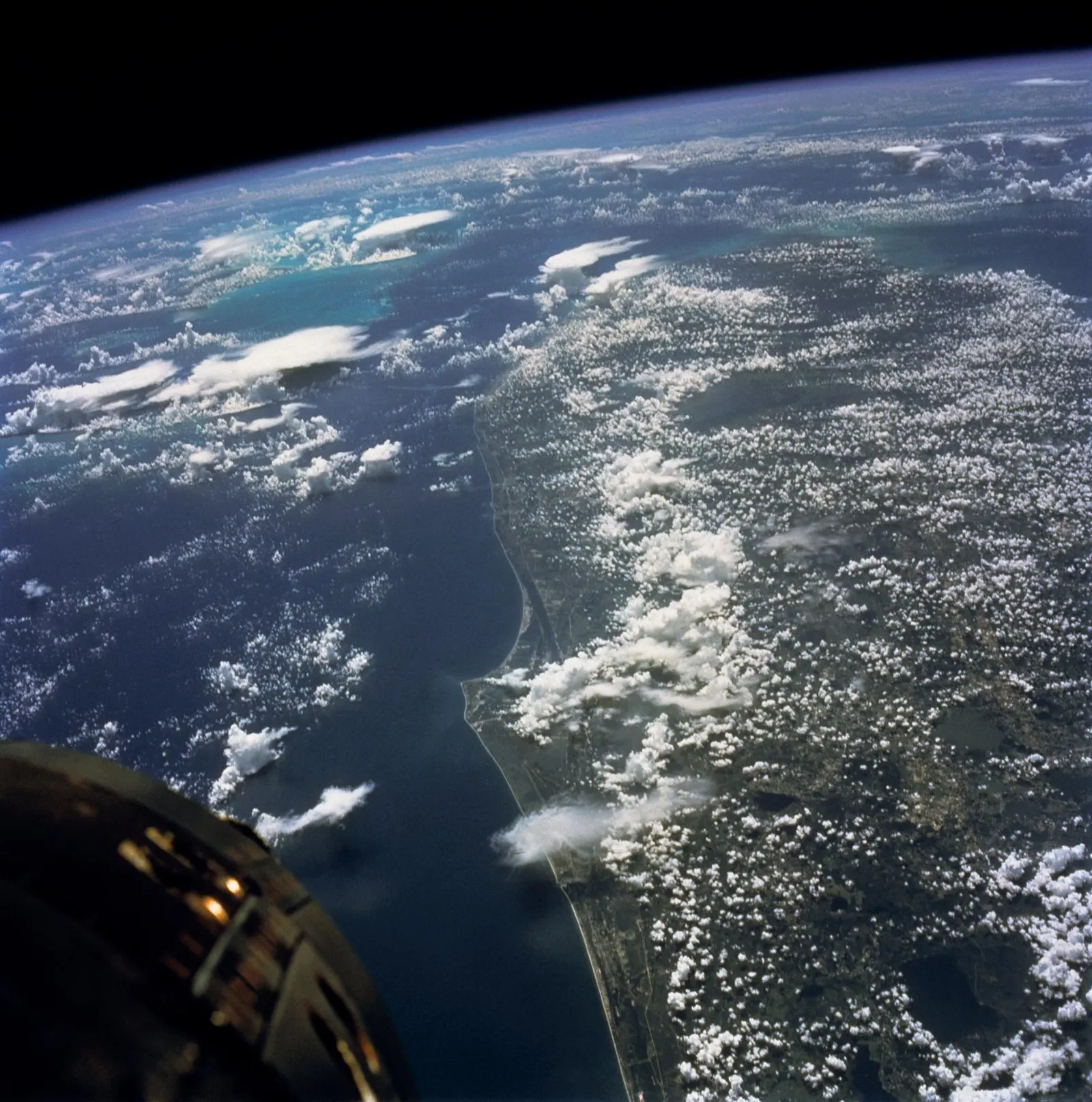
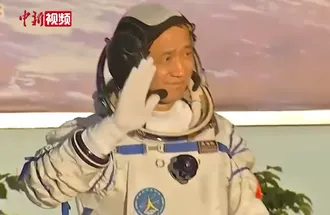
Image: Wikimedia Commons montage by Erick Soares3 (CC BY-SA 3.0)
Shenzhou 6
Mission Profile
| Launch date | 2005-10-12 |
|---|---|
| Launch site | Jiuquan Satellite Launch Center, LA-4/SLS-1 |
| Launch vehicle | Long March 2F (Y6) |
| Spacecraft | Shenzhou 6 |
| Target | Low Earth Orbit |
| Type | Crewed |
| End date | 2005-10-16 |
| Recovery | Land recovery — Siziwang Banner main landing site, Inner Mongolia |
| Duration | 4 days, 19 hours, 32 minutes |
Overview
Two years after Yang Liwei's solo dash around the planet, Shenzhou 6 stretched China's human spaceflight capability from hours to days. Fei Junlong and Nie Haisheng lifted off from Jiuquan atop Long March 2F (Y6) at 01:00 UTC on 12 October 2005 — 09:00 Beijing time — and flew for 4 days, 19 hours and 32 minutes, the country's first multi-person, multi-day mission. For the first time Chinese astronauts doffed their pressure suits, opened the hatch between the descent and orbital modules, and lived and worked in the orbital module, validating the life-support, food, sleep and sanitation systems needed for longer expeditions. The flight had human moments too: Nie Haisheng marked his 41st birthday in orbit on 13 October, and on 15 October the crew held a space-to-ground video call with President Hu Jintao. After 76 orbits the descent module parachuted onto the grassland at Honggor Sum, Siziwang Banner, Inner Mongolia at 20:33 UTC on 16 October — 4:33 a.m. Beijing time on the 17th — with both men in good health. The jettisoned orbital module kept operating in orbit for months afterward as an uncrewed experiment platform.
Crew
Fei Junlong
Commander
First spaceflight; later commanded Shenzhou 15 to the Tiangong station
Nie Haisheng
Flight Engineer
First spaceflight; flew again on Shenzhou 10 and commanded Shenzhou 12
Key Milestones
2005-10-12
Liftoff from Jiuquan at 01:00:05 UTC with China's first two-man crew
2005-10-13
Crew removes pressure suits and enters the orbital module — a first for Chinese spaceflight; Nie Haisheng celebrates his 41st birthday in orbit
2005-10-15
Space-to-ground video call with President Hu Jintao
2005-10-16
Descent module lands at Siziwang Banner, Inner Mongolia at 20:33 UTC after 76 orbits; both astronauts in good health
Key Achievements
China's first multi-astronaut, multi-day spaceflight — about 115.5 hours and 76 orbits
First Chinese crew to remove pressure suits and live and work in the orbital module
Validated five-day life support, food, sleep and waste-management systems for a two-man crew
Both astronauts recovered in good health at the Inner Mongolia main landing site
Legacy & Significance
Shenzhou 6 proved that China could not just reach orbit but live there. By turning the orbital module into a habitable workspace and sustaining two crew for nearly five days, the mission converted Shenzhou from a demonstration vehicle into an operational crew transport, setting up the spacewalk of Shenzhou 7 and the laboratory expeditions that followed. It also cemented the rhythm of China's deliberate, incremental flight-test philosophy — each mission retiring exactly one new set of risks.