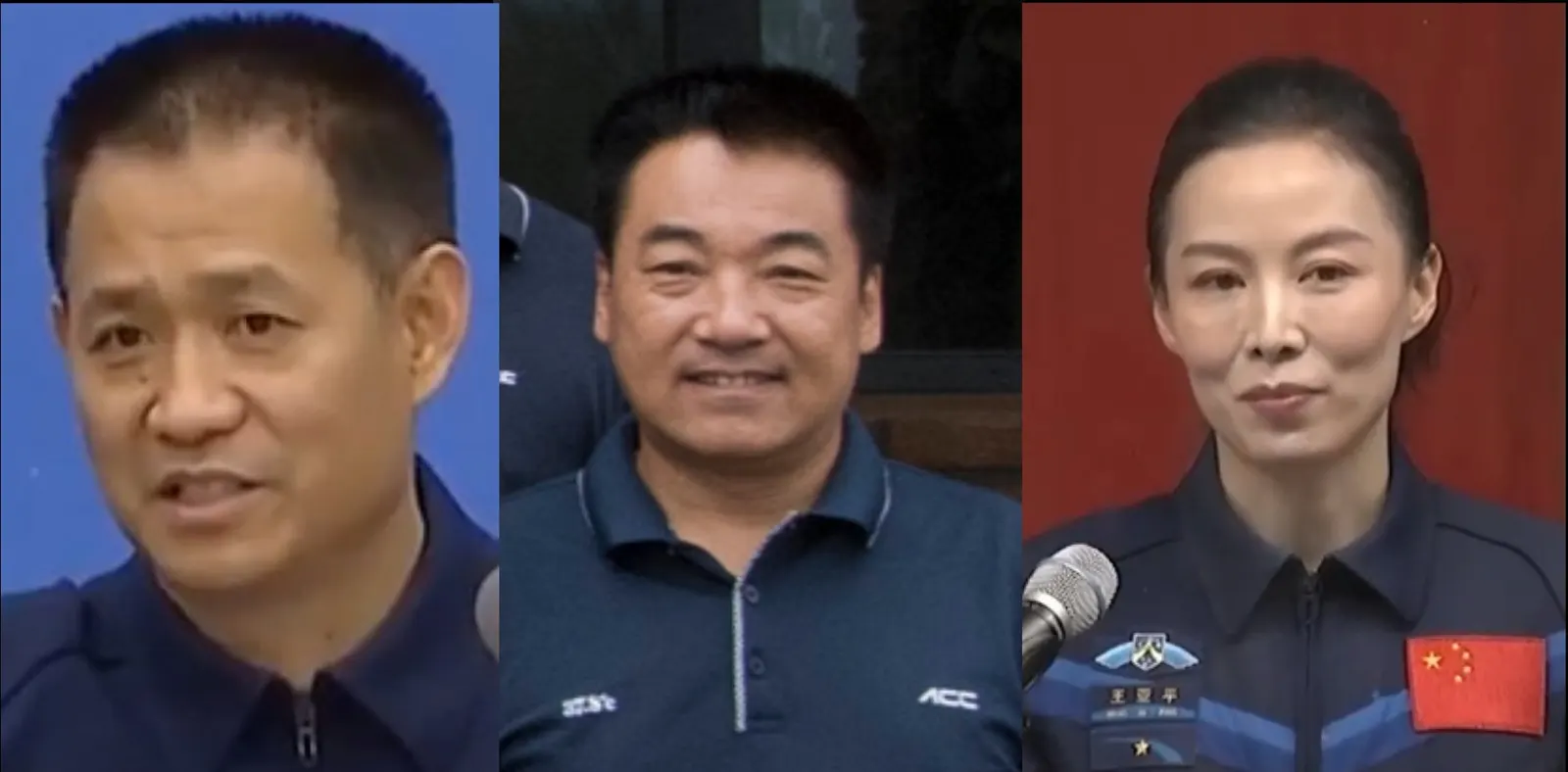
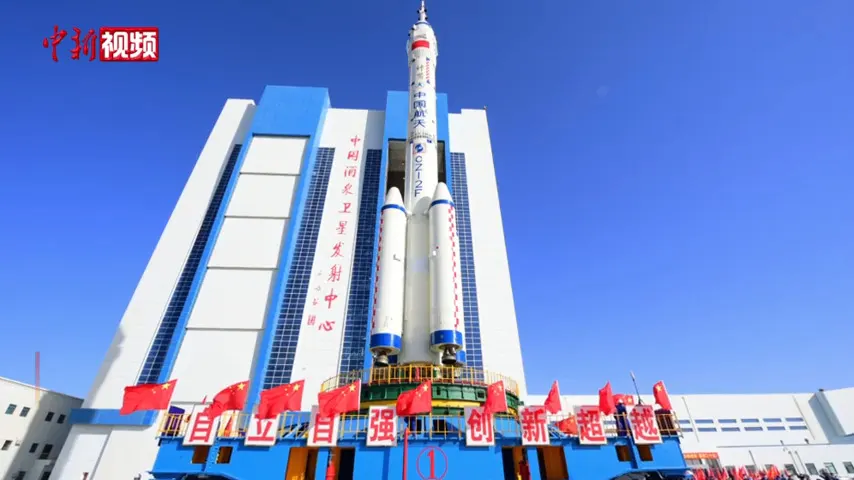
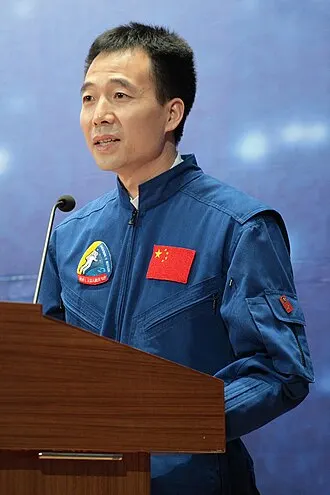
Image: Johnson Lau / Tksteven via Wikimedia Commons (CC BY-SA 3.0)
Shenzhou 9
Mission Profile
| Launch date | 2012-06-16 |
|---|---|
| Launch site | Jiuquan Satellite Launch Center, LA-4/SLS-1 |
| Launch vehicle | Long March 2F/G (Y9) |
| Spacecraft | Shenzhou 9 |
| Target | Low Earth Orbit |
| Type | Crewed |
| End date | 2012-06-29 |
| Recovery | Land recovery — Siziwang Banner main landing site, Inner Mongolia |
| Duration | 12 days, 15 hours, 23 minutes |
Overview
Shenzhou 9 rewrote two chapters of Chinese spaceflight history at once. When the Long March 2F/G lifted off from Jiuquan at 10:37 UTC on 16 June 2012 — 6:37 p.m. Beijing time — Liu Yang, a 33-year-old transport pilot, became the first Chinese woman in space, flying alongside commander Jing Haipeng, the first Chinese astronaut to make a second spaceflight, and operator Liu Wang. Two days later, on 18 June, the spacecraft executed an automated docking with the Tiangong-1 target module at 06:07 UTC and the crew floated into the orbiting laboratory — the first Chinese astronauts ever to board a vehicle in space. The mission's defining test came on 24 June: after backing away to a safe distance, Liu Wang flew the spacecraft back in by hand and completed China's first manual rendezvous and docking, proving the backup capability essential for any space station program. The crew spent ten days conducting medical and technical experiments aboard Tiangong-1 before final undocking on 28 June. The descent module landed at Siziwang Banner, Inner Mongolia at 02:01 UTC on 29 June after 12 days, 15 hours and 23 minutes aloft, with all three astronauts in good condition.
Crew
Jing Haipeng
Commander
First Chinese astronaut to make a second spaceflight (after Shenzhou 7)
Liu Wang
Operator
Executed China's first manual orbital docking; first spaceflight
Liu Yang
Laboratory Assistant
First Chinese woman in space; later flew Shenzhou 14
Key Milestones
2012-06-16
Liftoff from Jiuquan at 10:37:24 UTC; Liu Yang becomes the first Chinese woman in space
2012-06-18
Automated docking with Tiangong-1 at 06:07 UTC; crew boards an orbiting laboratory for the first time in Chinese spaceflight
2012-06-24
Liu Wang performs China's first manual rendezvous and docking at 04:38 UTC
2012-06-28
Final undocking from Tiangong-1 at 01:22 UTC
2012-06-29
Descent module lands at Siziwang Banner, Inner Mongolia at 02:01 UTC after 12 days 15 hours
Key Achievements
Liu Yang became the first Chinese woman in space
First crewed docking in Chinese spaceflight history — automated link-up with Tiangong-1 on 18 June 2012
First manual rendezvous and docking, hand-flown by Liu Wang on 24 June 2012
First Chinese crew to live and work aboard an orbiting laboratory
Jing Haipeng became the first Chinese astronaut to fly twice
Legacy & Significance
Shenzhou 9 transformed Tiangong-1 from a target vehicle into China's first inhabited outpost and proved both automated and manual docking — the two technologies without which no space station can be supplied or crewed. Liu Yang's flight, coming 49 years almost to the day after Valentina Tereshkova's, made the taikonaut corps visibly representative of half the country and inspired a generation of Chinese girls. The procedures rehearsed on this mission run today, largely unchanged in concept, on every Shenzhou flight to the Tiangong station.