Image: NASA
STS-7
Mission Profile
| Launch date | 1983-06-18 |
|---|---|
| Launch site | Kennedy Space Center, Launch Complex 39A, Florida |
| Launch vehicle | Space Shuttle |
| Spacecraft | Space Shuttle Challenger (OV-099) |
| Target | Low Earth Orbit |
| Type | Crewed |
| End date | 1983-06-24 |
| Recovery | Runway landing — Edwards Air Force Base, Runway 15, California |
| Duration | 6 days, 2 hours, 23 minutes, 59 seconds |
| Partners | Telesat Canada, Perumtel (Indonesia), MBB/ERNO (West Germany, SPAS-01) |
Overview
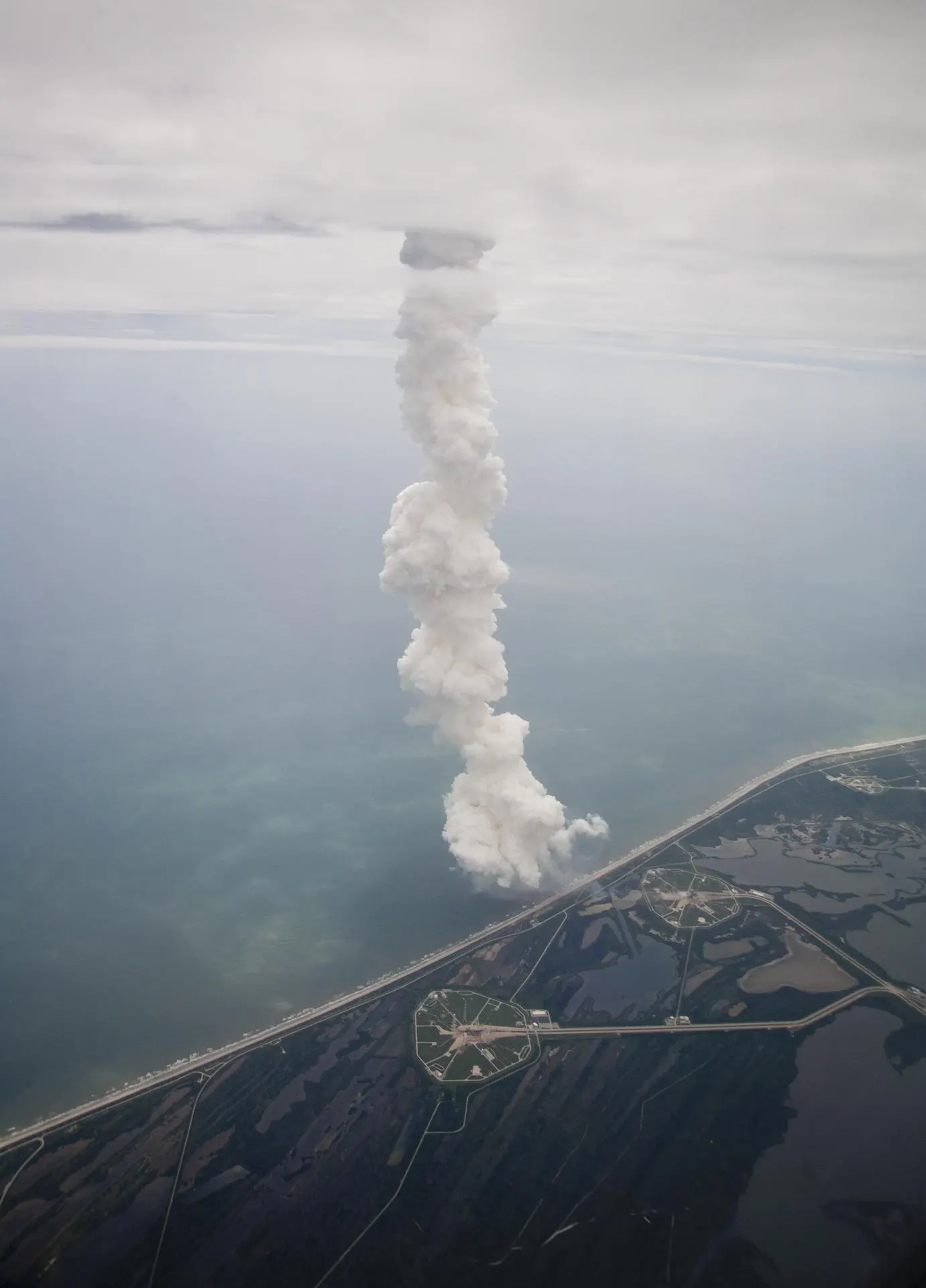
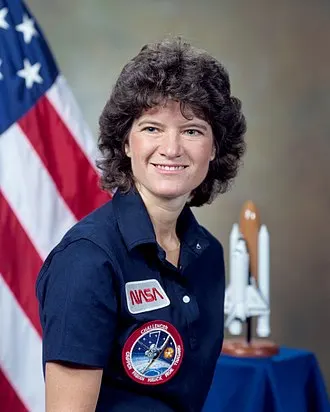
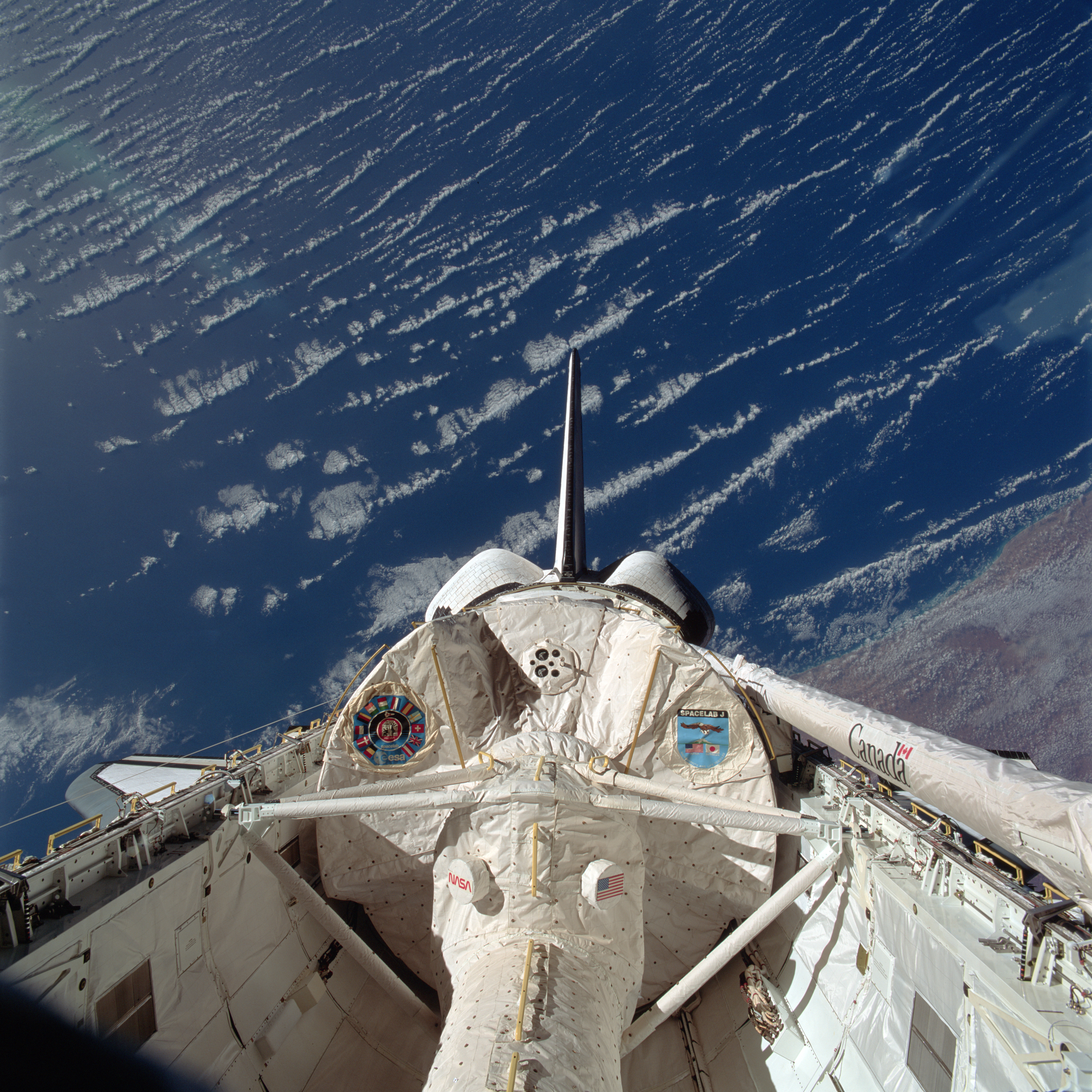
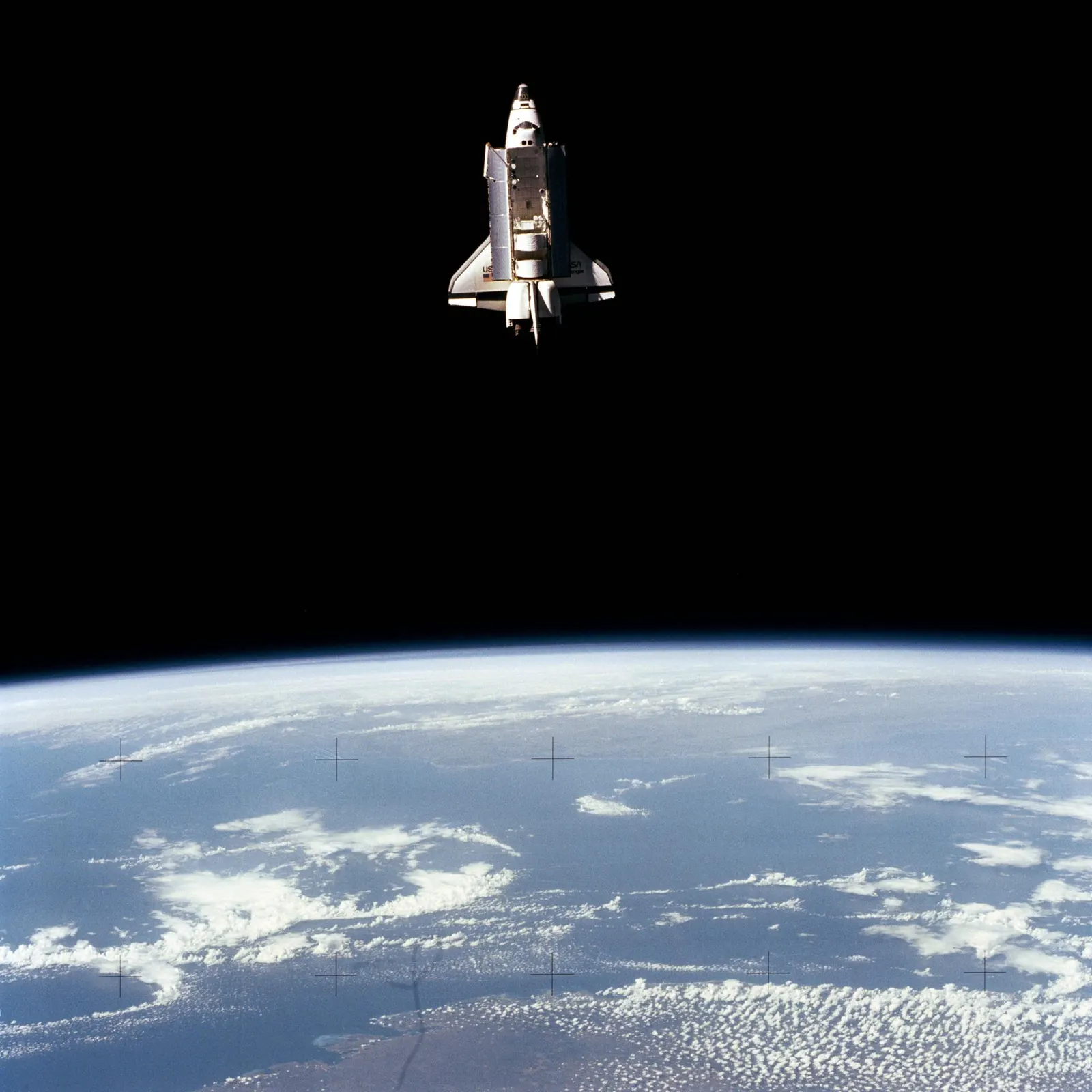
On June 18, 1983, Challenger lifted off from Kennedy Space Center carrying Sally Ride, who became the first American woman in space — two decades after Valentina Tereshkova's pioneering flight. The five-member crew, the largest yet flown on a single spacecraft, was commanded by STS-1 veteran Robert Crippen, who became the first astronaut to fly the Shuttle twice. Over six days the crew deployed two commercial communications satellites, Anik C2 for Telesat Canada and Palapa B1 for Indonesia, each spun out of the payload bay atop a Payload Assist Module upper stage. The mission's signature moment came on June 22, when the crew released the German-built SPAS-01 pallet satellite with the robot arm and then re-grappled it — the first time a free-flying satellite had been deployed and retrieved in orbit. SPAS-01's cameras returned the now-iconic photograph of Challenger flying above the Earth with its robot arm bent into the shape of a '7'. Fog at the Cape scrubbed what would have been the Shuttle program's first Kennedy Space Center landing, and Challenger diverted to Edwards Air Force Base, touching down on June 24 after 6 days, 2 hours and 24 minutes in space.
Crew
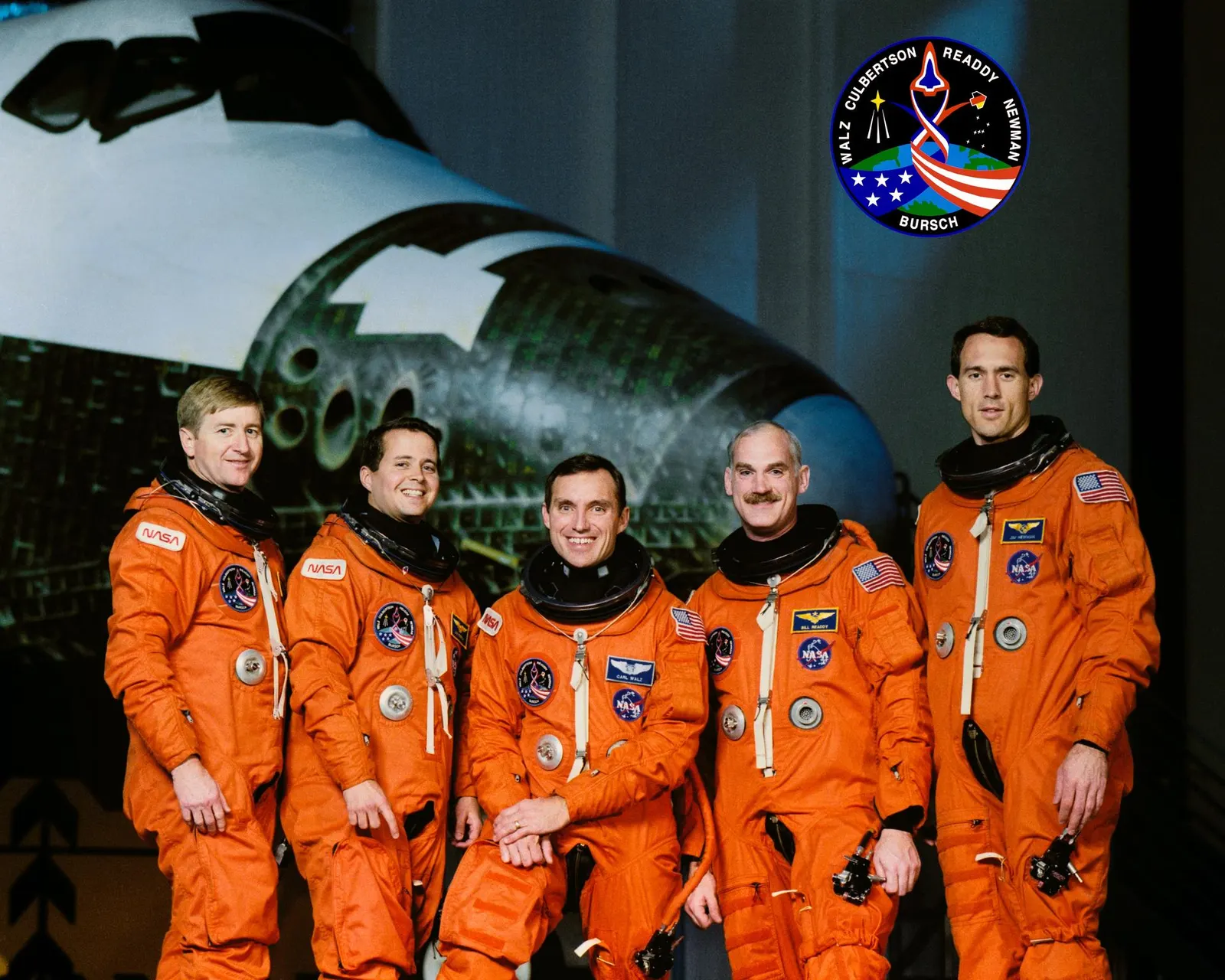
Robert Crippen
Commander
STS-1 pilot; became the first astronaut to fly the Space Shuttle twice
Frederick Hauck
Pilot
Later commanded STS-26, the post-Challenger return-to-flight mission
John Fabian
Mission Specialist
Worked the robot arm for the SPAS-01 deployment and retrieval; flew again on STS-51-G
Sally Ride
Mission Specialist
First American woman in space; operated the robot arm during SPAS-01 operations
Norman Thagard
Mission Specialist
Physician added to the crew to study space adaptation syndrome; in 1995 became the first American to live aboard Mir
Key Milestones
1983-06-18
Challenger launches from LC-39A; Sally Ride becomes the first American woman in space aboard the largest crew yet flown (five)
1983-06-18
Anik C2 communications satellite deployed for Telesat Canada
1983-06-19
Palapa B1 communications satellite deployed for Indonesia
1983-06-22
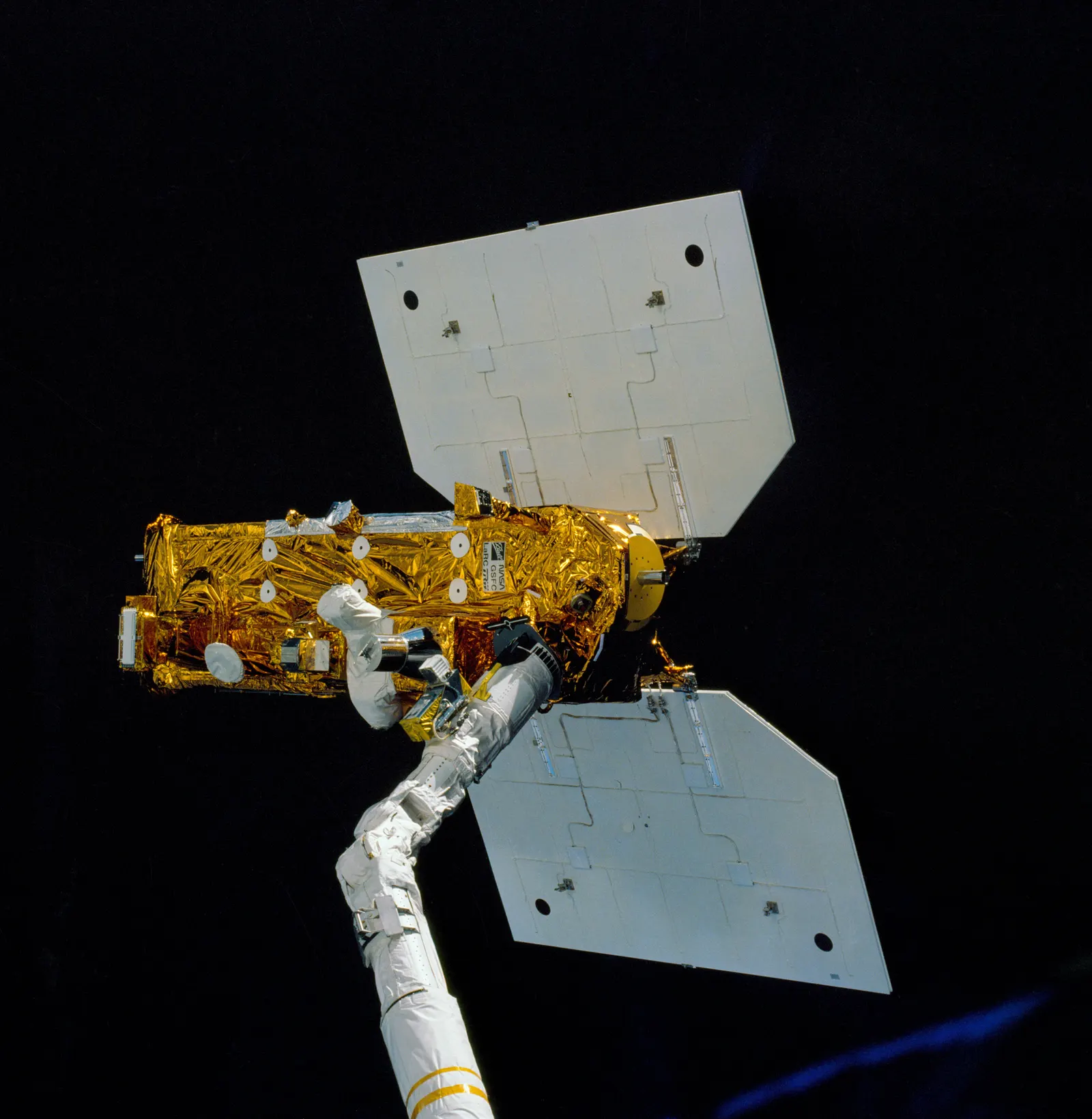
SPAS-01 pallet satellite released and re-grappled with the robot arm — the first satellite deployment and retrieval in orbit; SPAS photographs Challenger from free flight
1983-06-24
Fog scrubs the planned first KSC landing; Challenger lands on Runway 15 at Edwards Air Force Base after 6 days, 2 hours, 24 minutes
Key Achievements
Sally Ride became the first American woman in space
First deployment and retrieval of a free-flying satellite (SPAS-01) using the Shuttle's robot arm
Largest spacecraft crew flown to that date — five astronauts
Deployed two commercial communications satellites, Anik C2 and Palapa B1
Robert Crippen became the first astronaut to fly the Space Shuttle twice
Legacy & Significance
STS-7 broke NASA's 22-year all-male streak in human spaceflight and made Sally Ride a household name, reshaping public expectations of who could be an astronaut and inspiring a generation of women into science and engineering. Beyond its social significance, the flight proved the Shuttle's signature capability — deploying a satellite, letting it fly free, and plucking it back from orbit with the robot arm — a technique that underpinned later satellite rescues and the Hubble servicing missions. The SPAS-01 photograph of Challenger over the blue Earth became one of the defining images of the Shuttle era.