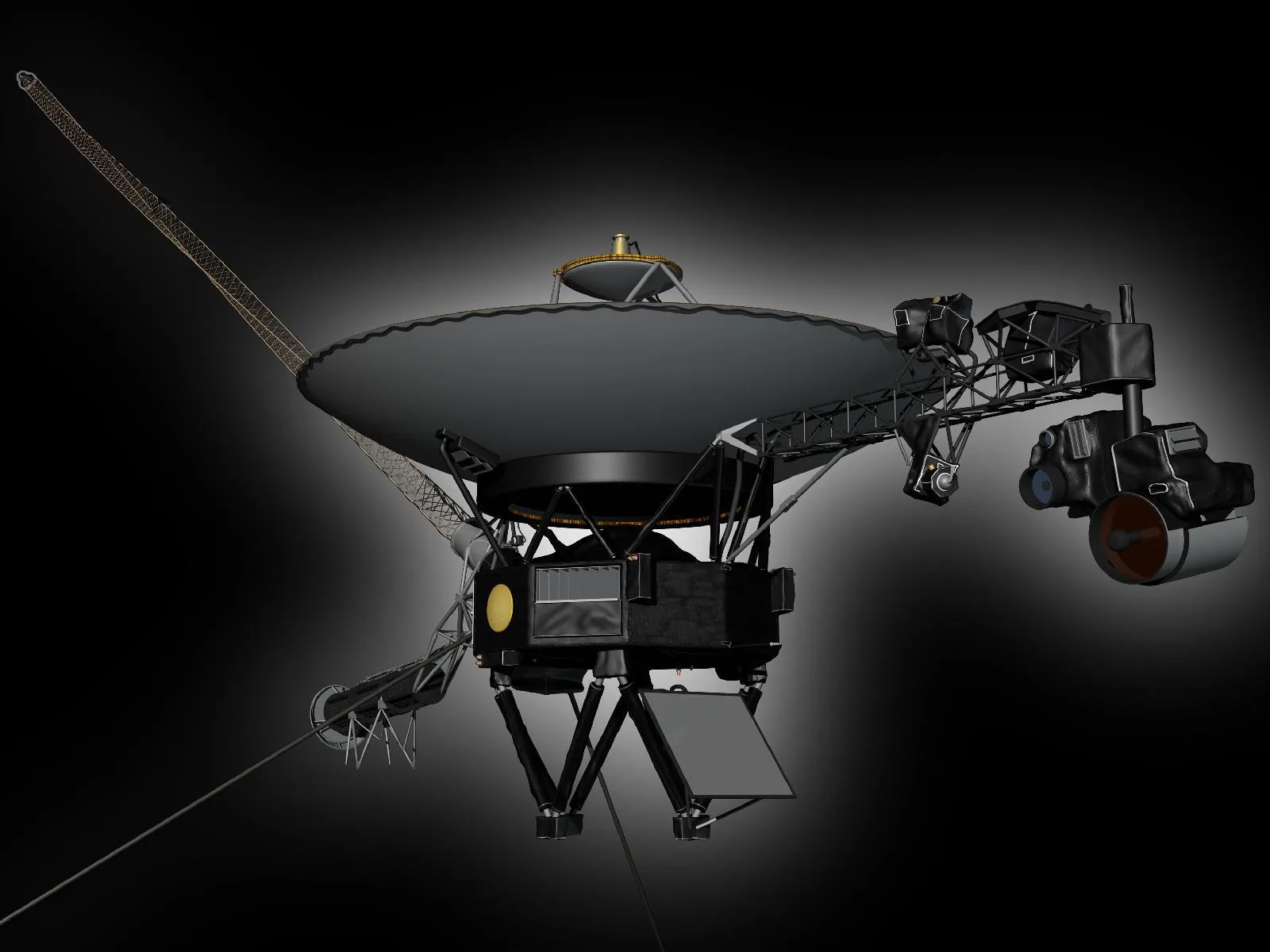
Image: NASA / JPL-Caltech
Don't just read it — experience it
Relive Voyager 1, chapter by chapter
48 years · 8 chapters · The Grand Tour
Voyager 1
Mission Profile
| Launch date | 1977-09-05 |
|---|---|
| Launch vehicle | Titan IIIE / Centaur |
| Spacecraft | Voyager 1 |
| Target | Interstellar |
| Type | Robotic |
| Cost | $865M (Voyager 1 and 2 combined, 1977 dollars) |
| Mass | 722 kg |
| Duration | 48+ years and counting (primary mission ended 1980; extended ops since) |
| Partners | NASA JPL, Caltech |
| Instruments | Plasma Wave Subsystem (PWS), Cosmic Ray Subsystem (CRS), Magnetometer (MAG), Low-Energy Charged Particle (LECP, deactivated 2026), Imaging Science (ISS, deactivated), UVS (deactivated) |
Prime Contractors
Companies that built, launched, or operate this mission. Tickers link to their investor profile.
- NASA JPL
- Lockheed Martin (heritage Martin Marietta)
- General Dynamics (heritage)
Overview
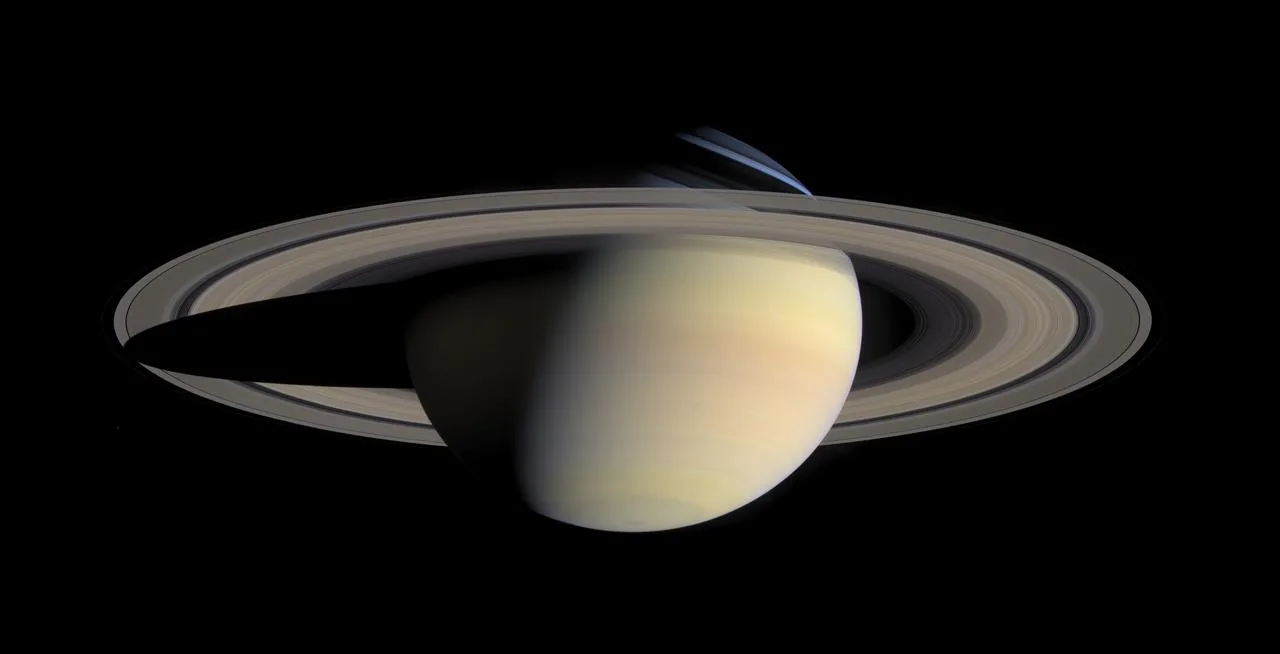
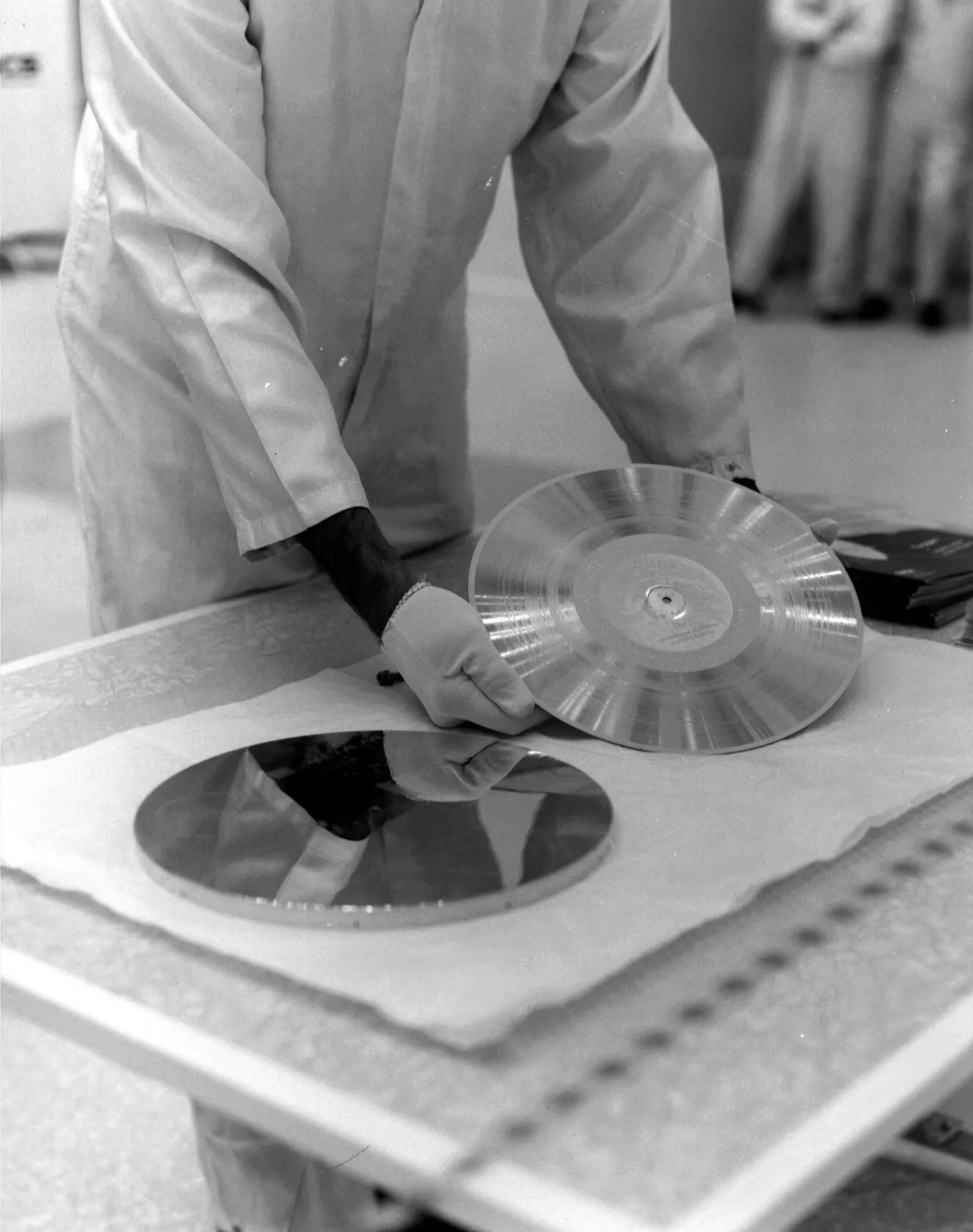
Voyager 1 is the most distant human-made object in existence and the first spacecraft to enter interstellar space. Launched on 5 September 1977 — 16 days after its twin Voyager 2 — Voyager 1 took advantage of a once-in-176-years planetary alignment to conduct the first close flybys of Jupiter (March 1979) and Saturn (November 1980), discovering volcanic activity on Io, the chaotic terrain of Saturn's moon Mimas, and the structure of Saturn's rings. After Saturn, Voyager 1 was directed up out of the ecliptic plane and onto a trajectory that took it on its long-haul journey toward the boundary of the Sun's heliosphere. On 25 August 2012, at a distance of 121.6 AU from the Sun, Voyager 1 became the first spacecraft to cross the heliopause — the boundary where the solar wind gives way to the interstellar medium. As of early 2026 Voyager 1 is approximately 172.6 AU (~25.5 billion km) from the Sun, with a one-way light-time of about 23.9 hours; it is on track to reach 1 light-day from Earth (~173.1 AU) on 18 November 2026 — the first human-made object to do so. Despite operating on radioisotope generators that have lost more than 60% of their original power, the spacecraft continues to return plasma wave data, and engineers in 2024 successfully recovered from a corrupted memory chip that had garbled telemetry for months. The 1977 Golden Record bolted to its side carries greetings, music, and images of Earth — a message in a bottle for any civilization that may someday encounter it.
Key Milestones
1977-09-05
Launch on Titan IIIE-Centaur from Cape Canaveral
1979-03-05
Jupiter closest approach (348,000 km)
1980-11-12
Saturn closest approach (124,000 km)
1990-02-14
Captures the 'Pale Blue Dot' image of Earth from 6 billion km
2012-08-25
Crosses heliopause into interstellar space
2024-06-13
NASA recovers Voyager 1 memory after 7-month telemetry loss
2026-04-17
LECP instrument powered off to conserve power — two science instruments remain active
2026-11-18
Reaches 1 light-day from Earth (~173.1 AU) — first human-made object to do so (planned)