EVACancelled🇷🇺
Krechet-94
The Soviet answer to Apollo's A7L — the lunar EVA suit that would have walked on the Moon if the N1 rocket had succeeded.
About This Suit
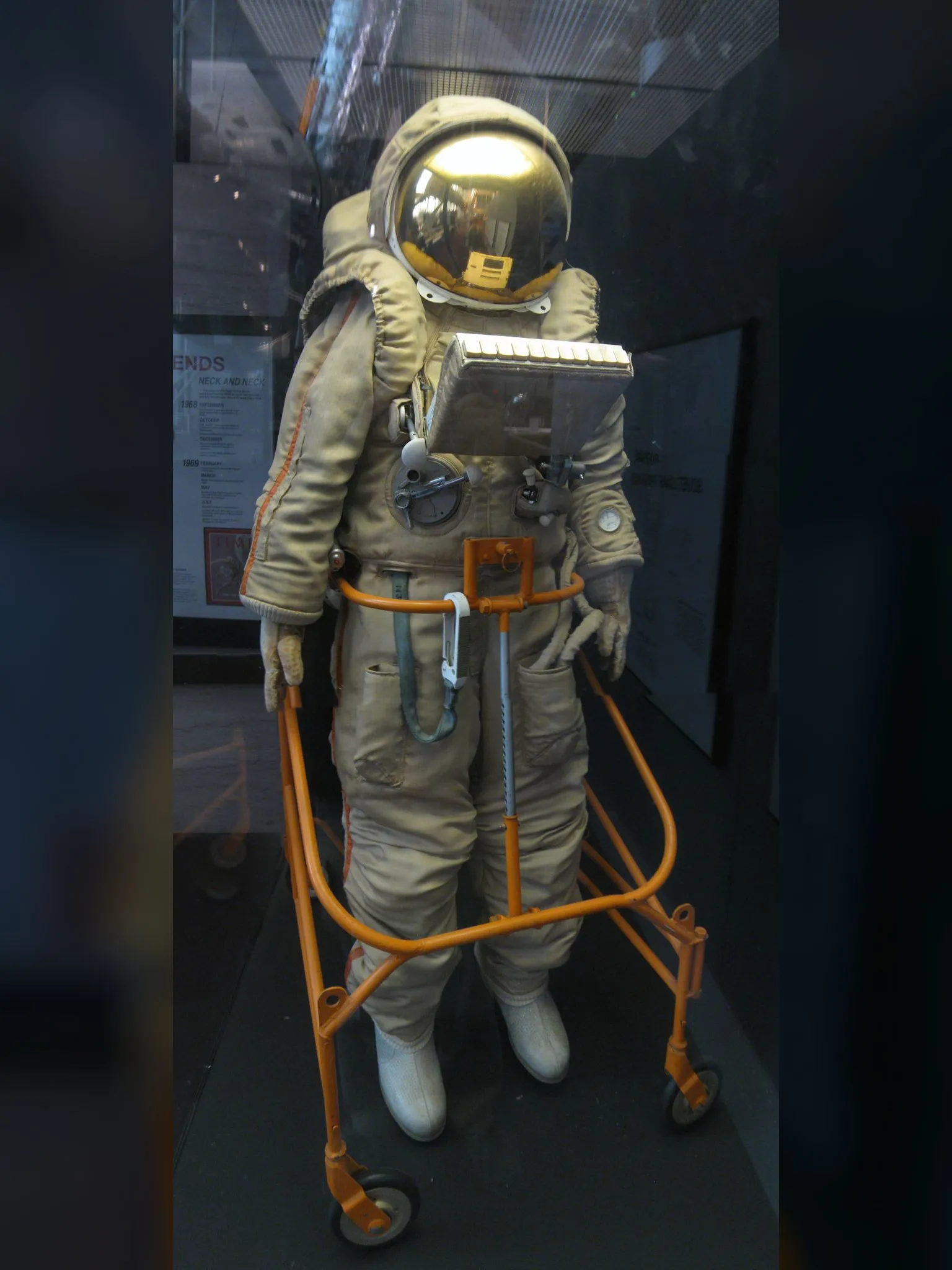
The Krechet-94 ('Gyrfalcon') was the Soviet Union's lunar surface EVA suit, designed in parallel with the Apollo A7L to put a cosmonaut on the Moon. Under Chief Designer Gai Severin, Zvezda pioneered the world's first semi-rigid spacesuit architecture: a rigid aluminum alloy upper torso ('cuirass') with soft fabric arms and legs. Most revolutionary was its rear-hatch entry design — cosmonauts stepped in through an integrated backpack door, eliminating the need for a second person to help with donning. This design was critical for the single-cosmonaut lunar landing profile of the Soviet L3 mission. The Krechet-94 was fully built and flight-qualified but never flew; one unit is preserved at the Smithsonian National Air and Space Museum.
Key Features
- 1World's first semi-rigid spacesuit: rigid aluminum alloy upper torso + soft fabric limbs
- 2Rear-entry design through integrated backpack hatch — single cosmonaut can don without assistance
- 3Fixed, integrated helmet (no separate neck ring) for structural integrity
- 4Self-contained Caspian life support backpack: O₂, CO₂ scrubbing, thermal control
- 5Designed for −180°C to +130°C lunar surface temperatures
- 610-hour EVA duration per sortie; 48-hour total suit lifetime
Historic Missions
1967
Soviet Lunar Program (unflown)
Built and flight-qualified but never deployed; N1 rocket failures ended Soviet lunar ambitions
Engineering & Research Highlights
- ◆Invented the semi-rigid 'hard upper torso' architecture now used in NASA EMU and all modern EVA suits
- ◆Rear-entry hatch design became the template for all Orlan-series suits that followed
- ◆Demonstrated that a single operator could don a full EVA suit independently — vital for solo lunar surface EVAs