On Christmas Eve 1968, an estimated one billion people in 64 countries tuned in as three Americans circled the Moon. While the lunar sunrise crept across a grey horizon, Bill Anders began to read: in the beginning, God created the heaven and the earth. Jim Lovell and Frank Borman carried the verses on as the camera showed a desolate surface sliding past the window. It was the most watched broadcast in history to that point, sent home by the first human beings ever to leave their planet.
02 / 04
Four months earlier, Apollo 8 had been a different mission entirely. The lunar module was running late, and intelligence suggested a Soviet Zond spacecraft might loop the Moon first with a cosmonaut aboard. In August 1968, NASA managers made one of the boldest calls of the space age: send the command module alone, all the way to the Moon, on the first crewed flight of the Saturn V. The crew launched on 21 December 1968, and three days later fired their engine behind the Moon, out of all contact with Earth, to drop into lunar orbit.
03 / 04
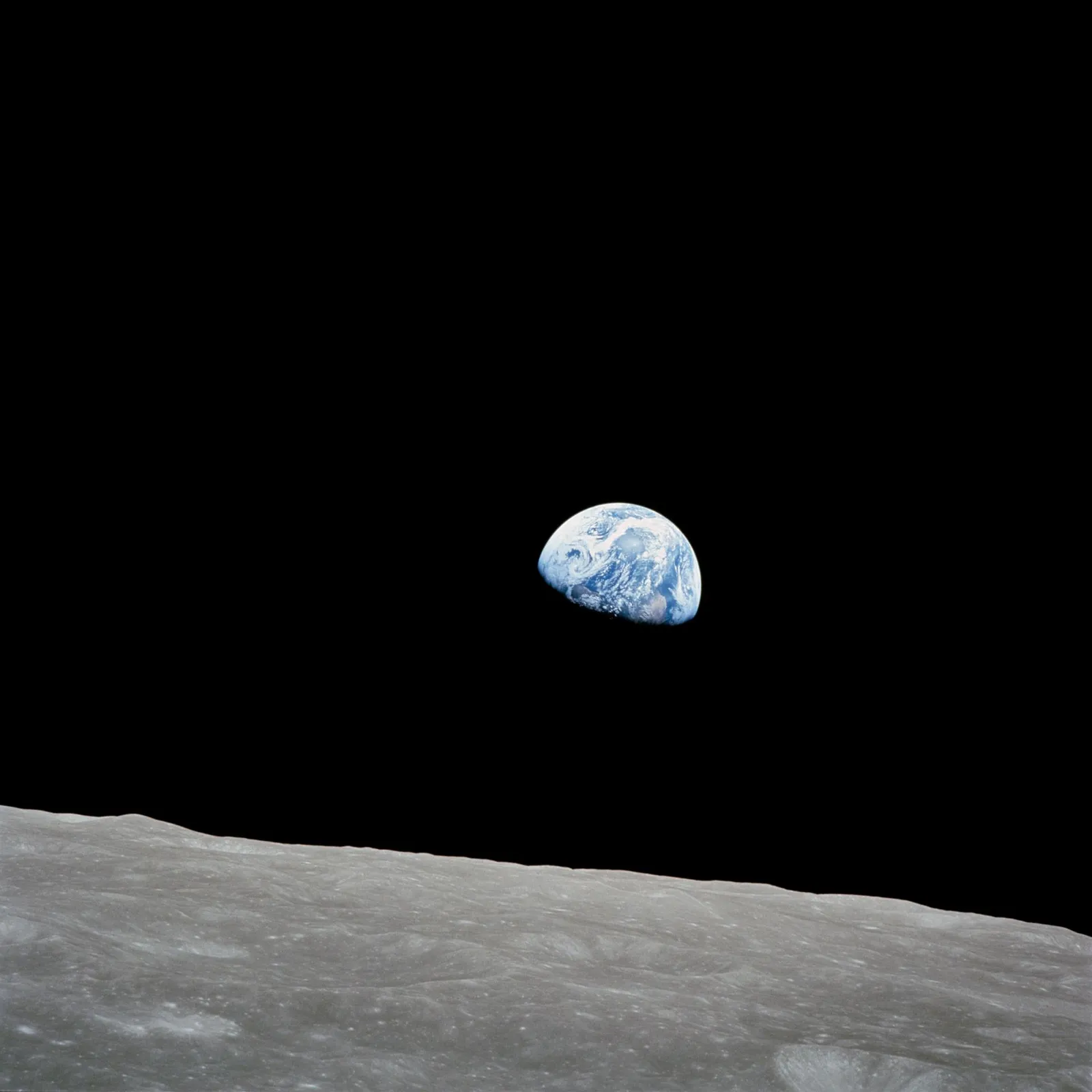
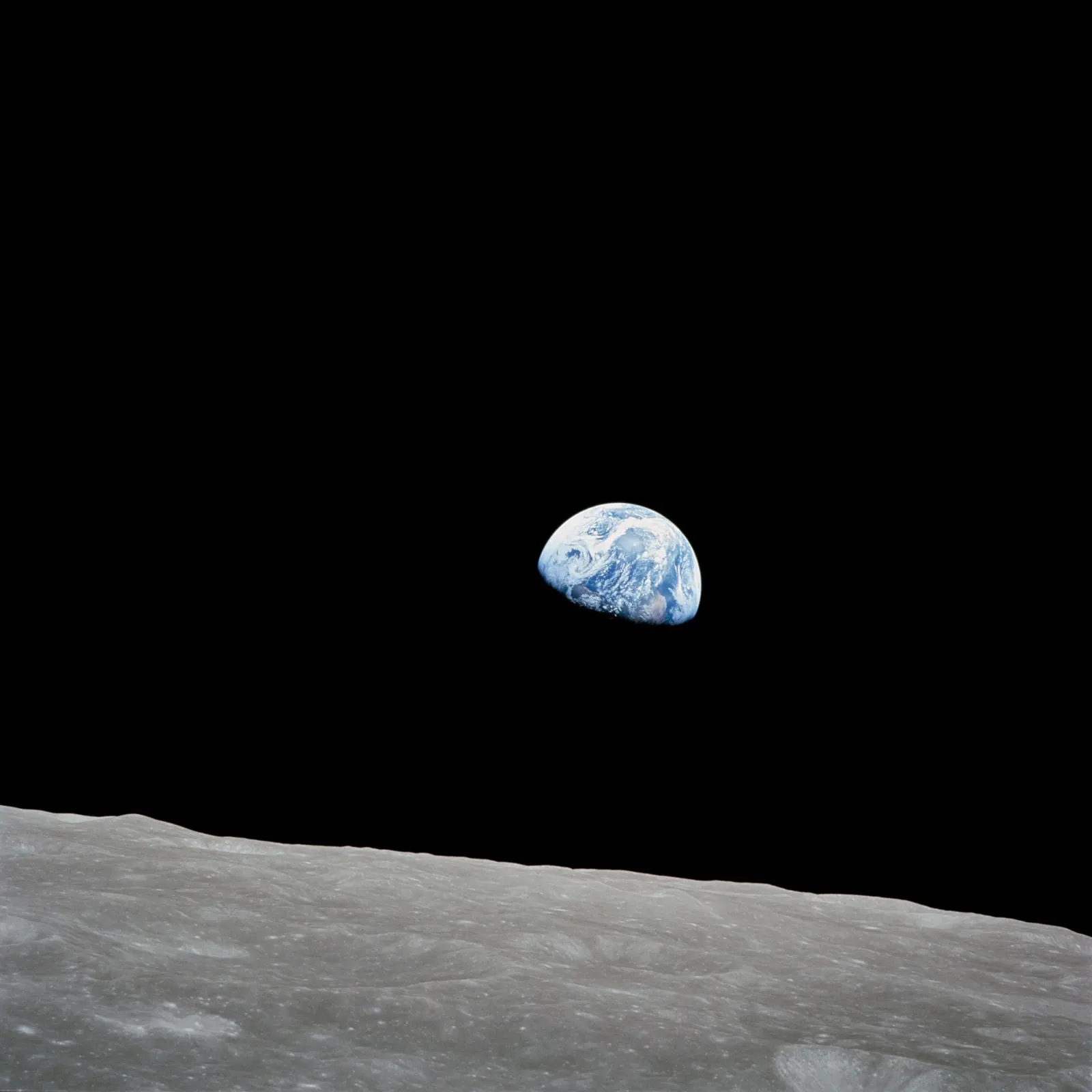
For twenty hours they circled ten times, photographing landing sites for the missions to come. On the fourth orbit, Borman rolled the spacecraft and the Earth rose over the lunar horizon, blue and impossibly alive above a dead landscape. Anders grabbed a camera loaded with color film while Borman joked that the picture wasn't on the flight plan. The frame he caught, Earthrise, became one of the most reproduced photographs ever made and the unofficial emblem of the environmental movement.
04 / 04
On Christmas morning, the engine burn that would bring them home had to work on the first try, behind the Moon and beyond all help. When Apollo 8 swung back into radio contact, Lovell announced that mission control should be informed: there is a Santa Claus. The capsule splashed down in the Pacific on 27 December, met by the USS Yorktown. At the end of a year of assassinations, riots, and war, a stranger's telegram to Borman said it best: thank you Apollo 8, you saved 1968.
“
And from the crew of Apollo 8, we close with good night, good luck, a Merry Christmas, and God bless all of you, all of you on the good Earth.
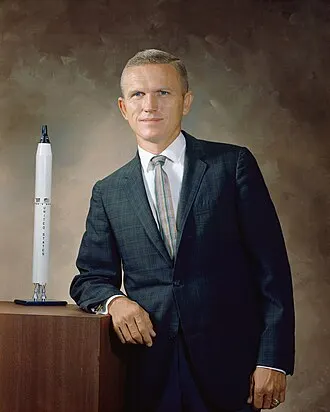
Frank Borman · Apollo 8 commander, closing the Christmas Eve broadcast from lunar orbit
By the numbers
Launch
21 Dec 1968
Splashdown
27 Dec 1968
Lunar orbits
10
Time in lunar orbit
approx. 20 hr
Crew
3
First crewed flight of
Saturn V
Why it mattered
Apollo 8 was the moment humanity left home. It proved the Saturn V, deep-space navigation, lunar orbit insertion, and high-speed reentry, clearing every obstacle on the road to the landing seven months later, and it effectively decided the race to the Moon: the Soviet circumlunar programme never flew a crew. Its cultural shock ran just as deep. Earthrise reframed the Earth as a fragile oasis, helping ignite the environmental movement and the first Earth Day sixteen months on. A mission flown to win a race ended up changing how its species saw itself.
▸The lunar mission was approved only in August 1968, after the lunar module fell behind schedule and intelligence hinted a Soviet Zond might carry a cosmonaut around the Moon first.
▸Earthrise was not in the flight plan: Anders grabbed a magazine of color film while Borman joked that the photograph 'wasn't scheduled.'
▸The Christmas Eve Genesis broadcast reached an estimated one billion people in 64 countries, the largest audience of any transmission to that date.
▸Emerging from behind the Moon after the burn for home, Lovell radioed mission control: 'Please be informed, there is a Santa Claus.'
▸Among the congratulations afterwards, an anonymous telegram to Frank Borman read simply: 'Thank you Apollo 8. You saved 1968.'