Full mission transcript
Every chapter of Apollo 8, in sequence.
T−39 days
The Gamble
November 12, 1968 · 00:00 UTC
When lunar module LM-3 arrived at Kennedy Space Center in June 1968, engineers logged more than a hundred significant defects. There would be no lunar module ready to fly that year — and with it, NASA's carefully sequenced path to the Moon stalled. In early August, George Low proposed something audacious: strip the mission down to the command and service module alone, and send it not into Earth orbit but all the way to the Moon. The decision came together in a meeting on August 9; the flight was confirmed after Apollo 7 proved the spacecraft in October, and announced publicly on November 12 — thirty-nine days before launch.
The urgency was not invented. That September, the Soviet Zond 5 had looped around the Moon carrying living creatures — tortoises among them — and returned them to Earth. Borman later remembered Deke Slayton citing CIA intelligence that a Soviet crewed circumlunar attempt might come before the end of the year. If the first voice from the vicinity of the Moon was going to speak English, Apollo 8 had to go in December.
The rocket was the gamble's sharpest edge. The Saturn V had flown exactly twice, never with a crew — and the second flight, Apollo 6 in April, had been near-disastrous: violent pogo oscillations, two second-stage engines shut down early, and a third stage that failed to restart in orbit. That restart was the exact burn Apollo 8's lives would depend on. Engineers traced the faults, fitted pogo suppression and rigid fuel-line bends, and certified the fixes — on paper. Borman, Lovell, and Anders would test them in person.
T+00:00:00
You Are Go for TLI
December 21, 1968 · 12:51 UTC
At 7:51 a.m. Eastern Standard Time on December 21, 1968, the first crewed Saturn V — 363 feet tall, throwing some 7.6 million pounds of thrust — lifted off from Launch Complex 39A. Over the public address loop, Jack King called the ignition sequence and the liftoff; the tower was clear in thirteen seconds. One second into the flight, Borman keyed his mic: 'Lift off. The clock is running.'
The fixes held. The third Saturn V ever flown carried its first crew into a 114-by-118-mile parking orbit, and for two and a half hours Borman, Lovell, and Anders checked every system on the only machine that could take them home. Then, at two hours and twenty-seven minutes into the mission, CapCom Michael Collins read up the clearance that no human had ever been given — permission to leave Earth orbit for another world.
Twenty-three minutes later the S-IVB third stage — the same stage that had refused to relight on Apollo 6 — lit on time and burned for five minutes and seventeen seconds, pushing the spacecraft from about 17,400 to 24,226 miles per hour. They were the first humans to leave low Earth orbit, falling outward along a quarter-million-mile arc toward a body they could not yet see out their windows.
Air-to-ground · NASA transcript - T+02:27:22 Collins (CAPCOM): Apollo 8. You are Go for TLI. Over.
- T+02:27:27 Borman: Roger. We understand; we are Go for TLI.
- T+02:50:13 Collins (CAPCOM): Apollo 8, coming up on 20 seconds to ignition. Mark it, and you're looking very good.
- T+02:50:40 Lovell: Ignition.
- T+02:55:57 Borman: Okay. We got SECO right on the money.
T+055:40:00
Into the Moon's Sphere
December 23, 1968 · 20:31 UTC
The crossing was not gentle on the commander. About eighteen hours out, after a restless sleep aided by a Seconal tablet, Borman vomited twice and suffered diarrhea. Rather than broadcast it on the open loop, the crew recorded a report onto the data storage tape — in effect a private medical channel to Houston. The surgeons concluded it was a twenty-four-hour flu or a reaction to the Seconal, and the mission went on. In retrospect, it was the first recorded case of space adaptation syndrome, the motion sickness that would touch many crews after them.
Out the windows hung something no human had ever seen: the Earth as a complete disk, oceans and weather and the whole Western Hemisphere suspended in black. Anders photographed it on December 22 — small enough, Lovell observed, to hide behind an outstretched thumb.
At fifty-five hours and forty minutes, about 325,000 kilometres from home, Apollo 8 crossed the equigravisphere — the invisible boundary where the Moon's gravity took over from Earth's. For the first time, human beings had passed into the gravitational keeping of another world. Mattingly marked the moment from Houston with a dry 'welcome to the Moon's sphere'; Borman, mishearing 'the Moon's fair?', got the clarification that they were now 'in the influence' — and fired back the line that made the control room laugh.
T+069:08:20
The Longest Four Minutes
December 24, 1968 · 09:59 UTC
On Christmas Eve morning, Apollo 8 swung behind the Moon and the radio went silent — precisely on schedule, which was itself a triumph of navigation. What came next had to happen alone. The service propulsion engine lit at 09:59:20 UTC and burned for four minutes and seven seconds, shedding 2,994 feet per second to drop the spacecraft into a 193.3-by-69.5-mile lunar orbit. If the burn ran long, they would descend toward the mountains of the far side; if it failed, they would whip around the Moon and head home without ever having arrived. Lovell later called it the longest four minutes he ever spent.
In Houston, Mission Control could only wait — roughly thirty-five minutes of silence between loss of signal and the moment the spacecraft, if all had gone well, would emerge around the limb. When the signal came through almost exactly on time, CapCom Jerry Carr made the contact and the public affairs officer let the room's relief onto the loop: 'We've got it! We've got it! Apollo 8 now in lunar orbit! There's a cheer in this room!'
Sixty-nine miles below rolled a landscape no human eyes had ever taken in directly — the far side of the Moon, churned, colorless, ancient. The crew reported what they saw like field geologists, in the flat, careful language of men taking notes. Three men, a quarter of a million miles from home, were in orbit around another world.
Air-to-ground · NASA transcript - T+069:32:02 Carr (CAPCOM): Apollo 8, Houston. Over.
- T+069:33:52 Lovell: Go ahead, Houston, this is Apollo 8. Burn complete. Our orbit 160.9 by 60.5; 169.1 by 60.5.
- T+069:34:07 Carr (CAPCOM): Apollo 8, this is Houston. Roger, 169.1 by 60.5. Good to hear your voice.
T+075:47:30
Earthrise
December 24, 1968 · 16:38 UTC
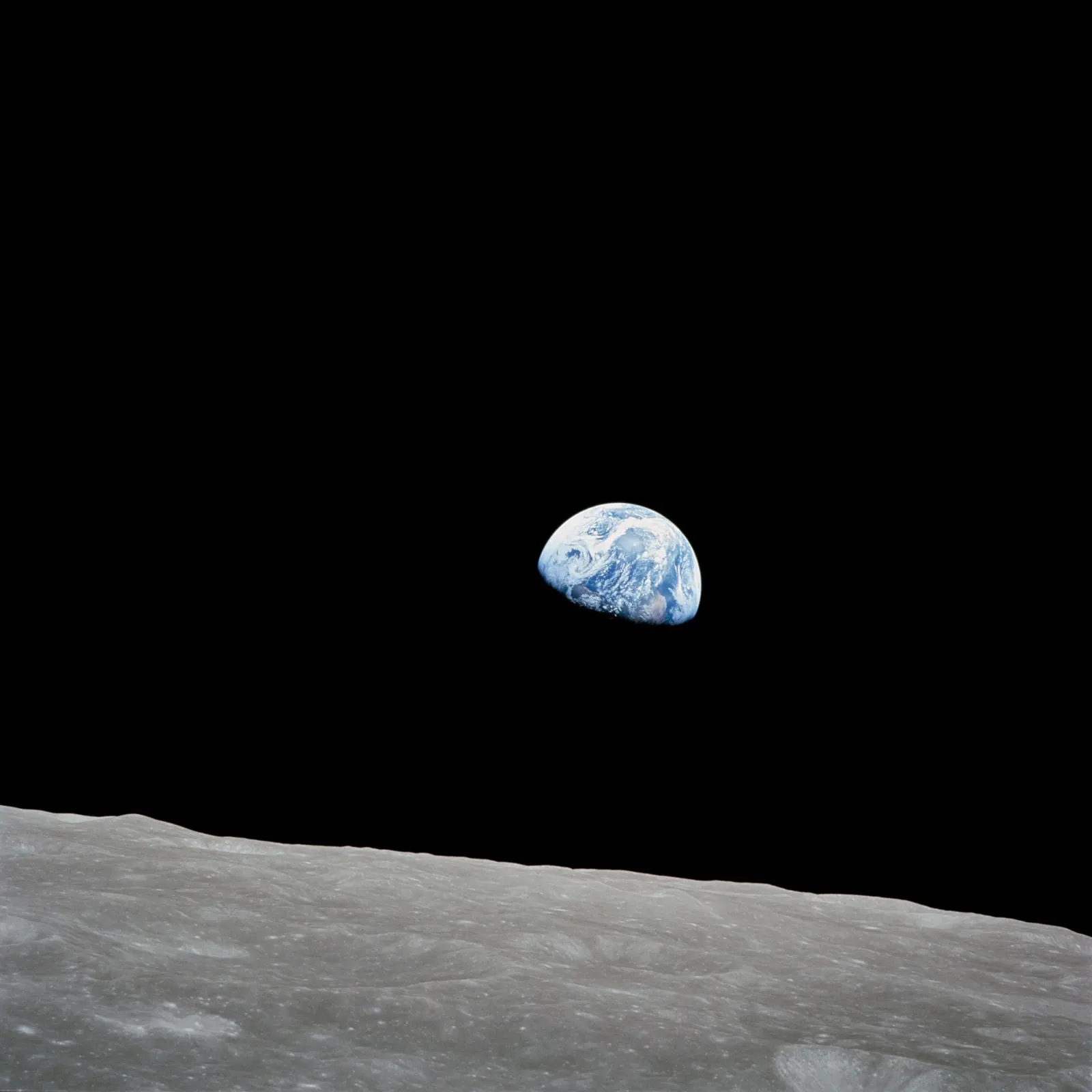
On the fourth orbit, Borman was rolling the spacecraft to a new attitude when the Earth came out from behind the lunar horizon — visible first, as it happened, only through Anders' side window. The onboard recorder caught what followed: Anders' astonished exclamation, Borman's deadpan 'Hey, don't take that, it's not scheduled,' and then a frantic scramble as Anders called for color film and Lovell dug for a magazine of Ektachrome. Anders caught a black-and-white frame first, then — through a rendezvous window, with a 250mm lens at 1/250th of a second and f/11 — the color photograph the world would come to know as Earthrise.
For decades the question of who took it stayed muddled: the 1968 transcript misattributed the exclamation to Borman, and Borman's memoir claimed the photograph itself. The matter was settled by NASA's Scientific Visualization Studio, which used Lunar Reconnaissance Orbiter terrain data and the documented roll maneuver to reconstruct the moment frame by frame: the Earth appeared only in Anders' window, and Anders took all three Earthrise photographs — the black-and-white and both color frames — while Borman flew the spacecraft.
They were the first humans to witness an earthrise — a robotic spacecraft, Lunar Orbiter 1, had photographed one in 1966, but no eyes had ever seen it. The print the world knows is also rotated: Anders shot the frame the way he saw it from equatorial lunar orbit, with the lunar horizon running vertically and the Earth emerging from behind it sideways. Anders later reflected that they had come all that way to explore the Moon, and the most important thing they discovered was the Earth.
Onboard recorder · NASA transcript - T+075:47:30 Anders: Oh, my God! Look at that picture over there! Here's the Earth coming up. Wow, is that pretty!
- T+075:47:37 Borman: Hey, don't take that, it's not scheduled.
- T+075:47:46 Anders: Hand me that roll of color quick, will you...
- T+075:47:48 Lovell: Oh man, that's great!
T+086:06:40
In the Beginning
December 25, 1968 · 02:57 UTC
NASA had told Borman only that the Christmas Eve telecast would reach the largest audience that had ever listened to a human voice, and that he should 'say something appropriate.' The answer came through journalist Joe Laitin — whose wife Christine, a veteran of the French Resistance, suggested the opening of Genesis. The first ten verses were typed onto fireproof paper and bound into the flight plan.
On the ninth lunar orbit, the broadcast went out at 9:33 p.m. EST on Christmas Eve in the United States — by Universal Time it was already 2:33 a.m. on Christmas Day. Near the end, as the spacecraft tracked toward the lunar sunrise, Anders began: 'We are now approaching lunar sunrise, and for all the people back on Earth, the crew of Apollo 8 has a message that we would like to send to you.' He read the first four verses of Genesis; Lovell took verses five through eight; Borman read the ninth and tenth, then closed the transmission with the sign-off the world still remembers. The reading itself lasted about ninety-one seconds.
An estimated one billion people in sixty-four countries — roughly one in four humans then alive — heard some part of it. Not everyone approved: atheist activist Madalyn Murray O'Hair sued the government over the reading, and the case was dismissed in the courts. In Mission Control, the flight controllers simply watched the gray Moon slide past on the big screen, listening to three voices reading Genesis from sixty-nine miles above it.
Air-to-ground · NASA transcript - T+086:06:40 Anders: We are now approaching lunar sunrise, and for all the people back on Earth, the crew of Apollo 8 has a message that we would like to send to you.
- T+086:06:56 Anders: In the beginning, God created the Heaven and the Earth. And the Earth was without form and void...
- T+086:08:07 Borman: And from the crew of Apollo 8, we close with good night, good luck, a Merry Christmas and God bless all of you - all of you on the good Earth.
T+089:33:38
There Is a Santa Claus
December 25, 1968 · 06:24 UTC
After ten orbits in about twenty hours, one burn stood between the crew and home — and like lunar orbit insertion, trans-Earth injection had to happen behind the Moon, out of contact, in the small hours of Christmas morning Houston time. If the single service propulsion engine failed to light, Apollo 8 would stay in lunar orbit until its oxygen ran out. There was no rescue to send.
The engine lit at 06:10:16 UTC and burned for three minutes and twenty-three seconds, adding 3,522.8 feet per second against a target of 3,522.3 — Apollo-era precision, measured in tenths of a foot per second a quarter of a million miles from home. Mission Control endured one more silent wait. Then, right on time, Lovell's voice came around the limb of the Moon: 'Houston, Apollo 8. Over.' CapCom Ken Mattingly answered loud and clear, and Lovell delivered the line that made Christmas in Mission Control — answered on the loop with 'That's affirmative' and Mattingly's 'You're the best ones to know.'
Fifty-seven hours and forty-one minutes of coasting lay ahead. Out the windows, the Earth grew slowly from a distant half-disk — the way home, finally getting closer.
Air-to-ground · NASA transcript - T+089:33:38 Mattingly (CAPCOM): Apollo 8, Houston.
- T+089:34:16 Lovell: Houston, Apollo 8. Over.
- T+089:34:19 Mattingly (CAPCOM): Hello, Apollo 8. Loud and clear.
- T+089:34:25 Lovell: Roger. Please be informed there is a Santa Claus.
- T+089:34:30 Houston (unidentified): That's affirmative.
- T+089:34:32 Mattingly (CAPCOM): You're the best ones to know.
T+147:00:42
You Saved 1968
December 27, 1968 · 15:51 UTC
Apollo 8 hit the atmosphere in pre-dawn darkness over the Pacific at 24,696 miles per hour — faster than any humans had ever flown. 'This is a real fireball,' Borman reported as the heat shield burned through reentry, the deceleration peaking at 6.8 g. At 15:51:42 UTC on December 27 — six days, three hours, and forty-two seconds after liftoff — the capsule splashed down about a thousand miles southwest of Hawaii, with the recovery carrier USS Yorktown just 5,100 yards away. The spacecraft initially bobbed apex-down in the swells until its flotation bags righted it, and recovery rules held the swimmers until first light; the crew came aboard the Yorktown about ninety minutes after splashdown.
They returned to a country that had lived through assassinations, riots, and a grinding war — and that, for a week at the end of it, had looked up. Time named Borman, Lovell, and Anders its Men of the Year for 1968. Among the messages that poured in, Borman always remembered a telegram from a stranger — a single line that told him what the flight had meant.
As an engineering mission, Apollo 8 proved everything but the landing itself: lunar navigation, deep-space communications, the insertion and escape burns, reentry at lunar-return speed. Seven months later its backup commander, Neil Armstrong, walked on the Moon. And the photograph Anders carried home outlived the program — Galen Rowell called Earthrise 'the most influential environmental photograph ever taken.' Borman died in 2023, Anders in 2024, and Lovell in 2025 — the first crew ever to leave for another world, the last to be able to tell it firsthand. The picture is still telling it.
Sources: NASA Apollo 8 Mission Page · Apollo Flight Journal — Apollo 8 · NASA SVS 4593 — Earthrise in 4K · Chariots for Apollo (NASA SP-4205) · Apollo 8 Audio Collection (Internet Archive)
The people who flew it
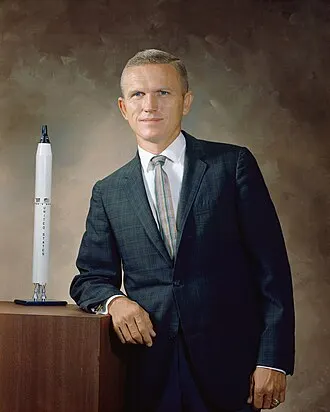
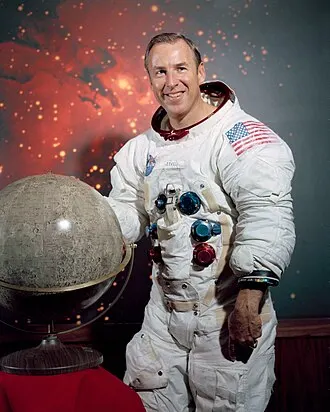
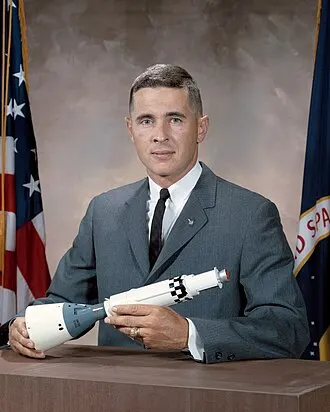
Meet the Apollo 8 crew
The people who lived these seconds. Open a profile to read who they were.
Answers come only from the Apollo 8 mission record above.
Continue your journey

The moment in history
Moment
Apollo 8 — first humans to orbit the Moon
The moment in history
The mission file
Mission
Apollo 8
The mission file
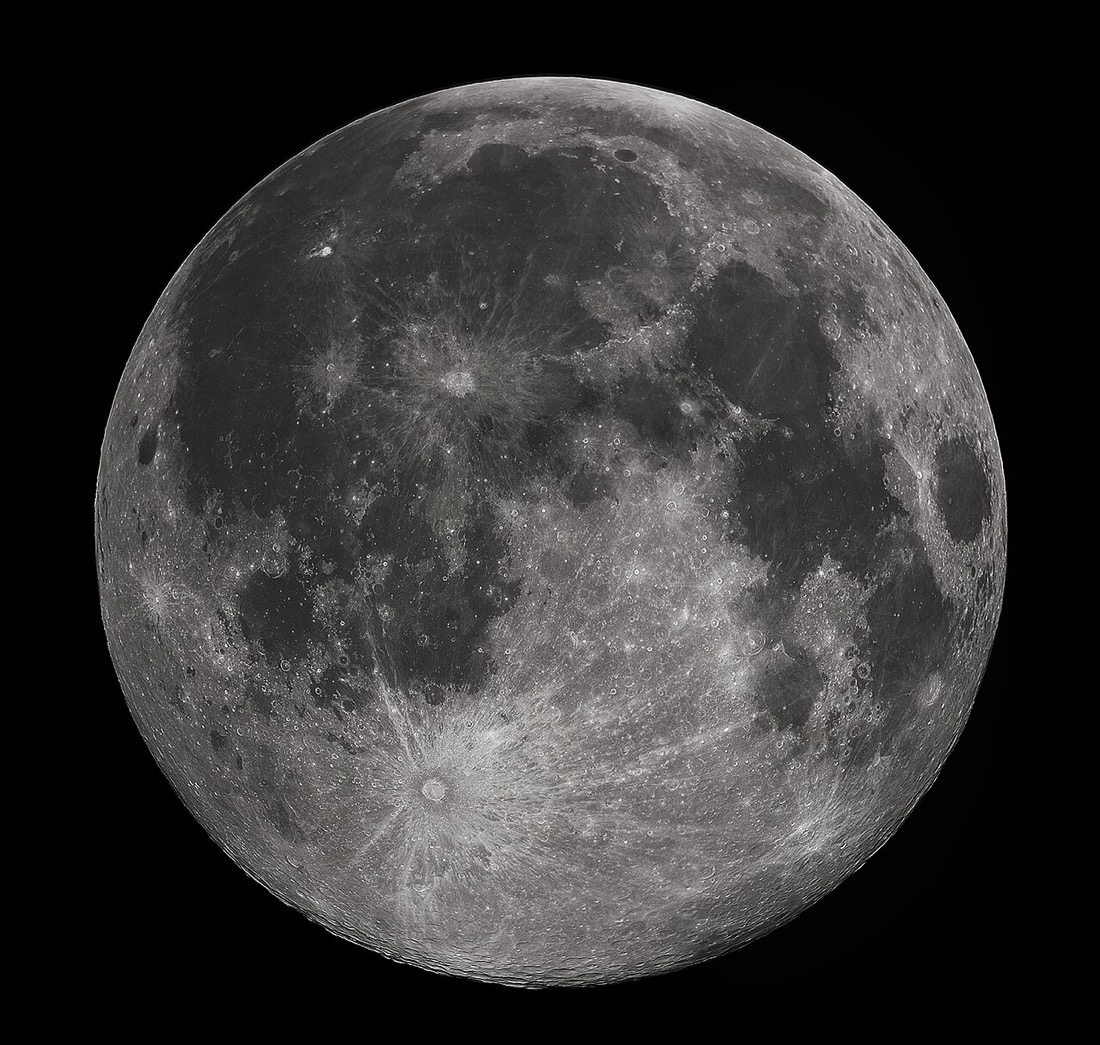
Experience it
World
The Moon
Experience it
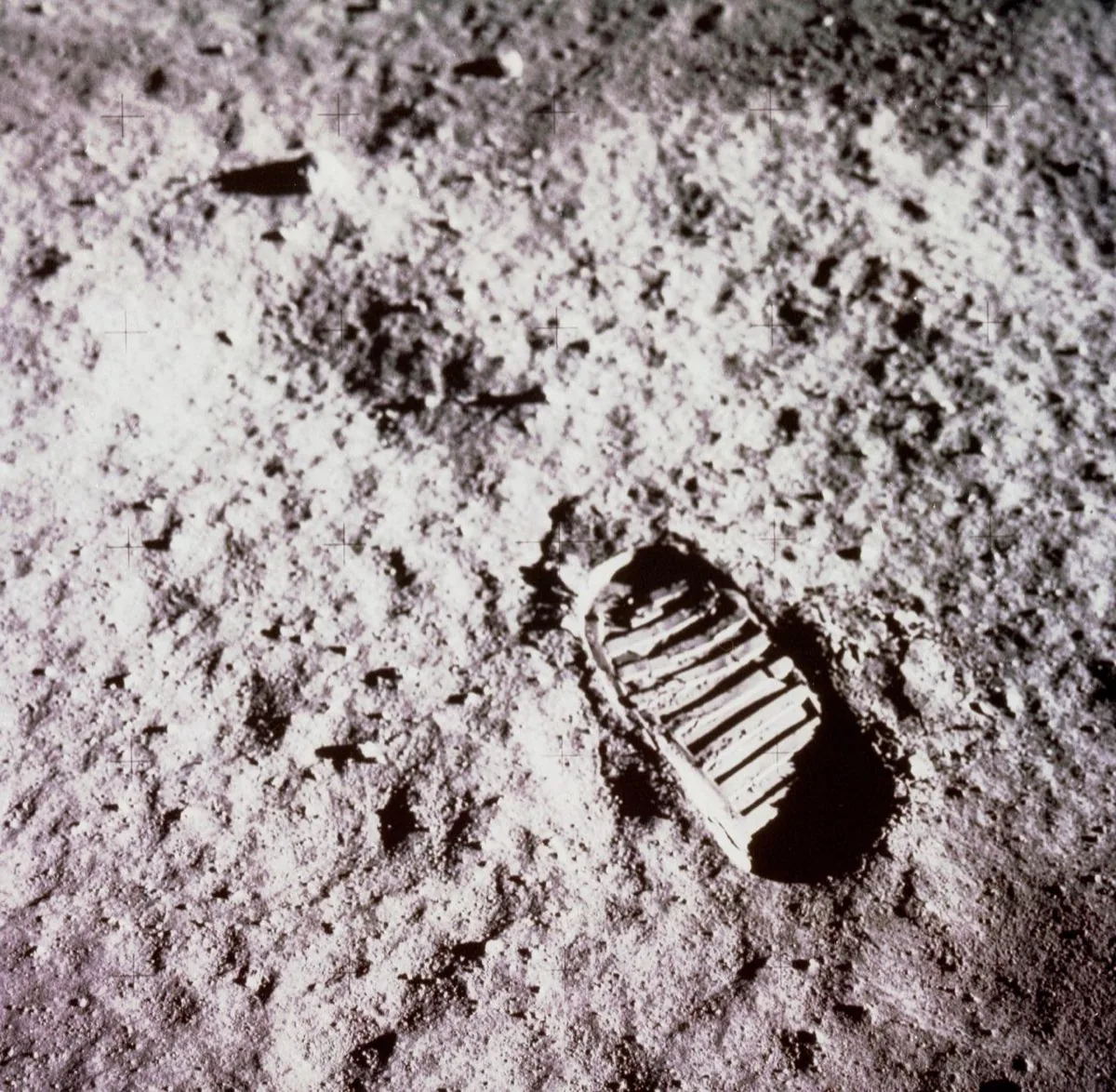
From the same era
Experience
Apollo 11
From the same era
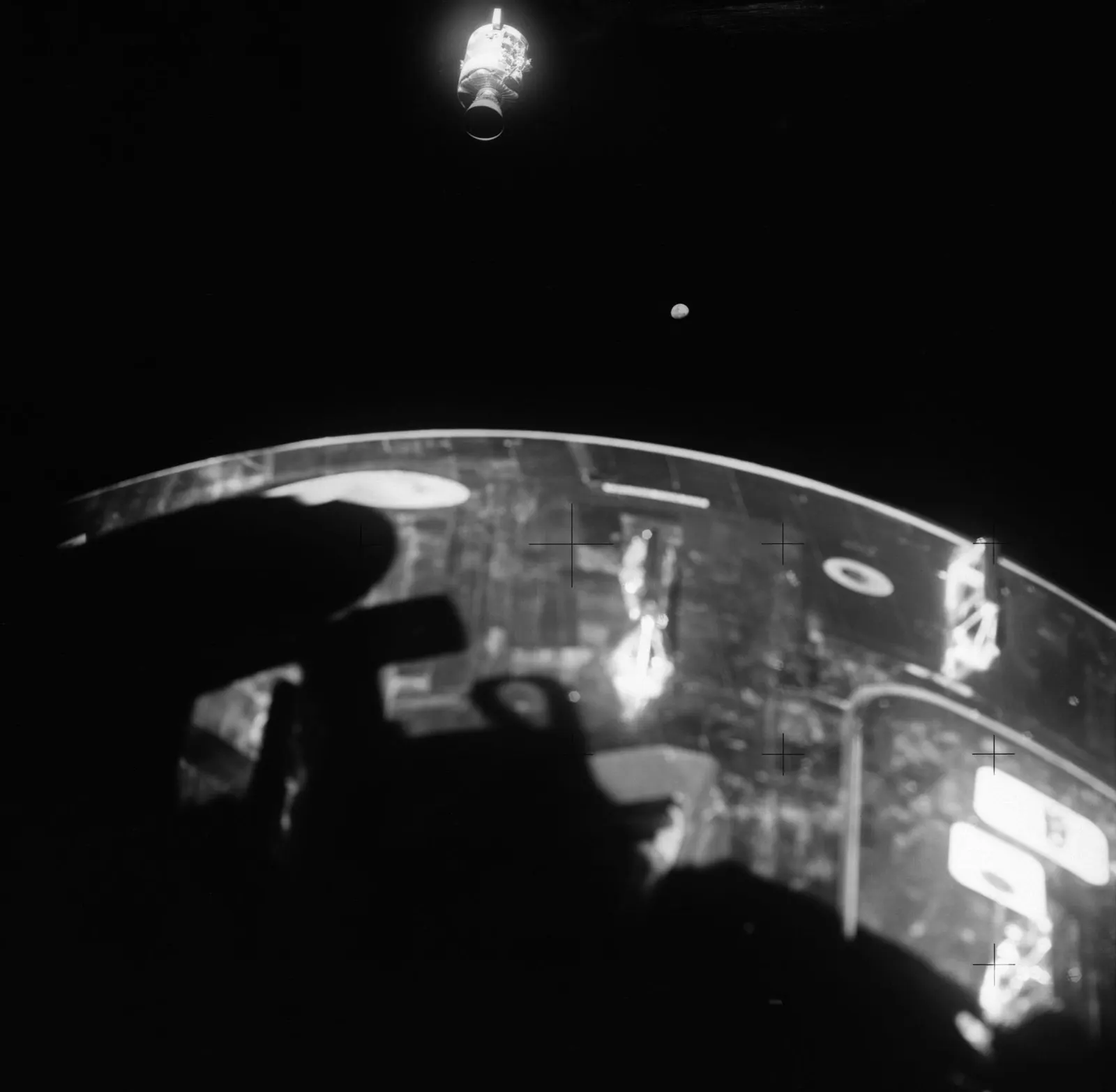
From the same era
Experience
Apollo 13
From the same era
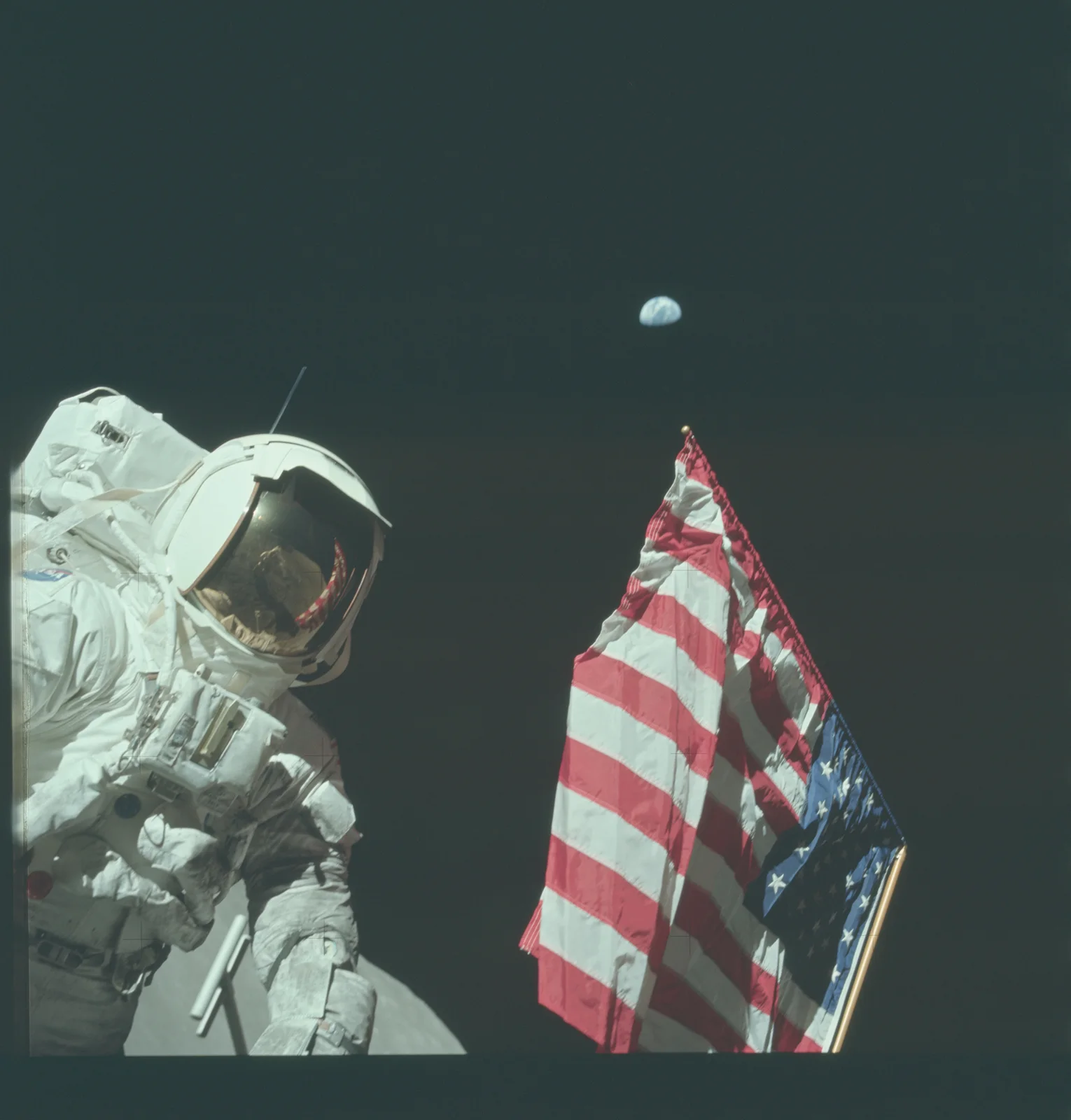
From the same era
Experience
Apollo 17
From the same era