Image: NASA / Bill Anders
Don't just read it — experience it
Relive Apollo 8, chapter by chapter
6 days · 8 chapters · Earthrise
Apollo 8
Mission Profile
| Launch date | 1968-12-21 |
|---|---|
| Launch site | Kennedy Space Center, Launch Complex 39A, Florida |
| Launch vehicle | Saturn V (SA-503) — first crewed Saturn V flight |
| Spacecraft | Command/Service Module CSM-103 (no LM; LTA-B mass simulator) |
| Target | Moon |
| Type | Crewed |
| End date | 1968-12-27 |
| Recovery | USS Yorktown, North Pacific Ocean (~8°08′N, 165°00′W) |
| Cost | Apollo program-wide; mission-specific cost not separately published |
| Mass | ~28,800 kg (CSM + LTA-B) |
| Duration | 6 days, 3 hours, 0 minutes, 42 seconds (~147 hours) |
| Partners | North American Aviation (CSM prime), Boeing (Saturn V first stage), Grumman (LTA-B) |
| Instruments | Two 70mm Hasselblad cameras, 16mm Maurer data acquisition camera, S-band communications |
Overview
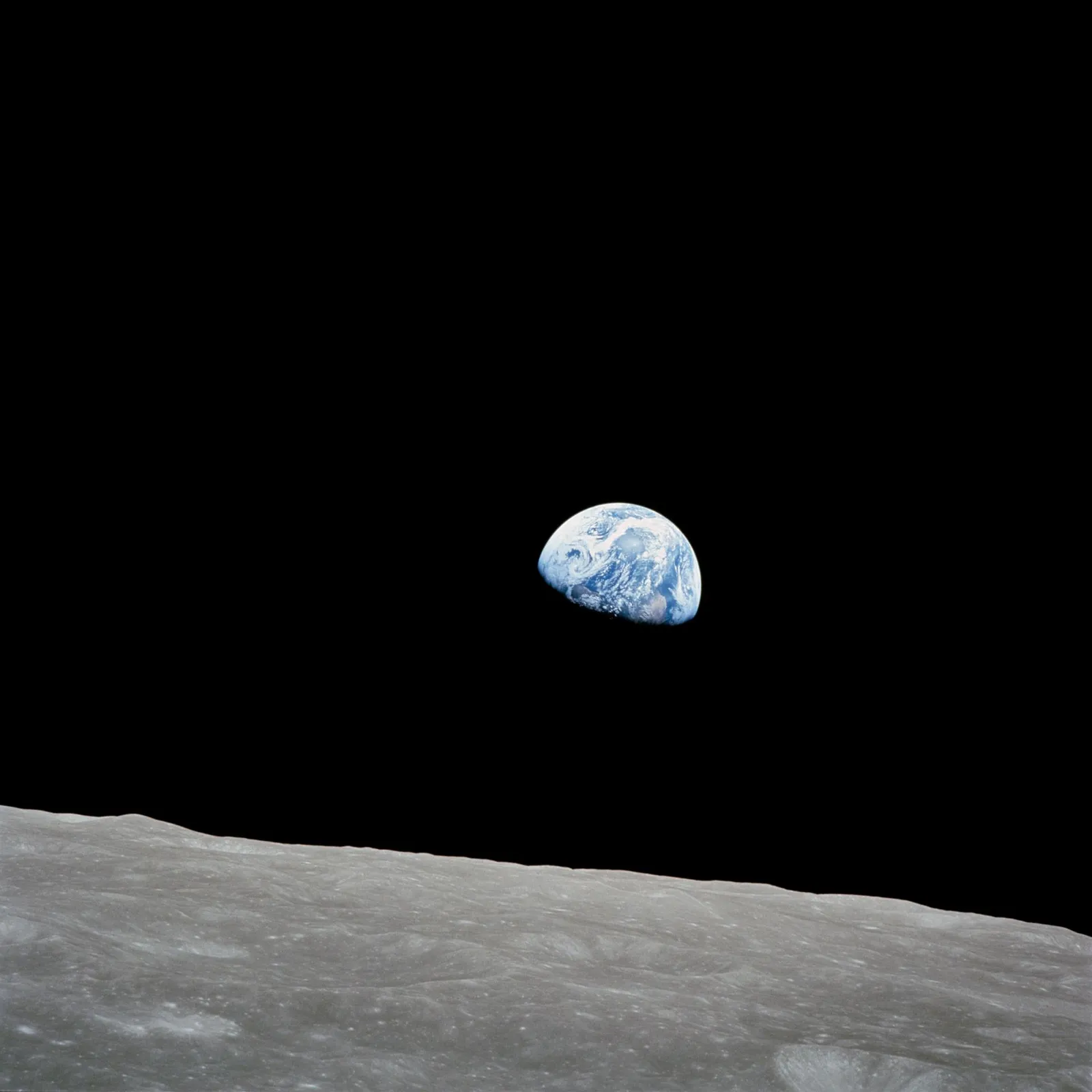
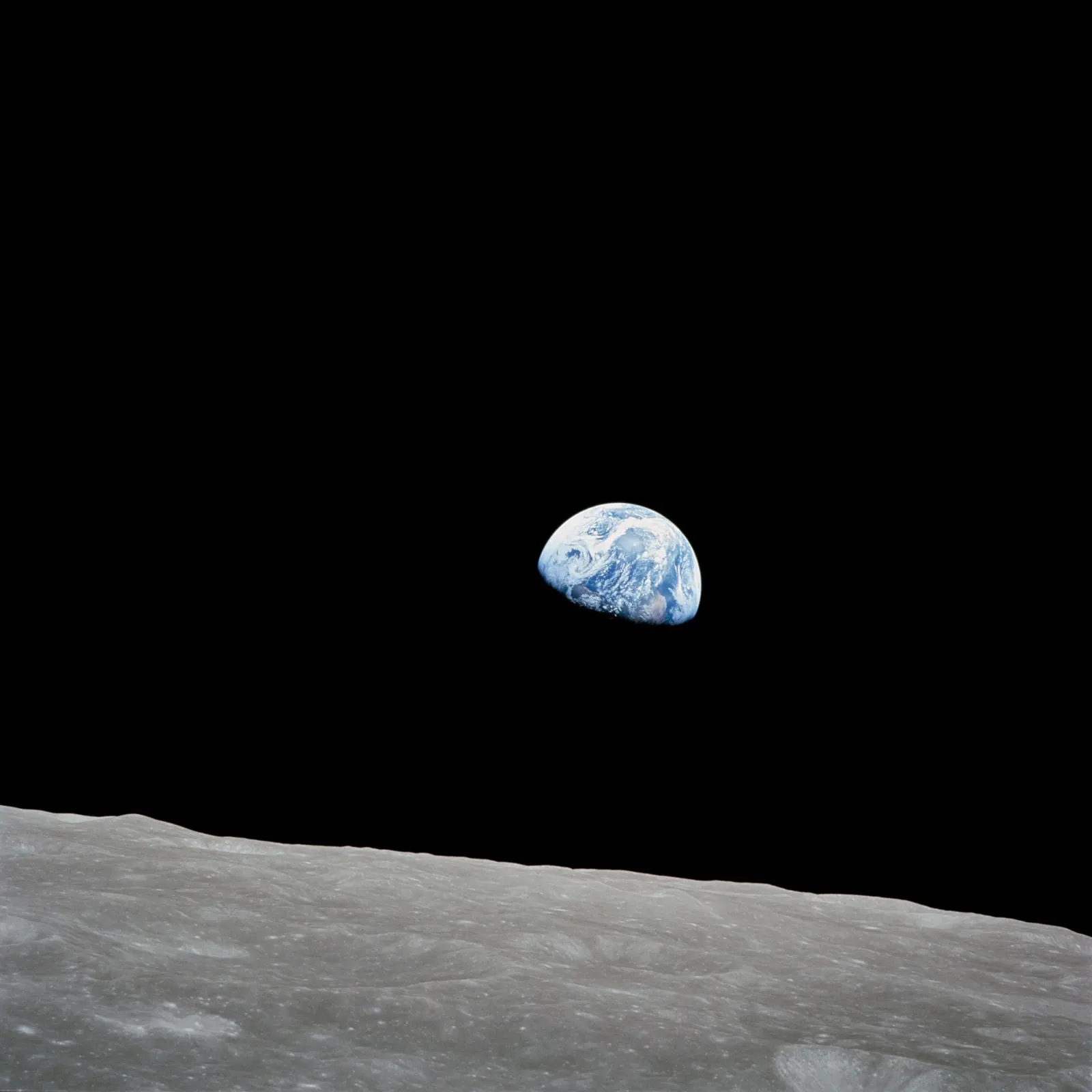
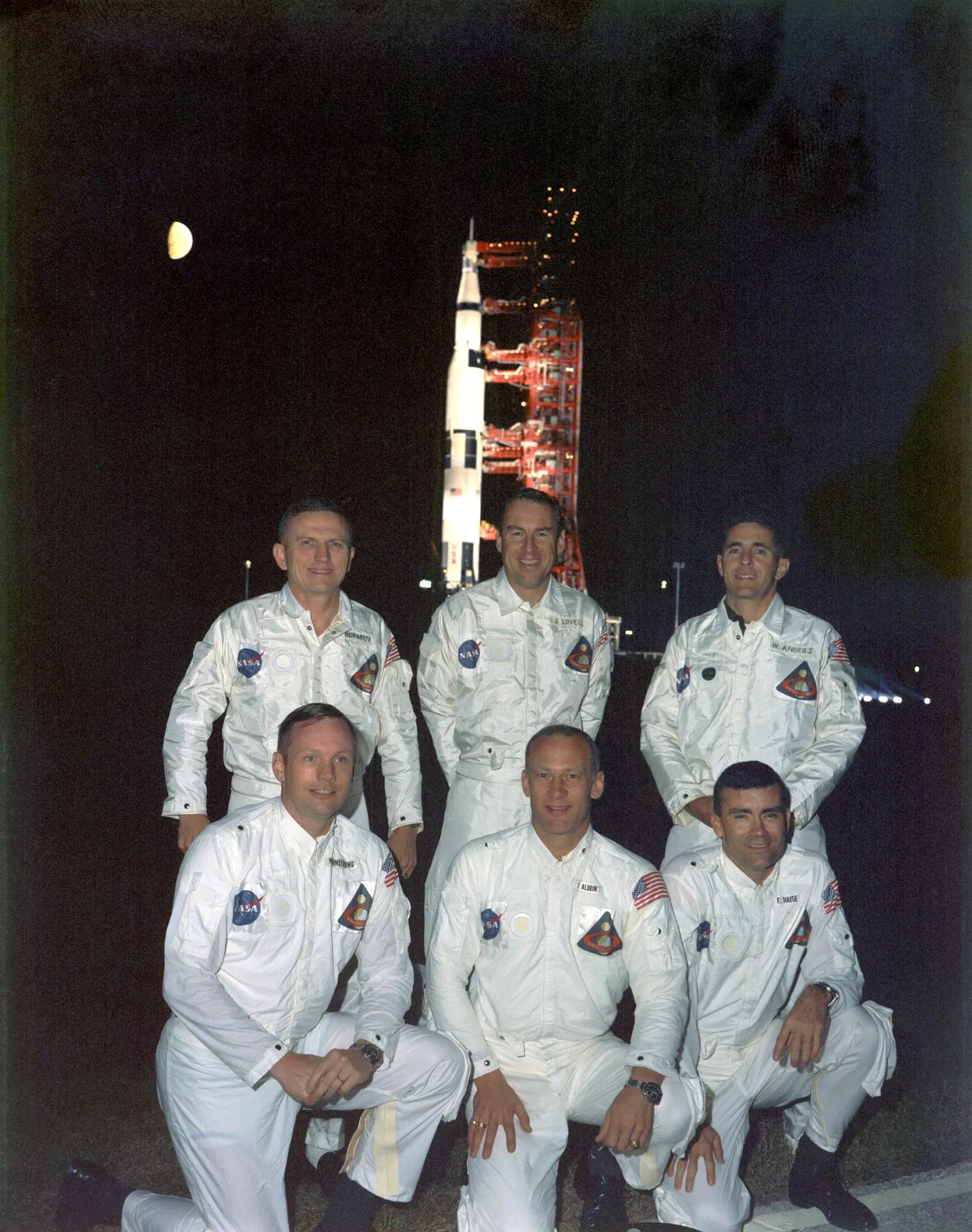
Apollo 8 was the first time humans left Earth's gravitational influence, the first crewed flight of the Saturn V, and the first time anyone orbited the Moon. Frank Borman, Jim Lovell, and Bill Anders launched on December 21, 1968 and reached lunar orbit on December 24 — Christmas Eve — completing 10 orbits over the next 20 hours. The mission produced two of the 20th century's most enduring cultural moments: Anders' "Earthrise" photograph (AS08-14-2383), which reframed humanity's view of Earth, and the crew's live Christmas Eve reading of Genesis Chapter 1 to roughly a billion television viewers — at the time the largest TV audience in history. The mission was originally planned as a low-Earth-orbit LM test; NASA reassigned it to a lunar-orbital flight in summer 1968 partly in response to intelligence suggesting Soviet Zond circumlunar plans.
Mission Objectives
First crewed lunar-orbit mission; demonstrate translunar/transearth injection
achieved
Verify CSM systems in cislunar/lunar-orbit environment
achieved
Photographic survey of lunar surface (especially Apollo landing sites)
achieved
Validate deep-space tracking and communications
achieved
Crew
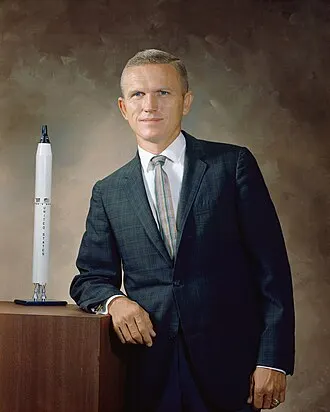
Frank F. Borman II
Commander
Also commanded Gemini 7. Headed Apollo 1 accident investigation. Died 2023.
James A. "Jim" Lovell Jr.
Command Module Pilot
Later commanded Apollo 13; one of only three humans to fly to the Moon twice.
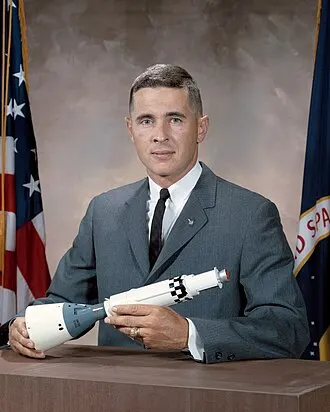
William A. "Bill" Anders
Lunar Module Pilot (no LM flown)
Captured the iconic "Earthrise" photograph. Died 2024 in a plane crash.
Vehicle Specifications
Command/Service Module
"Apollo 8"
- Mass
- ~28,800 kg
No Lunar Module — replaced with Lunar Module Test Article B (LTA-B) mass simulator.
Launch Vehicle (Saturn V SA-503)
- Mass
- ~2,800 t fully fueled
- Dimensions
- 111 m tall × 10.1 m diameter
First crewed Saturn V launch; 7.5 million pounds (33,000 kN) thrust at liftoff.
Key Milestones
1968-12-21
Launch from LC-39A at 12:51 UTC
1968-12-21
Trans-Lunar Injection burn — first humans to leave Earth orbit
1968-12-24
Lunar Orbit Insertion at ~09:59 UTC — first humans to orbit the Moon
1968-12-24
Anders captures Earthrise (AS08-14-2383)
1968-12-24
Christmas Eve Genesis reading broadcast to ~1 billion TV viewers
1968-12-25
Trans-Earth Injection burn after 10 lunar orbits
1968-12-27
Splashdown in North Pacific; recovered by USS Yorktown
Key Achievements
First humans to leave Earth orbit
First humans to orbit the Moon (10 orbits)
First humans to see the lunar far side directly with their own eyes
First crewed Saturn V flight
First photograph of the full Earth taken by a human — "Earthrise" (AS08-14-2383)
Photo Gallery
Legacy & Significance
Apollo 8's Earthrise photograph and Christmas Eve Genesis broadcast made the mission a cultural event as much as a technical one. The Earthrise image — described by photographer Galen Rowell as "the most influential environmental photograph ever taken" — is widely credited with helping launch the modern environmental movement. Lovell's transmission about "the vast loneliness up here of the Moon is awe-inspiring, and it makes you realize just what you have back there on Earth" became part of the iconic vocabulary of the Space Age.