NASA/Joel Kowsky, public domain, via Wikimedia Commons
The world that day
8.1 billion
People on Earth
3
Nations to launch a human
12
Humans to walk on the Moon
5,500
Known worlds beyond the Sun
01 / 04
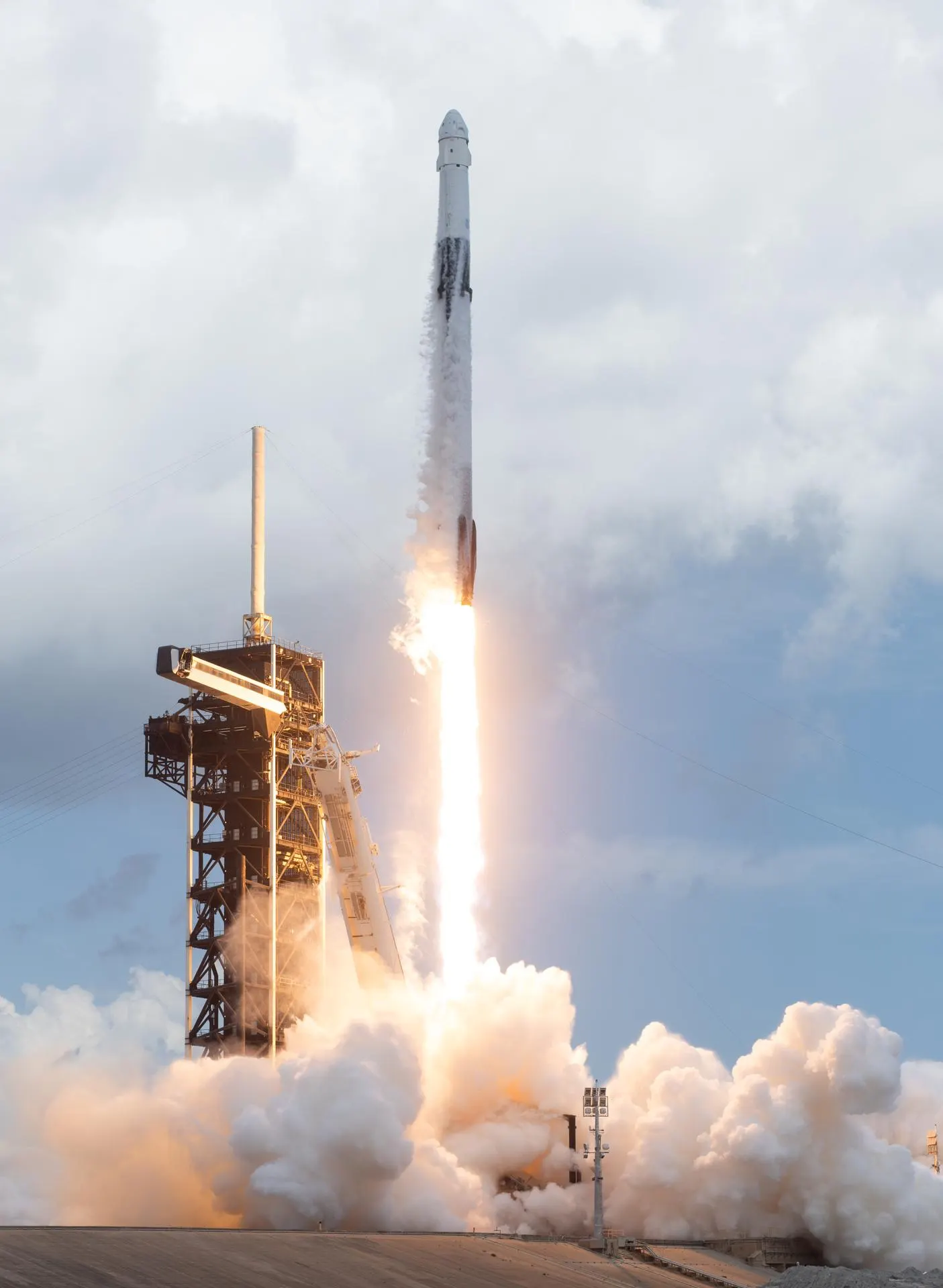
Florida's summer clouds nearly won twice. After weather scrubbed the first attempt on 31 July, Falcon 9 threaded a gap in the cumulus at 11:43 a.m. Eastern on 1 August 2025 and lifted Dragon Endeavour off pad 39A. The capsule riding uphill was an icon: the same Endeavour that carried Bob Behnken and Doug Hurley on Demo-2 in 2020, the flight that returned crewed launch to America, now making a record sixth trip to orbit.
02 / 04
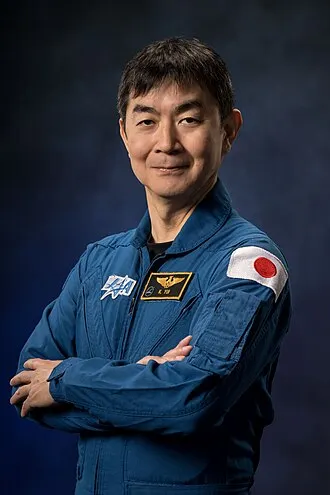
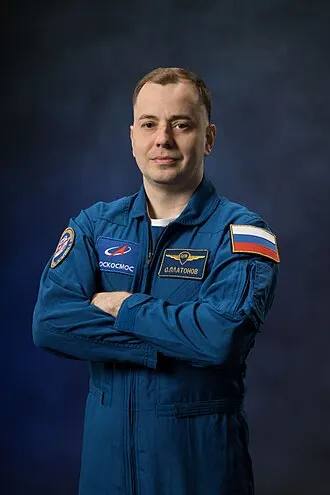
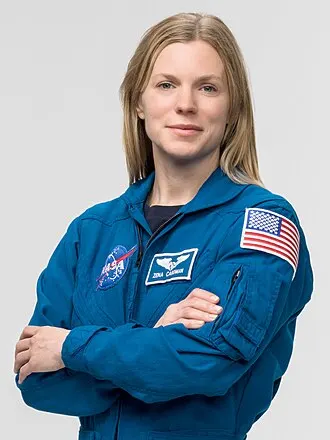
The four people inside carried their own histories. Commander Zena Cardman, a geobiologist who had worked in Antarctica, was finally flying after being pulled from Crew-9 a year earlier so the Starliner astronauts could ride home in her seat. Pilot Mike Fincke, on his fourth flight, had flown the final voyage of shuttle Endeavour in 2011 and now flew a Dragon of the same name. JAXA's Kimiya Yui returned for his second mission, and Roscosmos cosmonaut Oleg Platonov made his first, flying under the NASA-Roscosmos seat-swap agreement.
03 / 04
The ride to the station was the fastest a crew Dragon had ever flown. Endeavour docked at the zenith port of the Harmony module at 2:26 a.m. Eastern on 2 August, 14 hours and 43 minutes after liftoff, and the booster's touchdown back at Cape Canaveral was itself a piece of history, the final landing at Landing Zone 1 before the storied pad was retired. The crew joined Expedition 73 for what was planned as a six-month increment of research.
04 / 04
The mission's ending broke new ground of a harder kind. In orbit, Fincke suffered a medical event that briefly left him unable to speak, and in January 2026 NASA decided to bring the crew home about a month early. Endeavour splashed down in the Pacific off Southern California before dawn on 15 January 2026 in what amounted to the first medically shortened US station increment, executed so smoothly that NASA officials described the operation as the agency at its finest.
“
That was absolutely transcendent, the ride of a lifetime.
Zena Cardman · NASA astronaut and Crew-11 commander, after reaching orbit on her first flight
By the numbers
Launch
1 Aug 2025, 11:43 a.m. EDT
Launch site
LC-39A, Kennedy Space Center, Florida
Spacecraft
Crew Dragon Endeavour, record 6th flight
Docking
2 Aug 2025, 14 h 43 min after liftoff, fastest crew Dragon rendezvous
Crew
4, from NASA, JAXA, and Roscosmos
Return
15 Jan 2026, Pacific splashdown off Southern California
Why it mattered
Crew-11 captured commercial crew at full maturity and then tested it in a way no previous mission had. The launch itself was almost routine, a six-times-flown capsule, an international four-person crew, and a record-fast rendezvous, proof of how completely reusable spacecraft had normalized station access. But the early return in January 2026, prompted by a crew medical event, made Crew-11 the template for medical contingency operations in orbit: a quiet, controlled evacuation rather than an emergency, with the crew home safe within days of the decision. It demonstrated that the system's margins extend beyond hardware to the humans flying it.
▸Endeavour became the first Dragon to fly six crews; it is the same capsule that flew Demo-2 in 2020, the mission that ended America's nine-year gap in crewed launches.
▸Mike Fincke has now flown two spacecraft named Endeavour: the space shuttle's final flight, STS-134 in 2011, and this Dragon.
▸Commander Zena Cardman was removed from Crew-9 in 2024 so Wilmore and Williams could ride home in those seats; a year later she commanded her own first flight.
▸At 14 hours 43 minutes from liftoff to docking, Crew-11 set the record for the fastest crew Dragon trip to the station.
▸The Falcon 9 booster's return was the last landing ever made at Cape Canaveral's Landing Zone 1, the pad where booster recovery began in December 2015.