On August 23, 2023, something magical happened. The Vikram lander, part of India's Chandrayaan-3 mission, touched down softly near the Moon's south pole, and an entire nation -- no, an entire world of space enthusiasts -- erupted in joy. India became the fourth country ever to achieve a soft landing on the Moon, and the first to land near the lunar south pole. If you watched the livestream, you know the electricity of that moment. The scientists at ISRO's Mission Operations Complex in Bengaluru leaping from their chairs, the Prime Minister watching from the G20 summit in South Africa, and millions of Indians celebrating in the streets.
That landing was not just a technical achievement. It was proof that world-class space exploration does not require a world-leading budget. ISRO did it at a fraction of the cost that other agencies spend, and they did it with homegrown technology, homegrown talent, and an institutional culture that treats frugality as an engineering discipline.
Chandrayaan-3: Landing on the Moon's South Pole
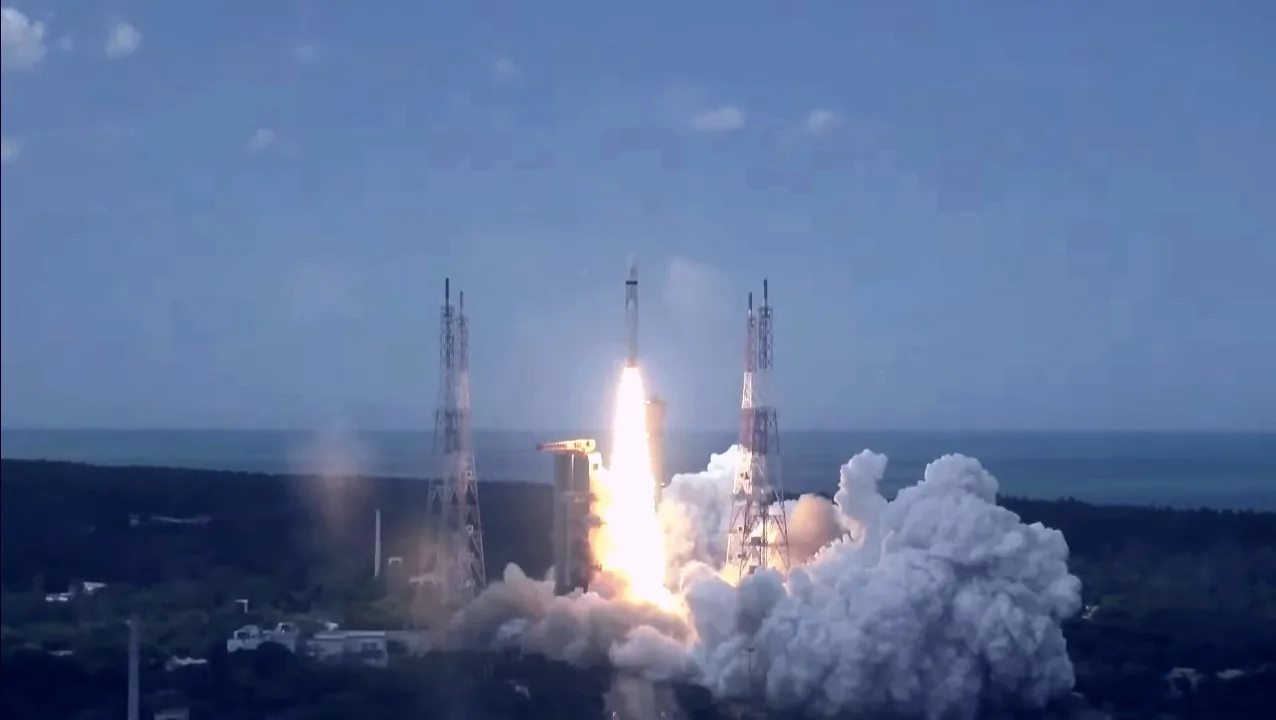
Chandrayaan-3 launched on July 14, 2023, aboard the LVM3 rocket from the Satish Dhawan Space Centre in Sriharikota. The mission was designed with one primary objective: demonstrate a safe and soft landing on the lunar surface -- something Chandrayaan-2's Vikram lander narrowly missed in September 2019.
This time, everything worked. The Vikram lander descended flawlessly and deployed the Pragyan rover, which spent two weeks rolling across the lunar surface near the Shiv Shakti Point. The rover's instruments, including the Alpha Particle X-ray Spectrometer (APXS) and the Laser Induced Breakdown Spectroscope (LIBS), confirmed the presence of sulfur and other elements in the south polar regolith -- data that is genuinely important for understanding the Moon's geological history and, potentially, for future resource utilization.
The lander also carried the ChaSTE instrument, which measured the thermal profile of the lunar topsoil, revealing a sharp temperature gradient just a few centimeters below the surface. These are the kinds of measurements that seem small on paper but are essential for anyone planning a sustained presence on the Moon. ISRO gave the global scientific community data that no one else had.
Aditya-L1: India's Eye on the Sun
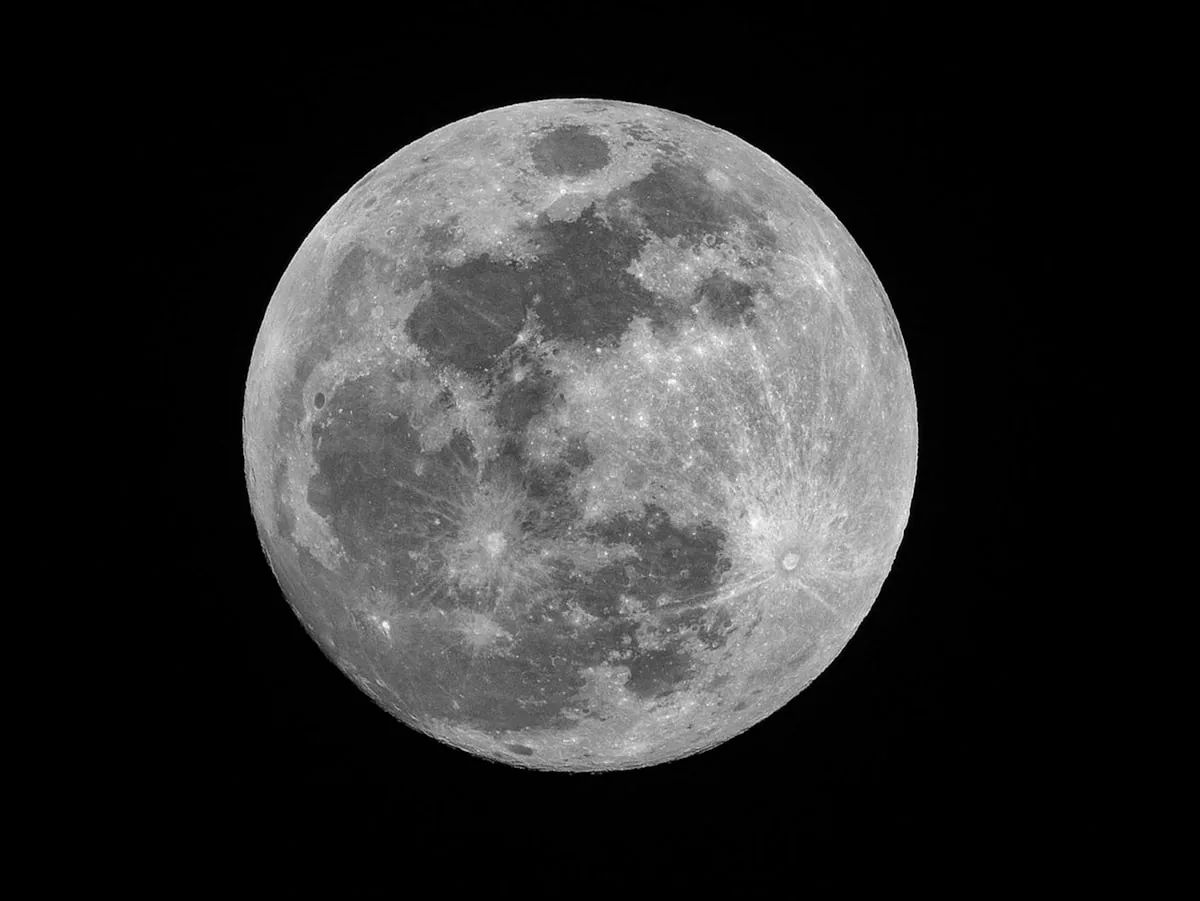
Just weeks after the Chandrayaan-3 triumph, ISRO launched Aditya-L1 on September 2, 2023 -- India's first dedicated solar observation mission. The spacecraft traveled to the Sun-Earth Lagrange Point 1 (L1), approximately 1.5 million kilometers from Earth, where it entered a halo orbit in January 2024.
From this vantage point, Aditya-L1 has an unobstructed, continuous view of the Sun. Its suite of seven scientific payloads studies the solar corona, solar wind, solar flares, and coronal mass ejections. The Visible Emission Line Coronagraph (VELC) is designed to image the solar corona and study the dynamics of coronal mass ejections -- events that can disrupt satellite communications, power grids, and navigation systems here on Earth.
For a country that is rapidly expanding its satellite infrastructure, understanding space weather is not just academic. It is strategic. Aditya-L1 gives India an independent capability to monitor and, eventually, forecast solar activity that could threaten its space assets and ground-based technology infrastructure.
Gaganyaan: India's Human Spaceflight Dream
ISRO's most ambitious program is Gaganyaan, India's first crewed orbital spaceflight mission. The goal is to send a crew of Indian astronauts -- called Vyomanauts -- to low Earth orbit aboard an indigenously developed crew module launched on the human-rated LVM3 rocket.
Development has progressed steadily through 2024 and into 2025. ISRO completed critical uncrewed test flights, including abort tests that validated the crew escape system -- the mechanism designed to pull astronauts to safety if something goes wrong during launch. The crew module has undergone extensive testing, including parachute deployment and splashdown recovery trials in the Bay of Bengal.
Indian astronaut candidates have been training at ISRO facilities and, earlier in the program, at the Yuri Gagarin Cosmonaut Training Centre in Russia. When Gaganyaan flies, India will become only the fourth country to independently launch humans into orbit, after Russia, the United States, and China. The significance of that milestone -- for national pride, for ISRO's institutional maturity, and for the global democratization of human spaceflight -- cannot be overstated.
NISAR: A Joint Mission with NASA
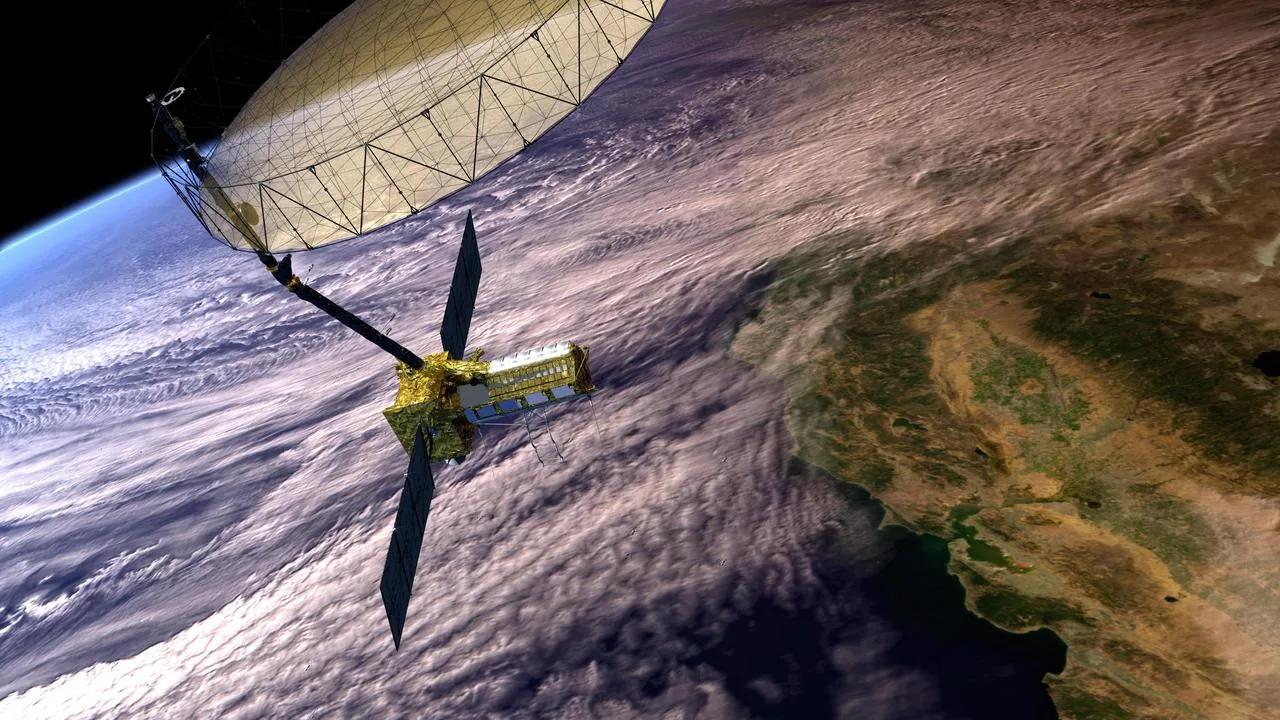
One of the most exciting Earth observation missions in development is NISAR (NASA-ISRO Synthetic Aperture Radar), a joint project between NASA and ISRO. The satellite carries two synthetic aperture radar systems -- one L-band unit built by NASA's Jet Propulsion Laboratory and one S-band unit built by ISRO -- that will map the entire globe every 12 days.
NISAR is designed to track changes in Earth's ecosystems, ice sheets, natural hazards, sea level rise, and groundwater resources with unprecedented precision. The data it produces will be invaluable for climate science, disaster preparedness, and agricultural monitoring. It represents a model of international collaboration -- two space agencies with very different budgets and institutional cultures coming together to build something neither could build alone. The satellite has been undergoing testing and is on track for launch, marking a landmark in US-India space cooperation.
PSLV-C58 and XPoSat: Studying the X-ray Universe
On January 1, 2024 -- what a way to start the year -- ISRO launched XPoSat (X-ray Polarimetry Satellite) aboard the PSLV-C58 rocket. XPoSat is only the second mission in the world dedicated to X-ray polarimetry, after NASA's IXPE. It carries two payloads: POLIX, which measures the polarization of X-rays from cosmic sources like black holes, neutron stars, and active galactic nuclei, and XSPECT, which provides spectroscopic observations.
Understanding the polarization of X-rays from these extreme environments helps us decode the geometry and physics of some of the most violent phenomena in the universe. It is pure science at its finest, and the fact that India is now contributing cutting-edge data to this field speaks to how far ISRO has come from its early days of launching sounding rockets from a church in Thumba.
The PSLV-C58 mission also carried the PSLV Orbital Experimental Module (POEM-3), which repurposed the rocket's fourth stage as a stabilized platform for additional experiments in orbit -- a clever and characteristically ISRO approach to extracting maximum value from every launch.
The Bigger Picture
What makes ISRO special is not just the missions. It is the philosophy. ISRO operates on a budget that is a fraction of NASA's, ESA's, or even CNSA's, and yet it consistently delivers missions that compete at the highest levels of scientific and technical achievement. The cost of Chandrayaan-3, from development to launch, was roughly $75 million. For context, that is less than the production budget of many Hollywood blockbusters.
This is not about doing things cheaply. It is about doing things smartly. ISRO's engineers are among the most resourceful in the world, and their approach -- building capability step by step, reusing proven platforms, and prioritizing mission success over spectacle -- is a model that the rest of the space community studies and admires.
India's space program is entering its most ambitious phase ever. Gaganyaan will put Indians in orbit. The next Chandrayaan missions will build on the south pole success. Aditya-L1 is already returning solar science. NISAR will transform how we monitor our changing planet. And the private Indian space sector, energized by regulatory reforms, is growing rapidly, with companies like Skyroot Aerospace and Agnikul Cosmos developing their own launch vehicles.
For those of us who believe space should belong to everyone, ISRO is one of the most inspiring stories in the history of exploration. They proved that you do not need the biggest budget. You need the biggest vision.