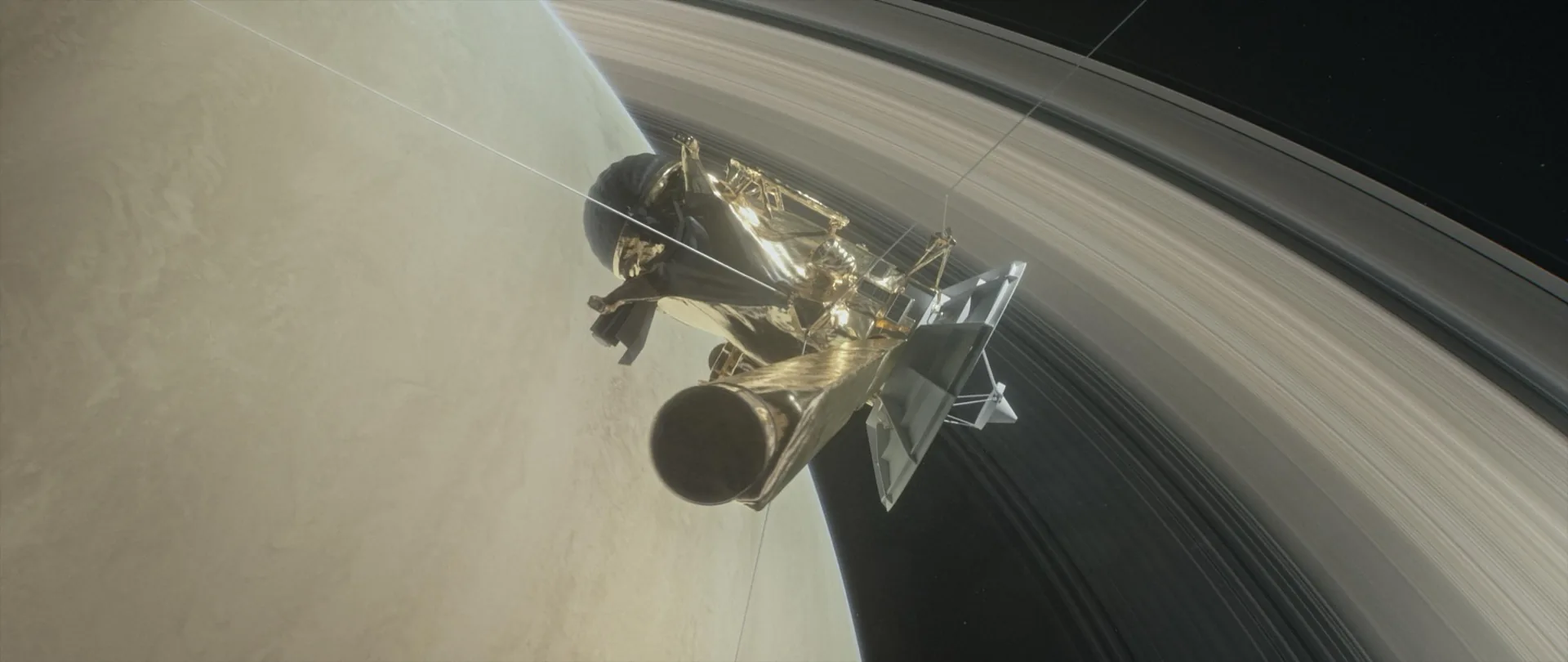
For all of human history, we have explored the universe with one sense: sight. Whether it was naked-eye stargazing, Galileo's telescope, or the Hubble Space Telescope, astronomy has always been about capturing light -- visible, infrared, radio, X-ray, gamma ray. Light in all its forms.
Then, on September 14, 2015, at 5:51 AM Eastern time, the universe whispered to us in an entirely new language. And we heard it.
That whisper was a gravitational wave -- a ripple in the fabric of spacetime itself -- and detecting it opened a window on the cosmos that had been sealed shut since the dawn of science.
What Are Gravitational Waves?
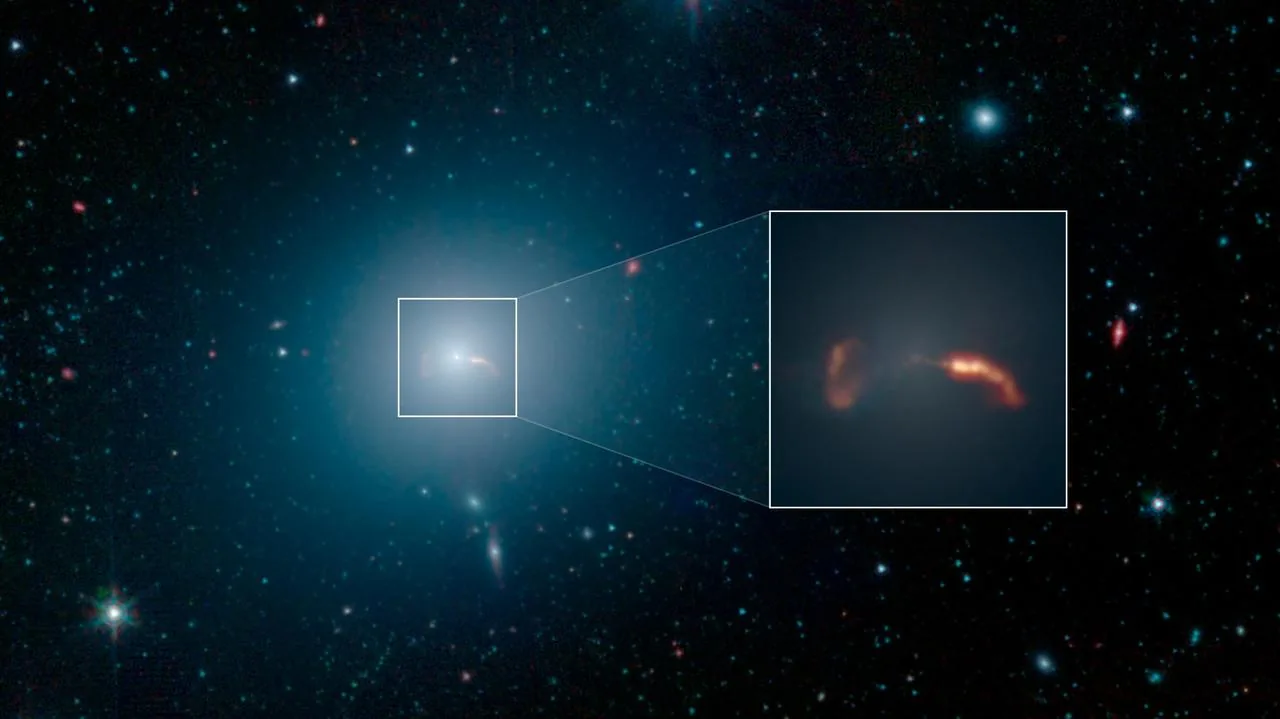
Albert Einstein predicted gravitational waves in 1916, as a consequence of his general theory of relativity. The idea is elegant: mass and energy curve spacetime, and when massive objects accelerate, they send ripples outward through that curved spacetime at the speed of light. Think of it like a stone dropped in a pond, except the pond is the very fabric of reality.
Every accelerating mass produces gravitational waves, technically speaking. You produce them when you wave your hand. But the effect is absurdly tiny -- so tiny that only the most violent events in the cosmos produce waves large enough to detect. We are talking about black holes colliding, neutron stars spiraling into each other, the cores of supernovae collapsing. The most extreme events the universe has to offer.
Even then, by the time the waves reach Earth, the distortion they cause is almost unimaginably small. The first detection measured a change in distance of about 10^-18 meters -- one-thousandth the diameter of a proton. Detecting that is the equivalent of measuring the distance to the nearest star and being sensitive to a change of less than the width of a human hair.
The fact that we built a machine capable of this is one of the greatest engineering achievements in human history.
LIGO and Virgo: The Detectors
That machine is LIGO -- the Laser Interferometer Gravitational-Wave Observatory. It consists of two L-shaped detectors, one in Livingston, Louisiana, and one in Hanford, Washington, each with arms 4 kilometers long. A laser beam is split and sent down both arms, bounces off mirrors at the ends, and recombines. When a gravitational wave passes through, it stretches one arm and compresses the other by that unthinkably tiny amount, causing the laser beams to fall slightly out of phase. The resulting interference pattern reveals the wave.
Having two detectors separated by about 3,000 kilometers is critical -- it allows the team to distinguish real signals from local noise (a passing truck, an earthquake, a misbehaving instrument). A real gravitational wave will arrive at both detectors within a few milliseconds of each other.
Virgo, a European detector near Pisa, Italy, with 3-kilometer arms, joined the network in 2017. Together, LIGO and Virgo can triangulate the source of a gravitational wave on the sky, enabling other telescopes to look for light from the same event. Japan's KAGRA detector has also joined the network, and India is building LIGO-India to further improve sky localization.
The First Detection: Two Black Holes Collide
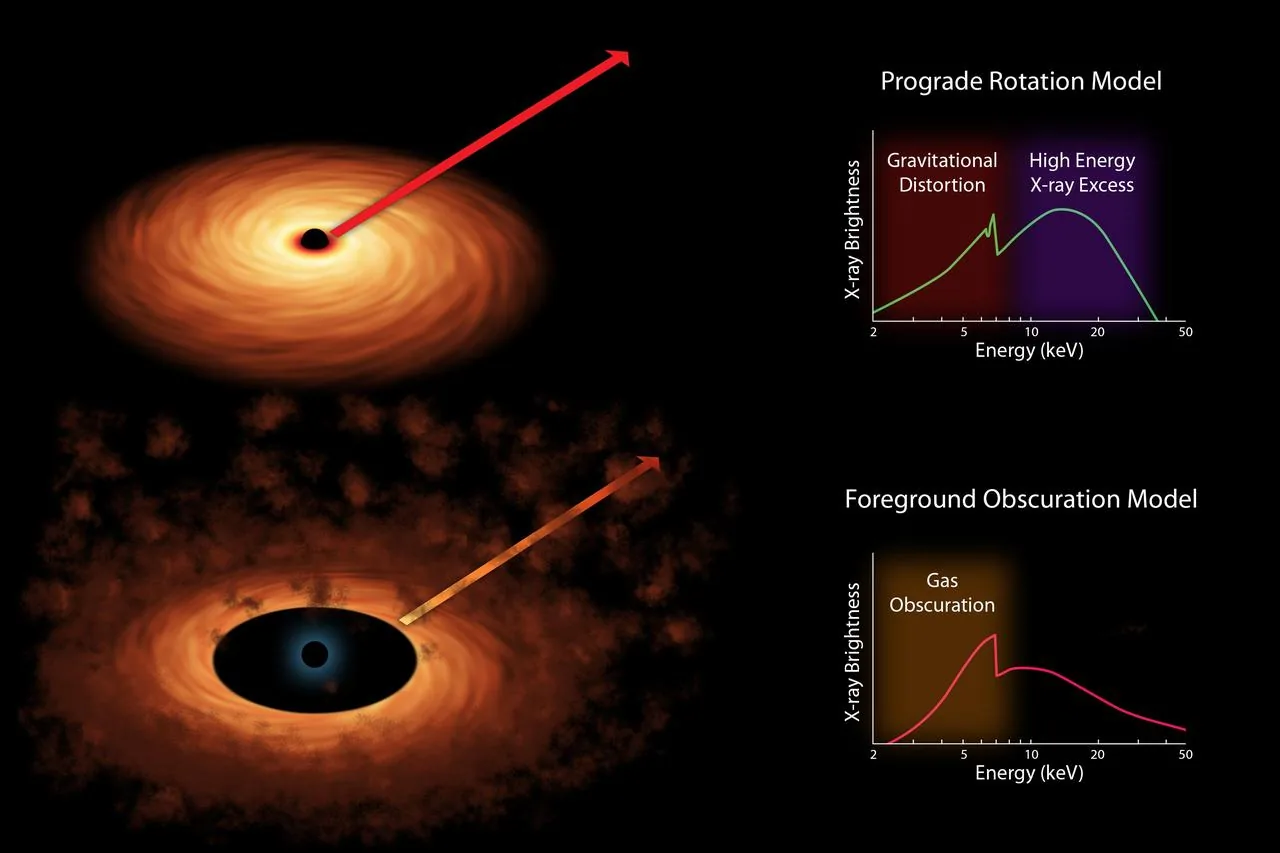
That first signal, designated GW150914, came from two black holes -- one about 36 solar masses, the other about 29 -- spiraling together and merging about 1.3 billion light-years away. In the final fraction of a second before merger, they were orbiting each other at about half the speed of light, completing dozens of orbits per second. The gravitational wave signal swept upward in frequency and amplitude -- a characteristic "chirp" -- before cutting off as the two black holes became one.
The merged black hole was about 62 solar masses. If you do the math, you will notice that 36 + 29 = 65, not 62. The missing three solar masses were radiated away as gravitational waves. Three solar masses of pure energy, released in a fraction of a second. For that brief moment, the collision was emitting more power than all the stars in the observable universe combined.
The announcement on February 11, 2016, electrified the scientific world. Rainer Weiss, Kip Thorne, and Barry Barish were awarded the 2017 Nobel Prize in Physics for the discovery.
Neutron Star Mergers: Where Gold Comes From
On August 17, 2017, LIGO and Virgo detected something different: GW170817, the gravitational wave signal from two neutron stars spiraling together and colliding about 130 million light-years away, in a galaxy called NGC 4993.
This event was transformative for multiple reasons. First, because Virgo was operating, the source could be localized to a small patch of sky. Within hours, telescopes around the world spotted a new point of light at that location -- a kilonova, the optical counterpart of the neutron star merger. For the first time, humanity observed the same cosmic event in both gravitational waves and electromagnetic radiation. Multi-messenger astronomy was born.
Second, the kilonova observations confirmed a long-suspected theory: neutron star mergers are a major source of the universe's heaviest elements. The violent collision flings out material so neutron-rich that it undergoes rapid neutron capture (r-process) nucleosynthesis, forging elements like gold, platinum, and uranium. Spectroscopic observations of the kilonova confirmed the presence of these heavy elements.
Think about that. The gold in your jewelry, the platinum in catalytic converters, the uranium in nuclear reactors -- much of it was forged in the collision of neutron stars billions of years ago, flung into space, and eventually incorporated into the gas cloud that formed our solar system. You are wearing the debris of unimaginably violent cosmic events.
NANOGrav: The Gravitational Wave Background
LIGO and Virgo detect gravitational waves at relatively high frequencies -- tens to thousands of Hertz. But there is an entirely different spectrum of gravitational waves at much lower frequencies, and detecting them requires a completely different approach.
In June 2023, the NANOGrav (North American Nanohertz Observatory for Gravitational Waves) collaboration announced a landmark result: strong evidence for a gravitational wave background -- a low-frequency hum of gravitational waves permeating all of space.
NANOGrav uses a network of millisecond pulsars as a galaxy-sized gravitational wave detector. Pulsars are rapidly spinning neutron stars that emit beams of radio waves with extraordinary regularity -- they are natural cosmic clocks. By precisely timing the pulses from dozens of pulsars spread across the sky over a period of 15 years, NANOGrav looked for the correlated timing variations that a gravitational wave background would produce.
They found it. The signal is consistent with the predicted pattern -- called the Hellings-Downs curve -- that is the unique fingerprint of gravitational waves. The most likely source is the combined gravitational radiation from thousands of supermassive black hole pairs in merging galaxies throughout the universe, all contributing to a cosmic chorus of spacetime ripples.
This result was simultaneously confirmed by European, Australian, and Chinese pulsar timing collaborations, making it one of the most robust multi-group detections in recent astronomy.
LISA: Taking Gravitational Wave Astronomy to Space
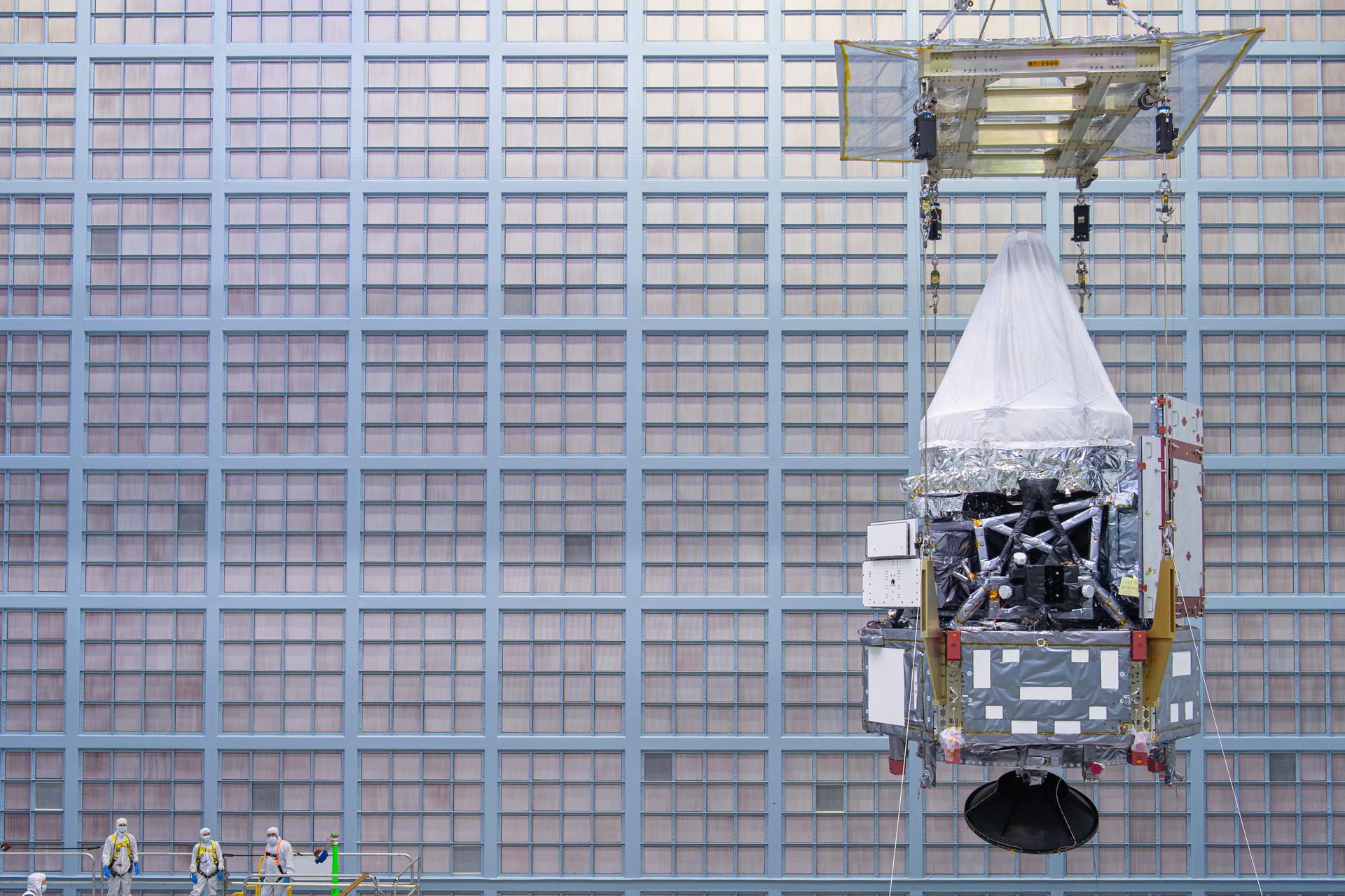
The next great leap will come from space. The Laser Interferometer Space Antenna (LISA), a joint ESA/NASA mission planned for launch in the mid-2030s, will consist of three spacecraft flying in a triangular formation, separated by 2.5 million kilometers. This enormous baseline will make LISA sensitive to gravitational waves at frequencies between the NANOGrav and LIGO bands -- millihertz frequencies that are inaccessible from the ground.
At these frequencies, LISA will detect the mergers of supermassive black holes -- the billion-solar-mass monsters at the centers of galaxies. It will observe compact binary systems in our own galaxy, map the population of white dwarf binaries, and potentially detect gravitational waves from exotic sources like cosmic strings (if they exist).
LISA will also provide early warnings for black hole mergers that LIGO and Virgo will later detect. Weeks or months before two stellar-mass black holes collide, LISA could spot them spiraling together, giving ground-based detectors (and electromagnetic telescopes) time to prepare. This kind of advance notice will unlock entirely new science.
What We Have Learned
In less than a decade, gravitational wave astronomy has already:
- Confirmed that black hole binaries exist and merge frequently
- Revealed a population of unexpectedly massive stellar black holes
- Proven that neutron star mergers produce heavy elements like gold and platinum
- Opened multi-messenger astronomy by combining gravitational and electromagnetic observations
- Provided a new test of general relativity in the strong-gravity regime (it passed with flying colors)
- Detected the gravitational wave background from supermassive black hole pairs
And this is just the beginning. As detectors improve in sensitivity and new observatories come online, we will hear ever fainter whispers from ever more distant and exotic sources. Gravitational wave astronomy is not just a new tool -- it is a new sense, one that lets us perceive aspects of the universe that were completely hidden from us before.
For billions of years, the universe has been vibrating like a cosmic bell, ringing with the collisions of black holes and the spiraling dances of neutron stars. We have only just learned to listen. And the music is extraordinary.