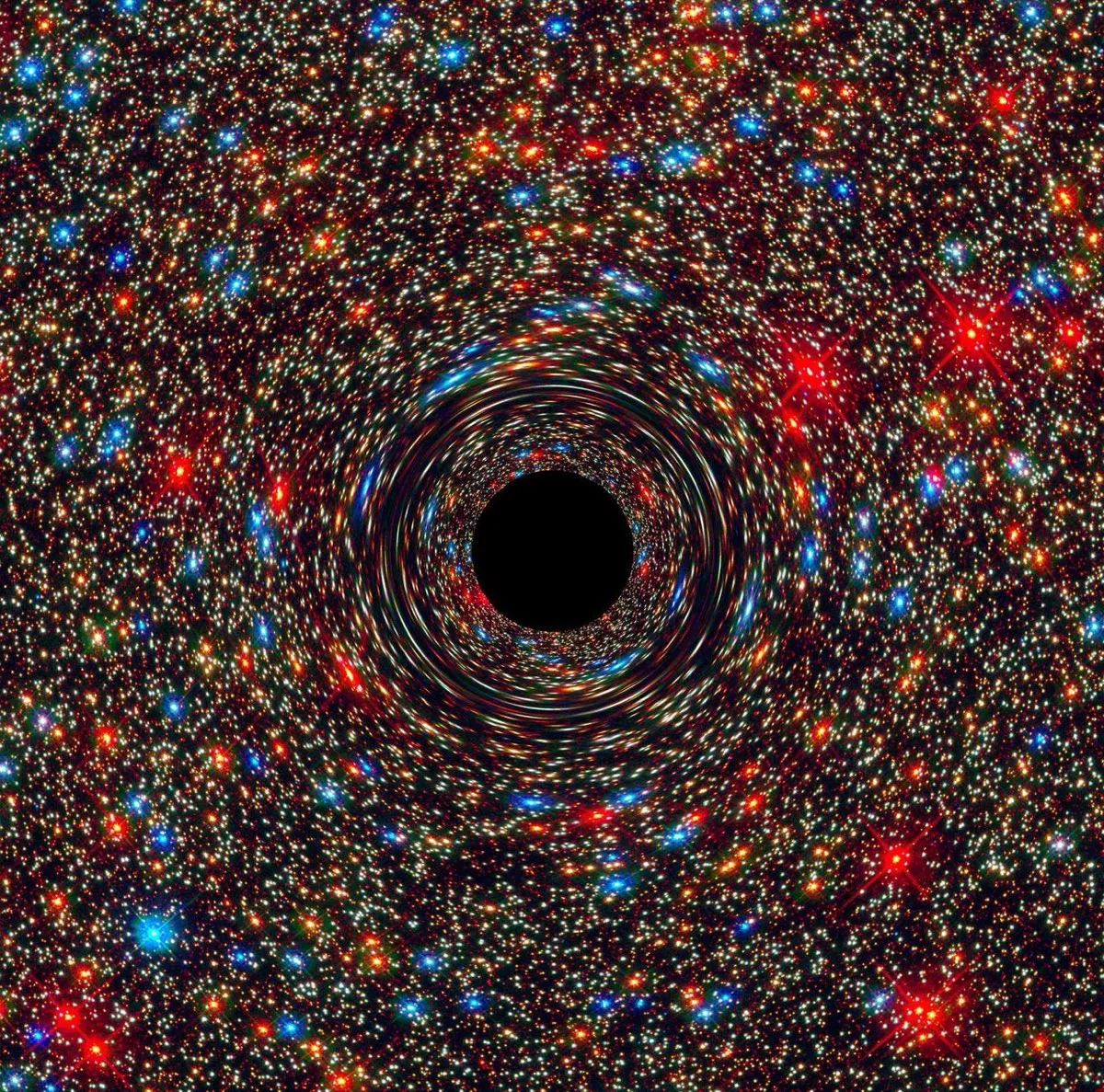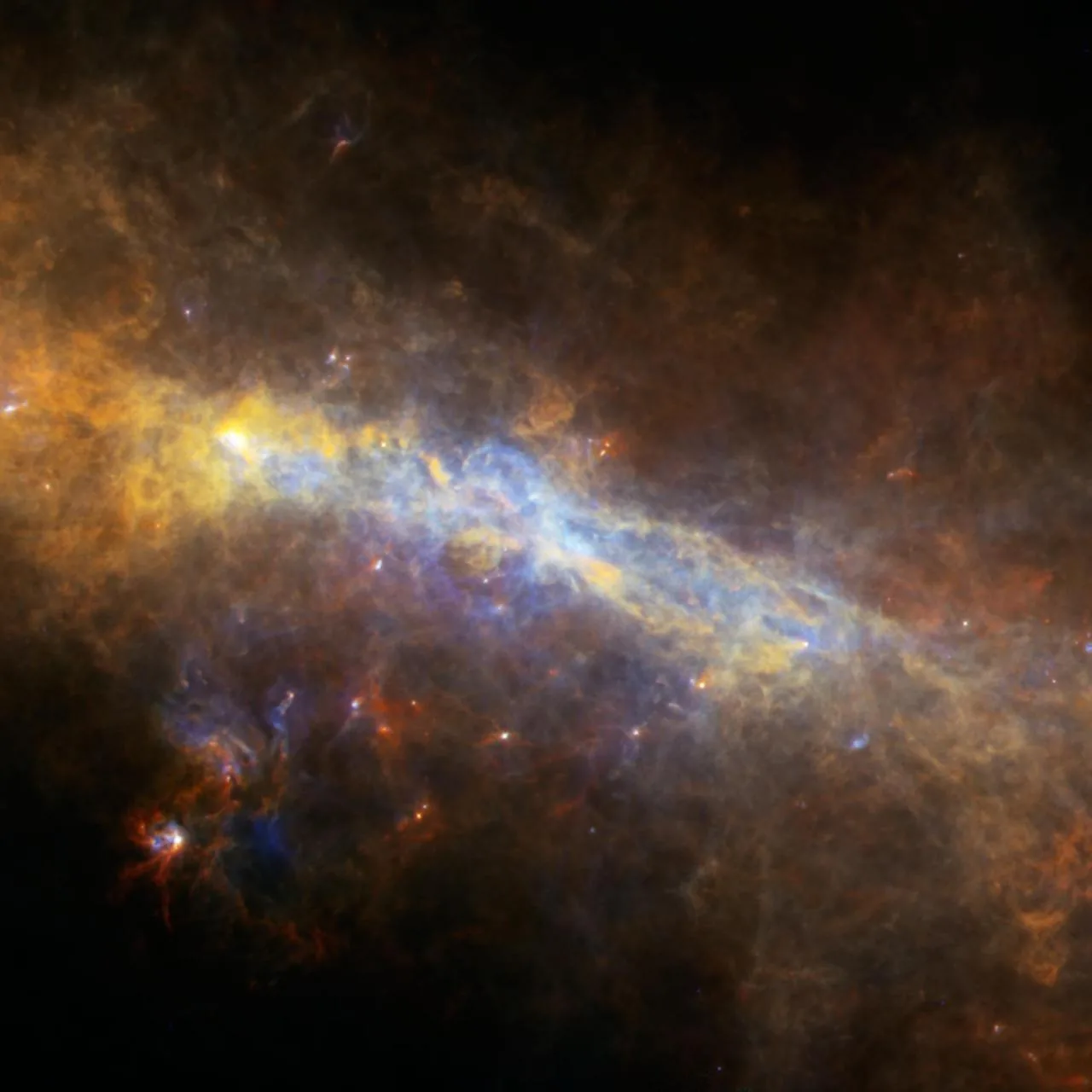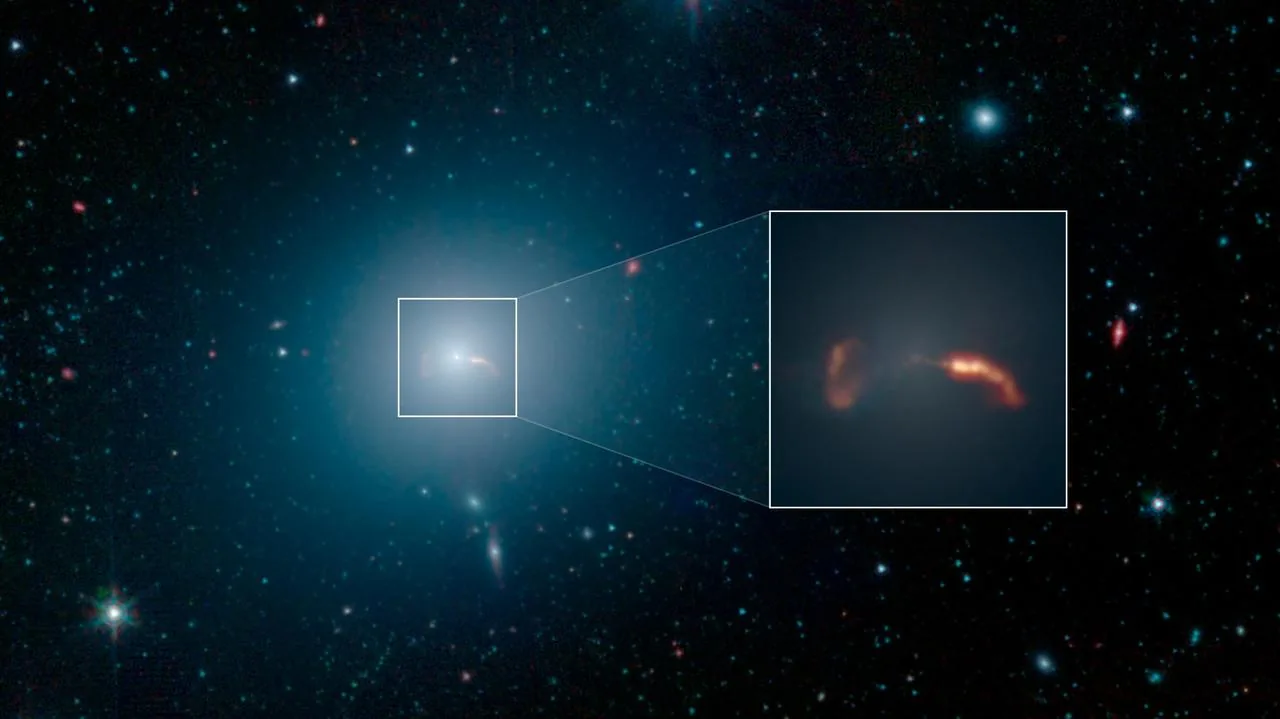
A black hole is a region of spacetime where gravity is strong enough that nothing — not even light — can escape once it crosses the event horizon. They form when massive stars (more than ~20 solar masses) collapse at the end of their lives, and they range from stellar-mass remnants of about 3-100 solar masses to supermassive giants like Sagittarius A* (4.3 million solar masses) at the Milky Way's center and M87* (6.5 billion solar masses), the first black hole ever directly imaged by the Event Horizon Telescope in 2019. This guide covers how black holes form, what happens at the event horizon, Hawking radiation, the LIGO gravitational-wave detections, and what the EHT and JWST have revealed about the universe's strangest objects.
How Black Holes Are Born
Most black holes begin their existence in violence. When a massive star -- typically more than about 20 times the mass of our Sun -- exhausts its nuclear fuel, the outward pressure that has been holding it up against gravity for millions of years suddenly vanishes. The core collapses in on itself in a fraction of a second. The outer layers rebound and explode outward in a supernova, one of the most energetic events in the universe. But the core? The core keeps falling.
If that collapsing core is heavy enough (roughly three solar masses or more), nothing in physics can stop it. Not the pressure of electrons jammed together, not the resistance of neutrons packed shoulder to shoulder. Gravity wins. The matter is compressed past all known limits, and a black hole is born.
These are stellar-mass black holes, and they typically weigh between about 5 and 100 times the mass of our Sun. They are scattered throughout every galaxy, the dark remnants of once-brilliant stars. Our Milky Way alone likely contains hundreds of millions of them.
The Event Horizon: A Point of No Return
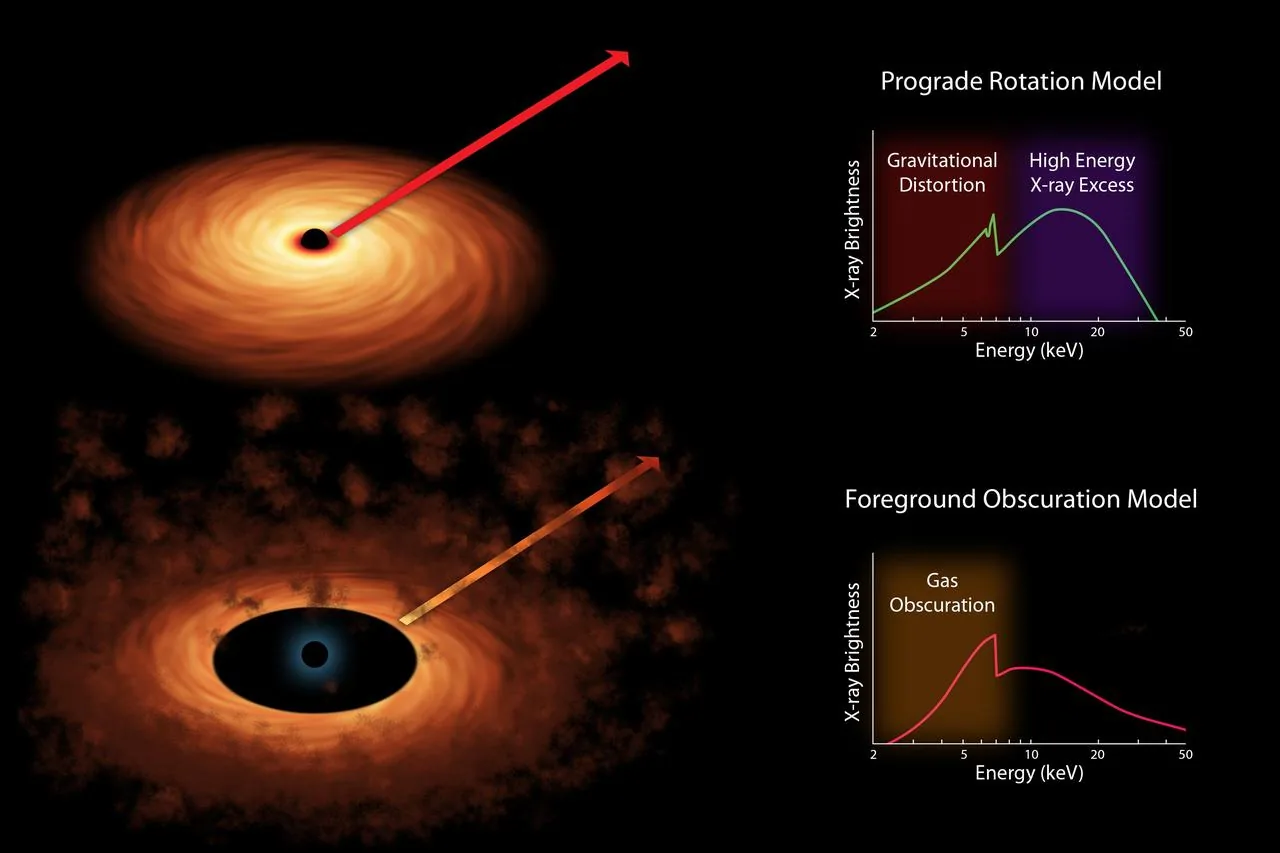
A black hole is not a solid object. It is a region of space where gravity has become so intense that nothing -- not matter, not light, not information -- can escape once it crosses a boundary called the event horizon.
Think of it this way: to escape Earth's gravity, a rocket needs to reach about 11.2 kilometers per second. On the surface of a neutron star, the escape velocity might be half the speed of light. At the event horizon of a black hole, the escape velocity exceeds the speed of light. Since nothing can travel faster than light, nothing gets out. Period.
Inside the event horizon, all paths through spacetime point inward. Trying to move away from the center of a black hole would be like trying to move backward in time. The singularity at the center -- that point of theoretically infinite density -- is not so much a place in space as it is a moment in the future. An unavoidable one.
This is the kind of thing that keeps physicists awake at night.
Seeing the Unseeable: The EHT Images
For most of the history of astronomy, black holes were inferred, not observed. We could see their effects -- stars whipping around invisible partners, jets of superheated material screaming outward at near-light speed -- but never the black hole itself. That changed spectacularly in April 2019.
The Event Horizon Telescope (EHT) -- a planet-spanning network of radio telescopes acting together as a single Earth-sized dish -- released the first-ever image of a black hole's shadow. The target was M87*, the supermassive black hole at the center of the galaxy Messier 87, some 55 million light-years away. It weighs an almost incomprehensible 6.5 billion solar masses. The image showed a bright ring of superheated gas swirling around a dark central void -- the shadow of the event horizon itself.
Then, in May 2022, the EHT team did it again. This time, they turned their gaze inward, capturing an image of Sagittarius A (Sgr A)**, the supermassive black hole at the center of our own galaxy. Sitting about 27,000 light-years away in the direction of the constellation Sagittarius, Sgr A* weighs roughly 4 million solar masses. Imaging it was actually harder than imaging M87*, despite being much closer, because the gas around it orbits so quickly that the picture changes within minutes. The team had to develop entirely new algorithms to piece together a coherent image from the flickering chaos.
These images are not photographs in the traditional sense. They are reconstructed from radio waves, painstakingly assembled from petabytes of data. But they are real. We are looking at the edge of a region where the normal universe simply ends.
Supermassive Black Holes: Anchors of Galaxies
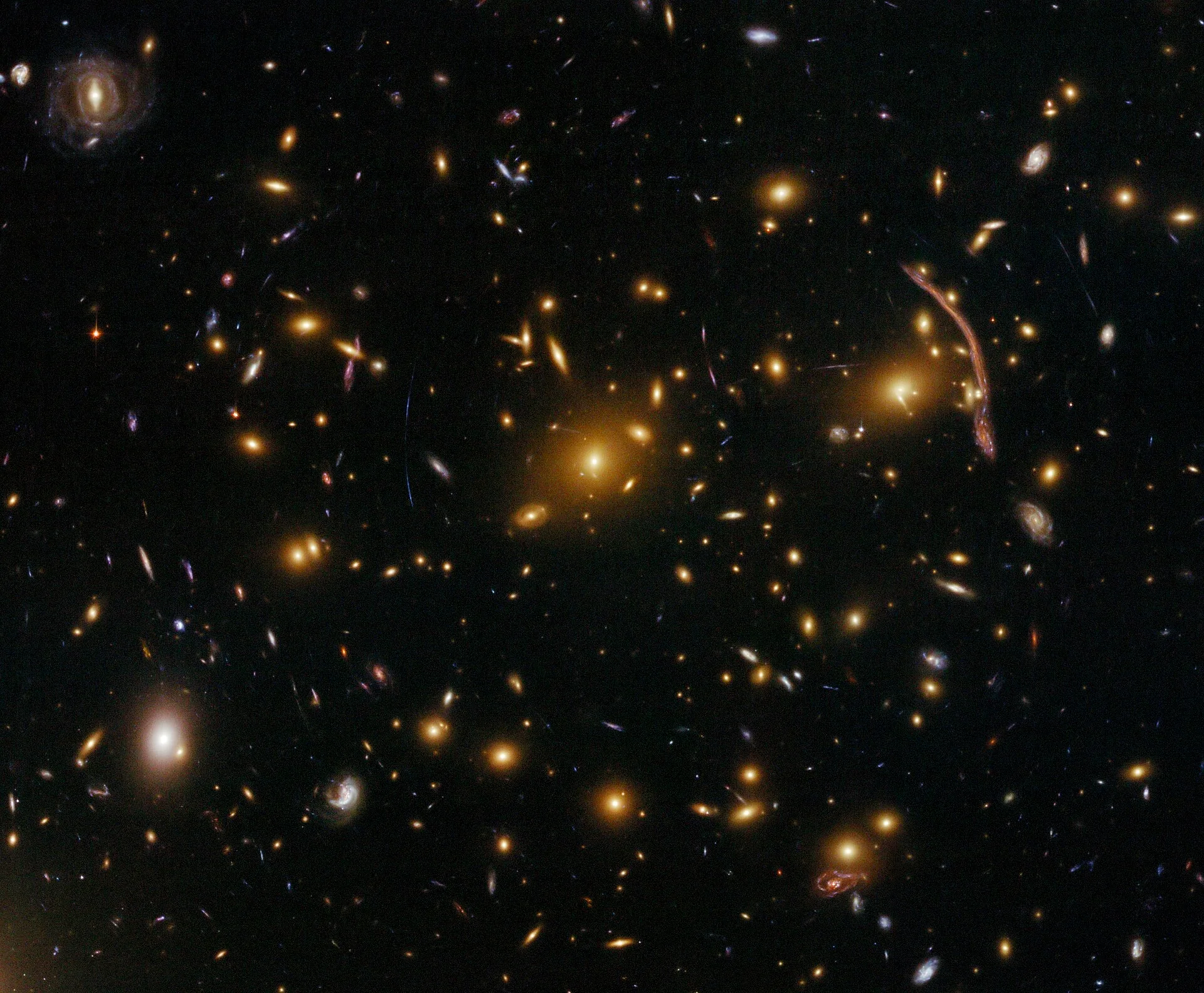
Sgr A* and M87* are examples of supermassive black holes (SMBHs), and it turns out they are not rare at all. As far as we can tell, virtually every large galaxy in the universe harbors a supermassive black hole at its center, ranging from millions to billions of solar masses.
How they got so big is one of the great open questions in astrophysics. Did they grow gradually, feeding on gas and merging with other black holes over billions of years? Or did they form from the direct collapse of enormous gas clouds in the early universe, giving them a head start? JWST has been finding shockingly massive black holes in the very early universe -- within the first billion years after the Big Bang -- which suggests the answer might be complicated.
These monsters are not just passive occupants. When matter falls toward a supermassive black hole, it forms a swirling accretion disk that can outshine the entire host galaxy. These are active galactic nuclei (AGN) and quasars, and their energy output can regulate star formation across an entire galaxy. Black holes, it turns out, are not just destroyers. They are cosmic architects.
Hawking Radiation: Black Holes Are Not Forever
In 1974, Stephen Hawking made a prediction that startled the physics world. Using quantum mechanics, he showed that black holes should not be perfectly black. They should slowly radiate energy and particles -- a phenomenon now called Hawking radiation.
The mechanism is subtle. In the quantum vacuum, pairs of virtual particles constantly pop into existence and annihilate each other. Near the event horizon, one particle can fall in while the other escapes, carrying away a tiny bit of the black hole's energy. Over unimaginably long timescales, this causes the black hole to shrink and eventually evaporate entirely.
For stellar-mass and supermassive black holes, this process is absurdly slow -- far longer than the current age of the universe. But for hypothetical tiny black holes, evaporation could be rapid and violent, ending in a burst of radiation. We have never detected Hawking radiation directly, and doing so remains one of the holy grails of physics. But the theoretical framework has profound implications for our understanding of information, entropy, and the fundamental nature of spacetime.
Gravitational Waves: Hearing Black Holes Collide
In September 2015, the LIGO (Laser Interferometer Gravitational-Wave Observatory) detectors in Louisiana and Washington state picked up a signal that had traveled 1.3 billion light-years to reach us. It was the gravitational wave signature of two black holes, each about 30 times the mass of the Sun, spiraling toward each other and merging in a cataclysmic collision. In the final fraction of a second, they radiated more energy in gravitational waves than all the stars in the observable universe were emitting in light. Combined.
Let that sink in for a moment.
Since that first detection, LIGO and its European partner Virgo have cataloged dozens of black hole mergers, opening an entirely new window on the universe. We are no longer just looking at the cosmos -- we are listening to it. Each merger tells us about the masses, spins, and distances of the colliding black holes, building a census of these objects that was previously impossible.
The Missing Middle: Intermediate-Mass Black Holes
Here is a puzzle. We know about stellar-mass black holes (a few to about 100 solar masses) and supermassive black holes (millions to billions of solar masses). But what about the gap in between? Intermediate-mass black holes (IMBHs) -- those weighing hundreds to hundreds of thousands of solar masses -- have been maddeningly elusive.
There are tantalizing hints. Some ultraluminous X-ray sources in nearby galaxies could be powered by IMBHs. Gravitational wave detections have found mergers producing black holes in the 100-150 solar mass range, right at the lower end of the intermediate category. And some globular clusters show dynamical evidence for central black holes of a few thousand solar masses.
Finding and confirming IMBHs is crucial because they may be the missing link explaining how supermassive black holes grow. If small black holes can merge their way up to intermediate masses, and those can continue merging and accreting to become supermassive, we have a growth pathway. The search continues.
Why Black Holes Matter
Black holes are not just cosmic curiosities. They are laboratories for testing our most fundamental theories of physics. General relativity and quantum mechanics -- the two pillars of modern physics -- give contradictory answers about what happens at a singularity. Resolving that contradiction is one of the deepest challenges in science, and it may require an entirely new theory of quantum gravity.
They shape the evolution of galaxies, the distribution of matter in the universe, and even the conditions for life. Without the regulation provided by supermassive black holes, galaxies might form stars too quickly or too slowly, never creating the stable environments where planets and biology can emerge.
And they remind us, in the most visceral way possible, that the universe is far stranger and more magnificent than our everyday experience would suggest. Somewhere out there, right now, two black holes are spiraling toward a collision that will shake the fabric of spacetime. Stars are being torn apart by tidal forces as they wander too close to a supermassive monster. And at the heart of our own quiet galaxy, Sagittarius A* sits in patient darkness, warping space and time around itself, a four-million-solar-mass punctuation mark at the center of everything we call home.
The universe has no shortage of wonders. But black holes? Black holes might just be the most wonderful of them all.