In late April 2026, a Seattle startup with fewer than 50 employees won a NASA contract to fly a helium-3 extraction payload to the Moon. The company is Interlune, founded in 2020 by Apollo 17 moonwalker Harrison Schmitt and former Blue Origin president Rob Meyerson, and the contract — issued through NASA's Commercial Lunar Payload Services (CLPS) program — marks the first time the agency has formally backed lunar resource extraction by a private company. The proposition behind it is enormous and uneven in equal measure: the lunar surface holds millions of tonnes of helium-3, an isotope that fusion researchers have spent four decades calling "the perfect fuel," and Interlune wants to bring some of it home.
Whether that bet is brilliant or premature depends on which fusion physicist is asked, which lunar geologist is trusted, and how patient the capital markets turn out to be. This article walks through the science, the company, the contract, and the competitors — and tries to be honest about where the helium-3 case is strongest and where it leans on assumptions that may not survive contact with a working reactor.
What Helium-3 Actually Is — And Why the Moon Has So Much
Helium-3 (³He) is a stable, non-radioactive isotope of helium with two protons and one neutron — one fewer neutron than the helium-4 that fills birthday balloons. On Earth it is vanishingly rare. The atmosphere contains roughly 1.4 parts per million of helium-4 and only about 7 parts per trillion of helium-3. The few kilograms of ³He available on the U.S. commercial market each year are produced almost entirely as a byproduct of tritium decay in nuclear-weapons stockpiles, which is why the U.S. Department of Energy regulates its supply tightly and the price has hovered near $40,000 per gram for years.
The Moon is a fundamentally different environment. With no global magnetic field and only a trace exosphere instead of an atmosphere, the lunar regolith — the powdery, rock-fragment soil covering the surface — has been bathed in solar wind for roughly 4.5 billion years. The solar wind is about 4% helium by mass, and a small fraction of that is helium-3. Over geological time the regolith captures and traps these particles, building up concentrations of ³He between roughly 5 and 20 parts per billion, depending on the mineralogy. Estimates of the total lunar inventory range from about 1 million to 5 million tonnes, concentrated in titanium-rich basaltic regions like Mare Tranquillitatis. Compared to Earth's effectively zero standing inventory, the Moon is — to the precision of a back-of-envelope calculation — the only large helium-3 reservoir within reach of human spaceflight.
How NASA Discovered the Lunar Reservoir
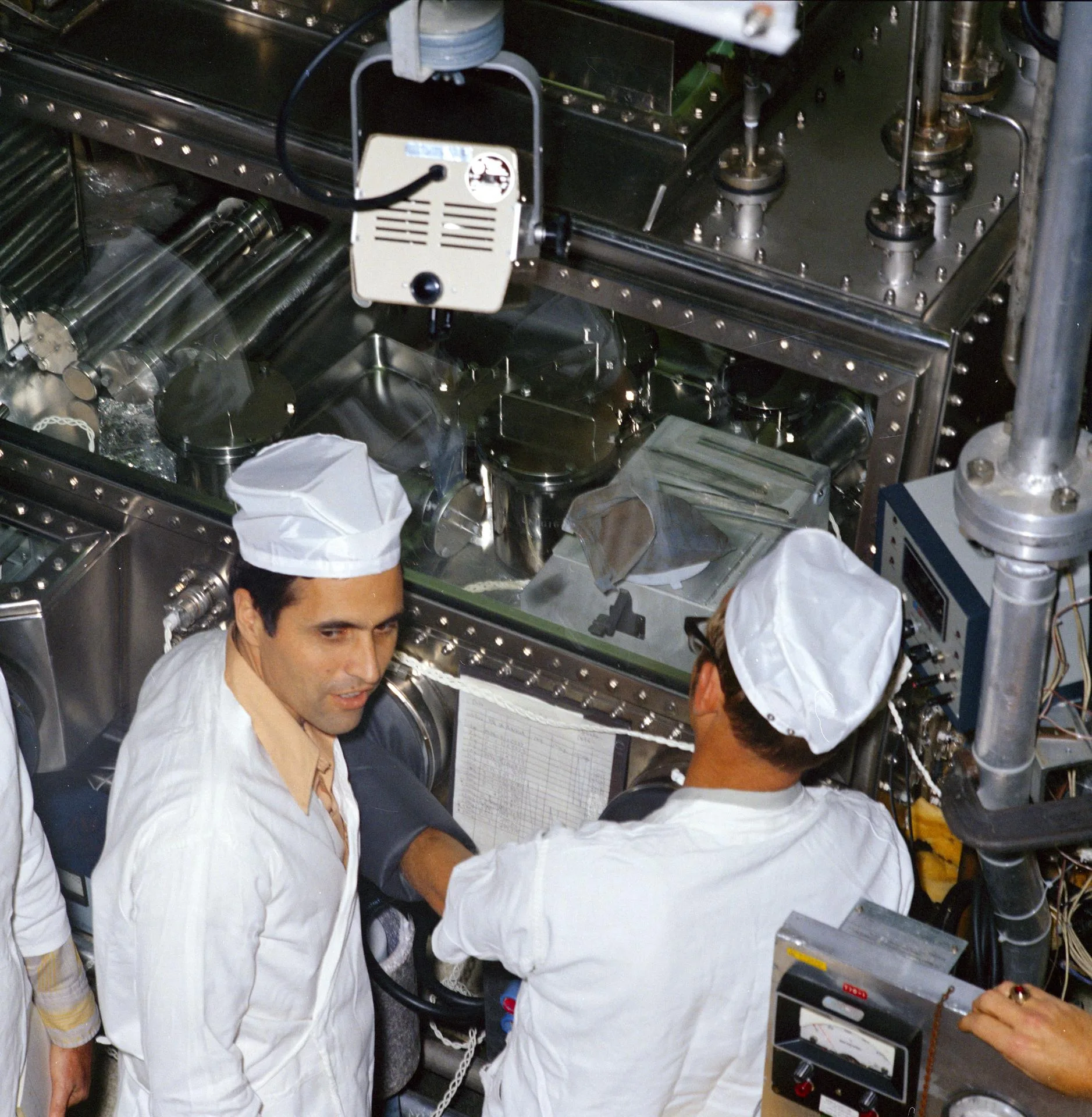
The lunar helium-3 hypothesis was not purely theoretical. It came out of the Apollo sample return program, and the person who collected most of the relevant samples is now the chairman of the company that wants to commercialise them.
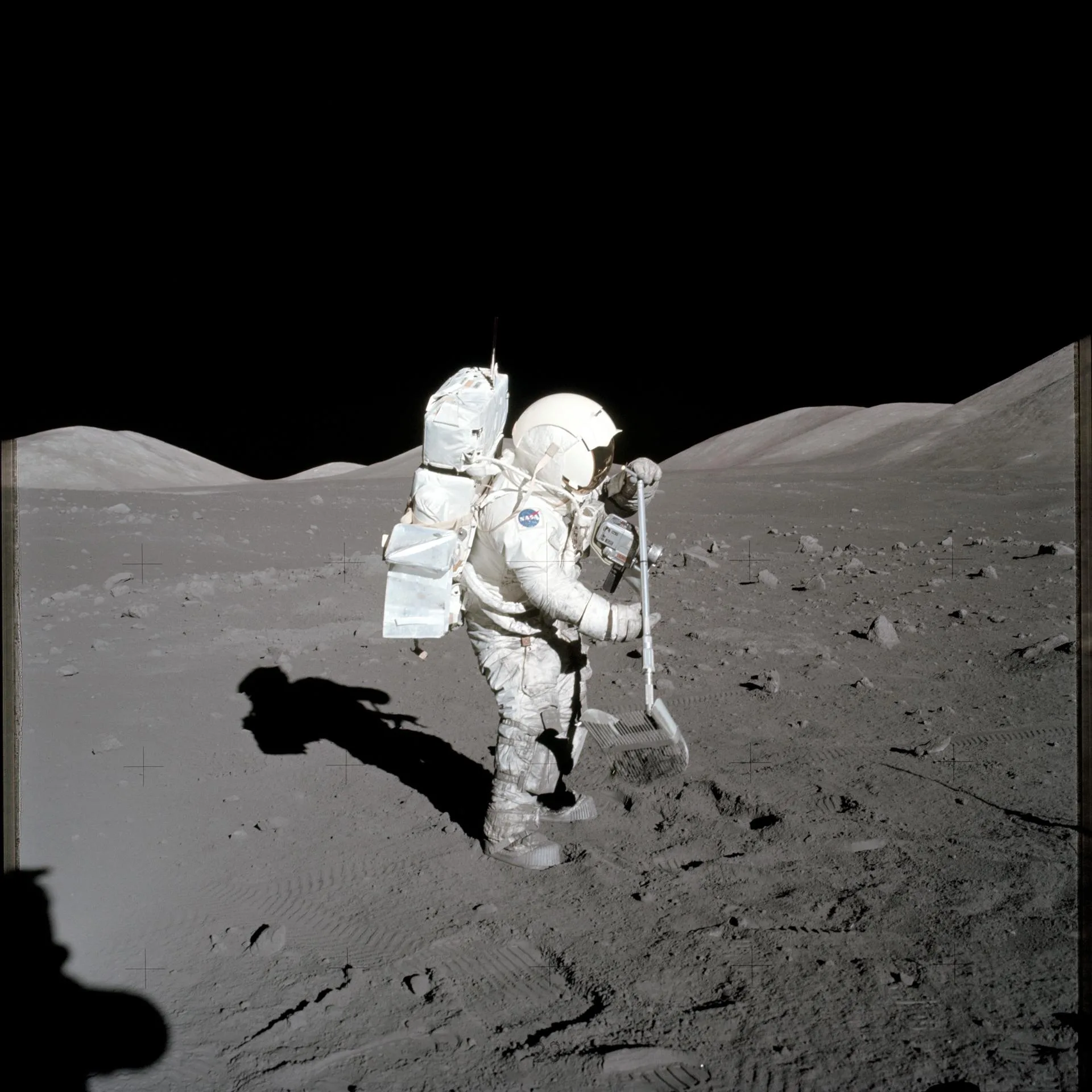
Between 1969 and 1972, the six successful Apollo crews returned 382 kilograms of lunar rock and regolith to Earth. Apollo 17 in December 1972 — the only mission to carry a trained geologist, Harrison "Jack" Schmitt — collected the most scientifically valuable sample set of the program, including the famous orange volcanic glass at Shorty Crater and the deep regolith cores that revealed how solar-wind volatiles vary with depth. Those cores were the first hard evidence that ³He concentrations were measurable, repeatable across sites, and high enough that extraction was at least worth analysing.
NASA's Lunar Sample Laboratory at Johnson Space Center has continued to study these samples for more than five decades, and a substantial fraction of the original return mass remains pristine and unopened — held in vacuum for instruments and questions that did not yet exist when Apollo flew. Modern measurements from those samples, combined with orbital data from the Lunar Reconnaissance Orbiter and the Chinese Chang'e missions, are what underpin every Interlune business-case slide. The science is settled enough that ³He is there; the open questions are economic and engineering.
What Interlune Is Building — And Why NASA Just Backed It
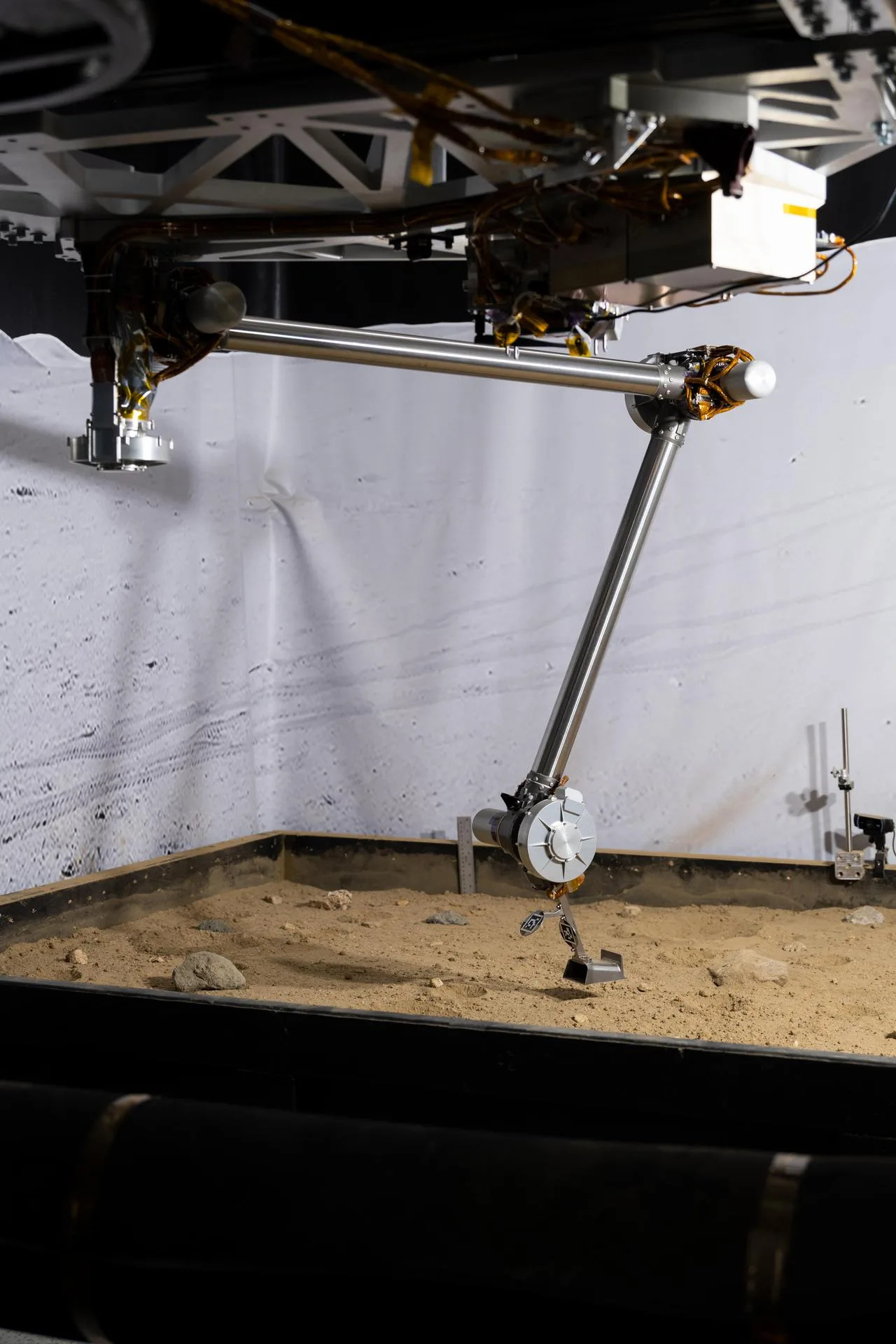
Interlune's pitch is unusually narrow for a space startup: not a launch system, not a station, not a constellation, but a single piece of equipment that excavates regolith, heats it, and separates volatiles. The company describes its architecture as a continuous-flow excavator — picture a tracked vehicle that scoops, processes, and discards regolith on the surface in one motion, capturing the gases driven off by heating. The mass that needs to come home is the helium-3 and a few collateral resources like hydrogen and water; the bulk of the regolith stays on the Moon.
The NASA contract announced this month, awarded under the Commercial Lunar Payload Services umbrella, funds a Moon-bound prospecting payload that will measure ³He concentrations in situ rather than relying on returned-sample inference. CLPS is a fixed-price service contract — NASA pays Interlune to deliver data, not to own the hardware — and the values disclosed for similar CLPS task orders have ranged from roughly $80 million to $300 million. The structural significance is not the dollar value but the precedent: NASA is signalling that it views privately-led resource extraction as compatible with the Artemis programme rather than a competing distraction.
Interlune has also raised private capital from investors including Seven Seven Six, the firm founded by Reddit co-founder Alexis Ohanian, and from defence-aligned funds that see a dual-use angle on a stable supply of ³He for cryogenics and neutron detection — markets that already exist on Earth and pay accordingly. (Each kilogram of ³He delivered to Earth is worth somewhere between $20 million and $40 million on the current market, before any fusion premium.)
The Fusion Question: Is Helium-3 Actually Useful?
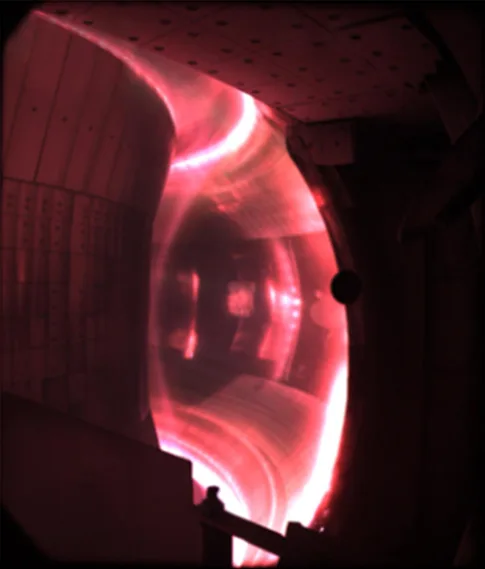
This is where the case gets contested. The standard argument for helium-3 as a fusion fuel is that the deuterium-helium-3 (D-³He) reaction is "aneutronic" — it produces charged particles instead of fast neutrons, which means a reactor would not require heavy neutron shielding, would not activate its structural materials into long-lived radioactive waste, and could in principle convert reaction energy directly to electricity without a steam cycle. Compared to deuterium-tritium (D-T) fusion, D-³He fuel is cleaner, the hardware is longer-lived, and the safety case is intrinsically stronger.
The catch is that D-³He fusion requires plasma temperatures of roughly 600 million kelvin — about ten times hotter than D-T fusion, which has not yet achieved sustained net-energy production at industrial scale. The flagship D-T effort is the international ITER tokamak in southern France, which is still years from first plasma at full power. Of the dozens of fusion startups that have raised more than $7 billion in venture capital since 2020, most have explicitly chosen D-T as the near-term path. The major exception is Helion Energy in Everett, Washington, which is pursuing D-³He with a deuterium–deuterium first stage and counts Microsoft as an announced power-purchase customer for a 50-megawatt plant. Whether Helion's timeline is realistic, optimistic, or aspirational depends on which engineer is talking, but Helion is by far the largest single near-term customer that lunar ³He could conceivably have.
If D-³He fusion never reaches commercial scale, helium-3 is still useful — for medical imaging cryogenics, neutron detectors at airport ports of entry, and ultra-low-temperature physics research. Those markets will buy every gram Interlune can deliver at the current $40,000-per-gram price. They are not, however, large enough to justify a five-billion-dollar lunar mining program on their own. The fusion thesis is what carries the upside.
The Economics and the Legal Landscape
The honest economics of lunar helium-3 are not flattering at small scales and not implausible at large ones. With concentrations of roughly 10 parts per billion in average regolith, extracting one tonne of ³He requires processing somewhere between 100 and 200 million tonnes of soil — a number that reads like a misprint until it is compared to terrestrial open-pit mining, where individual mines move similar volumes annually. The real questions are energy cost on the lunar surface (where solar power is intermittent through the 14-day lunar night and surface nuclear is years away), thermal processing temperatures (around 700°C to drive volatiles out of the regolith), and the mass-return cost from the Moon to cislunar space.
The legal situation is permissive but unsettled. The 1967 Outer Space Treaty prohibits any nation from claiming sovereignty over the Moon but does not explicitly forbid resource extraction by non-state actors — a gap that the U.S. Commercial Space Launch Competitiveness Act of 2015 and the 2020 Artemis Accords have both moved to fill, with the Accords' position being that resource extraction is consistent with the Treaty as long as it does not constitute territorial appropriation. Around 30 nations have signed the Artemis Accords as of 2026. The unresolved question is what happens when a country that has not signed — most importantly, China — disagrees about a particular site. For more on the legal picture, see Who Owns the Moon? The Legal Battle for Lunar Real Estate.
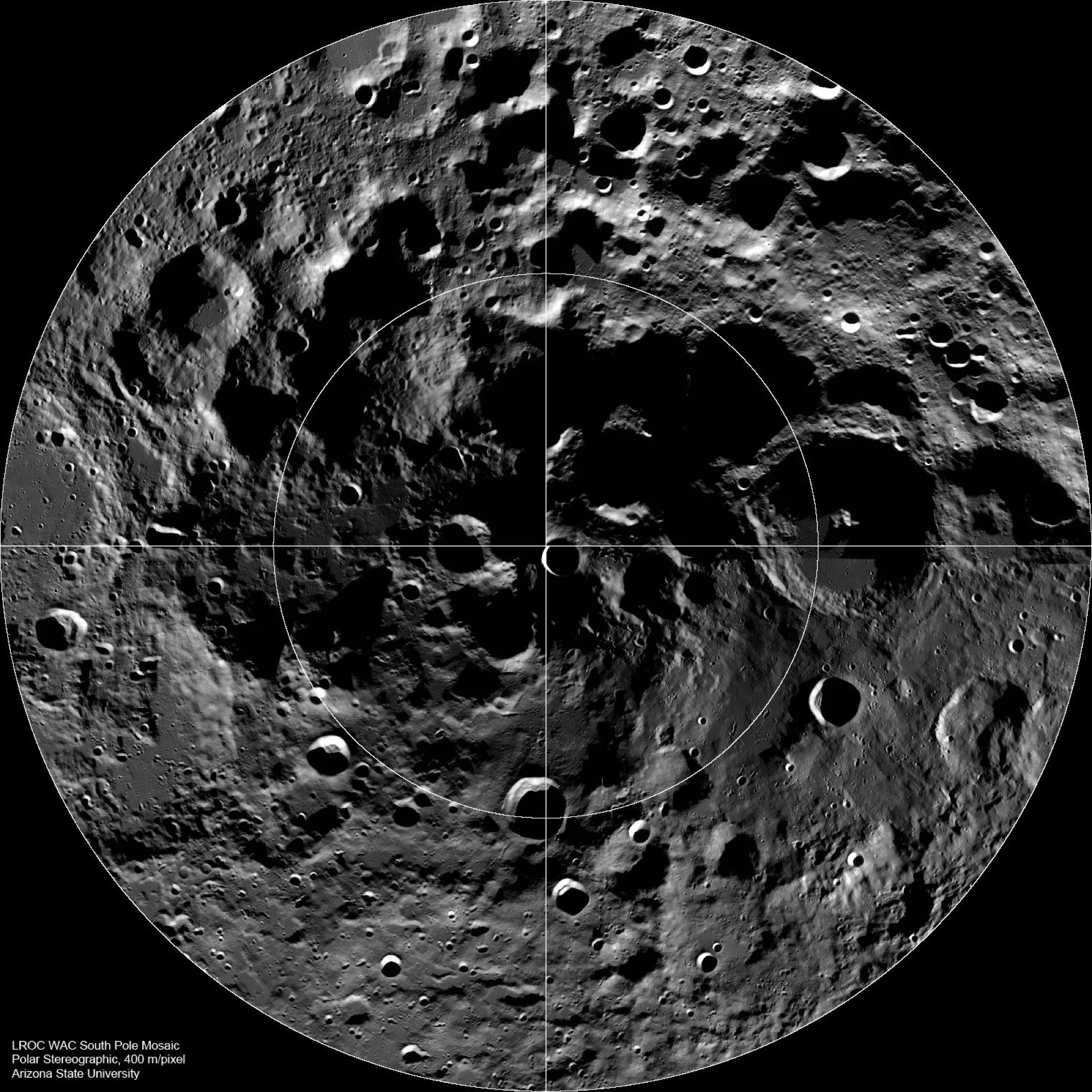
Interlune is not the only company in this race. Other entrants include lunar logistics players like Astrobotic and Intuitive Machines, which do not extract resources directly but provide the delivery infrastructure; ispace, which has flown two HAKUTO-R landers and announced commercial regolith sales to NASA; and the broader lunar south pole water-ice race, which is a separate resource competition focused on a different molecule. Asteroid mining ventures like AstroForge are pursuing an adjacent strategy targeting platinum-group metals, with different physics and a different timeline.
What Comes Next
The realistic timeline runs roughly like this. Interlune's prospecting payload is targeted for a CLPS-delivered landing in 2027 or 2028, contingent on the lander provider. A first end-to-end pilot extraction — a small machine bringing back tens of grams to demonstrate the mass-budget — is the company's stated 2030 goal. Commercial-scale production at multiple kilograms per year would not arrive before the early 2030s even on optimistic assumptions, and a fusion-grade supply chain measured in tonnes is a 2040s question.
That timeline maps reasonably well to NASA's own plans. Artemis IV and V, currently scheduled for the late 2020s and early 2030s respectively, are designed around in-situ resource utilization (ISRU) — the principle that long-term lunar presence becomes affordable only when local resources reduce dependence on Earth launches. ³He is not the headline ISRU resource (water ice and oxygen are), but the same surface infrastructure that supports a permanent moon base is exactly what an extraction company needs as customers, neighbours, and shared logistics.
The honest assessment is that lunar helium-3 mining will likely pay for itself before fusion ever needs it — through cryogenics and neutron detection at twenty-million-dollar-per-kilogram price points — and that fusion would be the upside scenario, not the base case. NASA appears to have reached the same conclusion, which is why a single CLPS task order to a fifty-person Seattle startup is, quietly, one of the more consequential decisions the agency has made about cislunar economics in years.