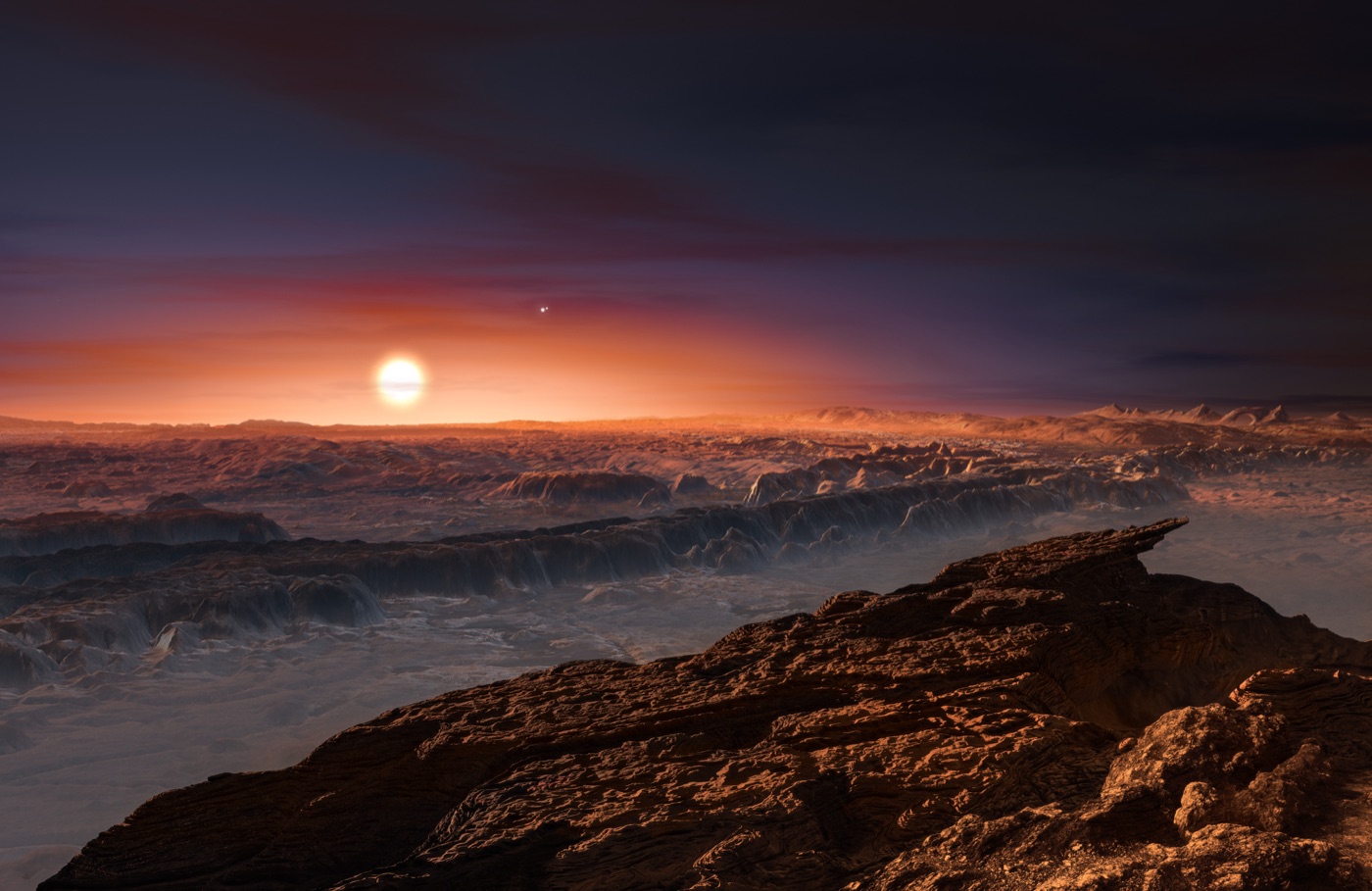
The nearest star to our Sun is Proxima Centauri, a dim red dwarf about 4.24 light-years away. That sounds almost close, as cosmic distances go. It is practically next door compared to the 100,000 light-year width of the Milky Way. But here is the humbling reality: with our current fastest spacecraft technology, getting there would take roughly 73,000 years.
Seventy-three thousand years. That is longer than the entire history of modern human civilization. The distance between stars is not just large -- it is a different category of large, a gulf so vast that crossing it requires us to fundamentally rethink what spacecraft can do.
And yet, serious scientists and engineers are working on it. Not as science fiction, but as engineering problems with potential solutions. So let us ask the big question: could we ever actually travel to another star?
The Scale of the Problem
To appreciate why interstellar travel is so hard, consider some numbers.
Proxima Centauri is approximately 40 trillion kilometers away. Light covers that distance in 4.24 years. The fastest object humanity has ever launched -- the Parker Solar Probe -- reached speeds of about 635,000 kilometers per hour (176 km/s) during its close passes by the Sun. At that speed, it would take roughly 7,200 years to reach Proxima Centauri.
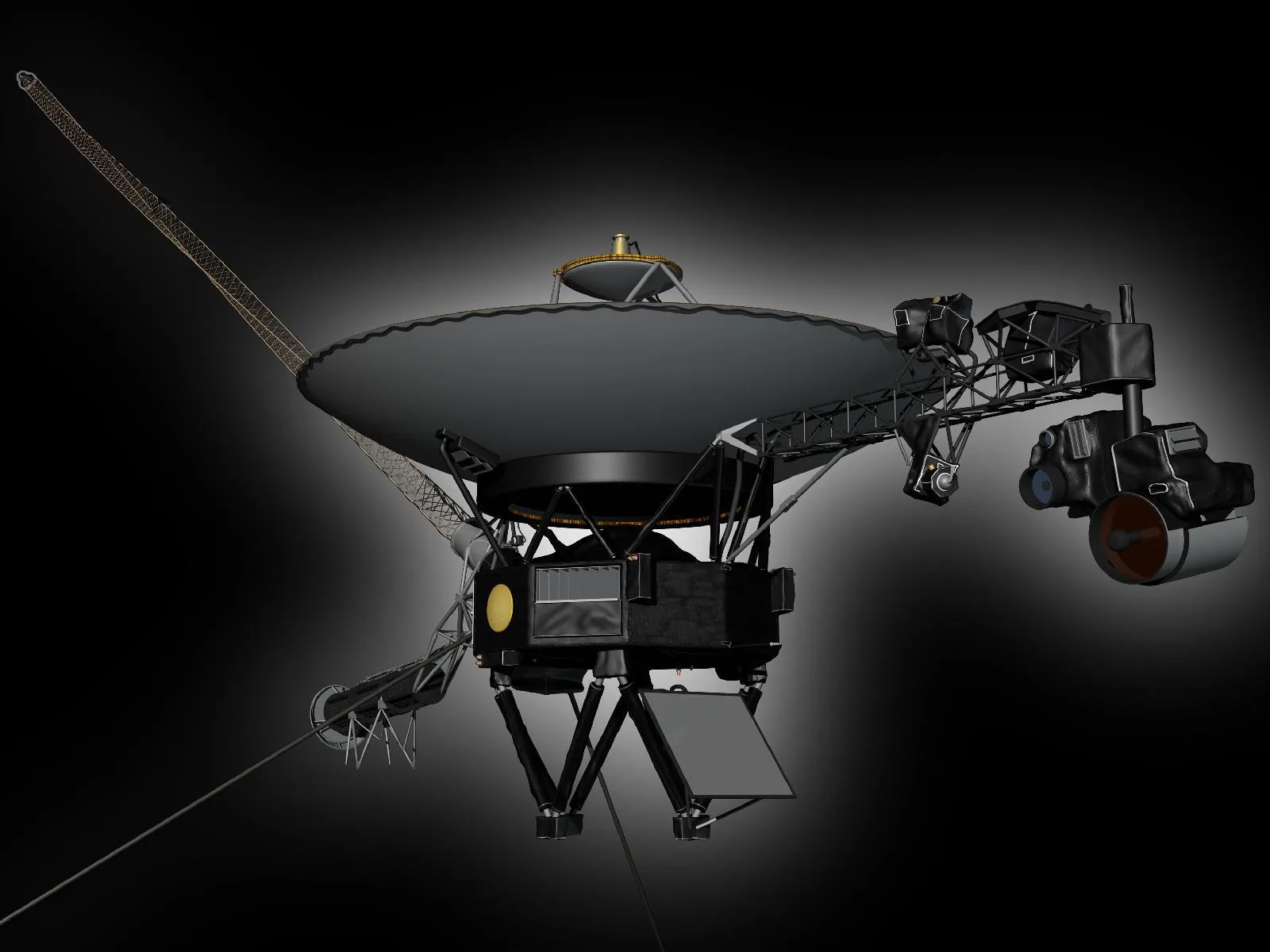
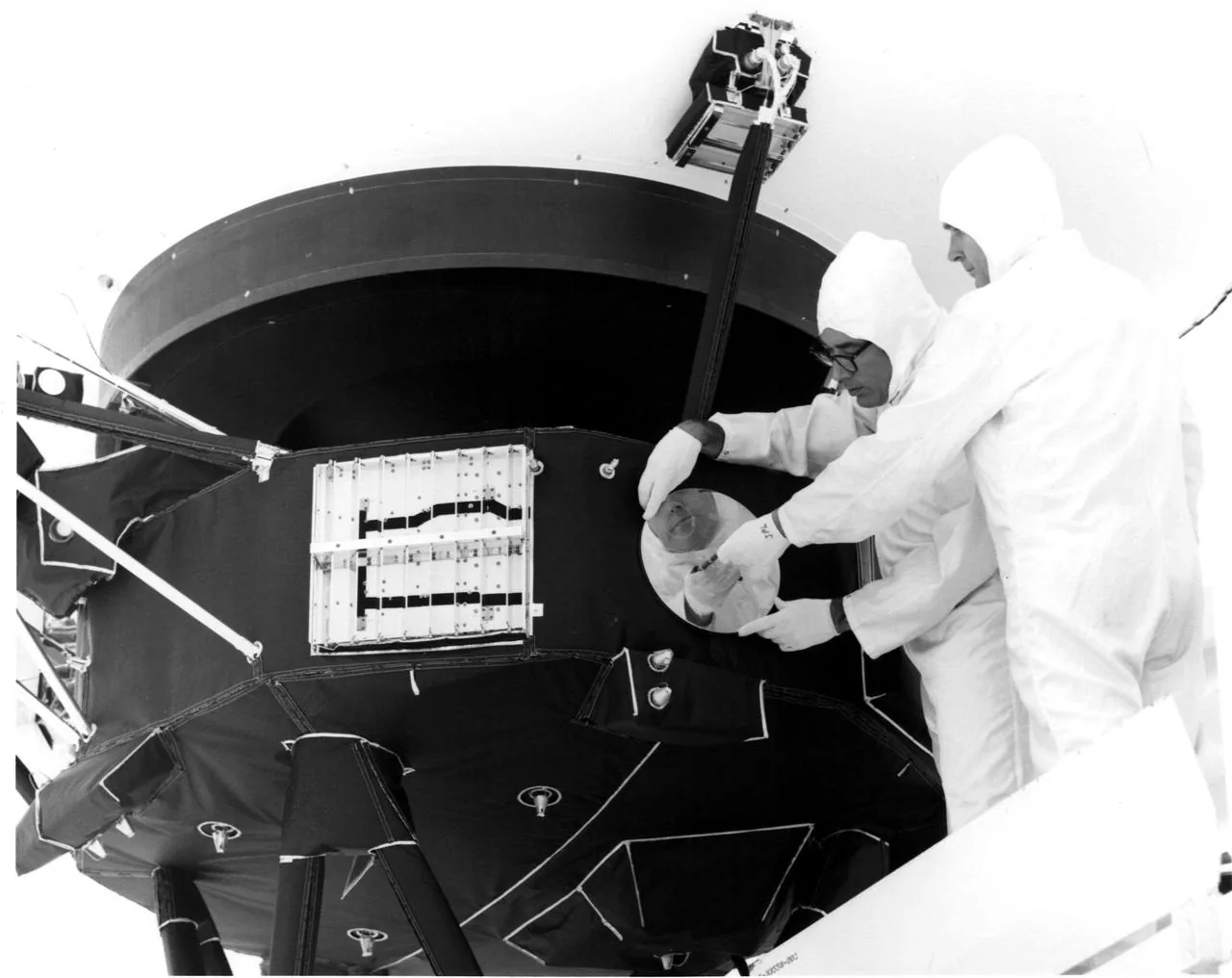
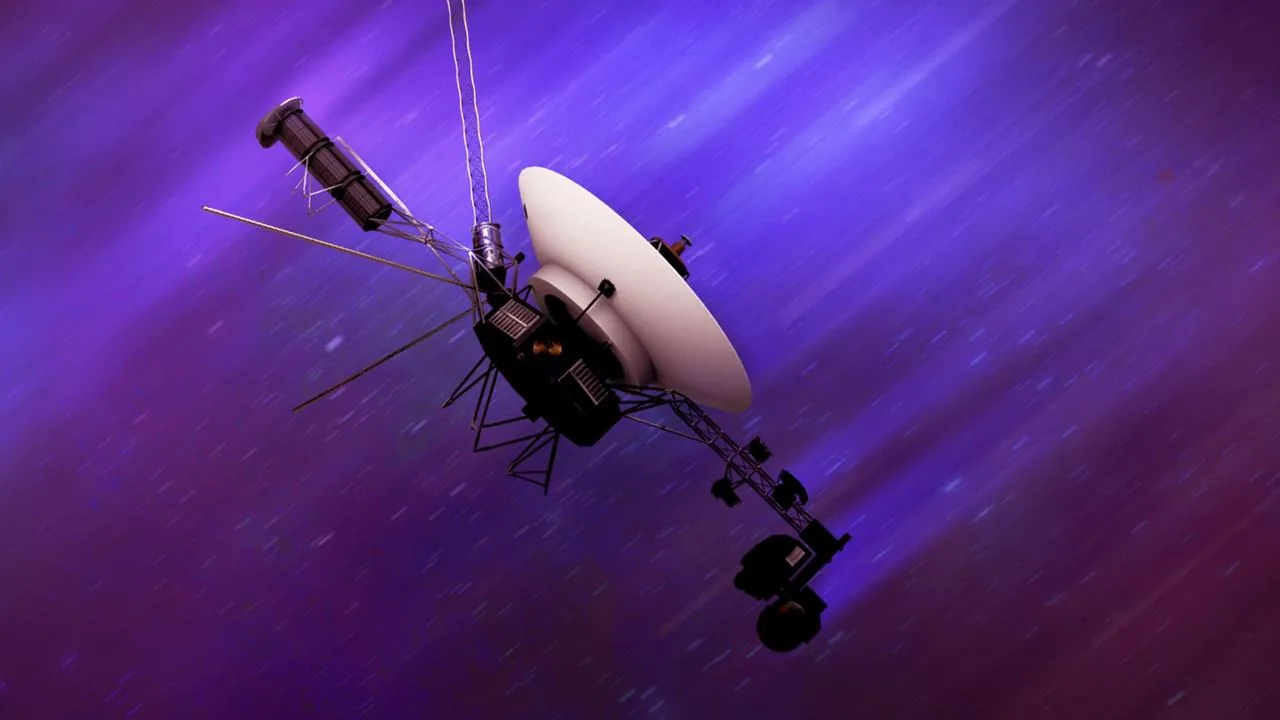
Voyager 1, currently the most distant human-made object at about 164 AU from the Sun, is moving at about 17 km/s relative to the Sun. At that pace, reaching Proxima Centauri would take about 73,000 years. Voyager 1 is not heading toward Proxima Centauri, but even if it were, no one alive today would be around to hear from it when it arrived. Nor their children. Nor their children's children, for roughly 3,000 generations.
The energy requirements are equally daunting. To accelerate even a modest spacecraft to a significant fraction of the speed of light requires staggering amounts of energy. Pushing a 1,000-kilogram probe to 10% of light speed would require kinetic energy equivalent to about 450 million tons of TNT -- roughly 10,000 times the yield of the largest nuclear weapon ever detonated.
These numbers are not meant to be discouraging. They are meant to define the problem clearly, because solving it is one of the most thrilling engineering challenges imaginable.
Breakthrough Starshot: Sailing on Light
The most developed and well-funded interstellar travel concept currently in play is Breakthrough Starshot, announced in 2016 with backing from the late physicist Stephen Hawking and entrepreneur Yuri Milner, with initial funding of $100 million for research and development.
The concept is elegant in its simplicity. Instead of carrying fuel (which adds mass, which requires more fuel, which adds more mass -- the tyranny of the rocket equation), Breakthrough Starshot proposes using a ground-based or space-based laser array to push ultra-lightweight lightsails to relativistic speeds.
The probes -- called StarChips -- would be gram-scale spacecraft, each about the size of a postage stamp, equipped with cameras, sensors, and a communications laser. Attached to each would be a thin, highly reflective sail a few meters across. A powerful laser array (on the order of 100 gigawatts) would fire a focused beam at the sail for about 10 minutes, accelerating the tiny probe to approximately 20% the speed of light -- about 60,000 km/s.
At that speed, the journey to Proxima Centauri would take roughly 20 years. Add about 4 more years for the data to travel back to Earth at light speed, and you are looking at results within a human lifetime. A generation that launches the probes could live to see the data return.
The technical challenges are immense. Building a 100-gigawatt laser array, manufacturing a sail that can survive the intensity of that beam without vaporizing, keeping a gram-scale probe functional during a 20-year coast through interstellar space, communicating across 4 light-years with a spacecraft that has the mass of a paper clip -- each of these is a formidable problem. But none of them violates known physics. They are engineering challenges, not fundamental impossibilities.
Breakthrough Starshot is currently in the research phase, developing enabling technologies. A flyby mission to Alpha Centauri, if all goes well, might be feasible within a few decades -- though the timeline is highly uncertain.
Nuclear Pulse Propulsion: Project Orion and Beyond
Long before laser sails, some of the boldest minds of the 20th century proposed a more brute-force approach to interstellar travel: riding a series of nuclear explosions.
Project Orion, studied from 1958 to 1965, proposed a spacecraft that would drop small nuclear bombs behind it and ride the resulting shockwaves on a massive pusher plate. The physics actually works -- calculations showed that an Orion-type ship could reach perhaps 3-5% of the speed of light, making Alpha Centauri reachable in about 85-140 years. The concept was killed not by physics but by the 1963 Partial Nuclear Test Ban Treaty, which prohibited nuclear explosions in space.
More advanced nuclear concepts have since been explored. Project Daedalus, a 1970s study by the British Interplanetary Society, proposed a two-stage spacecraft powered by inertial confinement fusion -- igniting pellets of deuterium and helium-3 with electron beams. It could theoretically reach about 12% of light speed, arriving at Barnard's Star (5.9 light-years away) in about 50 years.
Project Longshot, studied by NASA and the US Naval Academy in the late 1980s, proposed a similar fusion-powered probe that could reach Alpha Centauri in about 100 years.
None of these have progressed beyond the study phase, in part because the fusion technology they require does not yet exist. But they demonstrate that reaching other stars within a century or so is not inherently impossible -- it "merely" requires mastering controlled fusion propulsion, a technology that would transform civilization in countless other ways as well.
Generation Ships: Carrying Civilization to the Stars
If you cannot make the journey fast, perhaps you can make the travelers patient. A generation ship is a concept where a large, self-sustaining spacecraft carries a human community on a journey that would last centuries or millennia, with successive generations being born, living, and dying en route.
The challenges are less about physics and more about biology, sociology, and ecology. You would need a closed-loop ecosystem capable of recycling air, water, and nutrients indefinitely. You would need a population large enough to maintain genetic diversity (estimates range from a few thousand to tens of thousands). You would need a social structure capable of maintaining purpose and cohesion across dozens of generations.
And you would need propulsion capable of reaching at least a few percent of light speed to keep the journey under a thousand years, or the social and technical challenges become even more extreme.
Generation ships are the stuff of great science fiction, and they may eventually be within our technological reach. But they raise profound ethical questions: is it acceptable to commit your descendants to a voyage they never chose? What obligations do the founders have to the generations who will live and die in transit, never seeing the destination?
Time Dilation: Relativity as an Ally
Einstein's special relativity offers a strange gift to aspiring interstellar travelers: time dilation. The faster you travel relative to a stationary observer, the more slowly time passes for you.
At 50% the speed of light, time aboard the ship passes about 15% slower than on Earth. At 90% of light speed, time aboard passes at less than half the rate. At 99% of light speed, time is dilated by a factor of about 7 -- a journey that takes 100 years from Earth's perspective would feel like only about 14 years to the travelers.
Push to 99.99% of light speed, and the dilation factor reaches about 70. You could theoretically cross the entire Milky Way in a single human lifetime of subjective experience, though 100,000 years would pass on Earth.
This is not a cheat or a loophole. It is real physics, confirmed to extraordinary precision by experiments with particle accelerators and atomic clocks on airplanes and satellites. For travelers willing to accept that they would arrive in a distant future, time dilation makes even very long journeys potentially survivable.
The catch, of course, is that reaching such speeds requires enormous energy. Accelerating to 99% of light speed and then decelerating at the destination roughly doubles the energy requirement compared to a flyby. But the physics of time dilation means that if we ever solve the propulsion problem, the stars are closer than they appear.
Proxima Centauri: The First Target
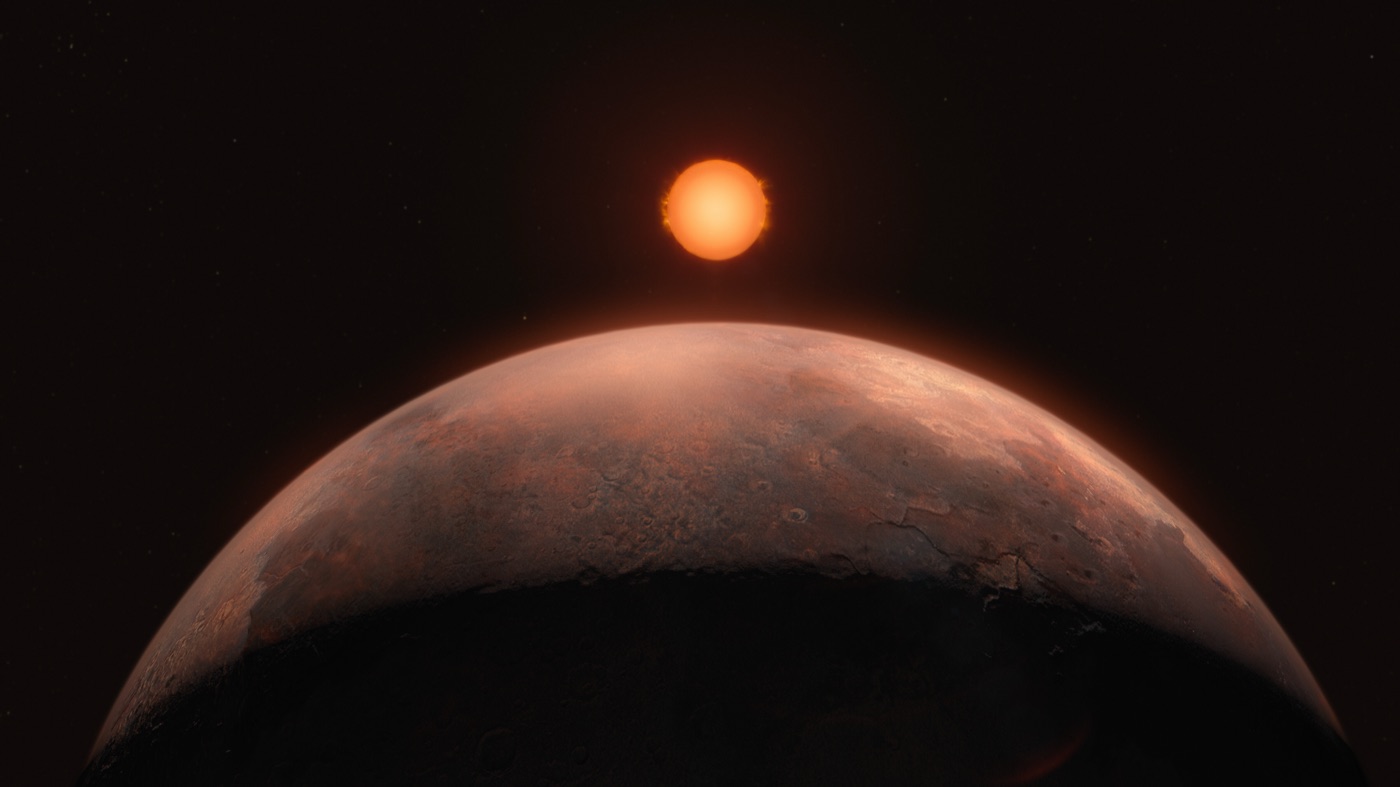
Why does Proxima Centauri keep coming up as the destination? Beyond being the nearest star, it has another compelling feature: it hosts at least one confirmed planet, Proxima Centauri b, orbiting within the star's habitable zone.
Discovered in 2016, Proxima b has a minimum mass of about 1.2 Earth masses and orbits its star every 11.2 days. Because Proxima Centauri is a cool red dwarf, the habitable zone is very close to the star, which means the planet is likely tidally locked (one side always facing the star). Whether it has an atmosphere, liquid water, or any conditions remotely hospitable to life remains unknown -- but finding out is one of the most compelling reasons to go there.
A Breakthrough Starshot flyby would give us only a few hours of close observation as the probe screams past at 20% of light speed. But even a few images and spectroscopic readings would be revolutionary -- the first close-up look at a world orbiting another star.
Realistic Timelines
Let us be honest about where we stand. No interstellar mission will launch this decade, or probably the next. The technologies required -- whether laser arrays, fusion drives, or something else entirely -- need significant further development. Breakthrough Starshot's own estimates suggest a launch might be possible by the 2050s or 2060s at the earliest, with data returning by the 2080s.
For crewed missions, the timeline is much longer. We would need propulsion breakthroughs that are not yet on the horizon, plus advances in closed-loop life support, radiation shielding, and long-duration human spaceflight that go far beyond current capabilities. A crewed interstellar mission is probably a 22nd-century endeavor at the earliest.
But "not yet" is very different from "never." A century ago, reaching orbit seemed fantastical. Fifty years ago, landing on the Moon was the cutting edge of human achievement. Today, we routinely launch, land, and reuse orbital rockets. The pace of progress, while uneven, is real.
The stars are very far away. The journey will be very hard. But the human species has never looked at a distant shore and decided not to try. The question is not whether we will reach another star, but when -- and what we will find when we get there.
The universe has scattered its wonders across light-years of empty space. It is up to us to figure out how to close the gap. And slowly, carefully, audaciously, we are working on it.