An internship at NASA, SpaceX, or ESA is not just a line on your resume. It is often the single most career-defining experience a student in aerospace can have. It is where classroom theory meets real hardware, where you discover what kind of work actually excites you, and where you build the network that will shape your professional life for decades. Many of the engineers leading today's biggest space missions got their start as interns who proved themselves indispensable during a single summer.
But landing one of these positions is competitive, and the application process can be opaque if you do not know how it works. Here is the complete, no-nonsense guide to getting your foot in the door at the organizations shaping the future of spaceflight.
NASA Internships
NASA is the largest employer of interns in the aerospace sector, hosting over 2,000 interns per year across its centers. The opportunities span every discipline: mechanical engineering, computer science, biology, communications, finance, and more.
The OSSI Portal
Nearly all NASA internships are posted through the One Stop Shopping Initiative (OSSI) portal at intern.nasa.gov. This is your primary application gateway. The portal lets you create a single profile and apply to multiple opportunities across all ten NASA centers, plus additional facilities like the Jet Propulsion Laboratory and the Goddard Institute for Space Studies.
Here is how the process works:
-
Create your profile with your academic information, GPA, resume, transcript, and a personal essay. The essay matters more than you think -- NASA mentors often read it to assess whether a student has genuine passion and curiosity, not just qualifications.
-
Browse and apply to specific projects posted by NASA mentors. Each project listing describes the work, the required skills, the center location, and the session dates (spring, summer, or fall). You can apply to up to 15 projects per session.
-
Mentors review and select candidates. This is not a centralized admissions process -- individual NASA scientists and engineers choose the interns they want to work with. That means your application needs to align with the specific project requirements.
Timeline: Summer applications typically open in October and close in early March, with offers extending through March and April. Spring and fall sessions have separate deadlines. Apply early -- some mentors begin reviewing applications as soon as the portal opens.
GPA Expectations: NASA does not publish a hard minimum GPA, but competitive applicants typically have a 3.0 or higher. A 3.5+ GPA is common among selected interns, but a lower GPA can be offset by relevant research experience, skills, or an outstanding essay. Your GPA matters less than what you have done with your education.
NASA Pathways Program
The Pathways Intern Employment Program is NASA's pipeline for converting interns into permanent civil servant positions. Pathways interns work at a NASA center while completing their degree, with the explicit intention that they will transition to full-time employment upon graduation. These positions are posted on USAJobs.gov and are more formal than OSSI internships, with specific eligibility requirements and a structured career track.
Pathways is the golden ticket if you want a long-term NASA career. Competition is stiff, but the payoff is a direct path to a GS-level position at the agency.
JPL Summer Programs
The Jet Propulsion Laboratory, managed by Caltech for NASA, runs its own internship programs that are among the most coveted in the industry. JPL interns work alongside scientists and engineers on active missions -- Mars rovers, the Europa Clipper, asteroid sample return missions, and deep space communications technology.
JPL internships are available for undergraduates, graduate students, and postdocs. Caltech students have a natural advantage due to institutional connections, but JPL actively recruits from universities nationwide. Applications go through the JPL Education website, and the process is separate from NASA OSSI.
What makes JPL special is the culture. Interns are treated as junior colleagues, not coffee runners. You are expected to contribute real work to real missions, and many interns see their contributions fly on spacecraft. The Pasadena campus is a unique environment where you might eat lunch next to someone who navigated Voyager through the outer solar system.
What NASA Interns Actually Do
This is not filing paperwork. Here are real examples of past NASA intern projects:
- Developing thermal models for the Orion spacecraft's heat shield at Johnson Space Center
- Writing flight software for CubeSat missions at Goddard Space Flight Center
- Testing 3D-printed rocket engine components at Marshall Space Flight Center
- Analyzing Mars rover terrain data using machine learning at JPL
- Designing life support system components for the Lunar Gateway at Kennedy Space Center
- Conducting wind tunnel experiments for supersonic retropropulsion at Ames Research Center
Interns typically work 40 hours per week for 10-16 weeks, earn a stipend ($1,000-$1,300 per week for undergraduates, more for graduate students), and receive housing assistance at most centers.
SpaceX Internships
SpaceX does not coddle its interns. From day one, you are expected to contribute at the same level as a junior engineer, and the work you do will end up on rockets that fly. This intensity is what makes a SpaceX internship so valuable -- and so demanding.
What SpaceX Actually Looks For
Forget the myth that SpaceX only hires from MIT and Stanford. They recruit broadly, but they look for specific qualities:
Hands-on project experience is the single most important differentiator. SpaceX wants to see that you have built things -- not just studied them. University rocketry teams, Formula SAE, robotics clubs, personal engineering projects, research lab hardware work. If your resume shows you have manufactured, assembled, tested, and iterated on physical hardware, you are already ahead of most applicants.
Problem-solving ability over pedigree. SpaceX interviews are technically rigorous. Expect questions that test your ability to reason through engineering problems on the spot, not just recall textbook solutions. "How would you design this?" and "What would you do if this failed during a test?" are typical.
Speed and adaptability. SpaceX moves fast. The culture rewards people who can learn quickly, make decisions with incomplete information, and are not afraid to be wrong as long as they learn from it. Communicate this in your application and interview.
Application Process
SpaceX posts internship positions on its careers website (spacex.com/careers). Positions are listed by engineering discipline, location (Hawthorne, CA; Starbase, TX; Cape Canaveral, FL; Redmond, WA), and term. Applications typically open 3-6 months before the start date.
The application asks for a resume, and there is no formal cover letter -- but your resume needs to tell a story. Lead with projects and accomplishments, not just coursework. Quantify your impact ("designed and tested a composite pressure vessel that withstood 3x design pressure" is better than "worked on pressure vessel project").
If selected, you will go through one or more phone or video interviews with the engineering team you would join. These are technical interviews: expect to discuss your past projects in detail and solve engineering problems.
GPA: SpaceX does not publish a minimum, but competitive applicants typically have a 3.5+. More importantly, they want to see that you can apply what you know. A student with a 3.3 GPA and a functioning cubesat on their resume will beat a 4.0 student with no project experience.
SpaceX internships are paid competitively ($30-$48/hour depending on education level) and include housing assistance in Hawthorne and relocation support for other locations.
ESA Opportunities
The European Space Agency offers several programs for students and recent graduates:
Young Graduate Trainee (YGT) Programme
The YGT program is ESA's primary entry point for recent graduates from ESA member states. Positions span engineering, science, IT, operations, legal, finance, and administration across ESA's facilities: ESTEC in the Netherlands, ESOC in Germany, ESRIN in Italy, ESAC in Spain, and others.
YGT positions are full-time, one-year contracts (renewable for a second year) with a competitive net salary. They are open to nationals of ESA member or cooperating states who have completed a master's degree (or equivalent) within the last two years. This is explicitly a career-launching program, and many YGTs go on to permanent ESA positions or senior roles in the European space industry.
Applications are posted on the ESA Careers website, typically in autumn for positions starting the following spring or summer.
ESA Student Internships
ESA also offers shorter student placements and traineeships, though these are less formalized than NASA's programs. The Student Internship Programme provides opportunities at various ESA establishments for students currently enrolled in a master's or bachelor's program. Duration is typically 3-6 months.
National Space Agency Programs in Europe
Many ESA member states have their own space agencies (CNES in France, DLR in Germany, ASI in Italy, UKSA in the UK) with student programs that can serve as stepping stones to ESA.
Rocket Lab Internships
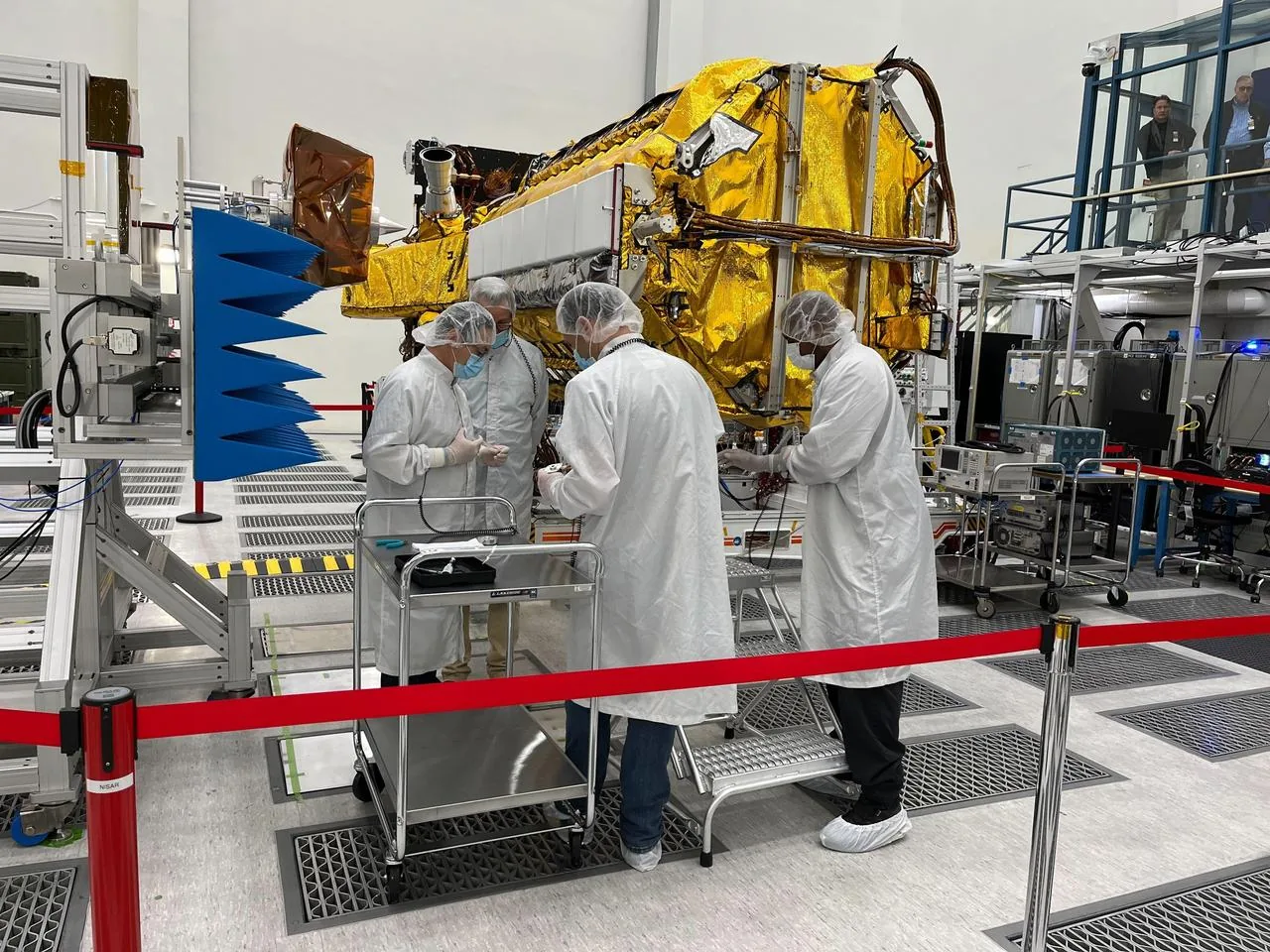
Rocket Lab has rapidly grown its internship program as the company scales production of its Electron rocket and develops the larger Neutron vehicle. Internship positions are available in Long Beach, California; Wallops Island, Virginia; and Auckland, New Zealand.
Rocket Lab internships are particularly attractive for students who want to experience a mid-size company culture -- you get more breadth of experience than at a large prime contractor, with more structure and stability than at a tiny startup. Interns report working on flight hardware early in their tenure, which is rare at larger organizations.
Applications are posted on Rocket Lab's careers page, and the company recruits from a broad set of universities. Like SpaceX, they value hands-on experience and demonstrated initiative.
Timelines and Planning
Here is a general timeline for summer 2026 internship applications:
- August-September 2025: Polish your resume. Join engineering design teams if you have not already. Start identifying target companies and programs.
- September-October 2025: NASA OSSI portal opens for summer. Begin submitting applications. SpaceX typically begins posting summer positions around this time.
- October-December 2025: ESA YGT positions posted. Rocket Lab and other companies post positions on rolling basis. Continue applying.
- January-February 2026: Peak interview season for SpaceX and private sector companies. NASA mentors reviewing OSSI applications.
- February-April 2026: Offers extended. NASA offers may continue into April. Accept early -- positions fill.
The single most important piece of advice: do not wait until your junior or senior year to apply. Many successful interns started as freshmen or sophomores. Even if you do not get in on your first try, the application experience is valuable, and some companies specifically value persistence across multiple application cycles.
Success Stories and Practical Wisdom
The students who land these internships share common traits beyond academic excellence:
They build things outside of class. Every successful intern I have spoken to had at least one significant extracurricular project -- a rocketry team, a cubesat program, a robotics competition, or a personal engineering project. This is not optional. It is the clearest signal that you are someone who acts, not just someone who studies.
They network intentionally. Attend conferences like the AIAA SciTech Forum, the Small Satellite Conference, or the International Astronautical Congress. Most offer discounted or free student registration. Talk to engineers at career fairs -- not just to drop off a resume, but to ask genuine questions about their work.
They apply broadly. Do not apply to only one NASA center or only SpaceX. Apply to JPL, to Rocket Lab, to Firefly Aerospace, to L3Harris, to Northrop Grumman's space division. The experience matters more than the logo on the building. Some of the best learning happens at places you did not plan on going.
They follow up. After applying through a portal, a polite email to the specific team or mentor expressing genuine interest can make a difference, particularly at NASA where mentors choose their own interns.
They do not give up. Rejection is normal. Many astronauts applied to the astronaut program multiple times before being selected. Many engineers applied to their dream company two or three times before getting an offer. Persistence, combined with genuine improvement between attempts, is a distinguishing characteristic of people who end up in this industry.
The aerospace industry needs new talent desperately. The retirement wave of Apollo and Shuttle-era engineers is well underway, and the commercial space boom is creating demand that outpaces the supply of qualified graduates. There has never been a better time to be a student interested in space. The opportunity is there -- you just have to reach for it.