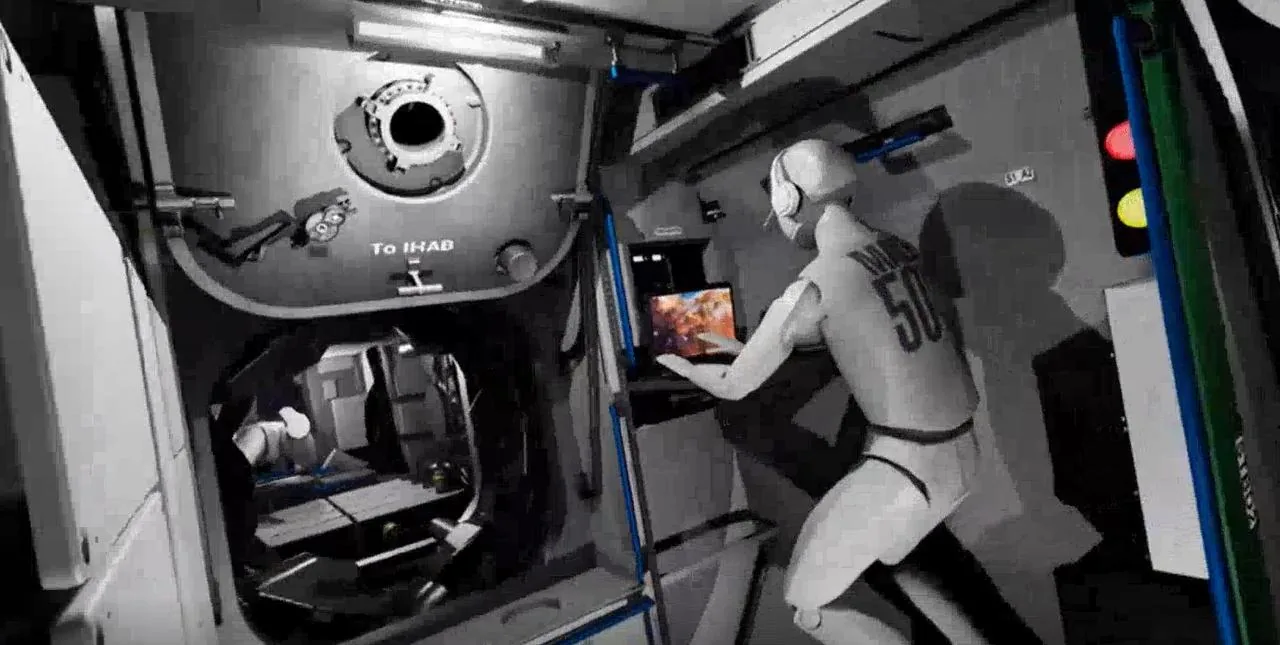
A Space Station Where No Space Station Has Been Before
For over two decades, the International Space Station has orbited Earth at an altitude of roughly 400 kilometers, serving as humanity's permanent foothold in low Earth orbit. It has been a triumph of international cooperation and engineering. But now, space agencies around the world are building something even more ambitious: a space station that will orbit the Moon.
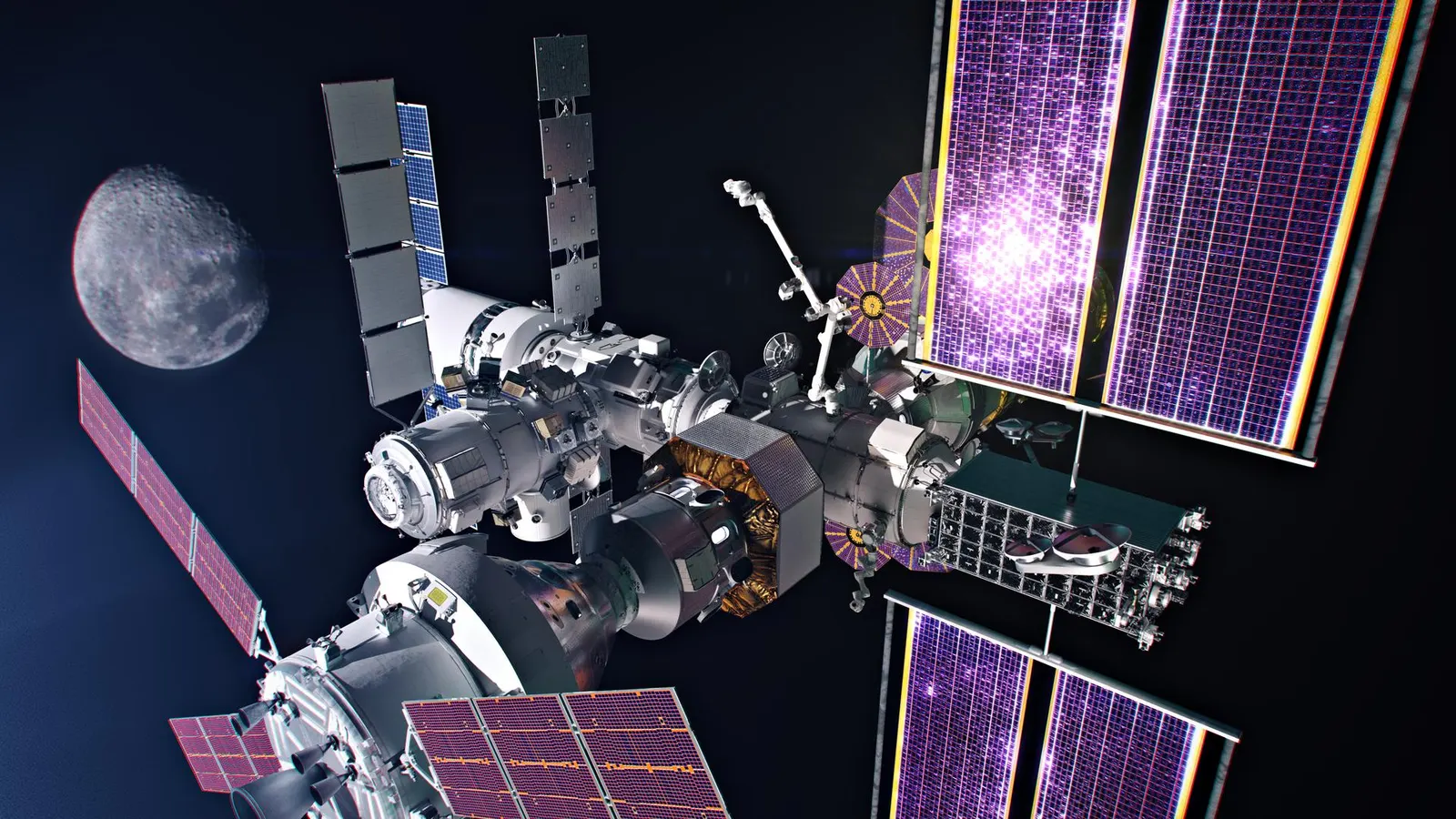
The Lunar Gateway -- often simply called Gateway -- is a small, modular space station that will be placed in a near-rectilinear halo orbit (NRHO) around the Moon. This unique orbit will bring the station as close as 1,500 kilometers to the lunar surface at its nearest point and swing it out to approximately 70,000 kilometers at its farthest. A single orbit will take about six and a half days, and the station's position will provide excellent communication coverage for missions to the lunar south pole.
Gateway is not a replacement for the ISS. It is something fundamentally different: a staging point, a laboratory, and a proving ground for the technologies and operations that will eventually carry humans to Mars and beyond.
Who Is Building Gateway?
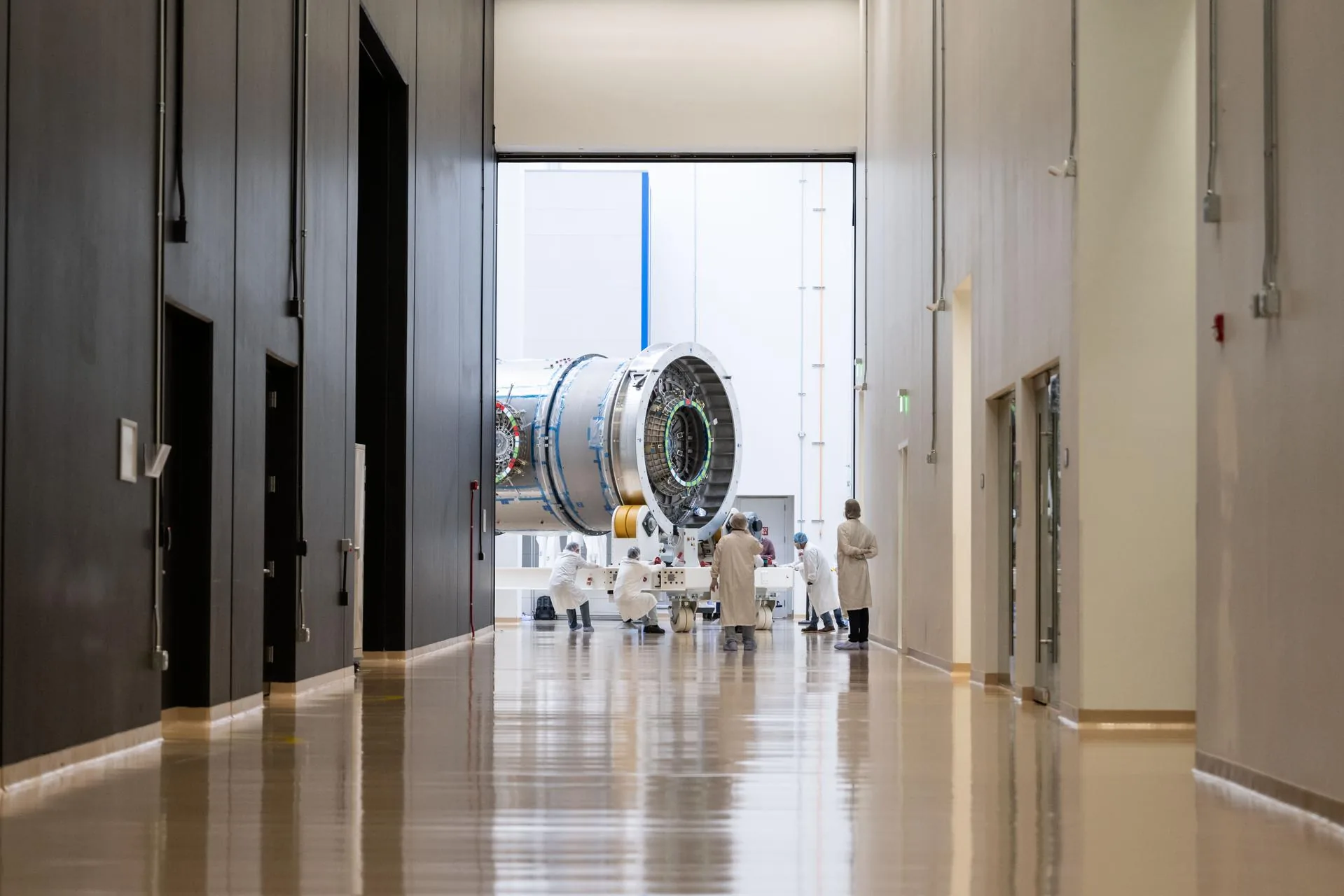
Gateway is a truly international effort, with contributions from four major space agencies under the framework of the Artemis Accords and bilateral agreements.
NASA is leading the program and contributing two foundational modules: the Power and Propulsion Element (PPE) and the Habitation and Logistics Outpost (HALO). NASA has contracted Maxar Technologies (now part of MDA Space) to build the PPE, a high-power solar electric propulsion spacecraft that will provide Gateway with 60 kilowatts of power -- roughly equivalent to powering 15 average American homes. The HALO module is being built by Northrop Grumman and will serve as the initial living quarters and command center, providing pressurized volume for crew operations, docking ports, and life support systems.
ESA (European Space Agency) is contributing the ESPRIT module (European System Providing Refueling, Infrastructure and Telecommunications), which will add communication capabilities, additional living space, and a refueling interface. ESA is also providing the International Habitat (I-HAB) module, which will expand Gateway's pressurized volume and crew capacity.
JAXA (Japan Aerospace Exploration Agency) is contributing to I-HAB with life support and thermal control systems, as well as providing batteries for the station.
CSA (Canadian Space Agency) is building Canadarm3, a next-generation robotic arm system that will be capable of autonomous operations -- maintaining the station and assisting with payload handling even when no crew is aboard. Canada's contribution secured Canadian astronauts seats on Artemis missions, making Canada the first international partner confirmed for crewed lunar missions.
Getting Gateway to the Moon
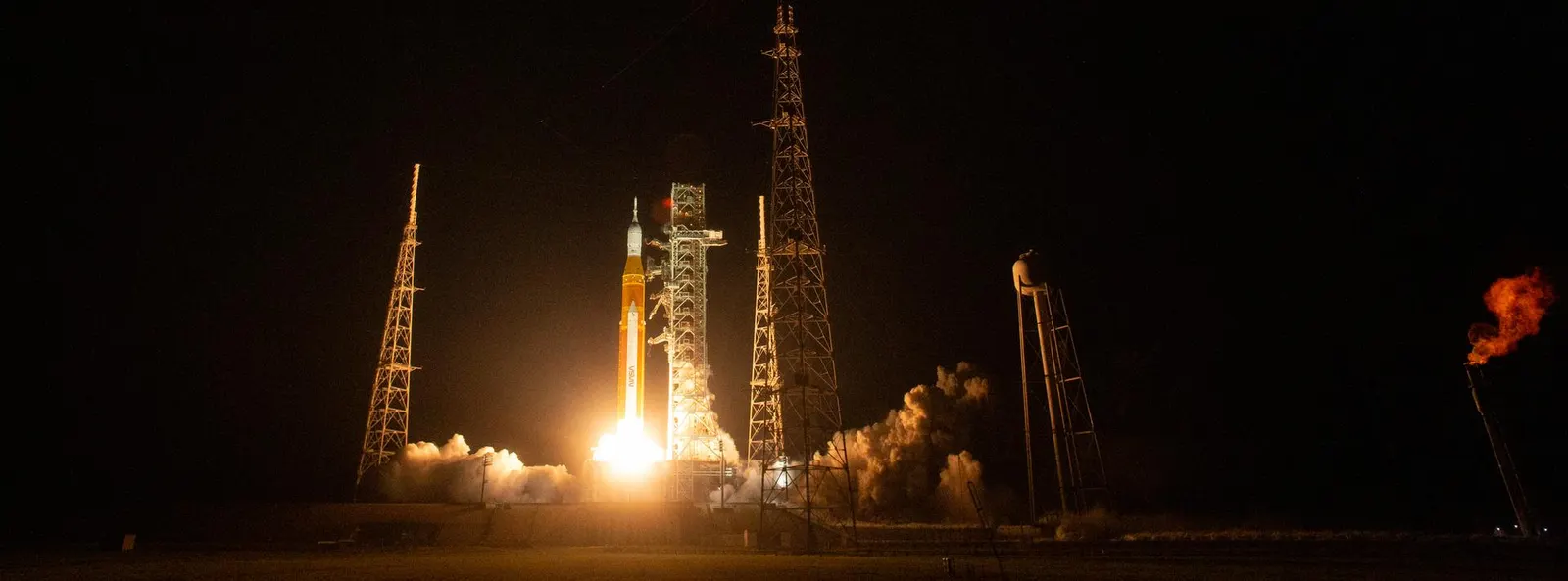
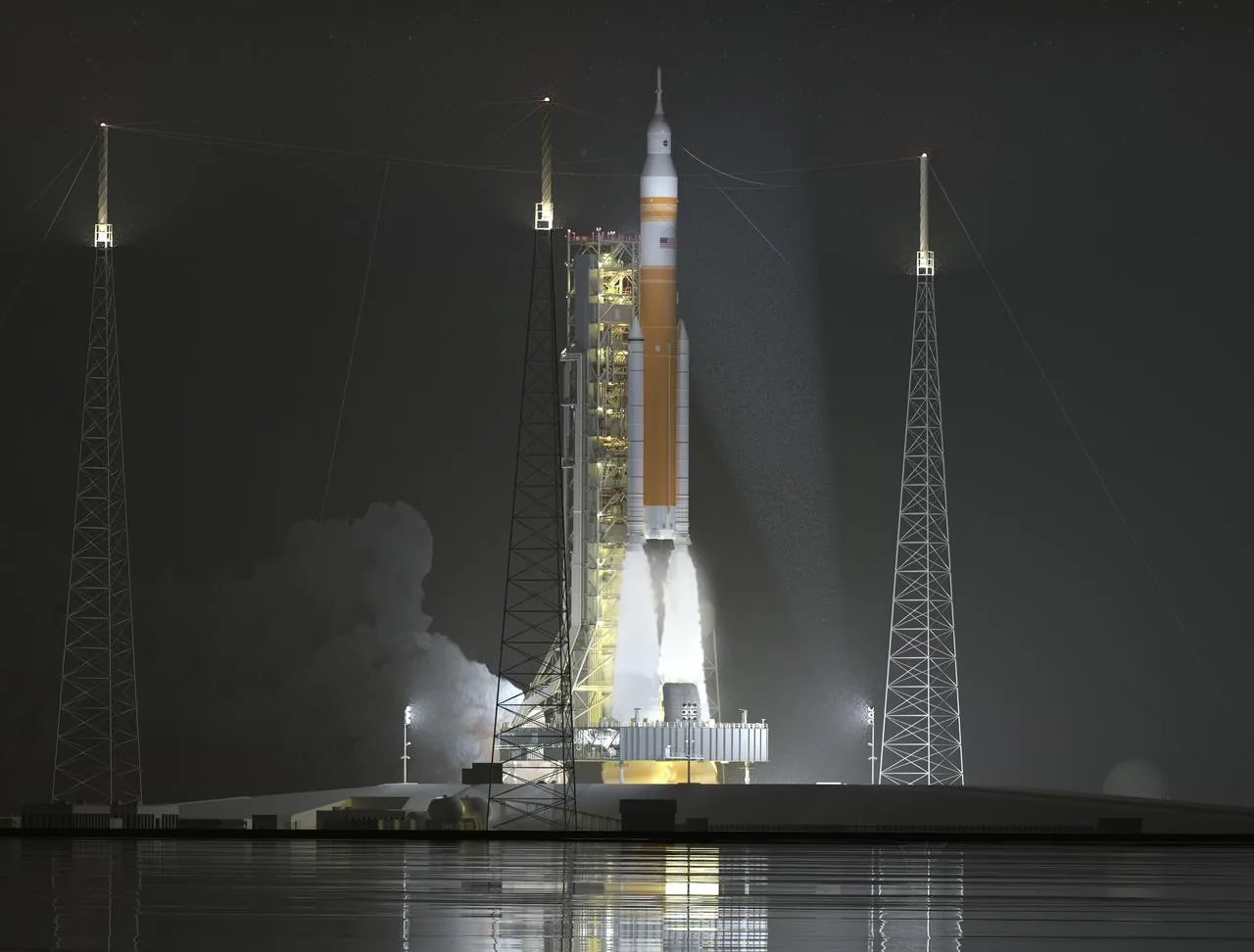
Here is where things get especially exciting. NASA selected SpaceX to launch the combined PPE and HALO modules to the Moon aboard a Falcon Heavy rocket. This will be one of the most significant Falcon Heavy missions ever flown, sending the integrated modules on a roughly year-long transit to their operational NRHO orbit using the PPE's solar electric propulsion system.
The launch has been targeted for no earlier than 2025, though the schedule has experienced delays typical of first-of-its-kind deep space hardware development. Once PPE-HALO reaches its operational orbit and completes checkout, subsequent modules will be delivered over the following years, gradually expanding the station's capabilities.
The SpaceX Dragon XL cargo spacecraft has been selected to deliver supplies, science experiments, and logistics to Gateway. These uncrewed resupply missions will be conceptually similar to the cargo missions that have sustained the ISS for years, but operating across the vast distance between Earth and lunar orbit.
Life Aboard Gateway
Gateway will be significantly smaller than the ISS. While the ISS has a pressurized volume of about 916 cubic meters -- comparable to the interior of a Boeing 747 -- Gateway's initial configuration will offer roughly 55 cubic meters, closer to the interior of a large studio apartment. The full configuration with I-HAB and ESPRIT will expand this, but Gateway will always be a compact outpost rather than a sprawling orbital complex.
Unlike the ISS, which has been continuously crewed since November 2000, Gateway will not have a permanent human presence -- at least not initially. Crews of four astronauts will visit Gateway aboard NASA's Orion spacecraft for stays of approximately 30 to 90 days before returning to Earth. Between crew visits, Gateway will operate autonomously, with Canadarm3 performing maintenance tasks and ground controllers monitoring systems remotely.
During their stays, crew members will conduct a range of activities. Scientific research will be a primary focus, with experiments in life sciences, radiation monitoring, and technology demonstrations that leverage Gateway's unique position in deep space. The radiation environment in NRHO is significantly different from low Earth orbit -- crew will be exposed to higher levels of galactic cosmic rays and solar particle events, making Gateway a critical testbed for understanding and mitigating deep-space radiation risks for future Mars missions.
Gateway will also serve as a staging and command point for lunar surface missions. Under the Artemis architecture, astronauts will travel from Earth to Gateway in Orion, transfer to a human landing system (such as SpaceX's Starship HLS), descend to the lunar surface for exploration campaigns, then return to Gateway and board Orion for the trip home. This architecture allows for mission flexibility -- Gateway can support landings at various locations on the Moon, not just a single fixed site.
Why Not Just Go Straight to the Surface?
This is a fair question, and one that has sparked genuine debate within the space community. Some argue that Gateway adds complexity and cost to lunar missions and that direct-to-surface architectures would be simpler. NASA has acknowledged this by planning Artemis III as a direct landing mission that does not use Gateway. The station becomes integral to the architecture starting with Artemis IV and subsequent missions.
The case for Gateway rests on several arguments. First, it enables reusable lunar landers. A lander that only needs to travel between Gateway and the surface, rather than making the full Earth-to-Moon round trip, can be smaller, lighter, and designed for multiple uses. Second, Gateway provides a safe haven in lunar orbit -- if a problem develops during a surface mission, crew can return to the station rather than attempting an immediate Earth return. Third, Gateway serves as a platform for science and technology development that benefits future Mars missions. And fourth, it is a framework for sustained international cooperation, keeping partner nations invested in a shared lunar exploration program.
The Technology Frontier
Gateway incorporates technologies that have never been used together in deep space. The PPE's advanced solar electric propulsion system uses Hall-effect thrusters running on xenon propellant to maintain the station's orbit with extraordinary fuel efficiency. This same type of propulsion could power future Mars cargo vehicles.
The station's communication systems will rely on both radio frequency and laser (optical) links to maintain high-bandwidth connections with Earth and with assets on the lunar surface. Life support systems will be more autonomous and resource-efficient than those on the ISS, a necessity given that resupply missions will be less frequent and more expensive.
Radiation shielding and monitoring will be critical. Gateway will carry dosimeters and radiation detectors to build a comprehensive picture of the deep-space radiation environment, data that is essential for designing the shielding and countermeasures that will protect crews on multi-year Mars missions.
Gateway as a Stepping Stone to Mars
NASA has been explicit that Gateway is not just about the Moon. It is a Mars proving ground. The six-and-a-half-day NRHO orbit means that crew aboard Gateway will spend extended periods far from Earth, experiencing communication delays and operational autonomy that simulate, in miniature, the conditions of a Mars transit.
The systems tested on Gateway -- life support, radiation protection, autonomous robotics, deep-space communication, solar electric propulsion -- are all directly applicable to Mars mission architectures. In many ways, Gateway is where humanity will learn how to live and work in deep space before committing to the much longer and more dangerous journey to the Red Planet.
A New Chapter in International Space Cooperation
The ISS taught us that nations with very different political systems and interests can build something extraordinary together in space. Gateway extends that lesson to a new frontier. With contributions from the United States, Europe, Japan, and Canada -- and the potential for additional partners -- Gateway represents a shared commitment to peaceful exploration that transcends any single nation's ambitions.
When the first crew floats through Gateway's hatch and looks out a window to see the Moon filling their view, it will mark the beginning of a new chapter in human spaceflight. Not just a visit to the Moon, but the establishment of permanent infrastructure in deep space. A stepping stone, a laboratory, a home away from home -- 384,400 kilometers from Earth.
The Gateway is not just a space station. It is a gateway, in the truest sense of the word, to everything that comes next.