Space is no longer a sanctuary. It is a battlefield — and the world's major military powers are racing to dominate it. In 2026, the militarization of space has accelerated faster than at any point since the Cold War, driven by three converging forces: the United States' $185 billion Golden Dome missile defense initiative, China's rapid expansion of anti-satellite weapons and orbital computing, and Russia's development of nuclear-armed space weapons that threaten to destroy entire satellite constellations.
This article provides a comprehensive analysis of every major space defense program worldwide — the technologies, the timelines, the contractors, the budgets, and the geopolitical stakes. It compares the preparedness and progress of the United States, China, Russia, Europe, India, Japan, South Korea, and Israel across every dimension of space warfare: missile defense, anti-satellite weapons, satellite constellations, directed energy systems, and space domain awareness.
The Golden Dome: America's $185 Billion Space Shield
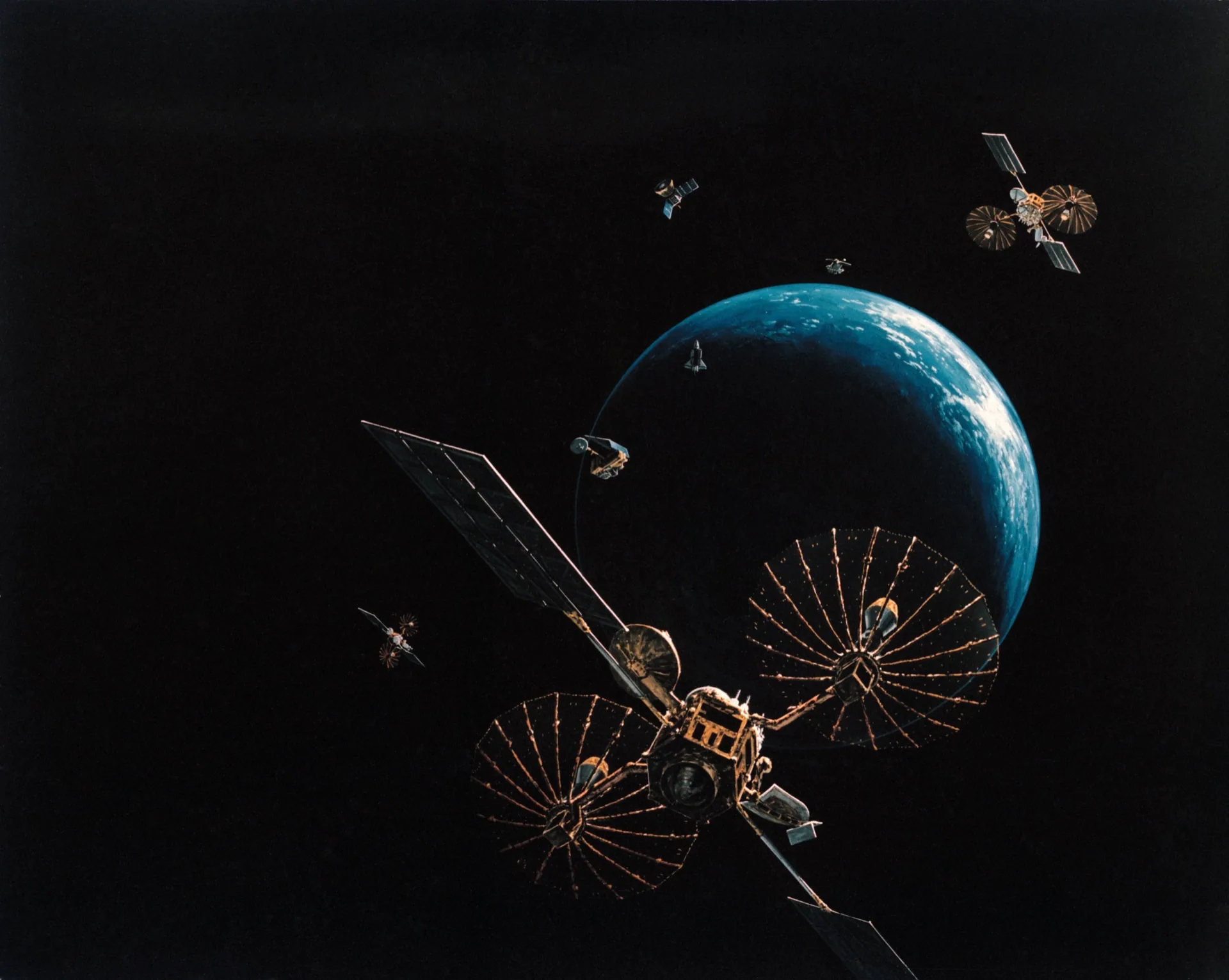
On May 20, 2025, President Trump announced the Golden Dome for America — the most ambitious missile defense program since Ronald Reagan's Strategic Defense Initiative (SDI, or "Star Wars") in the 1980s. Named after Israel's Iron Dome, the system aims to shield the continental United States from intercontinental ballistic missiles, hypersonic glide vehicles, and cruise missiles using a layered "system of systems" that integrates ground-based interceptors, space-based sensors, and potentially weapons stationed in orbit.
Scale and Cost: The program was initially estimated at $175 billion over three years. By March 2026, the official estimate had risen to $185 billion after requests for additional space capabilities. The fiscal 2026 defense appropriations bill included $13.4 billion specifically for space and missile defense systems under the Golden Dome umbrella.
Key Components:
- Sensor satellites: Constellations of missile-tracking satellites in low Earth orbit, building on the Space Development Agency's Proliferated Warfighter Space Architecture (PWSA)
- SpaceX Starshield: A reported $2 billion contract for a 600-satellite constellation dedicated to missile targeting and tracking
- Interceptor systems: Ground-based and potentially space-based interceptors capable of engaging threats in boost phase, midcourse, and terminal phase
- Directed energy weapons: Research into space-based lasers and ground-based high-energy laser systems for boost-phase missile defense
- Command and control software: Anduril Industries and Palantir Technologies are jointly developing the AI-powered software backbone that will fuse sensor data and coordinate interceptor launches in real time
Challenges: The Government Accountability Office has warned that satellites built for Golden Dome, including the SDA's PWSA and SpaceX Starshield satellites, have not demonstrated reliable communication links between satellites in different orbital planes. The physics of boost-phase intercept from orbit remains unproven at scale — the same fundamental challenge that doomed the original SDI program. Critics argue the $185 billion price tag is optimistic, noting that missile defense programs have historically exceeded budgets by 200–400 percent.
U.S. Space Force and the Proliferated Warfighter Space Architecture
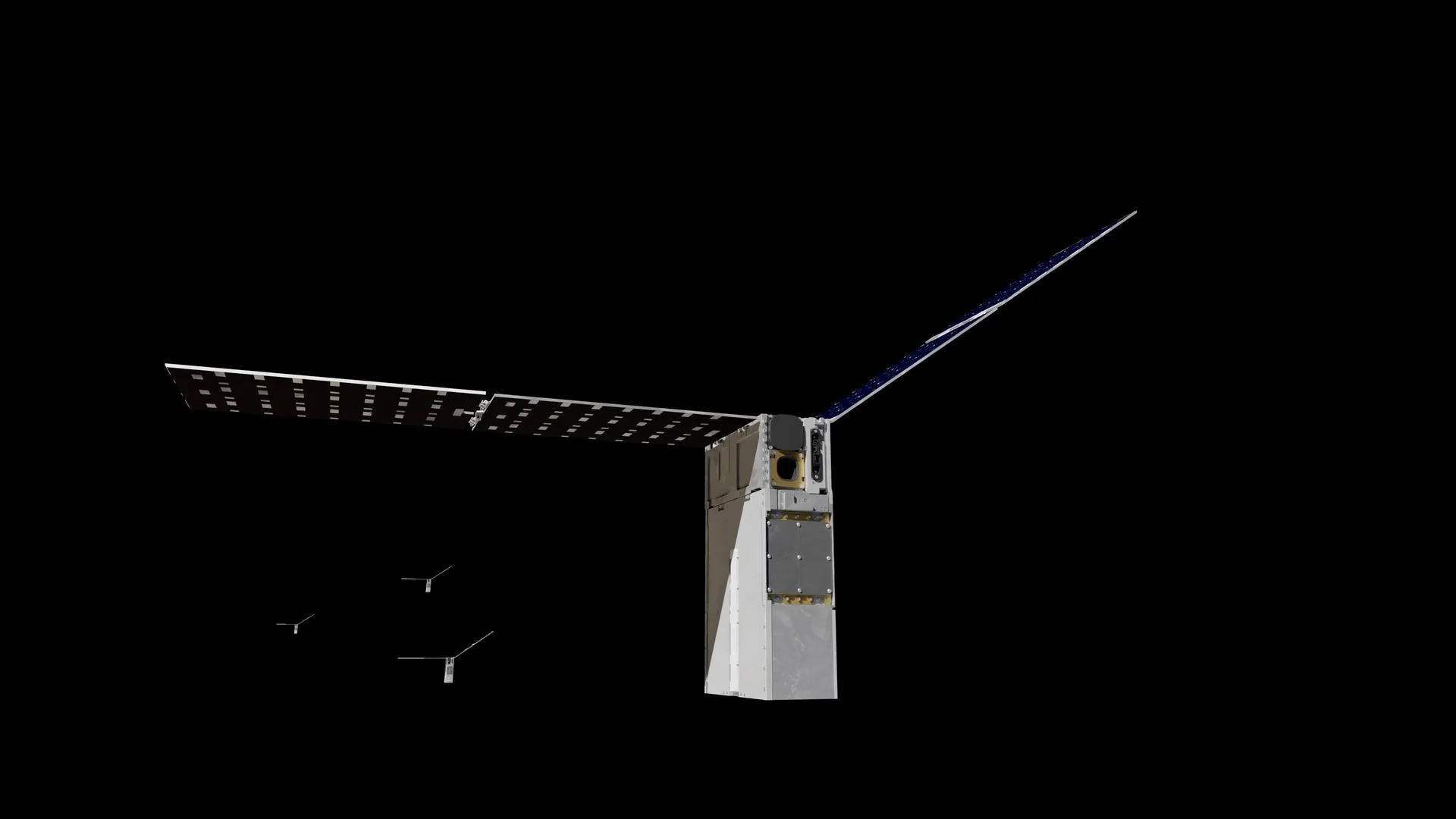
Beyond Golden Dome, the U.S. Space Force is building the most extensive military satellite infrastructure in history through the Proliferated Warfighter Space Architecture (PWSA) — a network of hundreds of small, networked satellites designed to provide missile tracking, secure communications, and battle management across all military domains.
Budget: Space Force funding in fiscal 2026 approaches $40 billion — a record — reflecting the priority placed on space dominance.
Key Programs:
| Program | Satellites | Cost | Purpose | Timeline |
|---|---|---|---|---|
| PWSA Tranche 1 | 126 | ~$2.4B | Initial missile tracking + data transport | Deploying 2024–2025 |
| PWSA Tranche 2 | ~200 | ~$4B | Enhanced tracking, fire control quality data | Deploying 2025–2026 |
| PWSA Tranche 3 | 72 (tracking) | $3.5B | Global persistent missile warning, hypersonic tracking | Launch FY2029 |
| MILNET | 480 | Classified | Dedicated military communications mesh | First launch mid-2026, IOC late 2027 |
| Starshield | 100+ (initially) | $70M+ (initial) | Military-grade Starlink variants | Ongoing through 2029 |
Prime Contractors for Tranche 3 Tracking Layer:
- Lockheed Martin: $1.1 billion for 18 satellites
- L3Harris Technologies: $843 million for 18 satellites
- Rocket Lab: $805 million for 18 satellites
- Northrop Grumman: $764 million for 18 satellites
The PWSA represents a fundamental shift from the traditional model of a few exquisite, expensive satellites to a proliferated architecture of many cheaper satellites. If an adversary destroys one, the network continues to function. The Space Force's "Race to Resilience" initiative aims to achieve battle-ready architectures by the end of 2026.
SpaceX MILNET: Perhaps the most significant new program, MILNET is a dedicated 480-satellite military communications constellation developed with SpaceX, separate from Starlink. First deployment is expected mid-2026, with initial operating capability by late 2027. The system will provide high-bandwidth, jam-resistant communications for global military operations.
China: The Peer Competitor

China has built the most comprehensive military space program outside the United States, and in some areas may be approaching parity.
Anti-Satellite Weapons (ASAT): China possesses the broadest array of counterspace capabilities of any nation:
- Direct-Ascent ASAT (DA-ASAT): At least one, and possibly three, operational systems capable of destroying satellites in low Earth orbit. LEO DA-ASAT capabilities are likely mature and may be operationally fielded on mobile launchers. Capabilities against medium Earth orbit (MEO) and geostationary orbit (GEO) targets are still in development.
- Co-orbital ASAT: China has conducted multiple rendezvous and proximity operations (RPO) with its own satellites, demonstrating the ability to maneuver close to and potentially disable or capture adversary spacecraft.
- Ground-based lasers: China has likely fielded ground-based laser weapons capable of blinding or dazzling low-orbit satellites. By the mid-to-late 2020s, higher-power systems may threaten satellite structures directly.
- Electronic warfare: Satellite jammers targeting GPS, communications, and reconnaissance satellites. China has demonstrated ground-based GPS jamming across wide areas.
- Cyber operations: Persistent campaigns targeting satellite ground stations and control systems.
Military Satellite Constellations: China operates an extensive constellation of military and dual-use satellites, including:
- Yaogan series reconnaissance satellites (optical, radar, electronic intelligence)
- Beidou navigation constellation (35 satellites, providing military-grade positioning independent of GPS)
- Tianlian data relay satellites
- Shijian technology demonstration satellites (some believed to have counterspace roles)
Space Computing Constellation: The Three-Body Computing Constellation, launched by Zhejiang Lab beginning in May 2025, places AI models directly on satellites. While nominally civilian, the dual-use potential is obvious — real-time AI processing of satellite imagery and sensor data in orbit eliminates the latency of downlinking data to Earth.
Timeline Comparison with the U.S.:
| Capability | United States | China |
|---|---|---|
| LEO ASAT (kinetic) | Demonstrated 2008 (SM-3) | Demonstrated 2007 |
| Co-orbital ASAT | Under development | Demonstrated multiple times |
| Ground-based laser (dazzle) | Operational | Likely fielded |
| Ground-based laser (structural) | R&D phase | Expected mid-to-late 2020s |
| Military satcom constellation | MILNET (2026–2027) | Operational |
| Missile tracking from space | PWSA Tranche 1–3 | In development |
| Space-based weapons | Golden Dome (TBD) | Unknown |
Russia: The Nuclear Wildcard
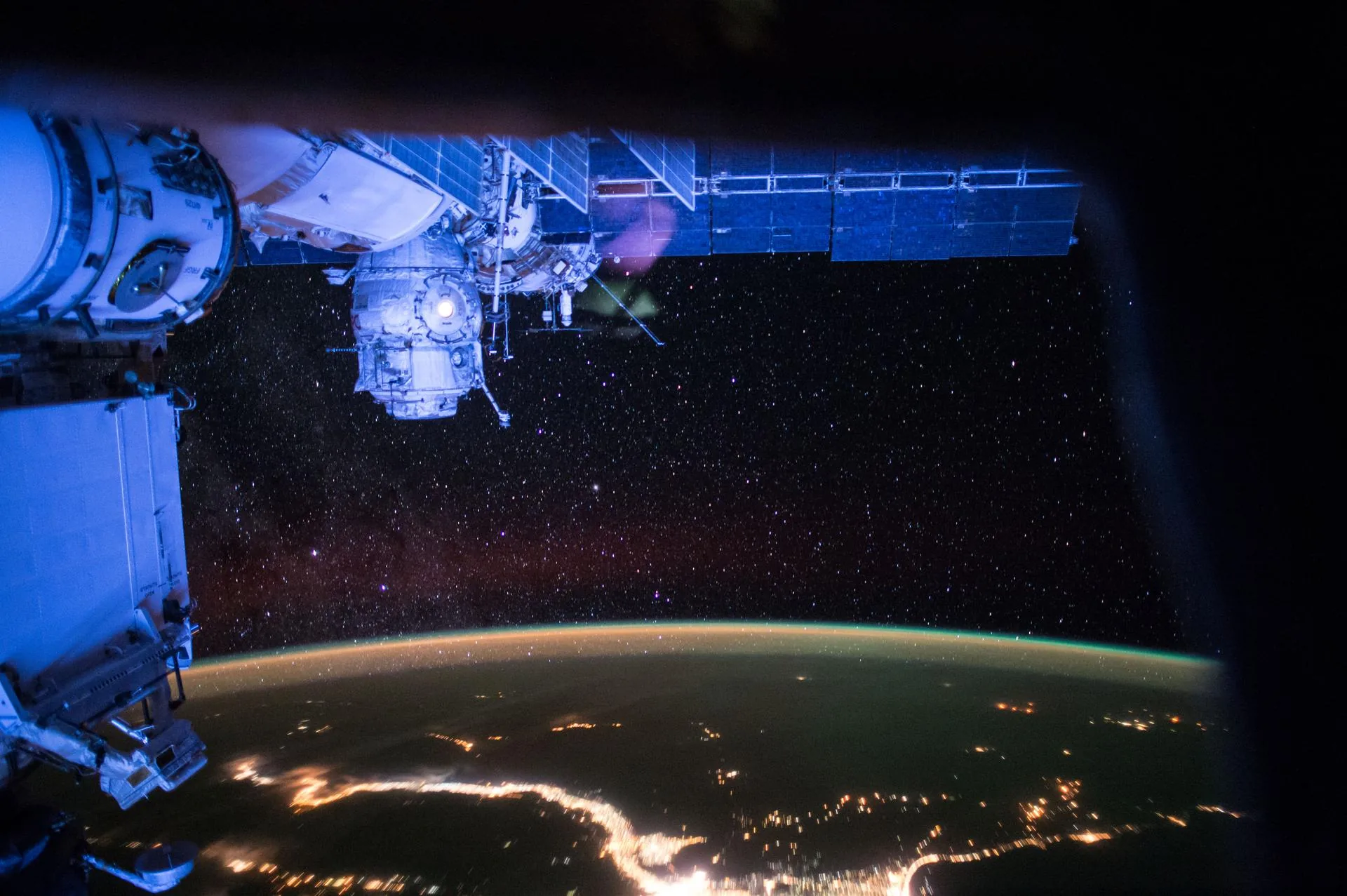
Russia's military space capabilities have declined from their Soviet-era peak, but Russia remains a major counterspace threat — particularly through its most alarming development: a nuclear anti-satellite weapon.
Nuclear ASAT Program: Since revelations surfaced in February 2024, intelligence agencies have confirmed Russia is developing an orbiting anti-satellite weapon with a nuclear warhead. If deployed, such a weapon could indiscriminately destroy, blind, or disable thousands of the approximately 9,500 commercial and military satellites currently in orbit. The electromagnetic pulse (EMP) from a nuclear detonation in space would not distinguish between Russian, American, Chinese, or European satellites — making it a weapon of mass destruction in the space domain.
In April 2024, the UN Security Council voted on language affirming the Outer Space Treaty's prohibition on nuclear weapons in orbit. Russia vetoed the resolution. China abstained.
Starlink Targeting: NATO intelligence agencies have warned that Russia is developing a conventional anti-satellite weapon specifically designed to target SpaceX's Starlink constellation — which has provided critical battlefield communications to Ukraine — by releasing destructive clouds of shrapnel in orbit.
Other Capabilities:
- Peresvet: A ground-based high-energy laser system deployed with mobile ICBM units, likely capable of dazzling or blinding satellites
- Nudol (PL-19): A direct-ascent ASAT missile system that has undergone multiple tests
- Cosmos 2542/2543: In 2020, Russia deployed a satellite that maneuvered near a U.S. National Reconnaissance Office satellite and released a sub-satellite, demonstrating co-orbital inspection or attack capabilities
- Electronic warfare: Russia maintains extensive satellite jamming capabilities, demonstrated in Ukraine and Syria
Russia's overall space capabilities are constrained by economic limitations and the diversion of resources to the war in Ukraine. However, the nuclear ASAT concept represents an asymmetric threat that could negate the United States' overwhelming advantage in space-based systems with a single weapon.
Europe: Awakening to Space Defense
Europe has historically treated space as a civilian domain. That is changing rapidly.
France — Europe's Space Defense Leader: French President Emmanuel Macron declared that "space is no longer a sanctuary; it has become a battlefield" when inaugurating France's expanded Space Command in November 2025. France has announced €4.2 billion in additional military space spending between 2026 and 2030. Key programs include:
- CSO-3 military observation satellite (launched March 2025)
- Proximity-inspection satellites for approaching and monitoring suspicious objects in orbit (demonstration flights planned for the second half of the decade)
- Enhanced ground stations for satellite command and control resilience
Germany — The New Contender: Germany announced €35 billion for space security between 2026 and 2030, potentially overtaking France as Europe's premier military space player. The investment covers new satellite constellations for early warning, reconnaissance, and communications.
United Kingdom: The SKYNET 6A military communication satellite, scheduled for launch in 2025, will provide secure military communications until at least 2040.
EU-Level Programs:
- GovSatCom: A €2.5 billion dedicated communications constellation for EU armed forces and government agencies, with first satellites launching in 2026
- European Defense Fund: New programs for on-orbit servicing feasibility (€49M) and a prototype ISR satellite constellation (€66M)
- ESA Ministerial Council: Delivered €22.1 billion for 2026–2028, the largest budget in ESA history, with unprecedented focus on security and defense
- Galileo Second Generation: Centimeter-level positioning accuracy with enhanced resilience against jamming


India, Japan, South Korea, and Israel
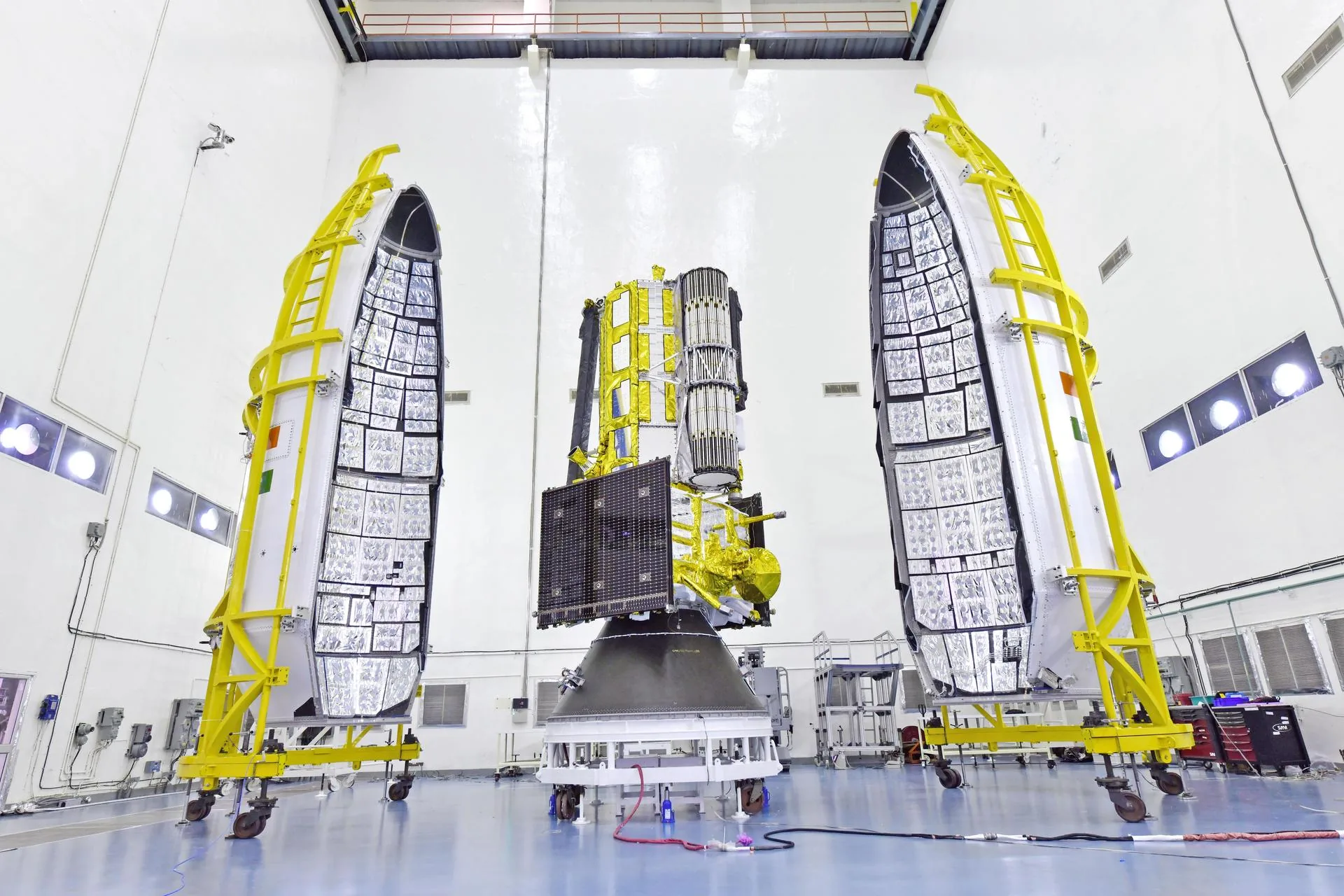
India — The Fourth ASAT Power: India demonstrated ASAT capabilities with Mission Shakti on March 27, 2019, destroying a test satellite at 283 kilometers altitude. The interceptor, based on the Prithvi Defence Vehicle Mark-II, hit its target with less than 10-centimeter accuracy. DRDO continues developing directed energy weapons, electromagnetic pulse systems, and co-orbital capabilities. India operates military reconnaissance and communications satellites but has not publicly announced an ASAT weapons deployment.

Japan — Rapid Buildup: Japan's space defense spending has increased over 1,000 percent since 2020. Key initiatives include:
- A $950 million program to deploy 12 satellites with infrared sensors and AI processors to track hypersonic glide vehicles
- A space domain awareness satellite launching in 2026
- Nearly $3.5 billion in space-related defense projects in the 2025 budget
- First-ever Space Domain Defense Guidelines published in July 2025
South Korea: The Korea AeroSpace Administration (KASA), established in 2024, has a budget of approximately $524 million. South Korea lags behind regional peers in military reconnaissance satellites and is working to build out an indigenous satellite ecosystem for intelligence, surveillance, and reconnaissance.
Israel: Israel operates the Ofek series of compact, high-performance reconnaissance satellites and has deep expertise in missile defense through the multi-layered Iron Dome, David's Sling, and Arrow systems. Israel's aerospace industry exports satellite components and defense technologies globally. While Israel has not publicly demonstrated ASAT capabilities, its Arrow-3 exo-atmospheric interceptor operates at altitudes approaching the space domain.
Directed Energy Weapons: The Next Frontier
The "Star Wars" dream of space-based lasers is closer to reality than at any point in history.
The U.S. Department of Defense plans to increase directed energy weapon power from approximately 150 kilowatts (currently feasible) to 500 kilowatts with reduced size and weight in the 2025–2030 timeframe, and to megawatt-class systems thereafter. Capability thresholds by power level:
| Power Level | Capabilities |
|---|---|
| 100 kW | Engage drones, small boats, rockets, artillery, mortars |
| 300 kW | Additionally engage cruise missiles in certain profiles |
| 1 MW | Potentially neutralize ballistic missiles and hypersonic weapons |
China has likely fielded ground-based laser weapons capable of blinding low-orbit satellite sensors. Russia's Peresvet laser is deployed with ICBM units. The United States is racing to field its own ground-based and eventually space-based directed energy systems as part of Golden Dome.
Space-based lasers remain the most technically challenging category. The physics of generating megawatt-class laser beams in orbit, dissipating the waste heat, maintaining precision targeting across thousands of kilometers, and sustaining operations over years without maintenance — these are engineering challenges that have stymied engineers for four decades. But advances in solid-state lasers, fiber-coupled systems, and space-grade power generation are narrowing the gap between ambition and capability.
Country-by-Country Comparison: Space Defense Preparedness
| Country | ASAT Capability | Mil. Sat Count | Annual Space Defense Budget | Directed Energy | Space Command | Nuclear Space Weapons |
|---|---|---|---|---|---|---|
| United States | Demonstrated (SM-3) | 500+ | ~$40B | R&D (150–500 kW) | U.S. Space Force (2019) | No (developing Golden Dome) |
| China | Demonstrated (3 systems) | 300+ | ~$15B (est.) | Ground laser (fielded) | PLA Strategic Support Force | Unknown |
| Russia | Demonstrated (Nudol) | 100+ | ~$5B (est.) | Peresvet laser (deployed) | Aerospace Forces (VKS) | Under development |
| France | No | 15+ military | €4.2B (2026–2030 add'l) | R&D | Space Command (CDE, 2019) | No |
| Germany | No | 10+ military | €35B (2026–2030) | R&D | Space Operations Centre | No |
| UK | No | 10+ military | Classified | R&D | UK Space Command (2021) | No |
| India | Demonstrated (Shakti) | 15+ military | ~$1.5B (est.) | R&D (DRDO) | Defence Space Agency (2019) | No |
| Japan | No (developing) | 20+ military | ~$3.5B | R&D | Space Operations Group (2022) | No |
| South Korea | No | 5+ military | ~$524M (KASA) | No | None yet | No |
| Israel | Unconfirmed | 10+ military | Classified | R&D | None (integrated) | No |
Modern Warfare and the Space Dependency
The Ukraine-Russia conflict has demonstrated how deeply modern warfare depends on space. Starlink has provided critical battlefield communications for Ukrainian forces. Commercial satellite imagery from Maxar, Planet, and others has enabled open-source intelligence at an unprecedented scale. GPS-guided munitions require satellite navigation to function. Electronic warfare against satellite signals has become a routine element of ground operations.
This dependency creates a critical vulnerability. A future conflict between major powers would almost certainly include attacks on space assets — either through kinetic destruction, electronic jamming, laser dazzling, cyber attacks on ground stations, or the terrifying prospect of nuclear detonation in orbit. The nation that loses its space capabilities first would face a devastating battlefield disadvantage: no precision-guided weapons, no secure long-range communications, no real-time intelligence, and no missile warning.
This is why the space arms race is accelerating. It is not about prestige or exploration. It is about the ability to fight and win wars on Earth — and the Golden Dome, the PWSA, China's ASAT arsenal, and Russia's nuclear space weapons are all expressions of that reality.
What Comes Next
The trajectory is clear and concerning. By 2030, the space domain will look fundamentally different from today:
- The United States aims to have the Golden Dome sensor layer operational, MILNET fully deployed, and the PWSA constellation numbering over 1,000 satellites. Space-based interceptors and directed energy weapons remain under development but face technical and political hurdles.
- China is expected to achieve parity in space domain awareness and may surpass the United States in certain counterspace capabilities, particularly ground-based and co-orbital ASAT systems. The Three-Body Computing Constellation will expand to over 100 AI-equipped satellites by 2027.
- Russia remains the wildcard. Economic constraints limit conventional space capabilities, but the nuclear ASAT program represents an existential threat to all satellite operators globally.
- Europe will have transformed from a civilian space bloc into a serious military space player, with dedicated communications and surveillance constellations and nascent offensive counterspace capabilities.
- The Asia-Pacific will see Japan and India emerge as significant military space powers, with South Korea, Australia, and others building out foundational capabilities.
The Outer Space Treaty of 1967 — which prohibits weapons of mass destruction in orbit and bans military bases on the Moon — remains the primary legal framework governing military activities in space. But it was written for a different era. It does not prohibit conventional weapons in orbit, does not address ASAT tests, and lacks enforcement mechanisms. As the space arms race accelerates, the gap between the legal framework and military reality grows wider every year.
The question is no longer whether space has been militarized — it has. The question is whether the world's powers can establish norms and guardrails before the first shots are fired in orbit, or whether the new space arms race will repeat the most dangerous patterns of the Cold War, but this time with the world's communications, navigation, weather forecasting, and economic infrastructure hanging in the balance.