The Battlefield Above
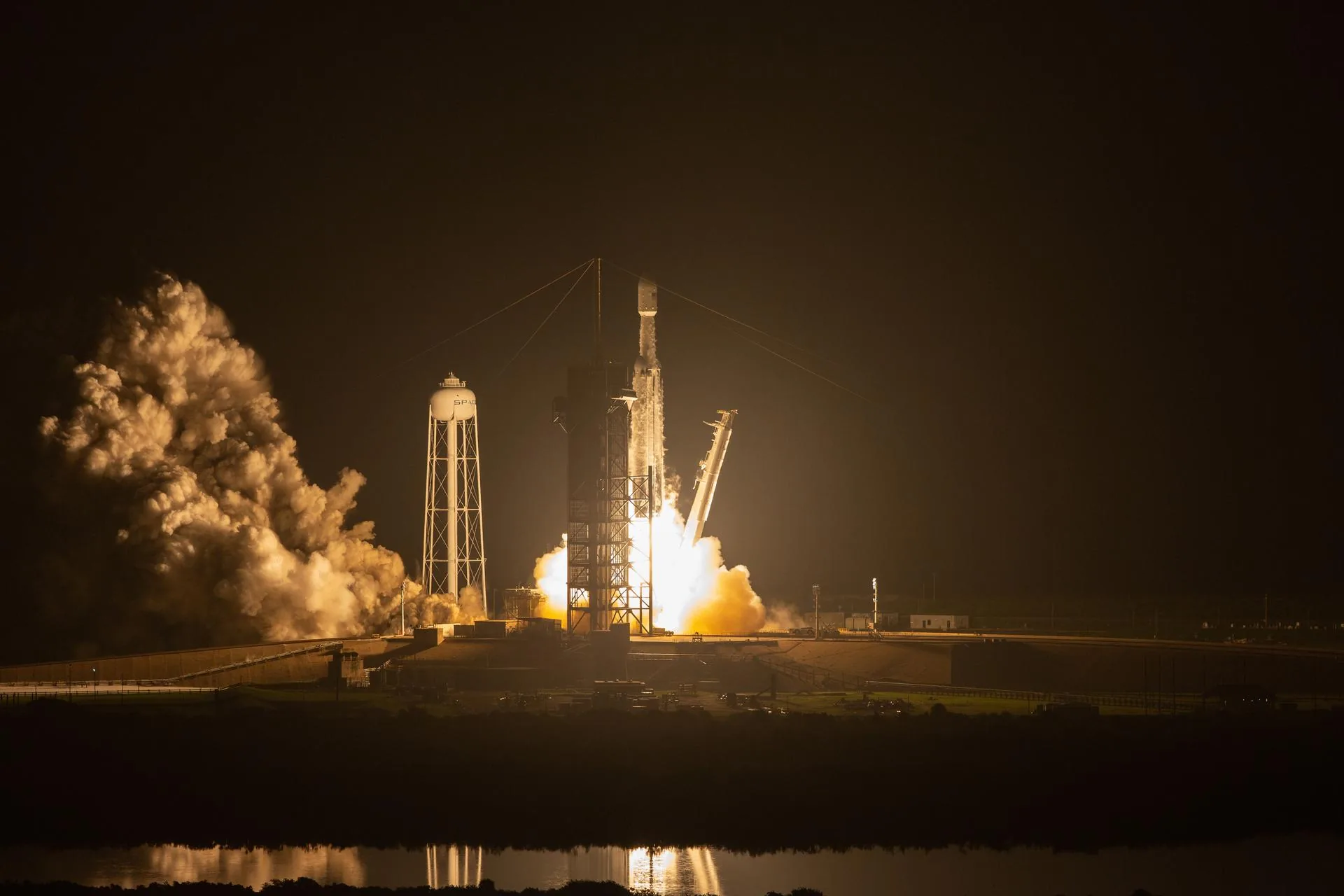
In military strategy, the concept of the "high ground" has been decisive since the first armies clashed in ancient valleys. Whoever holds the elevated position sees farther, strikes more accurately, and controls the tempo of the fight. In the twenty-first century, the ultimate high ground is not a hilltop or a mountain ridge -- it is orbit. And the world's major military powers are engaged in an intensifying competition to dominate it.
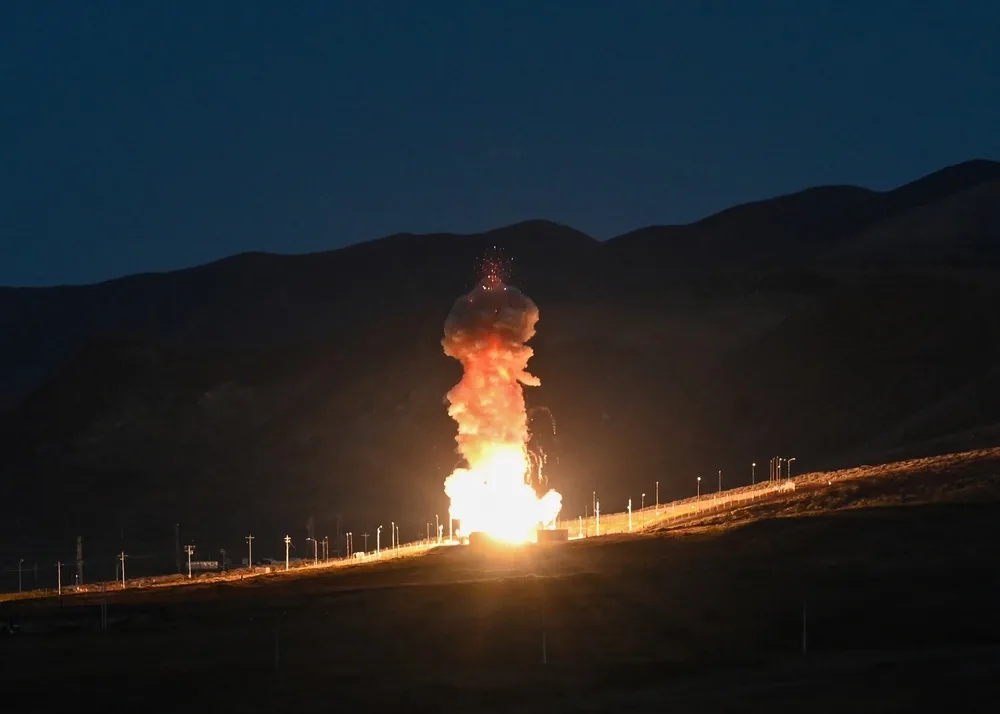
Space has been entangled with military operations since the very beginning of the Space Age. The rockets that launched the first satellites were derived from intercontinental ballistic missiles. The early reconnaissance satellites of the 1960s -- the American Corona program and its Soviet equivalents -- were among the most closely guarded secrets of the Cold War. But for decades, the military use of space was largely passive: satellites watched, listened, and relayed communications, but space itself was not treated as a warfighting domain.
That era is over. Multiple nations have now established dedicated military space commands. Anti-satellite weapons have been tested by at least four countries. Jamming, spoofing, and cyber attacks against space systems are routine concerns. And the same commercial space revolution that has brought reusable rockets and satellite megaconstellations has created new military capabilities -- and new vulnerabilities -- that are reshaping defense strategy worldwide.
The United States Space Force

The most significant institutional development in military space in decades was the establishment of the United States Space Force on December 20, 2019, when President Donald Trump signed the National Defense Authorization Act creating it as the sixth independent branch of the US armed forces. The Space Force absorbed the space missions previously conducted by Air Force Space Command, bringing together satellite operations, missile warning, space surveillance, and launch operations under a unified command.
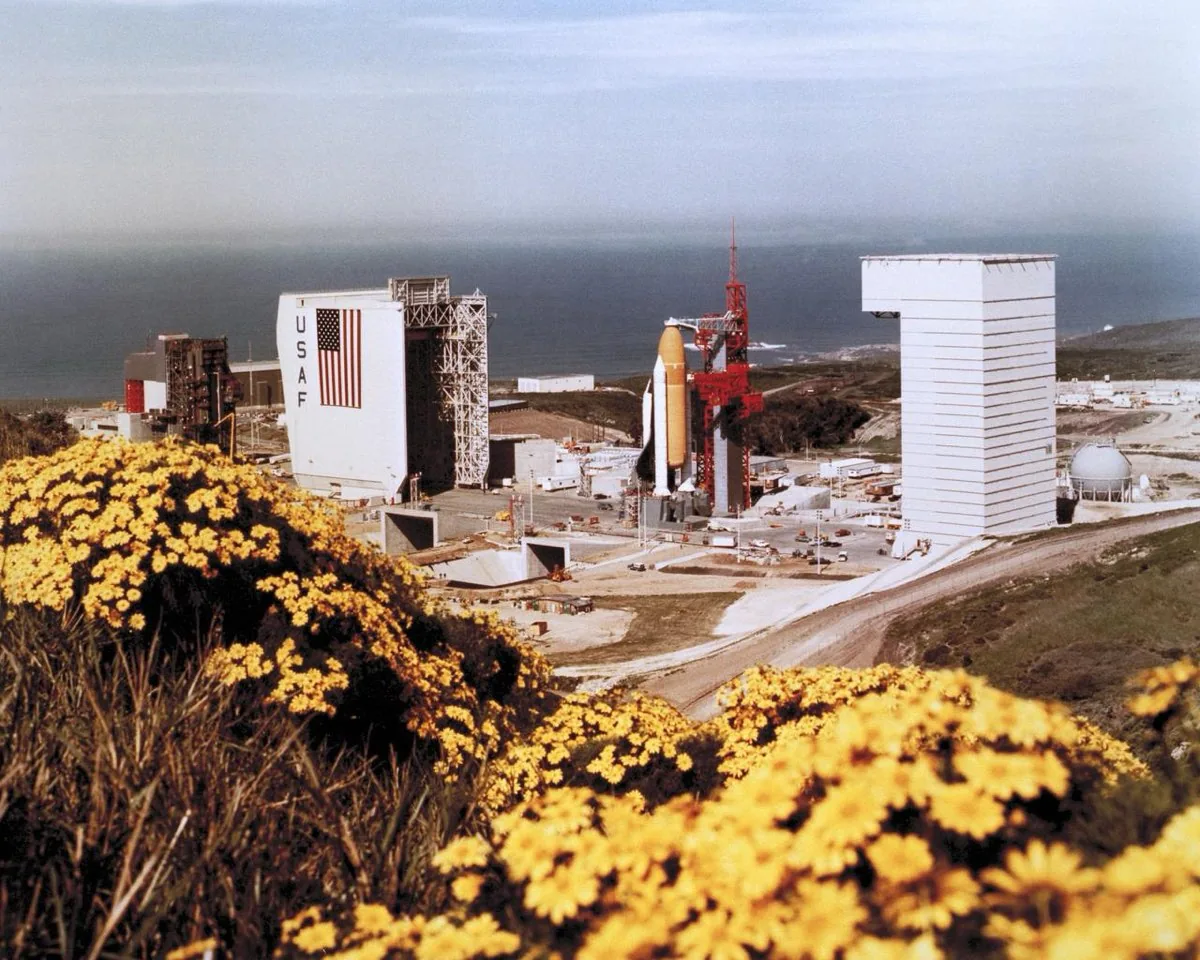
The Space Force is headquartered at the Pentagon and its field operations are centered at Peterson Space Force Base and Schriever Space Force Base in Colorado, along with facilities across the country including Vandenberg Space Force Base in California and Patrick Space Force Base in Florida. The service has over 16,000 military and civilian personnel -- called Guardians -- making it by far the smallest US military branch, but its mission scope is enormous.
The Space Force's annual budget exceeds $30 billion when including classified programs, making it one of the best-funded space organizations on Earth. This budget funds the operation of approximately 77 satellite constellations that provide missile warning, nuclear detonation detection, secure communications, GPS navigation, weather monitoring, and space domain awareness for the entire US military. The GPS constellation alone -- 31 operational satellites providing position, navigation, and timing signals to billions of users worldwide -- is arguably the single most economically important military system ever deployed.
The service has been pursuing a strategy called "Competitive Endurance," which emphasizes resilience, deterrence, and the ability to operate through contested conditions in space. This includes transitioning from a small number of large, expensive satellites -- sometimes called "juicy targets" -- to larger constellations of smaller, more affordable satellites that can absorb losses and be rapidly replenished.
The Intelligence Constellation
Operating alongside but separate from the Space Force is the National Reconnaissance Office, or NRO -- the US intelligence agency responsible for designing, building, and operating the nation's spy satellites. Founded in secrecy in 1961, the NRO's very existence was classified until 1992. Today, while the agency is publicly acknowledged, the details of its satellite constellation remain among the most closely guarded secrets in the US government.
What is known is that the NRO operates electro-optical imaging satellites capable of extraordinary resolution, synthetic aperture radar satellites that can image through clouds and at night, and signals intelligence satellites that intercept electronic communications and radar emissions. The NRO's budget, disclosed as part of the aggregate intelligence community budget, is estimated at over $18 billion annually -- more than many countries spend on their entire military.
In recent years, the NRO has announced a major shift in its acquisition strategy, moving to supplement its traditional exquisite satellites with a proliferated constellation of hundreds of smaller satellites. In 2024, the agency awarded contracts to multiple commercial providers for this "proliferated architecture," acknowledging that the commercial sector can now provide imaging and sensing capabilities that would have been classified state secrets just a decade ago.
The Space Development Agency and Missile Tracking
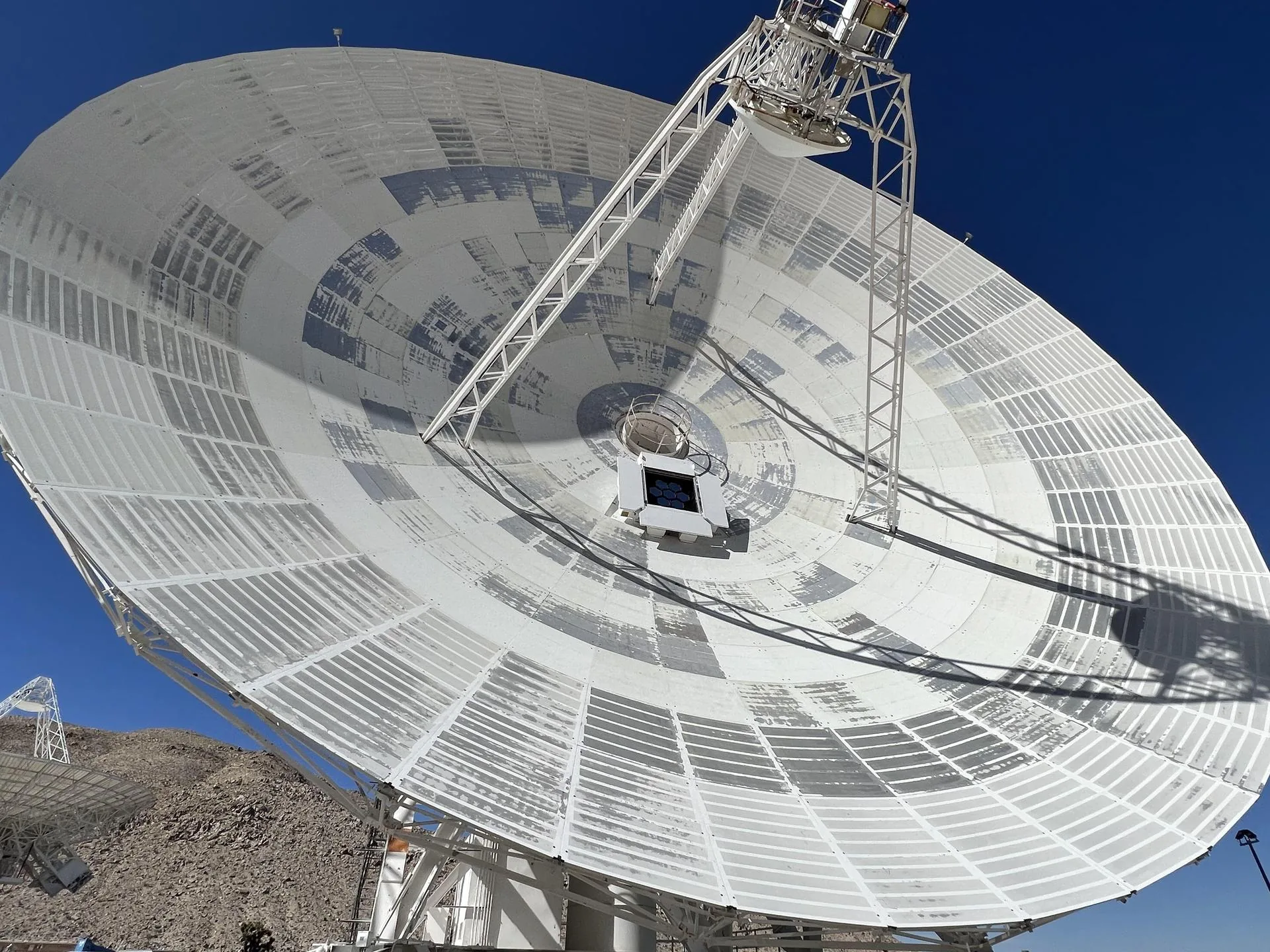
The Space Development Agency, established in 2019 and later absorbed into the Space Force, is building a new military satellite constellation specifically designed for missile tracking and defense. The Proliferated Warfighter Space Architecture, or PWSA, consists of multiple layers of satellites in low Earth orbit.
The Transport Layer provides resilient, low-latency military data connectivity using mesh-networked satellites with optical inter-satellite links. The Tracking Layer carries infrared sensors designed to detect and track hypersonic weapons and ballistic missiles from launch through their entire flight path -- a capability that existing missile warning satellites, which operate in geosynchronous orbit over 35,000 kilometers away, cannot provide with sufficient precision.
The SDA has adopted a commercial-inspired development approach, awarding contracts to companies including L3Harris, Northrop Grumman, York Space Systems, and SpaceX, with rapid development cycles of approximately two years per tranche. The first satellites launched in 2023, and the constellation is planned to grow to several hundred satellites by the late 2020s.
China: The Strategic Support Force
China's military space capabilities are organized under the People's Liberation Army Strategic Support Force, established in 2015 as part of President Xi Jinping's sweeping military reorganization. The SSF consolidates space, cyber, and electronic warfare operations into a single service, reflecting China's doctrinal view that these domains are deeply interconnected.
China operates a sophisticated military space architecture that includes the BeiDou navigation constellation (the Chinese equivalent of GPS, with 45 satellites providing global coverage), the Yaogan series of reconnaissance satellites (encompassing optical, radar, and electronic intelligence variants), military communications satellites, and an expanding constellation of early warning satellites.
China's space capabilities have grown at a rate that has alarmed Western defense planners. The country now launches more rockets annually than any other nation and has demonstrated the ability to rapidly deploy satellite constellations. The PLA has conducted extensive research on counterspace capabilities, including ground-based lasers for satellite dazzling, co-orbital inspection and potentially offensive satellites, and ground-based anti-satellite missiles.
The most dramatic demonstration came on January 11, 2007, when China destroyed one of its own defunct weather satellites, Fengyun-1C, using a ground-launched kinetic kill vehicle at an altitude of 865 kilometers. The test was a strategic shock to the international community, not only because it demonstrated a mature anti-satellite capability but because the destruction created over 3,500 pieces of trackable debris -- the single worst debris-generating event in the history of spaceflight. Much of that debris remains in orbit today and will continue to pose a hazard to other satellites for decades.
Russia's Aerospace Forces
Russia's military space operations fall under the Aerospace Forces, or VKS, which was formed in 2015 by merging the Russian Air Force with the former Aerospace Defence Forces. Russia operates the GLONASS navigation constellation (its GPS equivalent), a range of military communications and reconnaissance satellites, and the missile early warning system that is a cornerstone of its nuclear deterrence posture.
Russia has been active in developing and testing counterspace capabilities. In November 2021, Russia conducted a direct-ascent anti-satellite test, destroying its own defunct Kosmos 1408 satellite at approximately 480 kilometers altitude. The test generated over 1,500 pieces of trackable debris and drew immediate condemnation from the United States and other nations, partly because the resulting debris cloud passed through the orbital altitude of the International Space Station, forcing the crew to shelter in their return vehicles as a precaution.
Russia has also demonstrated suspicious co-orbital activities. Multiple Russian satellites, including the Kosmos 2542 and Kosmos 2543 pair, have been observed maneuvering close to American reconnaissance satellites in what the US Space Command has publicly described as threatening behavior. In 2020, Kosmos 2543 was observed releasing a sub-satellite that then conducted a close approach to another Russian satellite, in what the US military assessed as a test of space-based anti-satellite technology.
The Russian space program has faced significant challenges in recent years, including budget constraints exacerbated by international sanctions, the loss of access to Western electronics components, and a series of quality control failures. However, Russia retains substantial legacy capabilities and continues to prioritize military space systems within its constrained budget.
Europe and the Indo-Pacific Respond
France established the Commandement de l'Espace (Space Command) in September 2019, making it the first European nation to create a dedicated military space organization. Operating under the French Air and Space Force, the command is headquartered in Toulouse alongside the French space agency CNES. France has allocated approximately 6 billion euros to its military space programs through 2025, with investments in next-generation reconnaissance satellites (the CSO constellation), communications satellites (the Syracuse IV system), and space surveillance capabilities.
France has been particularly vocal about the threat of hostile actions in space, partly motivated by an incident in 2017 when a Russian satellite, Luch-Olymp, maneuvered close to a French-Italian Athena-Fidus military communications satellite in geostationary orbit -- an event that French defense minister Florence Parly publicly denounced as "an act of espionage."
The United Kingdom established UK Space Command in April 2021, consolidating the space activities of the Royal Air Force, British Army, and Royal Navy. Based at RAF High Wycombe, UK Space Command coordinates military satellite communications, space domain awareness through the joint US-UK facility at RAF Fylingdales, and the UK's contribution to NATO space activities.
Japan created the Space Operations Squadron within the Japan Air Self-Defense Force in May 2020, later expanded and renamed the Space Operations Group. Japan's military space focus is primarily on space domain awareness -- monitoring and cataloging objects in orbit -- driven by the recognition that Japan's defense infrastructure is heavily dependent on space-based assets that could be targeted by adversaries.
Anti-Satellite Weapons and the Debris Dilemma
The testing and potential use of anti-satellite weapons represents one of the most dangerous dimensions of space militarization. Four nations -- the United States, Russia, China, and India -- have demonstrated the ability to destroy satellites using ground-launched kinetic kill vehicles. The United States tested the capability during Operation Burnt Frost in February 2008, destroying a malfunctioning NRO satellite, USA-193, at a relatively low altitude of 247 kilometers to minimize persistent debris. India conducted its Mission Shakti ASAT test in March 2019, destroying a target satellite at approximately 283 kilometers altitude.
The fundamental problem with kinetic anti-satellite weapons is debris. Every destructive test creates thousands of fragments traveling at orbital velocities, each one capable of destroying another satellite or spacecraft. The 2007 Chinese test alone increased the cataloged debris population by approximately 25 percent. In a conflict scenario, the widespread destruction of satellites could trigger a cascading chain of collisions -- a scenario known as the Kessler Syndrome -- that could render entire orbital regimes unusable for generations.
This recognition has led to some diplomatic progress. In April 2022, the United States announced a unilateral moratorium on destructive direct-ascent anti-satellite missile testing, and several allies including Canada, New Zealand, Japan, Germany, and South Korea have followed suit. However, this moratorium does not cover other counterspace capabilities such as electronic jamming, laser dazzling, cyber attacks, or co-orbital weapons.
GPS Warfare and the Vulnerability of Navigation
The Global Positioning System has become so deeply woven into modern civilization that its disruption would have cascading effects far beyond the military. Banking systems use GPS timing signals to synchronize transactions. Power grids rely on GPS for frequency regulation. Telecommunications networks use GPS for synchronization. Agriculture, aviation, shipping, and emergency services all depend on GPS.
This dependency makes GPS a high-value target. GPS jamming -- broadcasting radio noise on GPS frequencies to overwhelm the relatively weak satellite signals -- is a widespread and growing problem. Russia has conducted extensive GPS jamming operations, particularly in the Baltic region, northern Scandinavia, and around conflict zones. During the conflict in Ukraine, GPS jamming and spoofing (broadcasting false GPS signals to mislead receivers) have been employed by both sides.
China has invested heavily in its BeiDou navigation constellation partly to ensure that its military and economy are not dependent on an American-controlled system. The European Union's Galileo constellation, India's NavIC system, and Japan's QZSS augmentation system reflect the same strategic logic -- nations increasingly recognize that dependence on a foreign power's navigation satellites is an unacceptable vulnerability.
Starshield and Dual-Use Technology
The war in Ukraine has provided a vivid demonstration of how commercial space technology has become inseparable from military operations. SpaceX's Starlink constellation has provided critical communications for Ukrainian forces, and the company's experience in resisting Russian jamming and cyber attacks has provided invaluable operational data.
SpaceX has formalized its military space offerings through Starshield, a service specifically designed for government and military customers. Built on Starlink's satellite bus and constellation architecture, Starshield offers secure communications, Earth observation hosting, and other capabilities tailored to national security requirements. The details are largely classified, but the concept represents a fundamental shift: a commercial company is now providing military space capabilities at a scale, speed, and cost that traditional defense contractors cannot match.
This dual-use reality creates profound challenges. When a commercial satellite constellation is used for military communications, does it become a legitimate military target under the laws of armed conflict? If a nation attacks commercial satellites being used by an adversary's military, the collateral damage extends to all civilian users of that constellation worldwide. International humanitarian law was not written with satellite megaconstellations in mind, and the legal frameworks are struggling to keep pace with technological reality.
The Stakes
The militarization of space is not a future scenario -- it is the present reality. The major powers have accepted that space is a warfighting domain and are investing accordingly. The challenge for the international community is to prevent the competition from spiraling into conflict, to establish norms of behavior that reduce the risk of miscalculation, and to preserve the space environment from the catastrophic consequences of debris-generating warfare.
The Outer Space Treaty of 1967 prohibits the placement of nuclear weapons in orbit and the establishment of military bases on celestial bodies, but it does not prohibit conventional weapons in space, military satellites, or anti-satellite operations. Efforts to negotiate more comprehensive arms control agreements for space have stalled for decades, caught between competing national interests and fundamental disagreements about verification.
What is clear is that space has become too important to ignore and too valuable to surrender. The satellites overhead enable everything from global communications to precision agriculture to nuclear deterrence. Whoever controls the high ground of orbit holds an advantage in any future conflict. That reality, uncomfortable as it may be, is driving the greatest military investment in space since the Cold War -- and it shows no signs of slowing down.