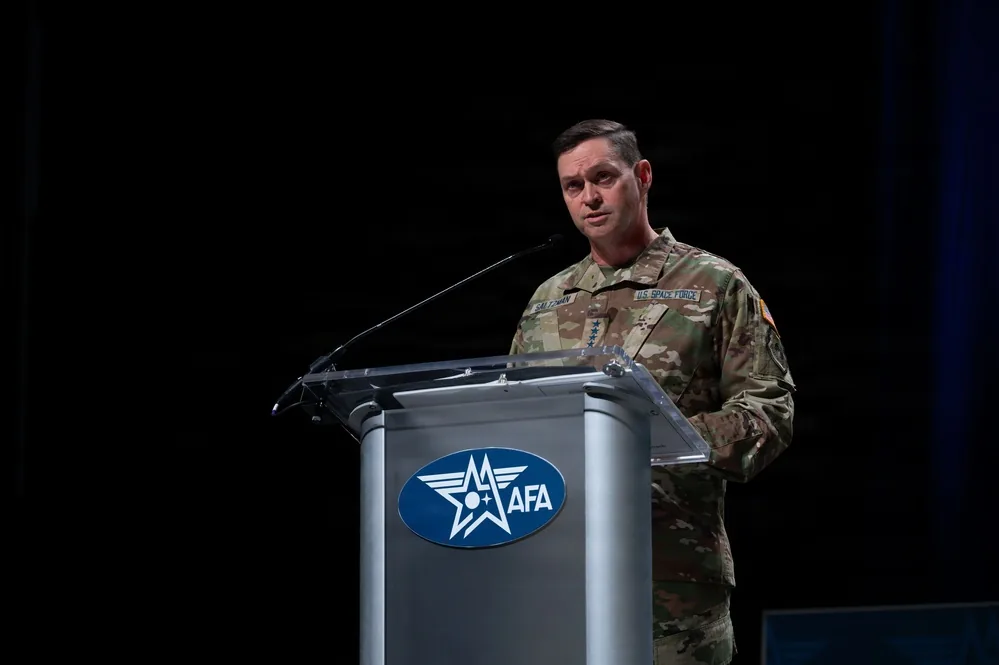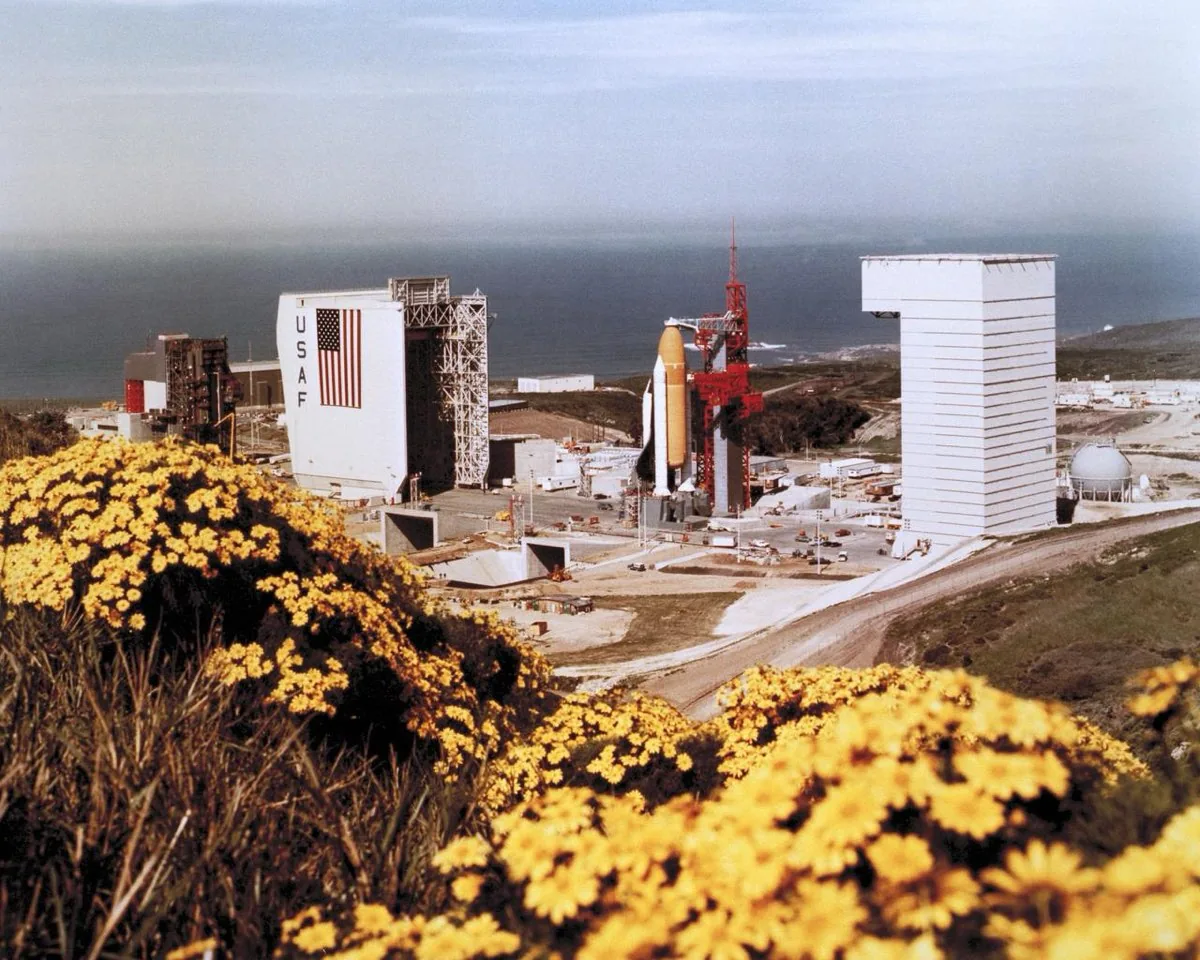
On December 20, 2019, the United States Space Force was officially established as the sixth branch of the U.S. military. It was the first new military branch since the Air Force was created in 1947, and its establishment signaled something that space policy experts had long recognized: space is no longer just a domain for science and exploration. It is a warfighting domain.
The creation of the Space Force made headlines and inspired jokes, but the reality behind it is deadly serious. The world's major military powers are developing and deploying capabilities to attack, disable, or deceive satellites. Anti-satellite weapons have been tested, creating thousands of pieces of dangerous debris. Electronic warfare systems can jam or spoof satellite signals. And the line between peaceful and military uses of space technology is growing thinner every year.
Should we be worried? The honest answer is yes -- but the picture is more nuanced than the doomsday scenarios suggest.
Space Has Always Been Military
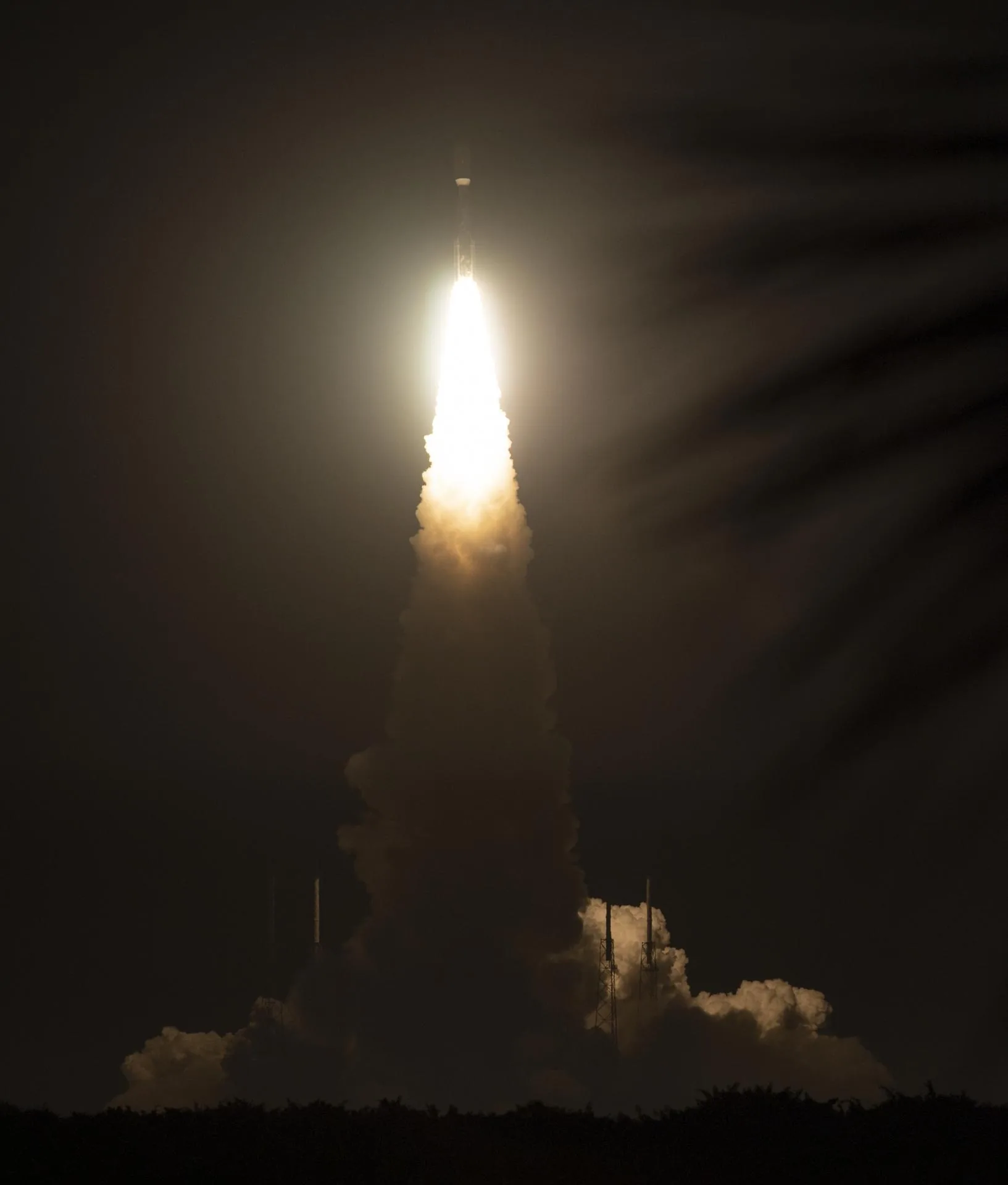
First, some perspective. Space has been intertwined with military activity since the very beginning. The rockets that launched the first satellites were derived from intercontinental ballistic missiles. The earliest reconnaissance satellites, like the CIA's Corona program in the 1960s, were purely military assets. GPS, which billions of people use daily for navigation, was developed by the U.S. Department of Defense. The same satellites that provide weather data to forecasters also provide it to military commanders planning operations.
What has changed is not the presence of military activity in space but its character. For decades, the military role in space was largely passive: satellites observed, communicated, and navigated. They were the eyes and ears of military forces, but they were not weapons themselves. The implicit understanding among the major powers was that attacking another nation's satellites would be an extremely provocative act -- akin to attacking their military infrastructure on the ground.
That implicit understanding is now eroding.
The ASAT Threat
Anti-satellite (ASAT) weapons are the most visible and alarming form of space militarization. These systems are designed to destroy, disable, or degrade satellites, and they come in several forms.
Direct-ascent ASAT weapons are ground- or air-launched missiles that physically collide with a satellite, destroying it through kinetic impact. China conducted the most notorious test of this type in January 2007, destroying its own defunct Fengyun-1C weather satellite at an altitude of about 865 kilometers. The test created more than 3,000 pieces of trackable debris, making it the single worst debris-generating event in the history of spaceflight. Much of that debris remains in orbit today and will continue to pose a hazard for decades.
Russia conducted its own direct-ascent ASAT test in November 2021, destroying the defunct Cosmos 1408 satellite. The test generated over 1,500 pieces of trackable debris in an orbit that directly threatened the International Space Station. Astronauts and cosmonauts aboard the ISS were forced to close hatches between modules and shelter in their docked spacecraft as the debris cloud made repeated close passes. The irony that Russian cosmonauts were endangered by Russia's own weapons test was not lost on the international community.
India tested its own ASAT capability in March 2019 with Mission Shakti, destroying a satellite at a relatively low altitude of about 300 kilometers. Because of the lower altitude, much of the debris reentered the atmosphere relatively quickly, though some fragments were briefly tracked at altitudes above the ISS.
The United States demonstrated direct-ascent ASAT capability as far back as 1985, when an F-15 fighter jet launched an ASM-135 missile that destroyed the Solwind P78-1 satellite. In 2008, the U.S. used a modified SM-3 missile to destroy the malfunctioning USA-193 spy satellite in Operation Burnt Frost, which was officially described as a safety measure to prevent its hydrazine fuel tank from surviving reentry.
In April 2022, the United States announced a moratorium on direct-ascent ASAT testing and called on other nations to follow suit. Several countries have endorsed this commitment, but China and Russia have not.
Co-orbital ASAT systems take a different approach. Instead of launching a missile from the ground, a satellite is maneuvered close to the target and then attacks it -- through collision, use of a robotic arm, deployment of a net or projectile, or other means. Russia has conducted a series of suspicious satellite maneuvers that Western intelligence agencies have characterized as co-orbital ASAT testing. In 2020, the U.S. Space Command reported that a Russian satellite, Cosmos 2543, released a sub-satellite in close proximity to another Russian satellite in what appeared to be a weapons test.
The challenge with co-orbital systems is that they exploit dual-use technology. A satellite designed to inspect, repair, or refuel another satellite uses exactly the same capabilities needed to attack one. A robotic servicing vehicle that can gently dock with a client satellite can also ram it. Distinguishing between peaceful and hostile intent is extraordinarily difficult, which creates instability and the potential for misunderstanding.
Electronic Warfare: The Invisible Threat
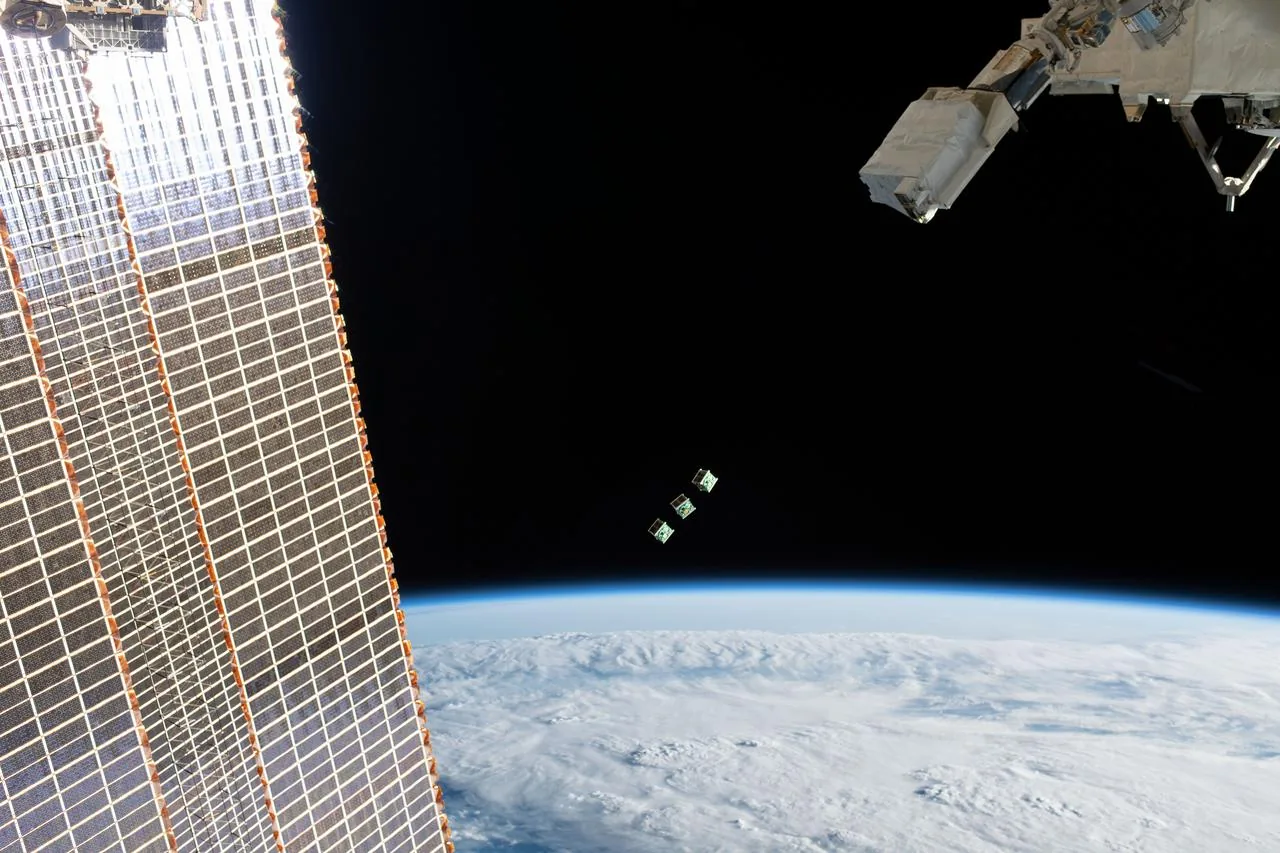
Not all space weapons are kinetic. Electronic warfare -- the use of electromagnetic energy to disrupt, degrade, or deceive satellite systems -- is arguably a greater near-term threat than physical destruction, and it leaves no debris.
Jamming involves broadcasting radio signals that overpower or interfere with satellite communications or navigation signals. GPS jamming is already widespread; Russia has been accused of jamming GPS signals in the Baltic region, the Black Sea, and near its borders. Jamming satellite communications can disrupt military operations, aviation, and emergency services.
Spoofing is even more insidious. Instead of blocking a signal, a spoofing attack replaces it with a false one. GPS spoofing can cause a ship or aircraft to believe it is in a different location than it actually is, with potentially catastrophic consequences. There have been documented incidents of GPS spoofing in the Eastern Mediterranean and the Black Sea, likely attributed to Russian electronic warfare systems.
Cyber attacks on satellite ground stations and command-and-control systems are another vector. In February 2022, just hours before Russia's invasion of Ukraine, a cyber attack disrupted Viasat's KA-SAT network, knocking out internet service for thousands of customers across Europe and disabling communications for Ukrainian military units. The attack targeted the ground segment of the satellite network rather than the satellites themselves, but the effect was the same.
Directed energy weapons, including lasers, represent a developing capability. High-powered lasers can dazzle or blind optical sensors on reconnaissance satellites, temporarily or permanently degrading their ability to observe the ground. China reportedly operates ground-based laser facilities capable of targeting satellites, and the U.S. and other nations are developing similar capabilities.
Space Situational Awareness: Knowing What is Up There
A foundational element of space security is Space Situational Awareness (SSA) -- the ability to track and identify objects in orbit and understand their behavior. Without SSA, you cannot tell whether a satellite approaching yours is a servicing vehicle or a weapon.
The U.S. Space Surveillance Network, operated by the Space Force, tracks tens of thousands of objects in orbit and provides conjunction warnings to satellite operators worldwide. This is the most capable SSA system in the world, but it has limitations. It was designed primarily to track debris and maintain a catalog of known objects; characterizing the behavior and intent of active satellites is a much harder problem.
Other nations are building their own SSA capabilities. The European Union's Space Surveillance and Tracking (EU SST) program, Russia's Space Surveillance System, and China's own tracking network all contribute to a global picture, though data sharing between these systems is limited, especially given current geopolitical tensions.
Private companies like LeoLabs, ExoAnalytic Solutions, and others are also entering the SSA market, offering commercial tracking services that complement government capabilities. This is a positive development, as more data from more sources improves the overall quality of space surveillance.
What Does the Law Say?
The Outer Space Treaty of 1967 prohibits the placement of nuclear weapons or other weapons of mass destruction in orbit or on celestial bodies. It also requires that the Moon and other celestial bodies be used exclusively for peaceful purposes.
But the treaty has significant gaps. It does not prohibit conventional weapons in orbit. It does not prohibit ASAT weapons, whether ground-based or space-based. It does not address electronic warfare, cyber attacks, or directed energy weapons. And the meaning of "peaceful purposes" has been debated since the treaty was signed -- the United States has long interpreted it to mean "non-aggressive" rather than "non-military," a distinction that allows a wide range of military activities.
Multiple attempts to negotiate additional arms control agreements for space have failed. Russia and China have proposed a Treaty on the Prevention of the Placement of Weapons in Outer Space (PPWT), but the United States and its allies have rejected it as unverifiable and one-sided -- it would restrict space-based weapons while leaving ground-based ASAT missiles, which both Russia and China possess, unregulated.
The result is a legal vacuum. The most destabilizing activities in space -- ASAT tests, close-approach maneuvers, electronic warfare -- are not clearly prohibited by any binding international agreement.
What Norms Are Needed?
In the absence of a comprehensive treaty, many experts advocate for building international norms of responsible behavior in space. These would not be legally binding but would establish expectations and create political costs for nations that violate them.
Some norms are already emerging. The U.S. moratorium on direct-ascent ASAT testing, endorsed by several allies, is an example. The United Nations has established an Open-Ended Working Group on reducing space threats through norms, rules, and principles of responsible behavior. Progress has been slow, but the conversations are happening.
Proposed norms include: no deliberate creation of long-lived debris, no close approach to another nation's satellite without notification, no interference with the command and control of another nation's space systems, and transparency about military space capabilities and intentions.
These may sound modest, but in the current environment, even modest steps toward transparency and restraint would be significant. The greatest danger in space security is not a deliberate attack -- it is a misunderstanding that escalates because there are no agreed-upon rules and no reliable communication channels.
Should We Be Worried?
Yes, but not panicked. The militarization of space is real and accelerating, but a full-scale war in space is in nobody's interest. Every spacefaring nation depends on satellites for military operations, economic activity, and daily life. Destroying another nation's satellites would invite devastating retaliation and could trigger the Kessler Syndrome, rendering critical orbital zones unusable for everyone.
The greater risk is a slow erosion of stability: an ASAT test here, a jamming incident there, a suspicious close approach, a cyber attack on a ground station. Each incident, taken alone, might not trigger a crisis. But cumulatively, they create an environment of mistrust and unpredictability that increases the risk of miscalculation.
The solution is not to pretend that space can be kept entirely free of military activity -- that ship sailed decades ago. The solution is to establish clear rules of the road: what is acceptable, what is not, and how nations will communicate and de-escalate when disputes arise. This requires diplomacy, transparency, and a recognition that protecting the space environment is in everyone's strategic interest.
Space is too important -- and too fragile -- to become a battlefield. The choices we make now about how to manage military competition in space will determine whether the orbital commons remains a shared asset for all of humanity or becomes a contested and degraded warzone. The stakes could hardly be higher.