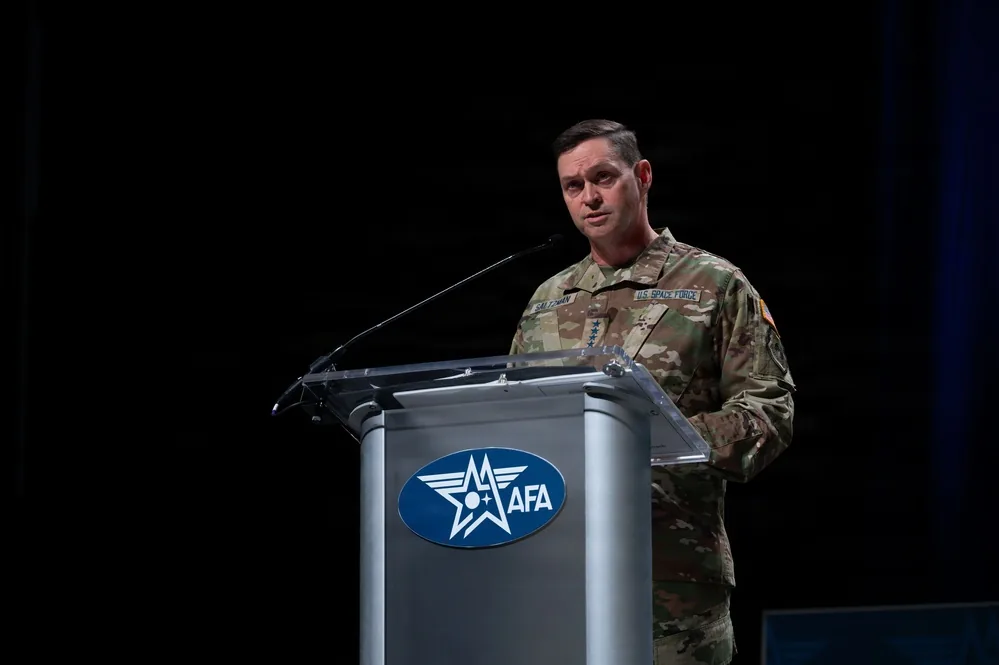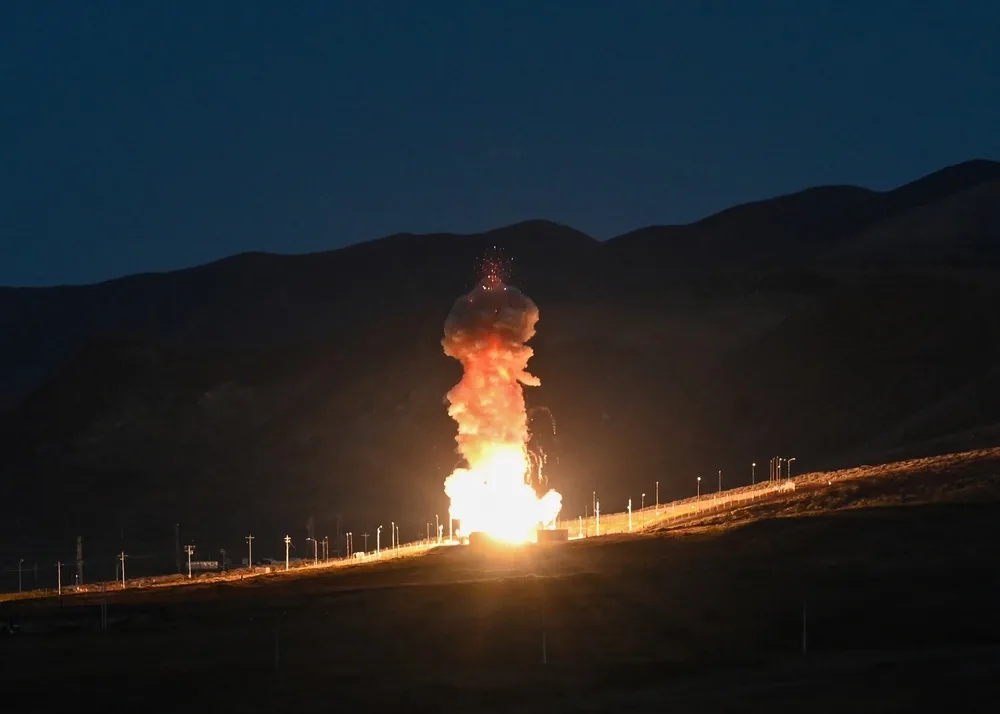
On the morning of April 15, 2026, in a packed convention hall at the Broadmoor in Colorado Springs, General B. Chance Saltzman walked onto the stage of the 41st Space Symposium and did something the Chief of Space Operations rarely does in public. He told the assembled industry, allied military partners, and Pentagon brass exactly what the United States Space Force expects to look like in fifteen years — and exactly what it will take to build it.
The two unclassified documents he released that morning, totaling roughly 160 pages, are the most consequential strategic guidance the service has issued since its founding charter in December 2019. The first, Future Operating Environment 2040 (FOE), is a forecast: what the contested space domain will look like in 2040, and what adversaries will be capable of doing in it. The second, Objective Force 2040 (OFD), is the response: the force structure, mission set, doctrine, and personnel model the Space Force believes it needs to deter — and if necessary fight — a great-power conflict that extends into orbit.
Together, they sketch a future in which the United States government operates a satellite fleet roughly four times larger than today's, fielded by a Guardian corps roughly twice the size of today's, fighting under a doctrine that has formally retired the previous "Competitive Endurance" framing in favor of something more aggressive: campaigning, maneuver, and reconstitution.
This is the Space Force's coming-of-age document. And the numbers are extraordinary.
The Headline Numbers
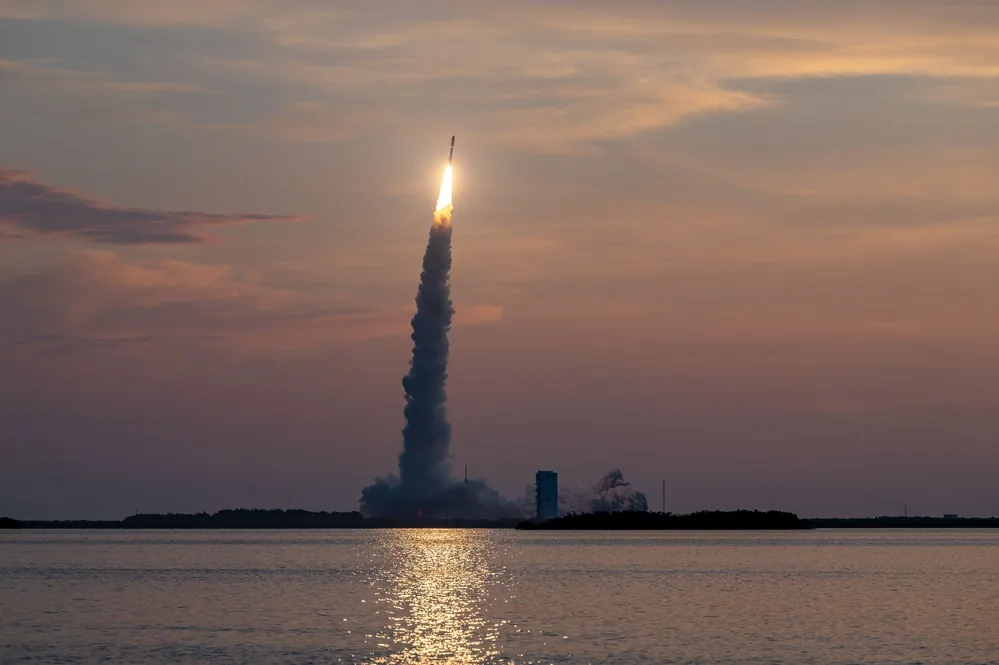
Two figures define this blueprint. The first is the projected size of the U.S. government satellite fleet by 2040: more than 30,000 satellites, up from 7,291 reported in service in 2025. That is a roughly fourfold expansion of orbital infrastructure under U.S. government command in the span of fifteen years.
The Future Operating Environment document goes further, sketching a 2040 in which Chinese government and commercial satellites number around 21,000 and Russian satellites around 1,500 — a total of more than 50,000 active spacecraft just from the three peer competitors, on top of whatever the commercial sector adds independently. SpaceX's Starlink alone is already the largest single satellite operator in history. By the time Saltzman's vision arrives, low Earth orbit will be more crowded than at any moment in the Space Age, and the United States will be the largest single uniformed operator in it.
The second number is personnel. Saltzman's Objective Force 2040 calls for the Guardian corps to roughly double over ten years, growing from approximately 16,000 today to north of 32,000. Those are uniformed end-strength figures and do not include the civilians and contractors who staff Space Force operations centers and program offices. Even at 32,000 in uniform, the Space Force would still be by far the smallest U.S. military service — but it would be significantly larger than the U.S. Coast Guard's officer corps and would, for the first time, possess a personnel base remotely commensurate with its mission scope.
If you want a single mental model: today's Space Force is asked to operate, defend, and modernize a constellation roughly half the size of Starlink while running missile warning, GPS, and military SATCOM for the entire joint force, all on a budget of about $30 billion. The 2040 force is the version of that institution scaled to actually fight and win in space.
For a fuller comparison of how this stacks up against the rest of the world's military space programs, see our pair article $100 Billion in Government Space Spending: Who Invests Most and What It Returns.
What the Documents Actually Say
It is worth being precise about how the two documents divide the work, because the labels matter.
Future Operating Environment 2040 is the Space Force's forecast of the threat environment, technology trajectory, and "characteristics of war" in the space domain through 2040. It is essentially a planning document — a description of the world the Objective Force has to win in. It identifies China as the pacing threat, predicts an adversary capable of "integrated, AI-enabled space-ground operations on a global scale," and reserves particularly sharp language for Russia, noting that "Russia has the lowest threshold for nuclear weapons use in the world, according to its public doctrine," and that Russian planners are aggressively pursuing space-based, nuclear-armed anti-satellite weapons.
Objective Force 2040 is the response: a force-design document that translates the threat picture into specific mission areas, capabilities, and structures. For the first time, the Space Force formally codifies six core mission areas and three enabling functions:
| Layer | Function | What it does |
|---|---|---|
| Mission area | Space Control | Orbital warfare, electronic warfare, defensive and offensive counterspace |
| Mission area | Missile Warning & Tracking | Layered detection of ballistic, hypersonic, and cruise threats |
| Mission area | Navigation Warfare | GPS modernization, anti-jam PNT, "Gen 4" PNT system targeted for 2040 |
| Mission area | SATCOM | The emerging Space Data Network — a sprawling military "internet in space" |
| Mission area | Space-Based Sensing & Targeting | ISR, tactical targeting from orbit, kill-chain support |
| Mission area | Space Access | Assured, responsive launch, including tactically responsive space |
| Enabling function | Command and Control | Joint and combined C2 across orbits |
| Enabling function | Cyber Operations | Defensive and offensive cyber for space systems |
| Enabling function | Space Domain Awareness | Tracking, characterization, and attribution of objects in orbit |
This formal six-and-three taxonomy is itself a doctrinal milestone. The previous Capstone Doctrine, Spacepower, identified mission sets in more general terms. The new Objective Force pins the service's identity to specific warfighting functions, aligning Space Force planning with the way the Army and Air Force describe themselves — and giving Congress and industry a clean structure to budget and contract against.
The Doctrinal Pivot: From Attrition to Maneuver
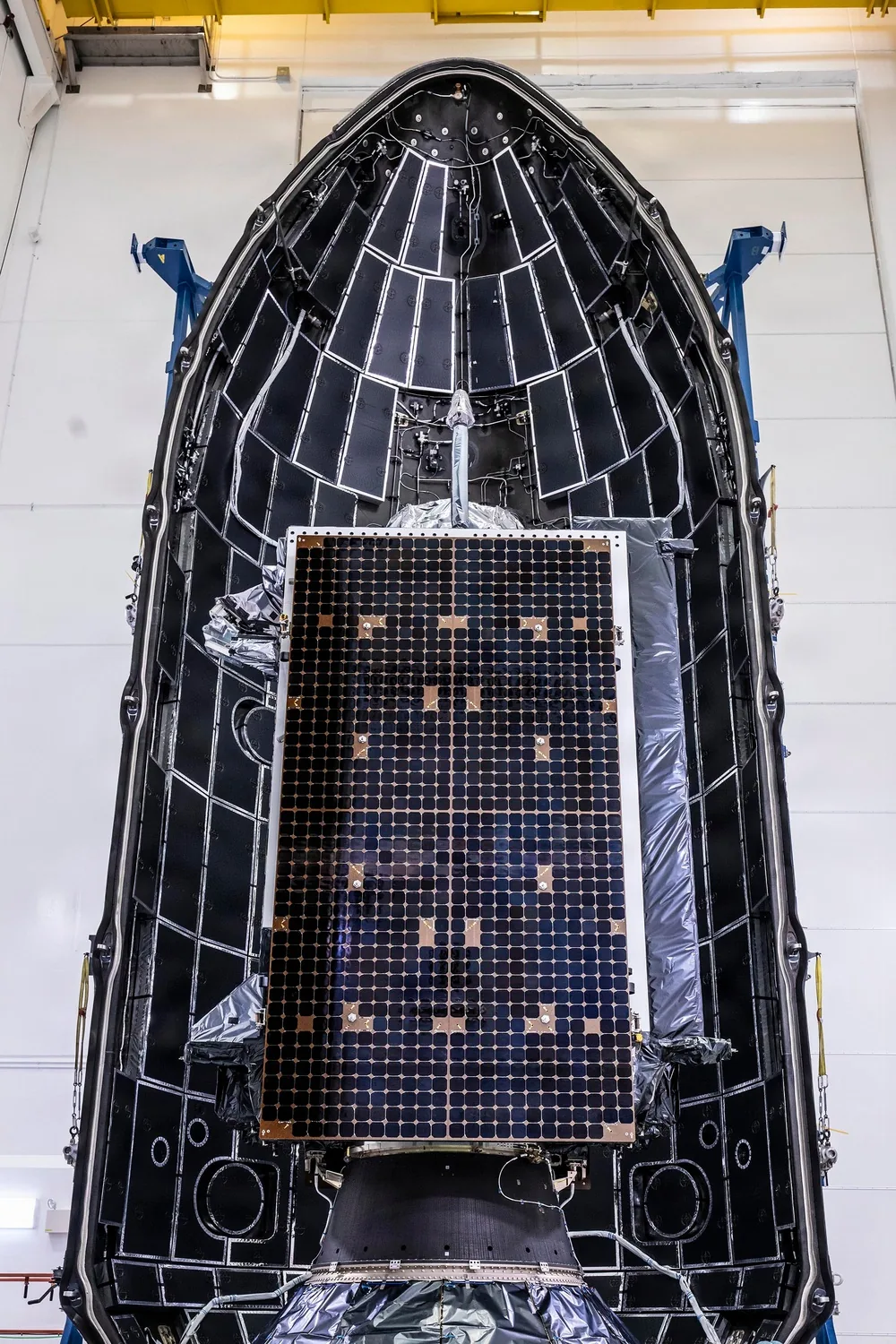
The most consequential single sentence in the new documents is also one of the simplest: "By 2040, the Space Force will move beyond near-term attrition-based methods to a mature warfighting approach centered on campaigning, maneuver, and reconstitution that preserves strategic advantage without driving unnecessary escalation."
That sentence buries a major doctrinal pivot. Since 2023, the Space Force has organized its strategy around what Saltzman called Competitive Endurance — a posture that essentially assumed satellites would be lost in a conflict and prioritized resilience, hardening, and rapid replenishment so that losses could be absorbed without losing the mission. It was a sober, defensive, attrition-aware framework appropriate to a service still building its first proliferated architectures.
Objective Force 2040 moves the goalposts. Resilience and reconstitution remain — they are not going away — but they are now subordinated to a more active concept: maneuver. The 2040 force is expected to actively reposition assets, conduct sustained orbital campaigns, attribute hostile actions in real time, and contest the adversary's freedom of action in orbit, not simply survive while the adversary tries to deny it. The document explicitly frames this as "campaigning" — the same word the Army and Marine Corps use to describe sustained joint operations across the strategic depth of an adversary.
That doctrinal shift is not abstract. It was field-tested in the spring of 2026.
On February 28, 2026, U.S. Central Command launched Operation Epic Fury, a coordinated preemptive campaign against Iran's nuclear and missile infrastructure conducted in parallel with Israel's Operation Roaring Lion. CENTCOM Commander Adm. Brad Cooper publicly declared that the Space Force had delivered space superiority over the theater — a phrase that until that moment had been a doctrinal abstraction. Saltzman, in a Mitchell Institute event afterward, was characteristically direct: "You have space superiority if you can use space the way you want, and the adversary cannot use space the way they want, and I think those are the conditions that we've met in this particular instance." He acknowledged "it wasn't really a fair fight" but argued that the operation validated the integration of Guardians into joint targeting cycles, electronic warfare, and missile warning at combat tempo.
Epic Fury is the empirical foundation under the Objective Force 2040 doctrinal claim. The 2040 force is the version of what worked over Iran scaled up to deter — and if necessary fight — China.
The 30,000-Satellite Question
The 30,000+ figure is not a single program. It is the projected steady-state total across every mission area, every orbit, and every architecture the Space Force expects to operate in 2040. Understanding what fills that envelope matters.
A meaningful share is missile warning and tracking. The Space Development Agency's Proliferated Warfighter Space Architecture is already growing through tranches: in December 2025, SDA awarded roughly $3.5 billion to four companies for 72 Tracking Layer satellites in Tranche 3, including a firm fixed-price OTA worth up to $805 million to Rocket Lab USA for 18 vehicles to launch in fiscal year 2029. That is a single tranche of a single layer. The Tracking Layer alone is on a trajectory to hundreds of satellites by 2040, and missile warning is repeatedly identified in Objective Force 2040 as needing layered redundancy across orbits.
Another massive share is SATCOM. The Space Force is in the middle of pivoting away from the old SDA Transport Layer concept toward what the new documents call the Space Data Network — described as a sprawling military internet in space, with a low-Earth-orbit "backbone" linking military and commercial communications birds across all orbits. A program previously branded MILNET is now folded into a budget line called "proliferated LEO SATCOM," with $1.6 billion requested through reconciliation in FY27 just to begin standing it up. Multiply that across fifteen years, and it implies a constellation in the high thousands.
The Navigation Warfare mission contributes hundreds more. Objective Force 2040 calls for lower-cost, simplified GPS-augmentation satellites in the near term, layered allied and commercial PNT contributions, and a more resilient "Gen 4" PNT system delivered around 2040. Space-Based Sensing & Targeting — the orbital ISR and kill-chain mission — adds another large, proliferated layer. Space Domain Awareness adds yet more, including dedicated SDA satellites in geosynchronous and cislunar orbit.
Stack those mission lines, add the Starshield-style commercial-derived constellations the Pentagon already buys at scale, and 30,246 stops looking like an aspiration and starts looking like the natural endpoint of trends already underway. The Space Force is not promising to build 30,000 satellites by itself. It is forecasting a U.S. government fleet at that scale — a mix of dedicated military programs, intelligence community assets, NASA platforms, and contracted commercial capacity.
The harder question is whether the industrial base can deliver. The U.S. commercial space sector launched more than 145 orbital missions in 2024, dominated by SpaceX. To sustain a 30,000-satellite government fleet alongside Starlink (already past 7,000 active and projected toward 30,000-plus on its own) and Kuiper, the United States needs cadence and pad infrastructure that does not yet exist. Saltzman's blueprint is, implicitly, a bet that the launch and manufacturing curves continue to bend. For the broader market context, see The $630 Billion Space Economy.
Objective Force 2040 calls for scaling the U.S. government satellite fleet from roughly 7,291 today to more than 30,000 by 2040 — a launch tempo that will require sustained throughput from Falcon 9, Vulcan, New Glenn, Neutron, and any successor classes.
Doubling the Guardians
If the 30,000-satellite line is the headline that grabs the cable graphics, the personnel line is the harder problem in the room.
The Space Force currently fields roughly 16,000 uniformed Guardians — by far the smallest U.S. service, and a force that has been visibly stretched by the post-Epic Fury operational tempo. Objective Force 2040 calls for that figure to roughly double over ten years, and identifies particular growth areas: Space Domain Awareness alone is projected to grow on the order of 30 percent in personnel as analyst, operator, and engineering demand rises. Space Control — orbital and electronic warfare — is identified as needing significant new manpower to actually generate combat-credible offensive and defensive counterspace forces.
The recruiting math is daunting. Doubling end-strength in a decade implies adding roughly 1,600 net Guardians per year, on top of replacing normal attrition. The Air Force Academy and Officer Training School pipelines that today produce a few hundred Space Force officers per year cannot meet that demand without a structural change.
That is where the second piece of news from April 2026 fits in. Under authority granted by the Space Force Personnel Management Act in the FY24 defense bill, the service announced its first cohort of part-time Guardians: 247 Air Force reservists, selected from a much larger applicant pool, set to begin transferring this summer into part-time roles in test and evaluation, training support, education, and headquarters staff. They will be known as Guardians on Non-Sustained Duty. Officers selected must commit to at least three years; enlisted personnel three to six. Reservists with 15 to 18 years of qualifying service can stay in part-time roles long enough to retire.
It is a small pilot — 247 people on a base of 16,000 — but it is structurally significant because it is the first operational deployment of the unified, full-time/part-time personnel model the Personnel Management Act was written to enable. The Space Force is the only U.S. service that can mix component types in a single career path; everyone else has rigidly separated active, reserve, and Guard structures. Objective Force 2040 implicitly bets that this flexibility will let the service grow faster than its sister services can.
The other half of the personnel story is training. The new documents call for major investments in simulators, particularly for missile warning operators learning to discriminate hostile launches from background events, and for live, virtual, and constructive training environments to substitute — at least partly — for the operational combat experience that pilots and ground units accumulate naturally. The Space Force is, for the first time, treating its lack of routine combat exposure as a problem to be solved rather than a fact to be managed.
 The harder problem behind the satellite numbers: roughly doubling the Guardian corps from 16,000 to more than 32,000 over the next decade — partly through a new mixed full-time/part-time service model that began with 247 Air Force reservist transfers in April 2026.
Acquisition Reform: 80% Today
If there is a single phrase that defines Saltzman's tenure, it is the one he repeated in his April 24, 2026 Commander's Note to the force: "An 80% solution in the warfighters' hands today is infinitely more valuable than a 100% solution that arrives late."
That sentence is not rhetorical filler. It is the operating doctrine of Objective Force 2040's entire acquisition model. The blueprint formalizes a pivot the Space Force has been signaling for two years: away from sequential testing and "pursuing perfection," toward what Saltzman calls Minimum Viable Capability — fielded fast, upgraded incrementally, retired or replaced when something better is ready.
In Saltzman's own framing, the goal is "continuous, streamlined test approaches, shifting our test mindset to validate only what is required to ensure the minimum viable capability is effective for the users and no more." Translated: the test community should not gate fielding behind requirements that exceed what the warfighter actually needs to begin operating.
Four programs illustrate the model:
- The Tracking Layer (Tranche 3). SDA's roughly $3.5 billion December 2025 award for 72 missile-tracking satellites used firm fixed-price Other Transaction Authority agreements — a contracting vehicle designed to bypass the slow march of traditional FAR-based defense procurement. Rocket Lab's $805 million slice came with a fiscal-year-2029 launch commitment baked in.
- MILNET / Space Data Network. The Space Force has effectively pivoted away from the older SDA Transport Layer architecture toward a new proliferated LEO SATCOM "backbone," accepting near-term turbulence in tranches that were already mid-procurement in exchange for a faster path to a fully meshed military space internet.
- Tactically Responsive Space (Victus Haze). Pushed into 2026 by a launch-provider rocket anomaly, Victus Haze is the live-fire demonstration of the Space Force's ability to alert, integrate, and launch a payload on operationally relevant timelines — using Firefly Aerospace and Rocket Lab as commercial responsive-launch partners.
- Starshield-derived constellations. The Pentagon has continued to lean on SpaceX's Starlink-derived bus and constellation infrastructure for classified and semi-classified missions, treating proven commercial scale as a faster path to capability than bespoke government development.
The bet underlying all of this is that the F-35 model — exquisite, fully-specified, decade-long development — is unsustainable in space. Adversary timelines are too short, satellite buses are too cheap, and software-defined capability changes too quickly. The same logic that drove NASA's Commercial Crew and CLPS programs (see our NASA & DoD Space Contracts: Investor Guide) is being applied to military space at scale.
The risk, of course, is that "minimum viable" becomes "permanently underbuilt." Senior officials inside the Space Force have already publicly warned that the service must define what acceptable risks of rapid acquisition actually look like, and the Heritage Foundation and others have argued that space superiority cannot be achieved on the cheap. Objective Force 2040 does not resolve that tension. It declares that, on Saltzman's watch, the bias is toward speed.
The Threat Driver
It would be easy to read the 30,000-satellite, 32,000-Guardian projection as bureaucratic ambition. Future Operating Environment 2040 is the document that makes the case it is something else.
China is named as the pacing threat — the adversary against which the U.S. Space Force is now structurally optimized. The People's Liberation Army Aerospace Force, reorganized out of the former Strategic Support Force, is consolidating space, cyber, and electronic warfare under a single operational headquarters with growing authority over space targeting cycles. China's domestic launch cadence has surpassed 60 orbital missions a year and is climbing. Two state-backed megaconstellations — Guowang and Qianfan / Thousand Sails — are building toward thousands of satellites apiece. The PLA Aerospace Force is expected to field "integrated, AI-enabled space-ground operations on a global scale" by the late 2030s. By 2040, FOE projects roughly 21,000 Chinese government and commercial satellites in orbit.
Russia is treated separately because its threat profile is different. Russia's overall space program has contracted sharply since 2022 — the FOE projects only 1,500 Russian satellites by 2040, a fraction of either superpower's fleet. But Russia retains specific high-end capabilities, including a continuing program to develop a space-based, nuclear-armed anti-satellite weapon. The document's blunt observation that "Russia has the lowest threshold for nuclear weapons use in the world, according to its public doctrine" is a statement of strategic concern: Russia does not need parity to threaten the orbital infrastructure the U.S. economy and military depend on. A single nuclear detonation at altitude would render entire orbital regimes unusable for years through electromagnetic effects alone.
Beneath those headline adversaries, FOE catalogs an expanding portfolio of counterspace capabilities — kinetic ASAT, co-orbital interceptors, ground-based lasers, sophisticated jamming, cyber attacks on satellite ground segments, and rendezvous-and-proximity operations that blur the line between inspection and attack. For a fuller treatment of how this fits into the broader space-arms-race landscape, see The New Space Arms Race: Golden Dome and The Militarization of Space: Space Forces, Spy Satellites, and the New High Ground.
In other words: the 30,000 number is not the ceiling of U.S. ambition. It is the floor of what the Future Operating Environment says is needed to deter an adversary that, by 2040, will already operate a comparable fleet under unified military command.
GPS III SV-10's launch on April 21, 2026 completed the constellation at 32 active satellites with M-code anti-jam capability. Objective Force 2040 extends this kind of resilient, jam-resistant architecture across missile warning, SATCOM, and ISR — and from a small fleet of exquisite satellites to a proliferated 30,000-satellite fleet.
Risks and Critics
The blueprint is not without sharp critics, inside the Pentagon as well as outside it.
The first issue is budget reality. The FY27 Presidential Budget Request asks for $71.24 billion for the Space Force — more than double the FY26 enacted level of approximately $31.86 billion, and roughly 4.5x the service's first budget in FY20. But the headline figure is misleading. Of that $71 billion, only about $59 billion is built into the Defense Department's regular base budget. The remaining roughly $12 billion is contingent on reconciliation — a legislative mechanism that has not yet cleared Congress and that has produced uneven results in past attempts. Within the request, $17 billion is earmarked for Golden Dome, of which only about $400 million sits in regular appropriations; the rest is reconciliation-dependent. Objective Force 2040 assumes a sustained funding ramp. If Congress declines to ratify the reconciliation portion, the timeline slips immediately.
The second issue is Kessler risk. A U.S. government fleet of 30,000+ satellites, layered on top of a Starlink trajectory toward 30,000+ commercial satellites of its own, on top of Kuiper, on top of Guowang and Thousand Sails, on top of a proliferating cast of secondary commercial constellations, is an orbital environment without precedent. Even absent kinetic conflict, the conjunction-management workload at that density approaches the limits of what current Space Domain Awareness infrastructure can support. Objective Force 2040 identifies SDA growth as a priority, but critics — including parts of the science community — argue that orbital traffic management has not kept pace with deployment, and that a single major collision could trigger debris cascades that no single service can clean up.
The third issue is internal skepticism about the 30,246 figure itself. Some Pentagon planners have privately argued the number double-counts capacity by aggregating dedicated military programs, intelligence community assets, and contracted commercial capacity that would exist with or without Space Force expansion. If half of the 30,000 is essentially commercial Starshield-style capacity the government rents rather than owns, the organic military fleet looks smaller — and the deterrent value of the headline number depends on how clearly an adversary can distinguish dedicated military assets from dual-use commercial ones.
The fourth issue is escalation management. The doctrinal pivot from attrition to maneuver is, by design, more aggressive. The same documents that promise "campaigning, maneuver, and reconstitution" insist this is achieved "without driving unnecessary escalation" — but the line between a maneuver that contests an adversary's orbital regime and one that is read as a first move in a kinetic exchange is, at best, narrow. Critics inside the arms-control community argue that Objective Force 2040 is the most explicit U.S. statement yet that orbit is a warfighting domain, and that this matters for crisis stability even if no shot is fired.
None of those critiques invalidate the blueprint. They define the political and operational environment in which it has to be executed.
The Saltzman Legacy
The timing of these documents is not incidental.
Saltzman is reportedly planning to step down as Chief of Space Operations in late 2026. Objective Force 2040 and Future Operating Environment 2040 are, candidly, his legacy push — the strategic guidance he wants to leave behind so that successors operate within a framework rather than starting from scratch. That explains some of their unusual qualities: they are more candid about adversary capability than typical Pentagon strategic guidance, more specific about acquisition reform than service-level documents normally are, and more willing to publicly retire prior framings (like Competitive Endurance) that Saltzman himself had championed.
There is also a structural reason for the unusual openness. The Space Force is small, young, and visible. It does not have the institutional inertia of the Army or Navy. A 160-page strategic vision, released publicly in unclassified form at Space Symposium, is itself a recruiting and political tool — aimed at industry, at allies, at Congress, and at the next generation of officers and enlisted Guardians. It is hard to imagine the Air Force or Navy releasing a comparably specific document without a year of internal review.
Saltzman's successor inherits a service that has, in the span of seven years, grown from a Trump-era political project into the institution that delivered space superiority over Iran in early 2026 and is now publicly committing to a 30,000-satellite, 32,000-Guardian future. Whoever takes the chair will be measured against the Objective Force 2040 benchmarks. That is, on its own terms, a successful institutional transition.
Closing: What a Space Force This Size Actually Means
A Space Force at 2040 scale is not just a bigger version of today's service. It is a structural change in how orbit relates to the rest of the U.S. economy and the broader space industry.
The downstream effects are already visible in early 2026. Defense-industry analysts treat the FY27 budget ramp as a structural reweighting of aerospace toward space-specific platforms: SDA tranche awards have become some of the most consequential government contracts of the decade, and prime contractors and new-space manufacturers alike are repositioning around the Space Data Network, Tracking Layer, and Golden Dome programs simultaneously. The civil and commercial space economy benefits from the same infrastructure: a launch market large enough to support 30,000 government satellites is a launch market that drops marginal costs for commercial users too. Allied integration deepens — the Objective Force 2040 documents repeatedly emphasize "integrated campaigning with Allies across all domains," which in practice means that the U.K. Space Command, French Commandement de l'Espace, Japanese Space Operations Group, and Australian and Canadian space units will increasingly plug into U.S. mission threads as full partners rather than observers.
There is also a sobering frame. A 30,000-satellite government fleet is the orbital equivalent of forward-deploying a permanent expeditionary force. It cannot be hidden, cannot be retracted easily, and constitutes a target set that adversaries will plan against for the entire fifteen-year horizon of the document. Objective Force 2040 is candid that the contested space environment of 2040 is not a peaceful one — it is one in which the United States expects to compete continuously against state actors who are actively building counterspace forces.
For now, the documents are public, the budget request is on the Hill, the first 247 part-time Guardians are about to swap uniforms, and the Tracking Layer Tranche 3 satellites are on contract. The framework Saltzman walked onto the Space Symposium stage to deliver is no longer a forecast. It is what the Space Force is now organized, funded, and recruiting to build.
In fifteen years, we will know whether the United States actually fielded what the Chief of Space Operations described in Colorado Springs on April 15, 2026. We already know what kind of service it intends to be.
Related reading on SpaceOdysseyHub:
- The Militarization of Space: Space Forces, Spy Satellites, and the New High Ground
- The New Space Arms Race: Golden Dome, Satellites, and Defense from Orbit
- $100 Billion in Government Space Spending: Who Invests Most and What It Returns
- The $630 Billion Space Economy
- NASA & DoD Space Contracts: Investor Guide