A Streak Across the Infrared
At 1:15 a.m. local time on February 28, 2026, U.S. Central Command commenced Operation Epic Fury — a coordinated American and Israeli campaign against Iran's nuclear program, ballistic missile force, and defense industrial base. Within hours, the Islamic Revolutionary Guard Corps Aerospace Force began firing back, lofting hundreds of ballistic missiles and one-way attack drones at U.S. installations across the Middle East.
Long before any warhead reached its terminal phase, infrared sensors in geosynchronous and low-Earth orbit caught the boost-phase plumes, pushed launch points and predicted impact zones onto a global mission network, and alerted Patriot and Terminal High-Altitude Area Defense crews on the ground. The interval between an Iranian launch and an interceptor fly-out was measured in seconds. People had time to reach shelters. Most missiles never reached their targets.
That sequence — invisible from the ground, but decisive — was executed by the United States Space Force. And for the first time in the service's six-year existence, the Guardians running it were doing so under fire, in a real war, at scale.
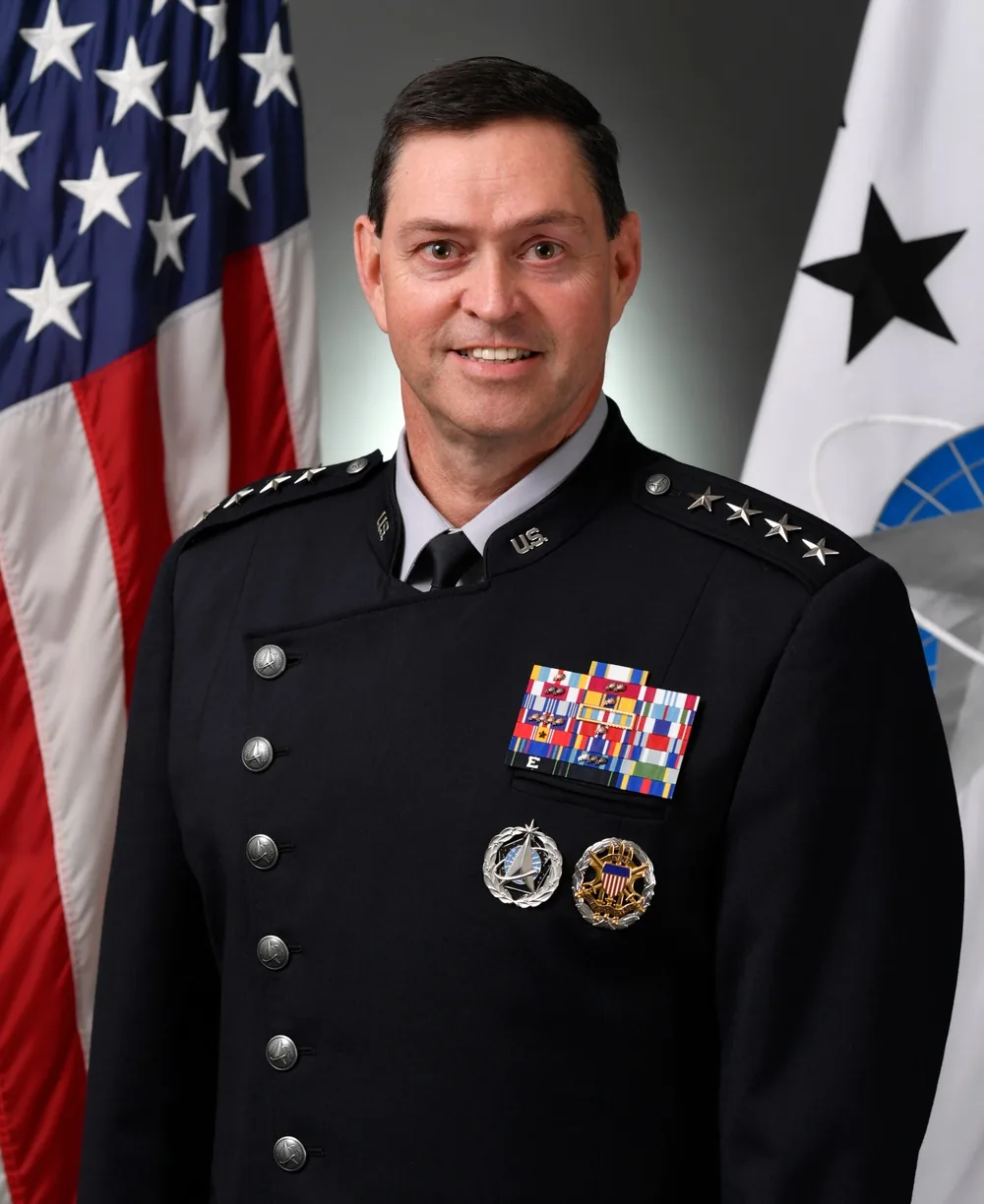
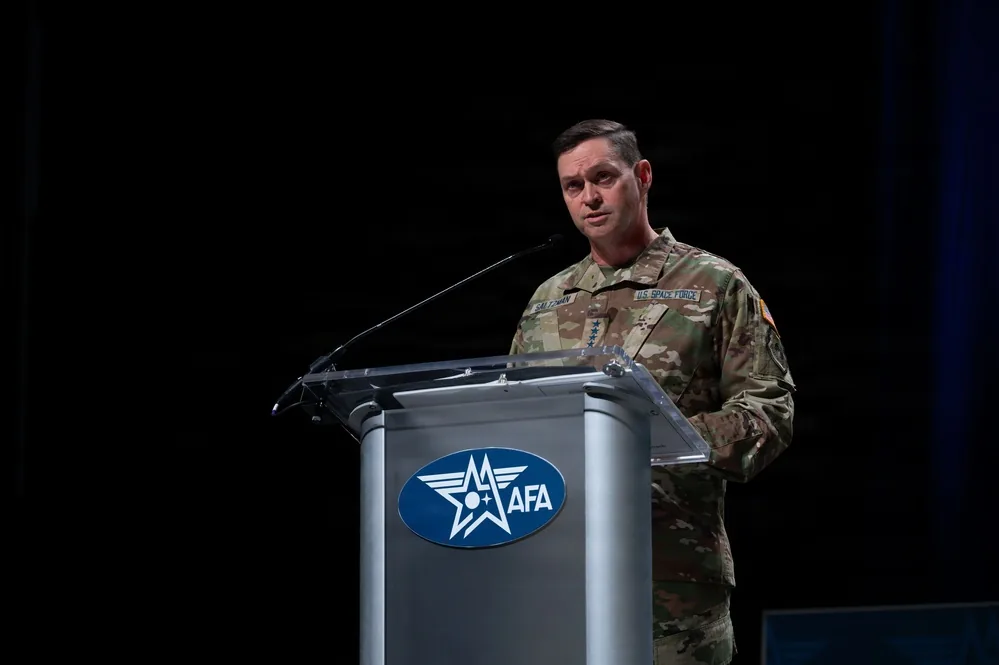
By April 1, the chief of space operations was telling reporters that space-enabled effects had been "critical to mission success" in the campaign. The CENTCOM commander soon used a phrase no American officer had spoken in earnest before: the United States, he said, had achieved space superiority. On April 15, at the 41st Space Symposium in Colorado Springs, Gen. Chance Saltzman closed the loop on a doctrine the service had been writing on whiteboards since 2019.
"Just a few years ago," Saltzman told the audience, "we were debating theories, thinking about our doctrine, designing uniforms. Today, we're a combat credible force."
This is the story of what the Space Force actually did during the 38 days of Epic Fury — what worked, what was tested for the first time, and what it means that orbit has now been used as a warfighting domain in a real war.
The Doctrine Test
The U.S. Space Force was established on December 20, 2019, when President Donald Trump signed the National Defense Authorization Act creating the sixth independent branch of the U.S. armed forces. For the better part of six years, it has lived under a peculiar shadow: stood up explicitly to fight in space, yet never tested in combat at scale. Critics called it a budget vehicle for the Air Force's space portfolio. (For broader background, see The Militarization of Space.)
That ambiguity ended on February 28. Operation Epic Fury was, in CENTCOM's own framing, the largest American military action in the Middle East since the 2003 invasion of Iraq. The U.S. military hit roughly 1,700 targets in the first 72 hours and more than 12,300 over the course of the operation. Across 38 days, the joint force destroyed an estimated 85 percent of Iran's defense industrial base, the majority of its long-range ballistic missiles and launchers, and roughly 70 percent of its launch facilities and ground control stations.
Almost none of that was possible without space. Targeting cells fusing imagery and signals intelligence depended on satellite collection. Fighters and bombers depended on GPS for precision and on military satellite communications to reach their tankers and command nodes. Interceptor batteries shielding U.S. troops in Qatar, Bahrain, Iraq, and the UAE depended on overhead infrared cueing for the few minutes that mattered.
What was different from previous campaigns was that this time, an independent service with its own chief, its own doctrine, and its own Title 10 authorities was running that layer of the war. The chief of that service was being asked, in real time, whether his force could fight. According to Saltzman and Chairman of the Joint Chiefs Gen. Dan Caine, the answer was yes.
The Opening Salvo
The most consequential Space Force contribution to Epic Fury arrived before the first F-35 lifted off. On March 2, Caine publicly confirmed what defense reporters had already begun to piece together: U.S. Space Command and U.S. Cyber Command acted as the campaign's "first movers," layering non-kinetic effects to disrupt and degrade Iranian sensor and communication networks in the hours before kinetic strikes began.
In practical terms, that meant Guardians and cyber operators worked together to blind Iran's air defense radars and command links, suppressing the Islamic Republic of Iran Air Defense Force's ability to coordinate a response. The operation's pre-strike preparation included the destruction of what CENTCOM described as "Iran's equivalent of Space Command" — a target announced roughly a month before opening night — degrading the IRGC's ability to coordinate the very retaliatory missile campaign it would launch hours later.
Saltzman, in subsequent appearances, was unusually direct about what this meant. Electronic-warfare Guardians, he said, were not just supporting the joint force — they were launching attacks against Iranian systems. It was the first time the Space Force had publicly acknowledged its operators conducting what amounts to active offensive electronic warfare in a major campaign.
He also disclosed an operational first that telegraphed how seriously the service is taking expeditionary employment. During Epic Fury, the Space Force relocated one of its electronic-warfare systems across multiple combatant-command areas of responsibility on a single deployment — something Guardians had never done before. The system in question was almost certainly drawn from the family of Counter Communications System and Remote Modular Terminal capabilities operated by Space Delta 3, the service's electromagnetic warfare delta based at Peterson Space Force Base, Colorado.
The result, according to U.S. defense officials, was that the joint force was able to strike more than 1,000 targets in the first 24 hours of the campaign — a tempo only achievable if the adversary's ability to detect, track, and shoot back has already been knocked down.
Missile Warning in Real Time
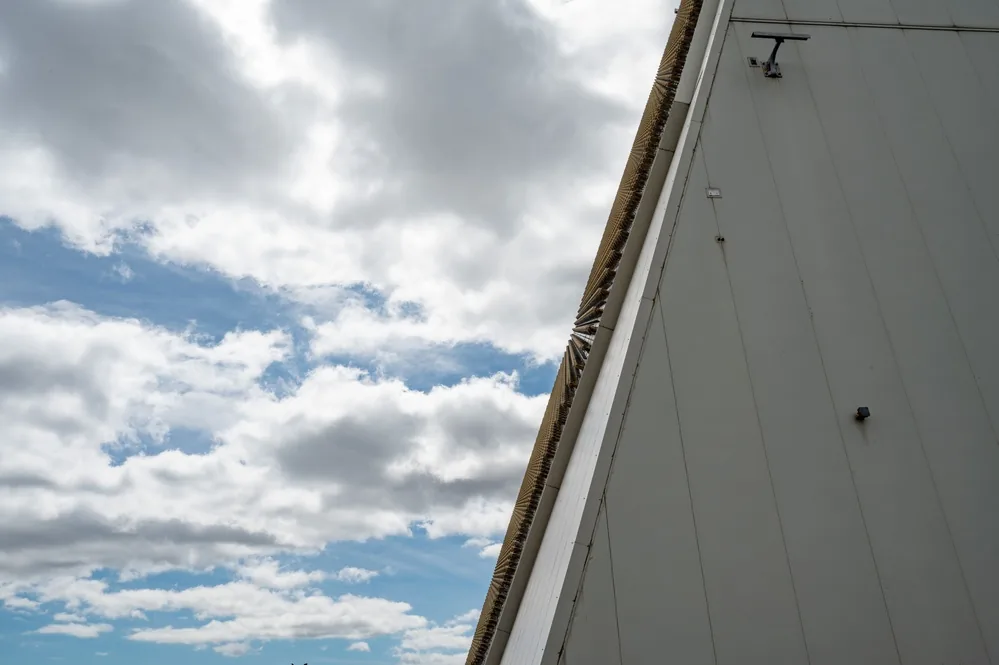
The 6th Space Warning Squadron's Cape Cod radar — and counterparts at Cavalier, Beale, Clear, and Thule — fed Iranian launch detections into the joint kill chain within seconds of boost during Operation Epic Fury.
If the first phase of Epic Fury showcased offense, the missile warning mission showcased defense — and arguably saved the most lives.
When Iran's IRGC Aerospace Force executed its pre-planned retaliation in the opening hours of February 28, it fired hundreds of ballistic missiles and one-way drones at U.S. installations and partner facilities across the region. Iranian commanders publicly described the campaign as a long-war attrition strategy, modeled on the strikes against Al Udeid Air Base in Qatar and Al Asad Air Base in Iraq during earlier confrontations.
Detection of those launches fell to the Space Force's Space Based Infrared System, or SBIRS, a constellation of geosynchronous and highly elliptical orbit satellites whose infrared sensors are tuned to the heat signatures of rocket plumes. SBIRS is being supplemented by Next-Generation Overhead Persistent Infrared (Next-Gen OPIR) satellites and, in low Earth orbit, by the Space Development Agency's proliferated Tracking Layer — a network of small satellites designed specifically to detect and track ballistic and hypersonic threats from launch through reentry.
The kill chain that resulted was operationally tight. According to Space Force officials and reporting from the Space Symposium, Iranian launches were identified almost immediately, with track data pushed to Patriot and THAAD batteries within seconds. Caine has publicly attributed an approximate 90 percent reduction in the effectiveness of Iranian ballistic missile fires to the combination of Space Force early warning and localized electronic warfare.
The human side of that capability is more granular than the topline statistics. Saltzman, recounting the experience to reporters, described Guardians at consoles inside operations centers like Buckley Space Force Base in Colorado — home to Space Delta 4, the missile-warning delta — calling launches in real time and watching shelter alerts cascade across U.S. installations from Bahrain to Kuwait. For deployed troops, the practical difference between SBIRS detection and no detection is the difference between hearing the air-raid horn forty seconds before impact and hearing nothing at all.
GPS, SATCOM, and the Quiet Kill Chain
While missile warning was the most dramatic Space Force contribution, the quieter, more pervasive one was navigation and communications — the connective tissue of every U.S. strike.
Iran has spent the past several years building an electromagnetic warfare program optimized to attack precisely those signals. When Epic Fury began, GPS jamming across the Persian Gulf escalated to levels not seen in any previous Middle East campaign. Maritime analytics firm Windward documented more than 1,100 vessels experiencing GPS and AIS interference within the first 24 hours of the operation. Commercial aviation rerouted around the Strait of Hormuz. Some allied units operating less-hardened receivers reported degraded position fixes and intermittent navigation drop-outs. (For background on how the system works in the first place, see How GPS Actually Works.)
For the U.S. fight, the effect was muted — by design. Most U.S. precision-strike platforms employed in Epic Fury used military-grade M-code GPS, which is more resistant to jamming and spoofing than the civilian C/A signal. Defense observers also noted the appearance of new Controlled Reception Pattern Antennas (CRPAs) on F-15E Strike Eagles photographed during the campaign, connected to the Digital GPS Anti-jam Receiver (DIGAR) system — an upgrade fielded in parallel with the rollout of the M-code-capable GPS III satellites operated by the Space Force's 2nd Space Operations Squadron at Schriever Space Force Base.
Secure communications were carried by the Mobile User Objective System (MUOS), which provides narrowband ultra-high-frequency satellite communications optimized for mobile and disadvantaged users, and by the Advanced Extremely High Frequency (AEHF) constellation, which carries protected, jam-resistant traffic for nuclear and conventional command. SpaceX-operated Starshield assets, the military variant of Starlink, were reported in theater for some special operations and allied users; Iranian attempts to jam those terminals were noted by open-source observers, but their effectiveness was not publicly confirmed.
The cumulative effect was a kill chain that mostly worked even under sustained electromagnetic attack. Targets were geolocated in space, struck from the air or from sea, and re-imaged from space — often inside the same six-hour cycle.
Guardians Under Fire
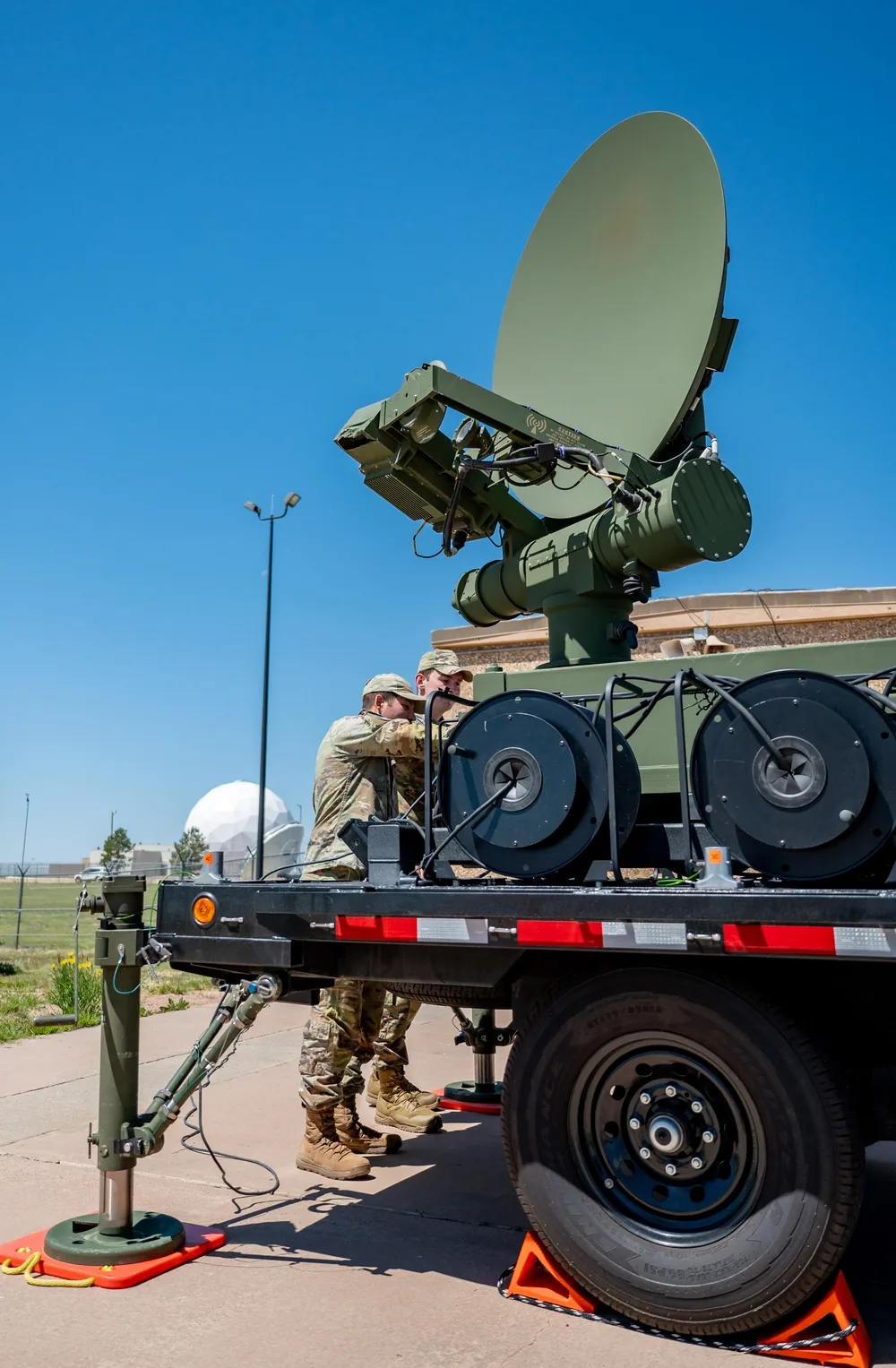
The Mobile Constellation Control System lets Guardians control satellite communications from locations far away from primary operations centers. During Epic Fury, deployable nodes like this ran inside the CENTCOM area of responsibility for the first time — and Guardians operating that forward equipment took indirect fire from Iranian munitions.
For most of the Space Force's existence, the popular caricature has been of Guardians as a desk-bound service: people who fight wars by joystick from suburban Colorado. Epic Fury complicated that picture in ways the service is still absorbing.
According to Saltzman's remarks at the Space Symposium on April 15, Guardians deployed forward into the CENTCOM area of responsibility took indirect fire from Iranian munitions during the campaign. The chief of space operations recounted, without naming her, an enlisted Guardian whose unit came under indirect-fire attack and who continued performing emergency maintenance on her electronic-warfare equipment to keep the system in the fight. He cited the episode as evidence that Space Force capabilities are now being operated "inside the threat zone," not just from sanctuary in the continental United States.
The detail matters strategically. A service whose personnel can be killed in the line of duty is treated differently — politically, culturally, and bureaucratically — than one whose personnel cannot. The Space Force has spent six years arguing that orbit is a warfighting domain, but until February 28, no Guardian had ever been a combatant in the lived sense that soldiers, sailors, airmen, and Marines have always understood. That has now changed, and the service's posture, force protection requirements, and recruiting pitch will all eventually change with it.
It also changes the legal picture. The treatment of forward-deployed Space Force personnel under the law of armed conflict — particularly when their work product is targeting data fed into Patriot batteries or strike packages — has been a quiet but live debate among military lawyers since 2020. Epic Fury supplied the first real test cases.
"Space Superiority" — A New Term of Art
The phrase that drew the most attention from defense analysts wasn't Saltzman's. It was CENTCOM commander Adm. Brad Cooper's.
In an early-April briefing, Cooper declared that the United States had achieved "space superiority" over Iran during Operation Epic Fury — meaning that U.S. forces could operate freely in the space domain while denying the adversary the ability to do the same. "Our space superiority has been a critical enabler to this fight," Cooper said, attributing two parallel achievements to the Space Force: "degrading Iranian capability, and second, they're helping to protect American forces."
The phrasing is deliberately constructed to mirror "air superiority" — the operational concept that has organized U.S. military thinking since World War II. Air superiority means owning the sky in a contested area: an adversary's aircraft cannot operate freely, an adversary's air defenses cannot freely engage, and friendly aircraft can do largely as they please within the contest area. Cooper's point is that the same condition has now been achieved in orbit, against Iran, in a real war.
Caveats apply. Iran is not a peer space power. It operates a small inventory of communications and remote-sensing satellites, possesses limited launch capability, and has historically focused its counterspace efforts on jamming and laser dazzling rather than on direct-ascent or co-orbital weapons. Achieving space superiority over Iran is a meaningfully smaller problem than achieving it over China, which fields multiple direct-ascent anti-satellite systems, demonstrated co-orbital rendezvous capabilities, and a maturing arsenal of ground-based lasers.
Still, it is a precedent. It is the first time a U.S. combatant commander has used the phrase about a real conflict, in public, with operational specifics behind it. Whether or not "space superiority" becomes a doctrinal term of art on par with air or maritime superiority will depend less on Iran than on what the Pentagon does next.
What This Validates
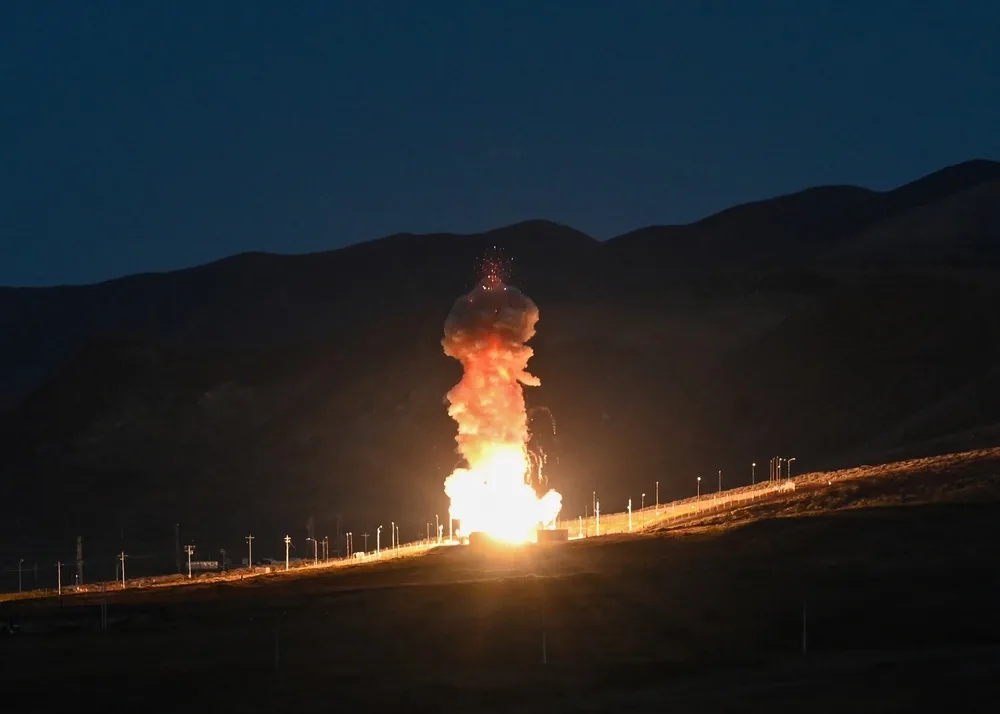
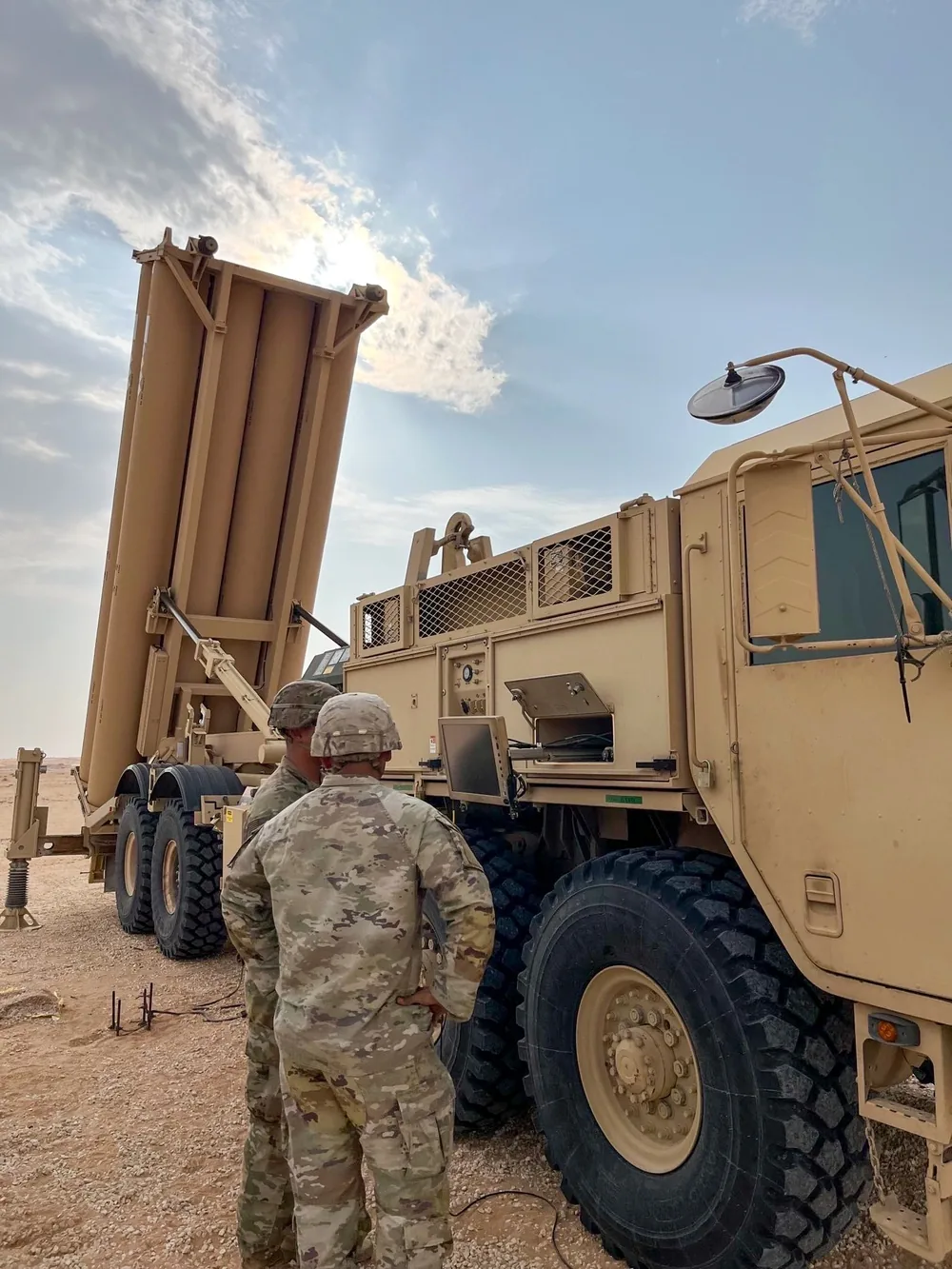
THAAD batteries — cued by Space Force missile-warning satellites — engaged Iranian retaliatory ballistic missile salvos targeting U.S. installations across the Middle East. The kill chain ran from infrared sensors in geosynchronous orbit to interceptor canisters on the ground in seconds.
Epic Fury arrived at a moment of acute political relevance for the Space Force. On April 30 — the same day Saltzman testified before the House Appropriations defense subcommittee — the Trump administration's fiscal year 2027 defense budget request laid out a Space Force topline of approximately $71.24 billion: more than double the FY26 enacted figure of $31.86 billion and roughly 4.5 times the service's original FY20 budget.
That request bundles roughly $59 billion in base discretionary funding with about $12 billion in a separate reconciliation package. It is, by a wide margin, the largest single-year jump in Space Force funding since the service was created. Saltzman has publicly characterized it as the first time there has been "widespread agreement" that the Space Force needs not just to grow, but to "accelerate" its growth.
Most of the increase tracks programs that Epic Fury, in effect, re-validated under live conditions:
- Proliferated Tracking and Transport layers under the SDA, including the Tranche 2 and Tranche 3 missile-warning satellites that build on the architecture used to cue Patriot and THAAD interceptors.
- MILNET, the SpaceX-built 480-satellite military communications mesh, with first launches expected in mid-2026 and initial operating capability in late 2027.
- Next-Generation Overhead Persistent Infrared (Next-Gen OPIR) satellites, the SBIRS successor designed to handle the next generation of hypersonic and maneuvering threats.
- Counter-communications and electromagnetic warfare capabilities operated by Space Delta 3, including the family of systems Saltzman alluded to when discussing offensive Guardian operations.
- Golden Dome, the layered homeland missile defense initiative whose space-based sensor and interceptor components are managed by Space Force program offices and Space Systems Command. (For the broader picture, see The New Space Arms Race: Golden Dome.)
Behind the budget sits a strategy. Saltzman's two foundational documents — the 68-page Future Operating Environment 2040 and the 104-page Objective Force 2040 — call for an end-state Space Force of roughly 30,000 Guardians and a satellite inventory measured in the tens of thousands. The FY27 request is the first installment on that bet. Epic Fury is the evidence the service is using to argue the bet is worth making.
What Remains Untested
A clear-eyed reading of Epic Fury has to acknowledge what was not tested.
Iran did not seriously contest U.S. assets in orbit. There is no public evidence the IRGC attempted to dazzle, jam, or otherwise disable U.S. military satellites in any sustained way. There were no Iranian co-orbital approaches against American spacecraft. There was no kinetic anti-satellite event. The Space Force was operating in an environment where the adversary's counterspace toolkit was largely confined to terrestrial GPS jamming and the targeting of allied or commercial terminals — a world apart from a major-power conflict.
China is the harder problem the service has been preparing for since its founding. As of April 2026, U.S. defense assessments indicate China possesses at least one, and possibly three, operational direct-ascent anti-satellite systems against low Earth orbit; demonstrated co-orbital rendezvous capabilities; likely fielded ground-based laser weapons capable of dazzling low-orbit imaging satellites; and an integrated electronic-warfare and cyber posture under the People's Liberation Army.
A Pacific war scenario would test the Space Force in ways Epic Fury did not. Satellites might be lost. The proliferated architectures the service has been building — designed to absorb attrition — would face their actual stress test. The political question of whether the United States would respond to attacks on its satellites with kinetic strikes against terrestrial targets has never had to be answered for real. Russian counterspace efforts, including the reported nuclear anti-satellite weapon and the Peresvet laser, present a different and in some ways more dangerous problem set, but one the Iran campaign did not stress.
The honest framing: Epic Fury validated a layer of capability — missile warning, secure communications, navigation warfare, and offensive electromagnetic operations — against an adversary who could not credibly contest the orbital domain. The harder validations remain ahead.
The Stakes
For 65 years, military space was largely a passive domain. Satellites watched, listened, relayed. They were not, in a meaningful sense, combatants.
Operation Epic Fury closes that era. From February 28 to early April 2026, U.S. military satellites and the Guardians who operate them were active participants in a real war — detecting launches in real time, jamming Iranian air defenses, cueing interceptors, carrying every relevant communications and navigation signal, and, in at least one publicly acknowledged case, coming under indirect fire alongside the people they were protecting.
Whether this counts as the moment orbit became "a warfighting domain" depends on definition. The doctrine has called it that since at least 2018. China and Russia have treated it that way for longer. What changed in Epic Fury is that an American service designed for that fight was put into one and came out with a chief willing to stand at a podium in Colorado Springs and say his force is combat credible — not in theory, but in a real campaign whose results are public.
For the U.S. military, the campaign removes the last respectable argument that the Space Force is a bureaucratic experiment. For potential adversaries, it sets a precedent: the United States is now willing to talk openly about offensive Guardian operations, to claim "space superiority" as a public political objective, and to back the claim with a budget request that nearly doubles the service in a single fiscal year.
For everyone else, it is a reminder that the most consequential changes in the space domain rarely announce themselves with a launch or a treaty. Sometimes they happen at 1:15 a.m. local time, on the first night of a war, in the form of a streak across an infrared sensor — and the quiet, deliberate decision of a service that has spent six years preparing for exactly this moment to act on it.
Sources include Air & Space Forces Magazine's reporting on Gen. Chance Saltzman's April 1 press engagement and his April 15 keynote at the 41st Space Symposium; National Defense Magazine, Task & Purpose, Space.com, and Defense One coverage of Operation Epic Fury; SatNews's "Guardians in the Kill Chain" reporting; CENTCOM and Department of War fact sheets from March 2026; and Breaking Defense coverage of the FY27 Space Force budget request.