The space industry in 2026 is not just about SpaceX and Blue Origin. Beneath the headlines dominated by the industry giants, a generation of startups is building the infrastructure, services, and technologies that will define the next era of space activity. These are not PowerPoint companies running on hype. They are flying hardware, signing contracts, and attracting serious capital -- with several recently graduating to the public markets. Here are ten space startups that deserve your attention, and the reasons why each one matters.
1. Firefly Aerospace
Headquarters: Cedar Park, Texas Founded: 2014 (restarted 2017) Key milestone: Nasdaq IPO (FLY) in August 2025 at ~$9.8B valuation
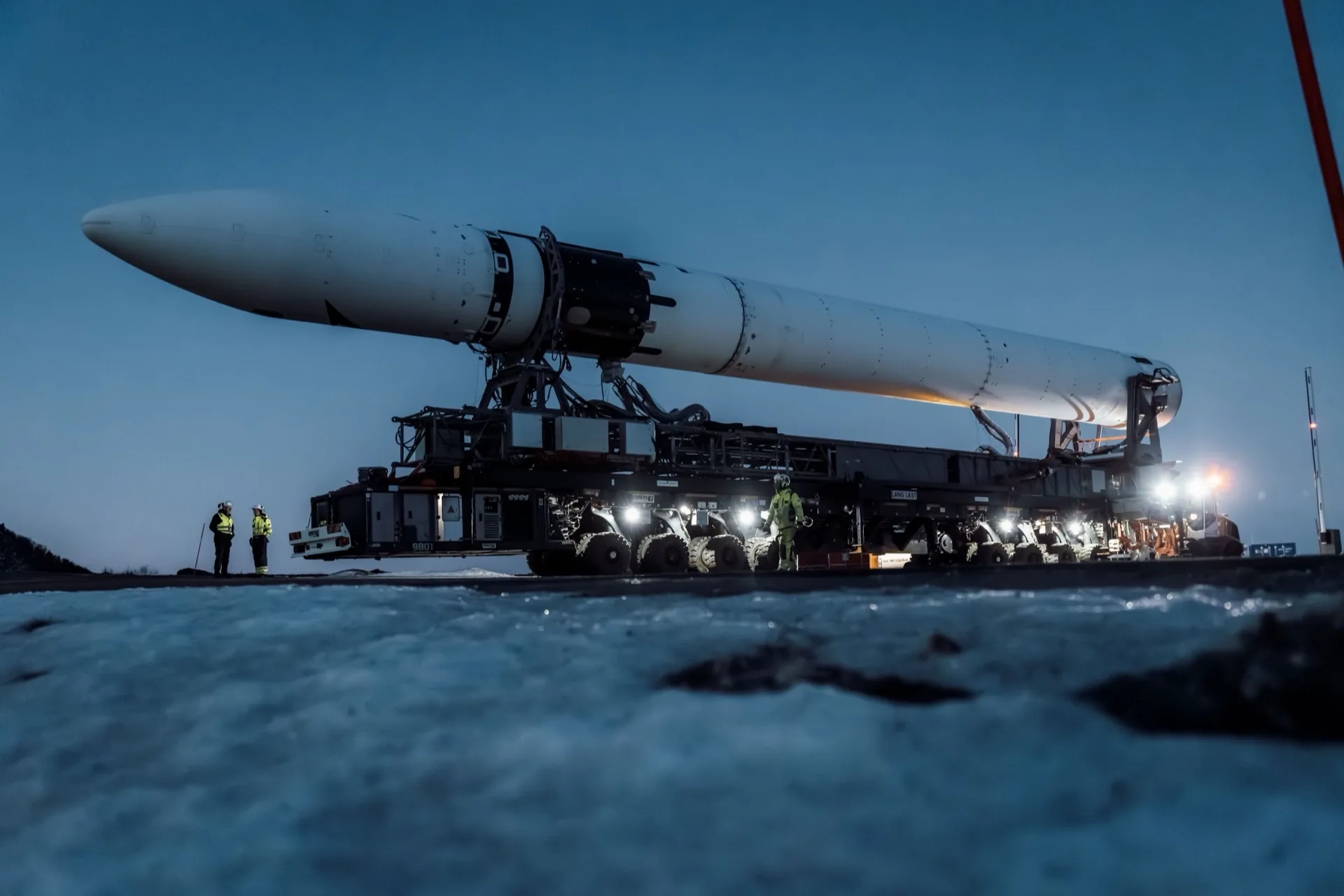
Firefly has emerged as one of the most capable small launch providers in the world and is now a publicly traded company. The company priced its Nasdaq IPO at $45 per share in August 2025, raising $868 million and reaching a debut valuation of approximately $9.8 billion under the ticker FLY. The Alpha rocket, capable of delivering approximately 1,000 kilograms to low Earth orbit, has completed successful missions, and Firefly's Blue Ghost lunar lander completed a historic soft landing on the Moon in March 2025 -- the first fully successful commercial lunar landing.
Firefly is also developing Eclipse (formerly the MLV) in partnership with Northrop Grumman, targeting the medium-lift market with a first flight no earlier than 2027. A $176.7 million NASA CLPS contract awarded in July 2025 funds a south-pole lunar mission planned for 2029. The company's Elytra orbital transfer vehicle extends its reach beyond launch, offering last-mile delivery services. With NASA, Department of Defense, and commercial customers, Firefly is positioning itself as a full-service space transportation company rather than just a rocket builder.
2. Relativity Space
Headquarters: Long Beach, California Founded: 2015 Key milestone: Terran R development
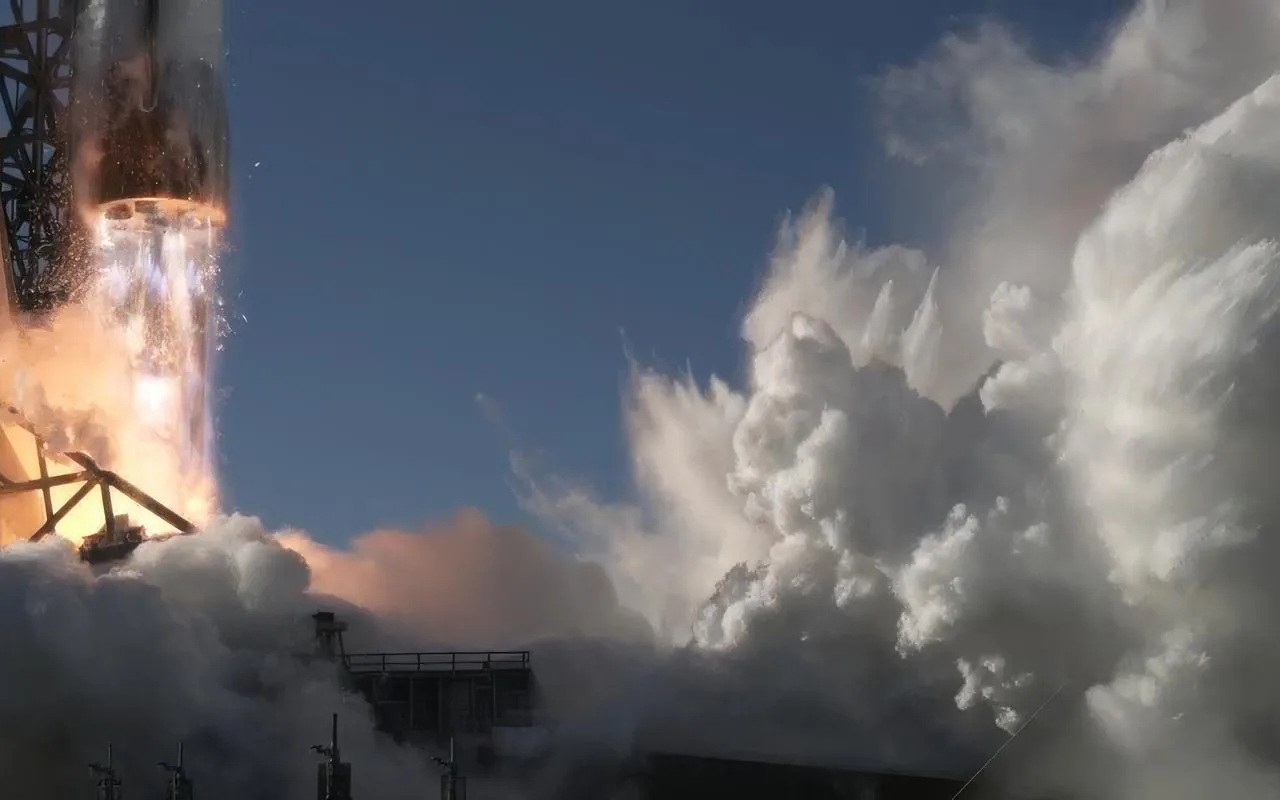
Relativity Space made headlines with Terran 1, the world's first 3D-printed rocket to attempt an orbital launch. While Terran 1's test flight in March 2023 did not achieve orbit, it validated the company's core thesis: that autonomous 3D printing using the Stargate system, the world's largest metal 3D printers, can dramatically reduce the part count, manufacturing time, and cost of building rockets.
The company has since pivoted its focus entirely to Terran R, a medium-to-heavy-lift reusable rocket designed to compete directly with Falcon 9. Terran R will be capable of delivering up to 23,500 kilograms to LEO with a reusable first stage. The shift to a larger vehicle reflects a strategic bet that the small launch market is becoming commoditized while the medium-lift segment offers better economics. Relativity has raised over $1.3 billion and secured launch contracts with multiple commercial and government customers. The company's factory in Long Beach is one of the most technologically advanced rocket manufacturing facilities on Earth.
3. Stoke Space
Headquarters: Kent, Washington Founded: 2019 Key milestone: Full-flow staged combustion upper stage testing
Stoke Space might be the most technically ambitious startup on this list. Founded by former Blue Origin engineers Andy Lapsa and Tom Feldman, the company is developing a fully reusable two-stage rocket where both the first and second stages return to the launch site for reuse. Full second-stage reusability is a problem that no one, including SpaceX, has solved operationally.
Stoke's approach to second-stage reentry is radical. Instead of a heat shield or ablative tiles, the upper stage uses an actively cooled metallic heat shield with regenerative cooling channels, similar in concept to how rocket engine nozzles are cooled. The company has demonstrated this technology in ground tests, firing a ring of engines around the base of the second stage to both decelerate and actively cool the vehicle during reentry. If it works at scale, Stoke will have cracked the hardest problem in reusable rocketry. The company has raised more than $260 million across its rounds, including a $100M+ Series C closed in 2024, and is progressing toward Nova flight testing.
4. Vast
Headquarters: Long Beach, California Founded: 2021 Key milestone: Haven-1 station under construction
Vast, founded by cryptocurrency entrepreneur Jed McCaleb, is racing to launch the first free-flying commercial space station. Haven-1 is designed as a single-module station that can support a crew of four, with artificial gravity research capabilities and commercial laboratory space. The station is being built at Vast's Long Beach facility and is targeting a launch aboard a SpaceX Falcon 9 rocket.
What sets Vast apart is speed. While competitors like Axiom Space are taking a methodical, multi-module approach, Vast is optimizing for time-to-market with a simpler, faster architecture. The company has also announced Haven-2, a larger follow-on station, and has partnered with SpaceX to use Crew Dragon for crew transportation. Vast has raised hundreds of millions in funding, primarily from McCaleb himself, and has hired aggressively from SpaceX, NASA, and other aerospace organizations. If Haven-1 reaches orbit as planned, it will be a landmark achievement for commercial space habitation.
5. Impulse Space
Headquarters: Redondo Beach, California Founded: 2021 Key milestone: Mira orbital transfer vehicle deployment
Founded by Tom Mueller, the legendary propulsion engineer who designed SpaceX's Merlin and Raptor engines, Impulse Space is building orbital transfer vehicles (OTVs) that serve as the "last mile" delivery service for satellites. The company's Mira vehicle rides to orbit as a secondary payload on a large rocket and then uses its own propulsion to deliver satellites to their final orbits.
Impulse Space successfully deployed multiple Mira vehicles in orbit, demonstrating the company's propulsion technology and guidance systems. The company closed a $300 million Series C in 2025 led by Linse Capital, on top of its 2024 $150 million Series B. Impulse is scaling production of Mira and developing the Helios high-energy upper stage for missions beyond low Earth orbit, targeting lunar and interplanetary destinations. Mueller's deep expertise in rocket propulsion gives Impulse Space a technical credibility that few startups can match, and the growing demand for flexible orbit delivery services provides a clear and expanding market.
6. Astrobotic
Headquarters: Pittsburgh, Pennsylvania Founded: 2007 Key milestone: Peregrine and Griffin lunar lander programs
Astrobotic is one of the leading commercial lunar transportation companies, developing robotic landers that deliver payloads to the Moon's surface for NASA, commercial companies, and international space agencies. The company's Peregrine lander launched in January 2024 as part of NASA's Commercial Lunar Payload Services (CLPS) program, though the mission encountered propulsion issues that prevented a lunar landing. Firefly's Blue Ghost has since claimed the honor of the first fully successful commercial lunar landing in March 2025, putting more competitive pressure on Astrobotic's upcoming missions.
The more ambitious Griffin lander is designed to deliver NASA's VIPER (Volatiles Investigating Polar Exploration Rover) to the Moon's south pole, where it will search for water ice in permanently shadowed craters. Griffin can deliver up to 625 kilograms to the lunar surface, making it one of the most capable commercial landers in development. Astrobotic has also won contracts for future CLPS missions and is developing LunaGrid, a power generation service for lunar surface operations. The company's Pittsburgh headquarters houses a lunar testbed facility where landers are tested in simulated lunar conditions.
7. ispace
Headquarters: Tokyo, Japan Founded: 2010 Key milestone: HAKUTO-R Mission 1 and Mission 2
ispace is the leading commercial lunar transportation company outside the United States. The Japanese startup's HAKUTO-R program is developing a series of increasingly capable lunar landers. Mission 1, launched in late 2022, successfully entered lunar orbit but experienced a software issue during its landing attempt in April 2023, crashing into the surface. The failure, while disappointing, provided invaluable engineering data.
Mission 2 (RESILIENCE) launched in January 2025 but suffered an anomaly during its June 2025 landing attempt, ending in a hard impact -- a second consecutive failure for the company. The company has Mission 3 in development with an even larger APEX 1.0 lander and a micro-rover. ispace remains publicly listed on the Tokyo Stock Exchange (ticker 9348) and has partnerships with JAXA, the European Space Agency, and multiple commercial payload customers. The setbacks have been costly for shareholders but the company's long-term vision includes lunar resource utilization and the development of a cislunar economic ecosystem.
8. Phase Four
Headquarters: Hawthorne, California Founded: 2015 Key milestone: Maxwell thruster deployments in orbit
Phase Four is tackling a less glamorous but critically important challenge: in-space propulsion. The company's Maxwell radio-frequency (RF) plasma thruster provides efficient, low-cost propulsion for small and medium satellites. Unlike traditional ion engines that require expensive, precisely machined grids and cathodes, Phase Four's thruster uses radio waves to ionize propellant and electromagnetic fields to accelerate it, resulting in a simpler, cheaper, and more robust design.
Multiple Maxwell thrusters are operating in orbit on customer satellites, providing station-keeping, orbit-raising, and deorbiting capabilities. As the satellite industry grapples with increasingly strict orbital debris regulations that require satellites to deorbit within five years of end-of-life, affordable and reliable propulsion has become a necessity rather than a luxury. Phase Four's technology fits this market perfectly, and the company has contracts with commercial constellation operators and government agencies.
9. Momentus
Headquarters: San Jose, California Founded: 2017 Key milestone: Vigoride orbital transfer vehicle operations
Momentus operates in the orbital transportation-as-a-service market, offering its Vigoride orbital transfer vehicle to deliver satellites from their launch vehicle drop-off orbit to their final operational orbit. The company went public via SPAC in 2021 at a $1.2 billion valuation, settled an SEC enforcement action over investor misrepresentations for $7 million, and has spent years on financial life support -- with reverse stock splits and delisting warnings along the way.
Vigoride has completed multiple missions, deploying customer satellites into various orbits. The vehicle uses a water-based plasma propulsion system, a unique approach that offers safety advantages during ground handling and launch integration. Momentus is increasingly outflanked by better-capitalized OTV peers like Impulse Space and Starfish Space (which raised $100M+ Series B in Q1 2026). The company is included here as a watch item more than a buy thesis -- the underlying market is real, but Momentus must execute consistently to remain viable.
10. Varda Space Industries
Headquarters: El Segundo, California Founded: 2020 Key milestone: First in-space manufacturing and Earth return
Varda Space Industries is arguably the most innovative company on this list. Founded by Will Bruey (formerly of SpaceX) and Delian Asparouhov (a venture capitalist at Founders Fund), Varda is pioneering in-space manufacturing, using the microgravity environment of orbit to produce pharmaceutical compounds and other high-value materials that cannot be manufactured as effectively on Earth.
Varda's first mission launched in 2023 aboard a SpaceX rideshare and successfully manufactured ritonavir crystals, an HIV medication, in orbit. The reentry capsule, built by Rocket Lab, returned the product to Earth, demonstrating the complete cycle of space-based manufacturing: launch, production, and return. This was a genuine first. No commercial company had ever manufactured a pharmaceutical product in space and returned it to Earth.
Varda has since flown additional missions and continues to scale flight cadence, with a pipeline of pharmaceutical and materials science payloads. The economics are compelling for certain products: drugs that crystallize more uniformly in microgravity can be more effective and command premium pricing, potentially justifying the cost of space-based production. Varda has raised more than $325 million in cumulative funding and has partnerships with major pharmaceutical companies interested in microgravity research. If the economics prove out at scale, Varda could pioneer an entirely new category of space commerce.
The Common Thread
What connects these ten companies is not just that they are building hardware and flying missions. It is that they are each attacking a specific, well-defined problem where space offers a genuine advantage over terrestrial alternatives. None of them are trying to be SpaceX. They are building the second, third, and fourth layers of a space economy that SpaceX's low-cost launch capability has made possible.
The space industry has always depended on a pyramid of capabilities: launch at the base, transportation and infrastructure in the middle, and applications and services at the top. These startups are filling out every level of that pyramid. Launch providers like Firefly and Relativity Space expand access. Transportation companies like Impulse Space and Momentus solve the last-mile problem. Station builders like Vast create destinations. Lunar companies like Astrobotic and ispace open new markets. Propulsion companies like Phase Four enable the satellite economy. And manufacturers like Varda prove that space can produce things that people on Earth actually want to buy.
Not all of these companies will succeed. The history of the space industry is littered with promising startups that ran out of money, technology, or luck. But the aggregate direction is unmistakable. The commercial space ecosystem is deepening, diversifying, and maturing. The age of space as a government-only domain is over. The startups are the proof.