All Space Stations: Complete History & Future
Complete guide to every space station from Salyut 1 (1971) to future commercial stations. Compare ISS, Tiangong, Mir, and upcoming Axiom, Orbital Reef, and Starlab.
Since 1971, humanity has built and operated 11 crewed space stations. The ISS — the largest structure ever built in space — is nearing retirement. A new generation of commercial stations will replace it. This page tracks every station ever launched and every one being planned.
5
Past
2
Active
6
Planned
| Mission | Agency | Year | Type | Status |
|---|---|---|---|---|
| Salyut 1 | 🇷🇺 Soviet Union | 1971–1971 | Space station | Deorbited |
| Skylab | 🇺🇸 NASA | 1973–1979 | Space station | Deorbited (uncontrolled re-entry over Australia) |
| Salyut 6 | 🇷🇺 Soviet Union | 1977–1982 | Space station | Deorbited |
| Salyut 7 | 🇷🇺 Soviet Union | 1982–1991 | Space station | Deorbited |
| Mir | 🇷🇺 Soviet Union / Russia | 1986–2001 | Modular space station | Deorbited (controlled, March 2001) |
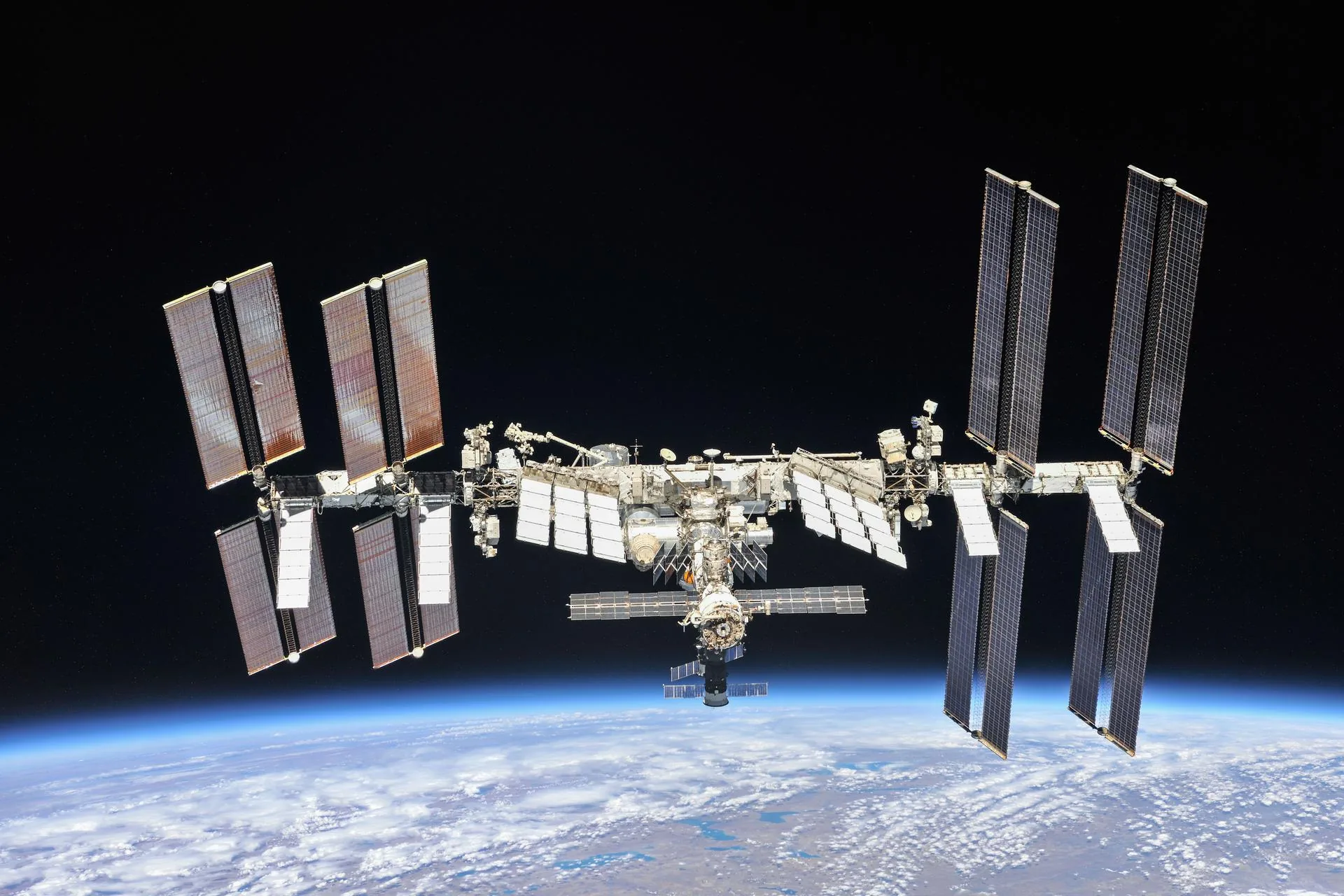
| International Space Station (ISS) | 🇺🇸 NASA / Roscosmos / ESA / JAXA / CSA | 1998 | Modular space station | Active — continuously crewed since Nov 2000, retirement ~2030 |
| Tiangong Space Station | 🇨🇳 CNSA (China) | 2021 | Modular space station | Active — fully operational since 2022, expanding |
| Lunar Gateway | 🇺🇸 NASA / ESA / JAXA / CSA | 2027 (planned) | Lunar orbital station | PPE + HALO modules in development, SpaceX launching |
| Axiom Station | 🇺🇸 Axiom Space (USA) | 2026–2030 | Commercial space station | Axiom Hab 1 module in production — attaches to ISS first |
| Orbital Reef | 🇺🇸 Blue Origin / Sierra Space | 2027+ (planned) | Commercial space station | In development — NASA CLD program |
| Starlab | 🇺🇸 Voyager Space / Airbus | 2028 (planned) | Commercial space station | In development — single-launch inflatable module |
| Haven-1 | 🇺🇸 Vast (USA) | 2025–2026 (planned) | Commercial space station | In development — could be first commercial station launched |
| International Lunar Research Station (ILRS) | 🇨🇳 CNSA / Roscosmos | 2035+ (planned) | Lunar surface station | Planning phase — China-Russia led initiative |
Mission Details
Salyut 1
Past🇷🇺 Soviet Union
Space station · 1971–1971 · Low Earth Orbit
- •First space station in history
- •Soyuz 11 crew stayed 23 days — first to live aboard a station
- •Crew tragically died during re-entry (depressurization)
Skylab
Past🇺🇸 NASA
Space station · 1973–1979 · Low Earth Orbit
- •First American space station
- •Three crews totaling 171 days in space
- •Pioneered solar science from orbit (Apollo Telescope Mount)
- •Proved humans could live and work in space for months
Salyut 6
Past🇷🇺 Soviet Union
Space station · 1977–1982 · Low Earth Orbit
- •First station with two docking ports (enabled crew rotation)
- •Hosted crews from 12 nations (Intercosmos program)
- •16 crews visited over 5 years
Salyut 7
Past🇷🇺 Soviet Union
Space station · 1982–1991 · Low Earth Orbit
- •Last of the Salyut stations
- •Svetlana Savitskaya became first woman to perform EVA (1984)
- •Record 237-day mission by Leonid Kizim & Vladimir Solovyov
Mir
Past🇷🇺 Soviet Union / Russia
Modular space station · 1986–2001 · Low Earth Orbit
- •First modular space station — pioneered on-orbit assembly
- •Operated for 15 years (designed for 5)
- •Valeri Polyakov set 437-day single spaceflight record (still stands)
- •Hosted Shuttle-Mir program — U.S.-Russia cooperation precursor to ISS
- •Survived a fire and collision with Progress supply ship
International Space Station (ISS)
Active🇺🇸 NASA / Roscosmos / ESA / JAXA / CSA
Modular space station · 1998 · Low Earth Orbit (408 km)
- •Largest structure ever built in space (109m x 73m, 420,000 kg)
- •Continuously inhabited for 25+ years — longest continuous human presence in space
- •Over 3,000 scientific experiments conducted
- •270+ people from 21 countries have visited
- •Cost: ~$150 billion — most expensive object ever built
Tiangong Space Station
Active🇨🇳 CNSA (China)
Modular space station · 2021 · Low Earth Orbit (340–450 km)
- •China's permanent space station — fully independent from ISS
- •Three modules: Tianhe (core), Wentian, Mengtian
- •Continuously crewed since June 2022
- •Planning expansion to 6 modules
- •Will host international experiments and potentially foreign astronauts
Lunar Gateway
Future🇺🇸 NASA / ESA / JAXA / CSA
Lunar orbital station · 2027 (planned) · Near-Rectilinear Halo Orbit (Moon)
- •First space station to orbit the Moon
- •Staging point for Artemis lunar surface missions
- •Will enable sustained lunar exploration
- •PPE (Power & Propulsion) + HALO (Habitation) modules launching together
Axiom Station
Future🇺🇸 Axiom Space (USA)
Commercial space station · 2026–2030 · Low Earth Orbit
- •First commercial space station
- •Initial modules attach to ISS, then detach as free-flying station
- •4 private astronaut missions already completed (Ax-1 through Ax-4)
- •Research, manufacturing, and space tourism
Orbital Reef
Future🇺🇸 Blue Origin / Sierra Space
Commercial space station · 2027+ (planned) · Low Earth Orbit
- •Partnership between Blue Origin and Sierra Space
- •Designed as mixed-use 'business park in space'
- •Will support 10 people at a time
- •Uses Blue Origin's New Glenn for launch
Starlab
Future🇺🇸 Voyager Space / Airbus
Commercial space station · 2028 (planned) · Low Earth Orbit
- •Single-launch station using inflatable habitat technology
- •Partnership between Voyager Space and Airbus
- •George Washington University lab module
- •Designed for 4 crew members
Haven-1
Future🇺🇸 Vast (USA)
Commercial space station · 2025–2026 (planned) · Low Earth Orbit
- •Single-module station with artificial gravity research
- •Launching on SpaceX Falcon 9
- •Designed for crew of 4
- •Precursor to larger Vast station with spin gravity
International Lunar Research Station (ILRS)
Future🇨🇳 CNSA / Roscosmos
Lunar surface station · 2035+ (planned) · Moon (South Pole)
- •Joint China-Russia lunar base project
- •Will include orbital, surface, and mobile components
- •Open to international partners (Pakistan, South Africa, others joined)
- •Rival to NASA's Artemis Base Camp concept
Frequently Asked Questions
How many space stations are currently in orbit?▾
As of 2026, there are two operational crewed space stations: the International Space Station (ISS), a collaboration of NASA, Roscosmos, ESA, JAXA, and CSA; and China's Tiangong space station, which has been continuously crewed since June 2022.
When will the ISS be retired?▾
The ISS is currently approved to operate through 2030. NASA plans to deorbit it using a SpaceX-built deorbit vehicle. Commercial stations from Axiom Space, Blue Origin/Sierra Space (Orbital Reef), and Voyager/Airbus (Starlab) are being developed to replace it.
What was the first space station?▾
Salyut 1, launched by the Soviet Union on April 19, 1971, was the world's first space station. The Soyuz 11 crew spent 23 days aboard, but tragically died during re-entry due to cabin depressurization.
How big is the ISS compared to Tiangong?▾
The ISS is much larger: it has a mass of ~420,000 kg, a pressurized volume of 916 m3, and a length of 109 meters. Tiangong currently has a mass of ~90,000 kg and a pressurized volume of ~340 m3 with three modules, though China plans to expand it to six modules.
What are commercial space stations?▾
Commercial space stations are privately built and operated orbital habitats. NASA's Commercial LEO Destinations (CLD) program is funding several: Axiom Station (Axiom Space), Orbital Reef (Blue Origin/Sierra Space), and Starlab (Voyager Space/Airbus). Vast's Haven-1 is also in development. These will replace the ISS for research, manufacturing, and tourism.
Will there be a space station around the Moon?▾
Yes — the Lunar Gateway is a planned small space station that will orbit the Moon in a near-rectilinear halo orbit. It's a key component of NASA's Artemis program and will serve as a staging point for lunar surface missions. The first modules (PPE + HALO) are expected to launch around 2027.
What is the longest anyone has lived in space?▾
Russian cosmonaut Valeri Polyakov holds the record for the longest single spaceflight: 437 days aboard Mir (1994–1995). The record for total time in space is held by Gennady Padalka at 878 days across five missions.
How much did the ISS cost to build?▾
The ISS cost approximately $150 billion to build and operate, making it the most expensive single object ever constructed. This includes contributions from all partner agencies: NASA (~$100 billion), Roscosmos, ESA, JAXA, and CSA.
Last updated: 2026-03-27. Data sourced from NASA, ESA, JAXA, ISRO, CNSA, and official agency publications.
© SpaceOdysseyHub. Cite with attribution.