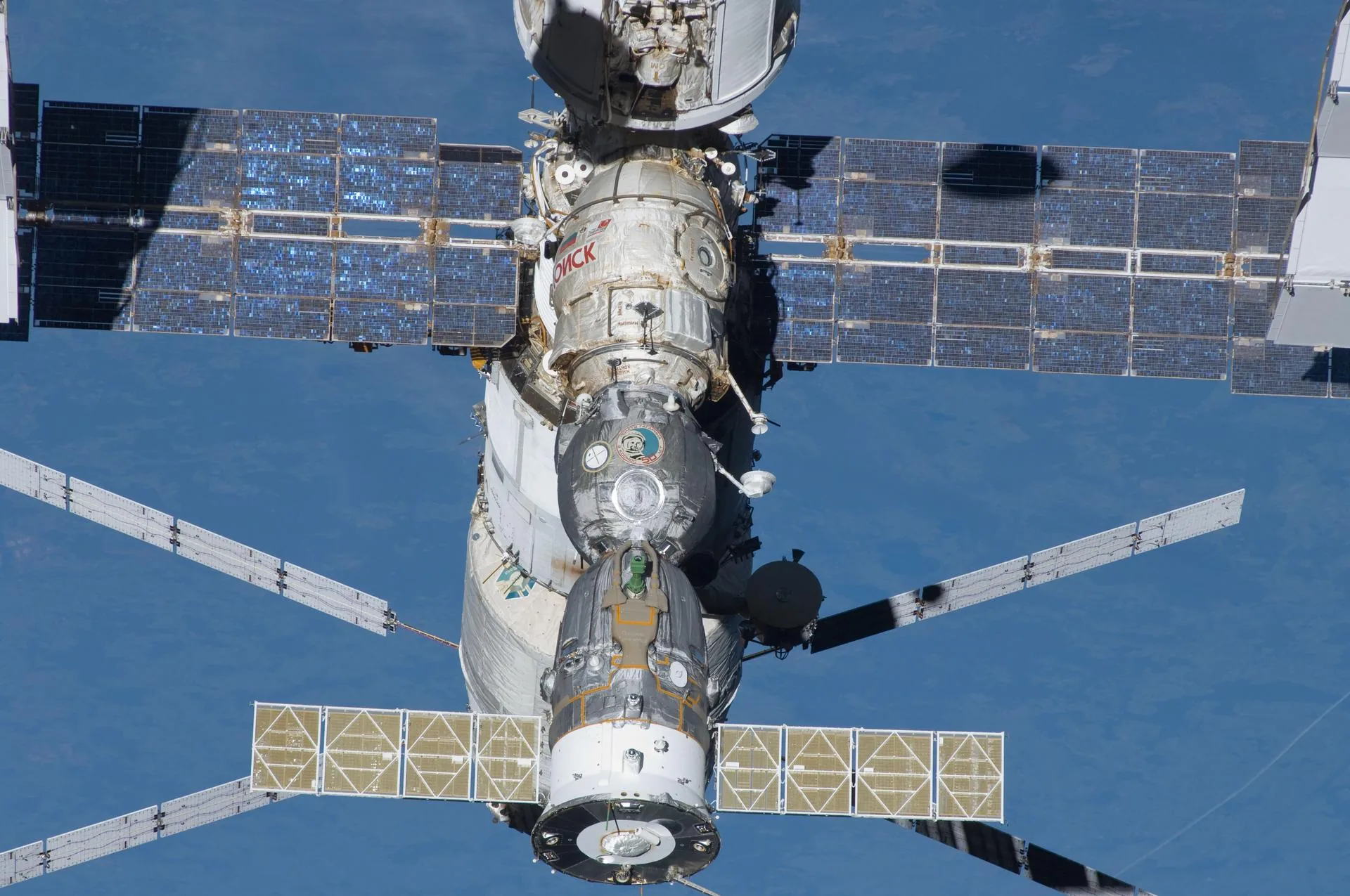
The International Space Station will not last forever. After more than 25 years of continuous habitation, the most complex structure ever built in space is approaching the end of its operational life, with retirement planned around 2030. When it goes, it will leave a gap in low Earth orbit that no government agency plans to fill alone.
Instead, for the first time in history, commercial companies will take the lead. NASA has placed a deliberate bet that the private sector can build, launch, and operate space stations that serve not just government astronauts but paying customers, researchers, manufacturers, and tourists. At least four companies are racing to make that vision real before the ISS makes its final descent.
The era of commercial space stations is not a distant dream. It is a construction project with deadlines, budgets, and hardware already being built.
Commercial Space Station Programs (2026 Status)
| Station | Operator | Partners | Architecture | Crew Capacity | First Module Launch | NASA CLD Award | Status (May 2026) |
|---|---|---|---|---|---|---|---|
| ISS (incumbent) | NASA + Roscosmos + ESA + JAXA + CSA | Government partners | Modular, 1998 onwards | 7 | 1998 (Zarya) | n/a (incumbent) | Operational; deorbit ~2030 |
| Tiangong | CNSA (China) | Chinese national | Modular (Tianhe + 2 lab modules) | 3 (expanding to 6) | 2021 | n/a | Operational since 2022; expansion planned |
| Axiom Station | Axiom Space | Northrop, Thales Alenia | ISS-attached → free-flier | ~8 | 2027 (revised; was 2026) | $140M (2020 NASA award) | Module 1 (Hab) in production; ISS-attached phase first |
| Starlab | Voyager Technologies + Airbus | Hilton, Northrop, Mitsubishi, Palantir | Single-launch modular on Starship | 4 | 2028-2029 target | $217M (Phase 1, 2021); $415M Phase 2 (2024) | Vertical integration; full-scale mockup demonstrated |
| Orbital Reef | Blue Origin + Sierra Space | Boeing, Redwire, Genesis Eng. | Modular, multi-port | 10 | 2027-2028 target | $130M (2021 award) | Mixed-mode (workstation + tourism); Sierra Space LIFE habitat tested 2024 |
| VAST Haven-1 | VAST Space | Self-funded + SpaceX launch | Single-module station | 4 (short stays) | Mid-2026 target | n/a | Privately funded; first commercial station to fly |
| VAST Haven-2 / Long-term station | VAST Space | TBD CLD partner | Modular | 8+ | 2029-2030 target | Bidding CLD Phase 2 | Architecture finalized |
| Bharatiya Antariksh Station | ISRO (India) | Indian national | Modular | 3 → 6 | 2028-2030 (first module) | n/a | Concept design; full station ~2035 |
| CASIS / commercial ISS national lab | CASIS | NASA-managed transition | Research time | Multi-tenant | n/a | n/a | Operational on ISS until 2030 |
Caveat: Schedules slip frequently in the commercial-station industry. Axiom delayed first module launch from 2026 to 2027 in 2024; Starlab and Orbital Reef both target 2028+. NASA's CLD Phase 2 contracts are expected mid-2026.
NASA's Commercial Low Earth Orbit Destinations Program
The framework for this transition is NASA's Commercial Low Earth Orbit Destinations (CLD) program. Announced in 2021, CLD awarded funded Space Act Agreements to multiple companies to develop commercial space stations capable of supporting NASA astronauts alongside other customers.
NASA's logic is straightforward and economically compelling. Operating the ISS costs NASA roughly $3-4 billion per year -- about a third of the agency's human spaceflight budget. If commercial companies can provide equivalent capabilities at lower cost, NASA can redirect those billions toward Artemis, lunar surface operations, and eventually Mars missions, while maintaining access to low Earth orbit by purchasing services rather than owning the infrastructure.
This model mirrors the Commercial Crew Program that produced SpaceX's Crew Dragon and Boeing's Starliner. NASA provided seed funding and guaranteed demand; industry provided innovation and cost reduction. The results, whatever Boeing's struggles, have been transformative: SpaceX now routinely launches astronauts for a fraction of what Shuttle flights cost.
CLD aims to repeat that success with space stations. The stakes are high. If commercial stations are not ready when the ISS retires, the United States could face a gap in its low Earth orbit capabilities -- a scenario NASA is determined to avoid.
Axiom Space: Building on the ISS Itself
Axiom Space, based in Houston, has what may be the most pragmatic approach of any contender: rather than building a station from scratch, they are attaching commercial modules to the ISS first, then detaching them as a free-flying station when the ISS retires.
The plan is elegant. Axiom's first module, scheduled for attachment to the ISS's forward port, will provide additional habitation and research space while the ISS is still operational. Subsequent modules will add laboratory capabilities, crew quarters, and a large-windowed Earth observation module. When the time comes, these modules will separate from the ISS and continue operating independently.
Axiom has already flown multiple private astronaut missions to the ISS (Ax-1 through Ax-4), building operational experience and commercial relationships. The company's leadership includes former ISS program manager Michael Suffredini, whose deep knowledge of station operations provides credibility that is hard to replicate.
The Axiom station is designed to serve multiple customer types: NASA astronauts conducting research, international space agencies that want orbital access without building their own stations, private researchers, and space tourists. Axiom has signed agreements with the Italian Space Agency, the Turkish Space Agency, and several other national programs.
Vast: Haven-1 and the Speed Play
Vast, founded by cryptocurrency entrepreneur Jed McCaleb, is taking a very different approach. Rather than a large, multi-module station, Vast is developing Haven-1 -- a single-module station designed for rapid deployment.
Haven-1 is designed to launch on a single SpaceX Falcon 9 rocket, with crew arriving separately aboard a Dragon capsule. The station would support a crew of four for missions lasting up to 30 days, providing a bridge capability between the ISS retirement and the arrival of larger commercial stations.
What Haven-1 lacks in size, it compensates for in speed. Vast has announced an ambitious timeline, targeting launch as early as 2025-2026 -- potentially making it the first commercial free-flying station in orbit. The company views Haven-1 as a pathfinder for a larger, more capable station called Haven-2, which would incorporate artificial gravity through rotation -- a technology never before implemented on a crewed station.
The artificial gravity concept is particularly compelling. If proven, it could fundamentally alter the health calculus of long-duration spaceflight, reducing or eliminating the bone loss, muscle atrophy, and fluid shift problems that plague astronauts in microgravity.
Orbital Reef: The Business Park in Space
Orbital Reef is perhaps the most ambitious concept in the commercial station race. A joint venture between Blue Origin and Sierra Space, with additional partners including Boeing, Redwire Space, and Genesis Engineering Solutions, Orbital Reef is envisioned as a "mixed-use business park" in low Earth orbit.
The concept draws explicitly on commercial real estate analogies. Just as a business park on Earth provides shared infrastructure -- power, water, internet, security -- and allows tenants to focus on their core activities, Orbital Reef would provide the basic services of orbital habitation while customers bring their own experiments, manufacturing processes, media productions, or tourist experiences.
Sierra Space is developing the LIFE (Large Integrated Flexible Environment) habitat, an expandable module that launches compactly and inflates to full size in orbit, providing significantly more volume per launch than rigid modules. Blue Origin is contributing the core module, power systems, and launch services on its New Glenn rocket.
Orbital Reef has received CLD funding from NASA and has been working through design reviews and prototype testing. The station's timeline targets the late 2020s for initial operational capability, aligning with the ISS retirement window.
Starlab: European-American Partnership
Starlab is being developed by Voyager Space in partnership with Airbus, bringing European aerospace expertise to a commercially operated American station. The concept is a continuously crewed station capable of supporting four astronauts, with a large inflatable habitat module, a metallic docking hub, a robotic arm, and a laboratory volume comparable to the ISS's US laboratory module.
Starlab is designed to launch on a single rocket -- potentially SpaceX's Starship -- and achieve full operational capability immediately, without the multi-mission assembly required by the ISS. This single-launch approach significantly reduces the complexity and risk of deployment.
The Airbus partnership gives Starlab access to decades of European experience in space station systems (Airbus built several ISS modules and the Columbus laboratory) while maintaining the commercial flexibility that NASA's CLD program requires. Starlab has also received CLD funding and is targeting operational capability before the ISS retires.
What Will They Be Used For?
The business case for commercial space stations rests on multiple revenue streams, each at different stages of maturity.
Government customers represent the most certain demand. NASA needs continued access to low Earth orbit for astronaut training, technology development, and scientific research. International space agencies -- particularly those too small to build their own stations -- represent a growing market.
Research and development in microgravity has proven value in pharmaceuticals (protein crystal growth, drug formulation), materials science (advanced alloys, fiber optics), and biotechnology (organ-on-a-chip platforms, stem cell research). Several ISS experiments have produced results with direct commercial applications, and dedicated commercial stations can offer more flexibility and faster turnaround than the ISS's government-managed research environment.
In-space manufacturing is the longer-term prize. ZBLAN fiber optic cable, which can be produced with fewer defects in microgravity, is one frequently cited example, but the broader category includes semiconductor crystals, bioprinted tissues, and specialized pharmaceuticals. The economics of space manufacturing depend on launch costs continuing to decline -- a trend that SpaceX's Starship, if successful, could accelerate dramatically.
Space tourism has moved from science fiction to demonstrated reality. Axiom's private missions, Inspiration4, and other flights have proven that non-professional astronauts can safely travel to orbit. As costs decrease and station capacity increases, the tourism market could grow from a handful of ultra-wealthy clients to a broader (though still premium) customer base.
Media and entertainment represent a wildcard revenue stream. A feature film has already been partially shot aboard the ISS (the Russian film "The Challenge" in 2021), and multiple production companies have expressed interest in orbital filming.
The Transition Challenge
The single greatest risk in the ISS-to-commercial transition is timing. If commercial stations are not ready when the ISS retires, NASA and its partners face a period without crewed access to low Earth orbit -- a gap that would be scientifically costly and geopolitically awkward, particularly with China's Tiangong station operating continuously.
NASA is managing this risk by supporting multiple companies (reducing dependence on any single provider), maintaining flexibility in the ISS retirement date, and using Axiom's ISS-attached modules as a bridge. But space hardware development timelines are notoriously optimistic, and delays are more common than not.
The next five years will determine whether the commercial space station concept succeeds. If it does, the result will be a fundamental transformation: low Earth orbit will transition from a government-operated frontier to a commercially operated domain, with all the dynamism, competition, and innovation that market forces bring.
The ISS proved that humans could live in space. Commercial stations will prove that humans can make a living there. And that distinction -- from survival to sustainability -- may be the most important leap in the history of spaceflight.