In the autumn of 2022, roughly 240 miles above Earth, three Chinese taikonauts watched as the final module of their nation's space station locked into place. With the arrival of the Mengtian laboratory, the T-shaped Tiangong -- whose name means "Heavenly Palace" -- was complete. China had built its own permanent home in orbit, becoming only the third nation (after Russia and the United States) to operate a crewed space station.
What makes Tiangong remarkable is not just that it exists, but the speed and determination with which it was built, the ambition of its scientific program, and the questions it raises about the future of international cooperation in space.
From Rejection to Self-Reliance
The origin story of Tiangong is inseparable from a political decision made thousands of miles from any launch pad. In 2011, the United States Congress passed the Wolf Amendment, which prohibits NASA from using federal funds to collaborate with China in space. The amendment, driven by concerns about technology transfer and national security, effectively barred China from participating in the International Space Station program.
China's response was not to accept exclusion but to build its own station. The country had already gained experience with crewed spaceflight through the Shenzhou program (first crewed mission in 2003) and small experimental stations (Tiangong-1 in 2011 and Tiangong-2 in 2016). The permanent station -- formally called the China Space Station (CSS) but universally known as Tiangong -- was the logical next step.
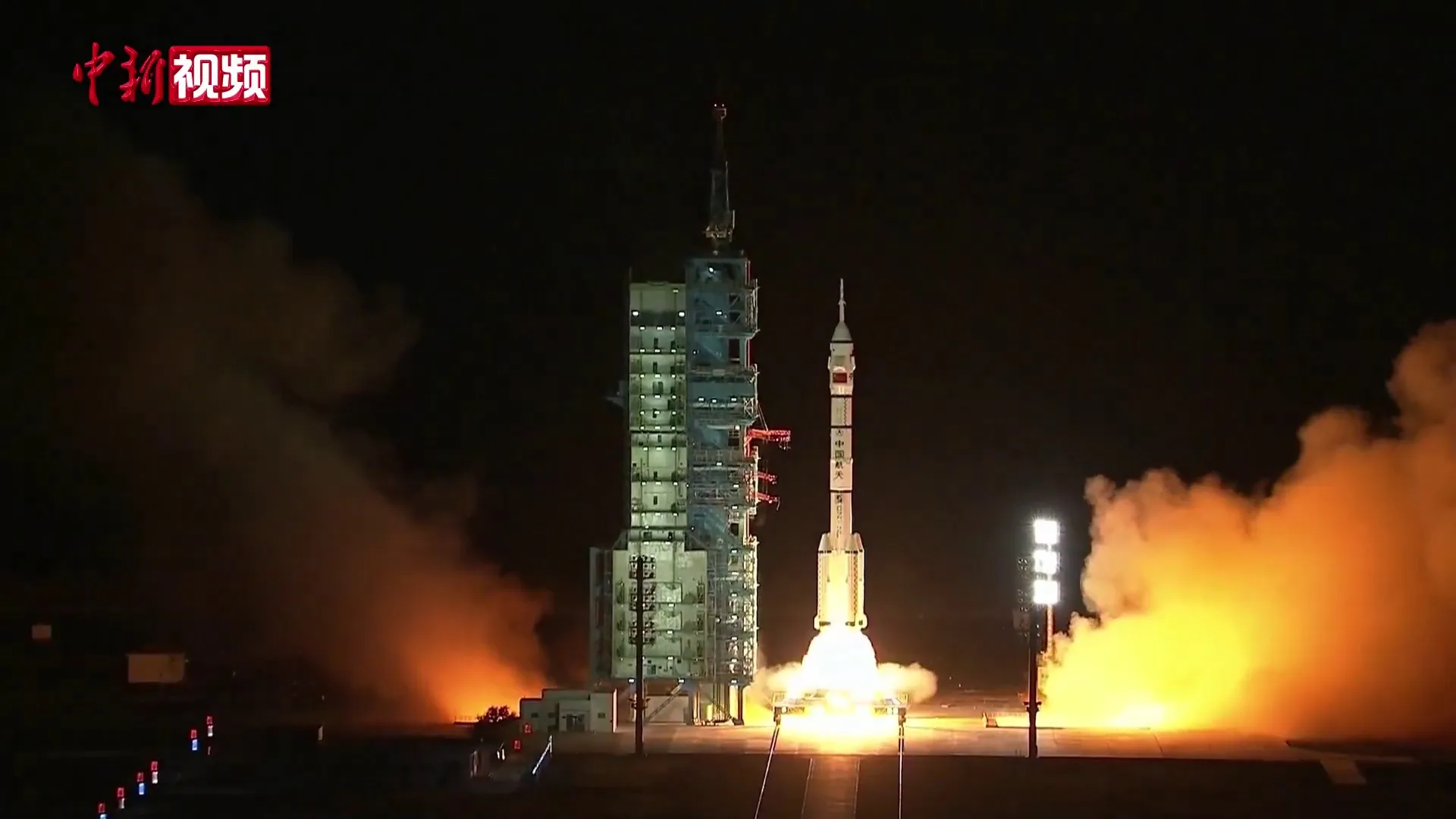
What is extraordinary is the pace. The core module launched in April 2021. The station was fully assembled by October 2022. In roughly 18 months, China built and assembled a multi-module space station capable of supporting three-person crews for long-duration missions. For comparison, the ISS took over a decade to assemble across more than 40 missions.
Architecture of the Heavenly Palace
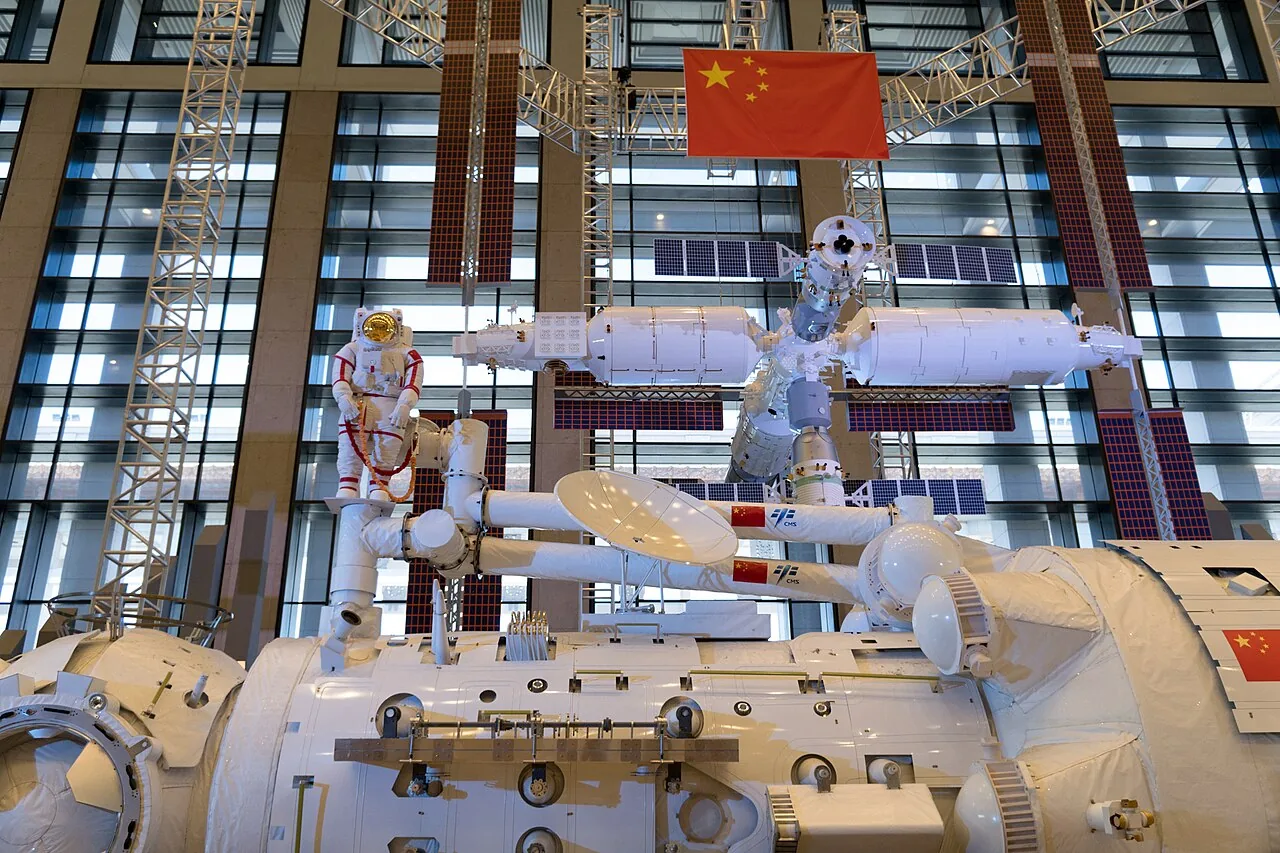
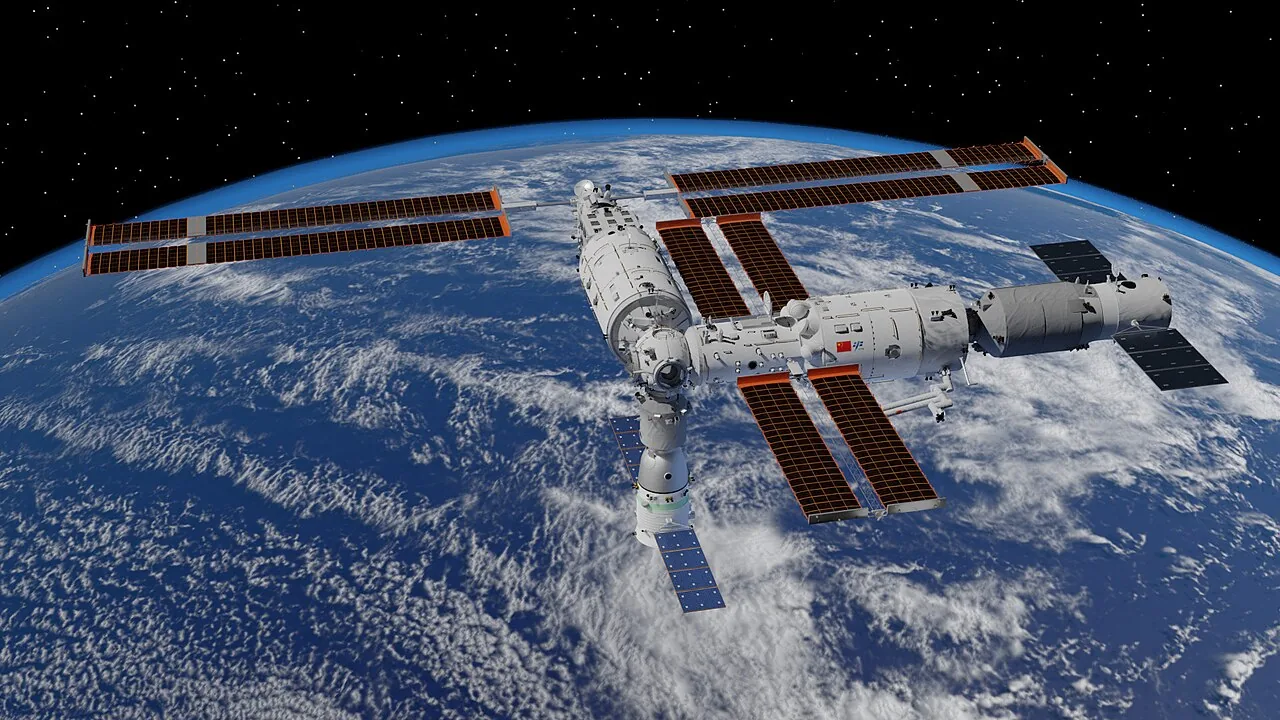
Tiangong's T-shaped configuration consists of three primary modules. The Tianhe ("Harmony of the Heavens") core module launched first, providing life support, crew quarters, and the station's primary control systems. At roughly 54 feet long and weighing about 22 metric tons, Tianhe is comparable in size to a single ISS module, and it serves as the central hub of the station.
Attached perpendicular to Tianhe are two laboratory modules. Wentian ("Quest for the Heavens"), which arrived in July 2022, is a multipurpose laboratory with a secondary life support system, a small robotic arm, and an airlock for spacewalks. It also provides backup control capabilities, meaning the station can continue operating even if Tianhe's primary systems fail.
Mengtian ("Dreaming of the Heavens"), which docked in October 2022, is dedicated to scientific research. It features specialized experiment racks, a cargo airlock for deploying external payloads without requiring a spacewalk, and mounting points for external experiments.
The total pressurized volume of Tiangong is approximately 110 cubic meters -- significantly smaller than the ISS's 388 cubic meters but comparable to Russia's Mir station. It is designed for a standard crew of three, with capacity for six during crew rotation periods when incoming and outgoing crews overlap.
Life Aboard Tiangong
Chinese taikonauts follow a schedule broadly similar to their counterparts on the ISS: structured work days with designated periods for exercise, meals, rest, and personal time. Crew rotations occur every six months, with new crews launching aboard Shenzhou spacecraft and cargo delivered by Tianzhou freighters.
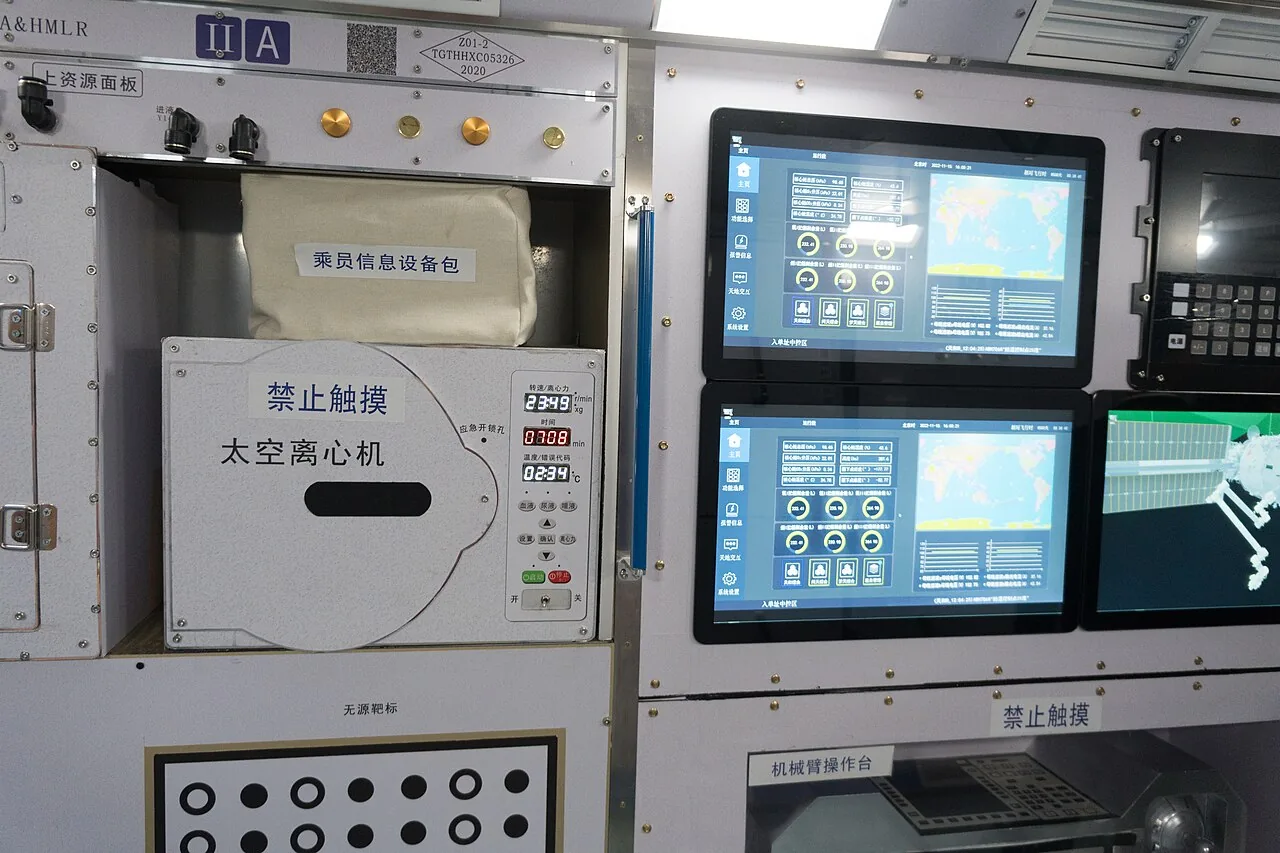
Exercise equipment aboard Tiangong includes a treadmill, a stationary bicycle, and a resistance training device -- the same categories of equipment used on the ISS, reflecting the universal challenge of combating microgravity's effects on the human body. The station's galley allows taikonauts to prepare meals from a menu of over 120 Chinese dishes, and crews have shared images of traditional meals enjoyed in orbit.
The station includes a dedicated spacewalk airlock, and Chinese taikonauts have conducted multiple EVAs using the Feitian ("Flying in the Sky") spacesuit. Spacewalks have been used to install external equipment, service experiments, and test the station's small robotic arm, which complements the larger arm mounted on Tianhe.
Communication is handled through China's Tianlian data relay satellite system, which provides near-continuous coverage for voice, video, and data transmission. Taikonauts communicate with mission control in Beijing and have conducted live educational broadcasts from orbit, echoing similar outreach programs on the ISS.
A Hundred Experiments and Counting
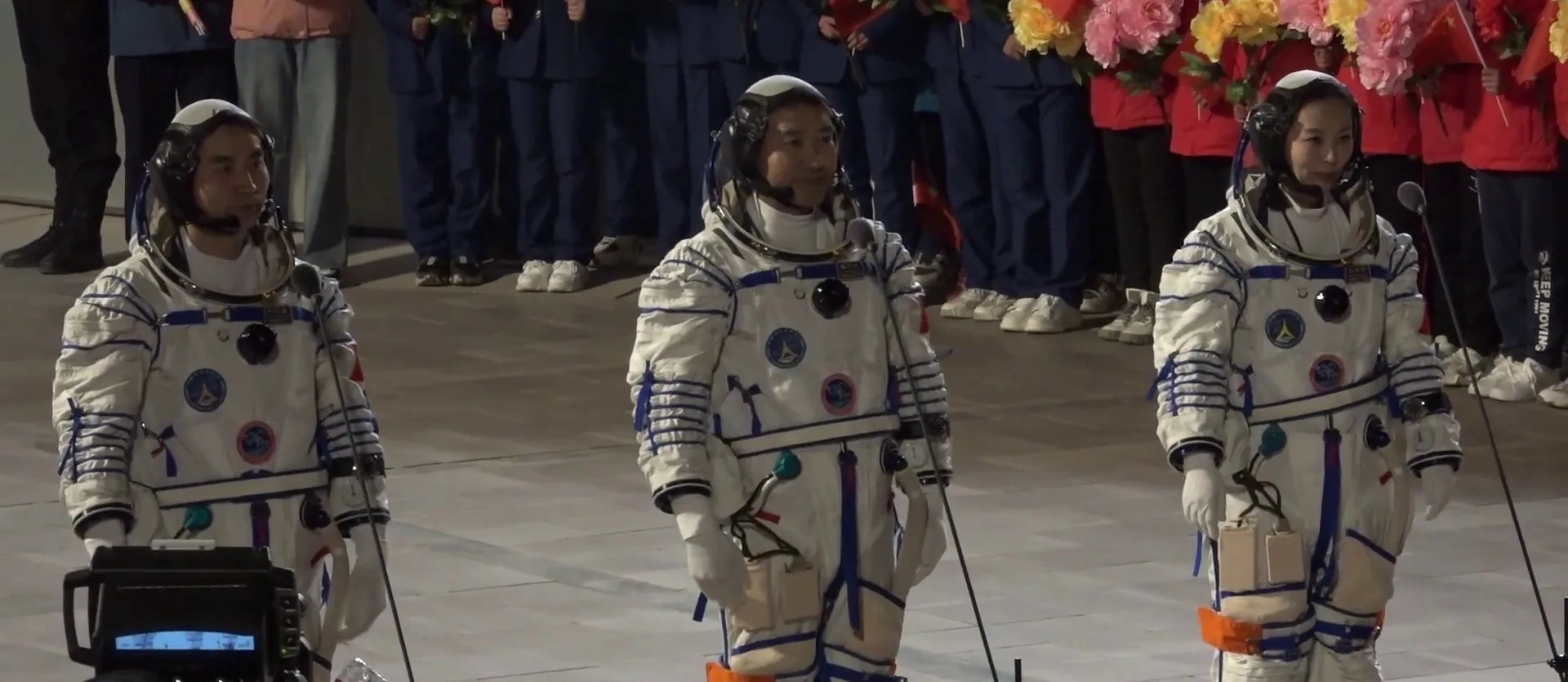
Tiangong's scientific program is ambitious and growing. More than 100 experiments have been planned or conducted across disciplines including fluid physics, materials science, combustion, life sciences, fundamental physics, and Earth observation.
One of the most anticipated instruments is the Xuntian space telescope, a Hubble-class observatory that will fly in a co-orbital configuration with the station. Xuntian (meaning "survey of the heavens") features a 2-meter primary mirror and a field of view 300 times larger than Hubble's, allowing it to survey vast areas of the sky while maintaining comparable resolution. It will periodically dock with Tiangong for maintenance, upgrades, and instrument changes -- a capability the Hubble Space Telescope lost when the Space Shuttle retired.
The station's experiment racks support research in areas that mirror ISS science in many ways but with distinctly Chinese priorities. Materials science experiments focus on advanced alloys and semiconductor crystals with applications for Chinese industry. Life science research includes plant growth experiments, studies of the human cardiovascular system in microgravity, and fundamental biology investigations.
Comparing Tiangong and the ISS
Comparisons between Tiangong and the ISS are inevitable but require nuance. The ISS is larger, older, more capable, and the product of an unprecedented international partnership among five space agencies. Tiangong is smaller, newer, nationally operated, and designed from the start with modern systems that benefit from decades of lessons learned from ISS operations.
Tiangong's power system, computing architecture, and life support systems incorporate technologies that were not available when the ISS was designed in the 1990s. Its modular design allows for future expansion. And because it is operated by a single national program rather than a complex international partnership, decision-making is faster and operational overhead is lower.
The ISS, however, remains unmatched in scientific output, crew diversity, and the sheer volume of human spaceflight experience it represents. More than 270 people from 21 countries have visited the ISS over 25 years; Tiangong is still in its early years with exclusively Chinese crews.
The Question of International Cooperation
Despite the Wolf Amendment's restrictions on US-China space cooperation, Tiangong has not been entirely closed to international participation. China has stated its openness to hosting international astronauts and experiments, and several countries -- including France, Italy, Germany, Pakistan, Kenya, and others -- have signed agreements or expressed interest in conducting research aboard the station.
The European Space Agency trained several astronauts in Chinese language skills and participated in joint sea survival training exercises with Chinese taikonauts. While no ESA astronaut has yet flown to Tiangong, the groundwork for such cooperation exists.
If the ISS retires around 2030, Tiangong could temporarily be the only operational space station in orbit (depending on the timeline of commercial stations). This creates both practical and diplomatic pressures to expand international access. Whether those pressures lead to broader cooperation or deeper division will depend on decisions made by policymakers far from any launch pad.
Expansion Plans
China has signaled that Tiangong's current three-module configuration is just the beginning. Plans call for expanding the station to a six-module cross-shaped configuration, roughly doubling its pressurized volume and scientific capacity. Additional modules could include expanded laboratory space, enhanced crew quarters for larger crews, and specialized facilities for technology demonstrations.
The expansion timeline is not firmly set, but China's track record of meeting or exceeding its stated spaceflight goals suggests it will happen. The country has also outlined plans for crewed lunar missions in the 2030s, and Tiangong's operational experience will directly inform the development of future habitats -- whether in lunar orbit, on the lunar surface, or beyond.
A New Chapter in Human Spaceflight
Tiangong represents something genuinely new in the story of human spaceflight. It is the first permanent space station built entirely by a single nation since Russia's Mir, and it embodies a spacefaring capability that only three countries have ever achieved. Its existence changes the geopolitics of space, the dynamics of international cooperation, and the options available to researchers worldwide.
For the taikonauts who live and work aboard the Heavenly Palace, however, the view from the window is the same one that has transformed every human who has seen it. Earth, blue and white and endlessly beautiful, turning slowly below. National boundaries invisible. The atmosphere a gossamer thread.
Whatever the politics on the ground, the humans in orbit are doing what humans have always done at their best: learning, building, and reaching for something greater than themselves.