Project Kuiper / Amazon Leo
Project Kuiper (rebranded Amazon Leo) is Amazon's $10B+ commitment to deploy a 3,236-satellite LEO broadband constellation — the second-largest commercial constellation globally after Starlink — anchored by the largest commercial launch-services procurement in history (up to 83 launches across Vulcan, Atlas V, Ariane 6, Falcon 9 and New Glenn) [1][2][3]. After KuiperSat-1/2 prototypes launched October 2023 and KA-01 operational launches began April 28, 2025 on Atlas V, Amazon faces an FCC license deadline requiring 50% (1,618) of the constellation in active orbit by July 30, 2026 — a target the company filed for a two-year extension on in January 2026 citing launch-vehicle availability [4][5][6].
Funding & Contract Structure
Total committed: Amazon publicly committed over $10 billion to Project Kuiper in initial 2020 disclosures; independent analysis from Quilty Space suggests Amazon may be spending closer to $10B on launch services alone given the up-to-83-launch procurement [3][13]
Annual run-rate: Amazon Devices & Services operating losses (the parent operating segment containing Kuiper) widened in FY2024 and FY2025 as Kuiper development costs ramped; specific Kuiper line items are not publicly broken out in Amazon's 10-K filings [12]
Per launch: Per-launch pricing not publicly disclosed; the up-to-83-launch procurement is structured as commercial firm-fixed-price contracts with milestone payments to ULA, Arianespace, Blue Origin, and SpaceX [3]
Procurement vehicle: FIXED-PRICE — Contractor commits to a set price — bears overrun risk; aligns incentives on cost discipline.
Congressional status: FCC license granted July 2020 with 50% by July 2026 deployment requirement and 100% by July 2029; January 2026 extension request pending FCC review [2][6]
GAO / CRS findings
| Date | Finding |
|---|---|
| Amazon filed a formal request with the FCC in January 2026 for a two-year extension of the 50% deployment deadline (originally July 30, 2026), citing shortage of available launch vehicles — particularly Vulcan Centaur certification timing and New Glenn launch cadence[6] | |
| First operational Kuiper launch (KA-01) delivered 27 production satellites on ULA Atlas V on April 28, 2025 — three years after the August 2022 FCC milestone target[4] |
Beneficiary Breakdown
Sum of disclosed shares: 100% — remaining 0% undisclosed or unallocated.
| Contractor | Role | Share | Ticker |
|---|---|---|---|
| Amazon (Kuiper Systems LLC) | prime | Programme owner and satellite designer/integrator; Kuiper Systems is a wholly-owned subsidiary of Amazon.com Inc.; satellites built in Amazon's purpose-built Kirkland WA factory and integration line[1] | AMZN |
| United Launch Alliance | supplier | Largest launch-services provider with 38 Vulcan Centaur missions plus 9 Atlas V missions contracted — 47 total launches forming the backbone of the deployment campaign; ULA is a Boeing-Lockheed Martin joint venture, listed exposure via BA and LMT[3] | BA |
| Arianespace | supplier | 18 Ariane 6 launches contracted — the largest contract in Arianespace history per CEO Stéphane Israël; Arianespace is principally owned by ArianeGroup (a JV of Airbus and Safran) — listed exposure via AIR.PA and SAF.PA[8] | EPA: AIR |
| Blue Origin | supplier | 12 New Glenn launches contracted with options for 15 additional; Blue Origin is privately held by Jeff Bezos — no publicly listed exposure[7] | private |
| SpaceX | supplier | 3 Falcon 9 launches contracted in December 2023 (notable for being a contract between two direct constellation competitors); all three flown in July, August and October 2025[10] | private |
| Boeing (via ULA) | sub | 50% owner of United Launch Alliance; Vulcan Centaur and Atlas V launch services for Kuiper flow partially through Boeing's segment-level economics[3] | BA |
| Lockheed Martin (via ULA) | sub | 50% owner of United Launch Alliance; same Vulcan Centaur + Atlas V Kuiper flow as Boeing — split equally at the JV level[3] | LMT |
Key Milestones
Amazon announces Project Kuiper — a planned constellation of 3,236 LEO satellites to provide broadband internet
FCC authorizes Project Kuiper for 3,236 satellites with milestones (50% by July 2026, 100% by July 2029)
Amazon signs largest commercial launch-services procurement in history — up to 83 launches across ULA Vulcan, Arianespace Ariane 6, and Blue Origin New Glenn
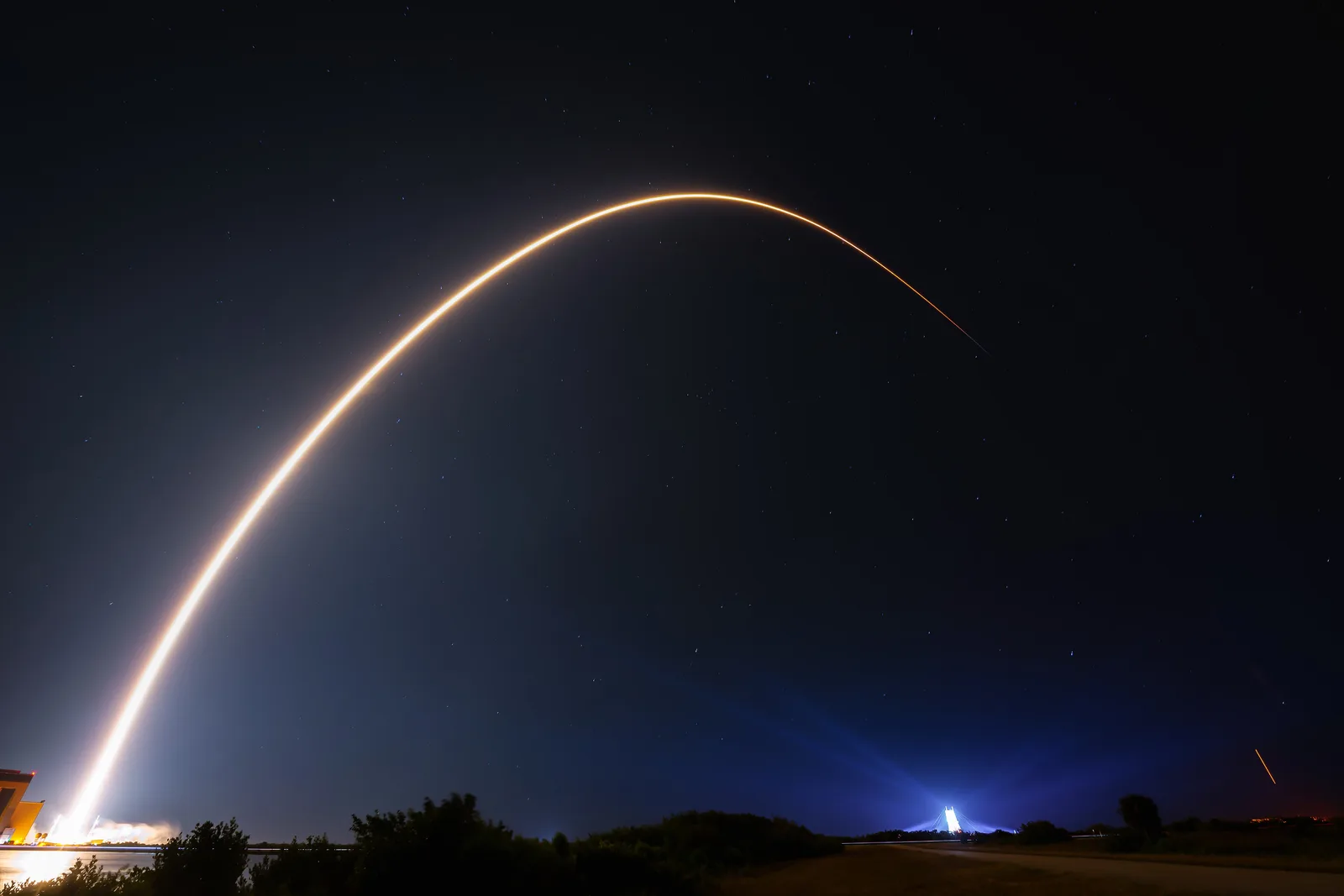
KuiperSat-1 and KuiperSat-2 prototypes launched on ULA Atlas V from CCSFS SLC-41; validated satellite-to-ground links and propulsion
Amazon secures 3 Falcon 9 launches from SpaceX (notable for being a contract between direct constellation competitors)
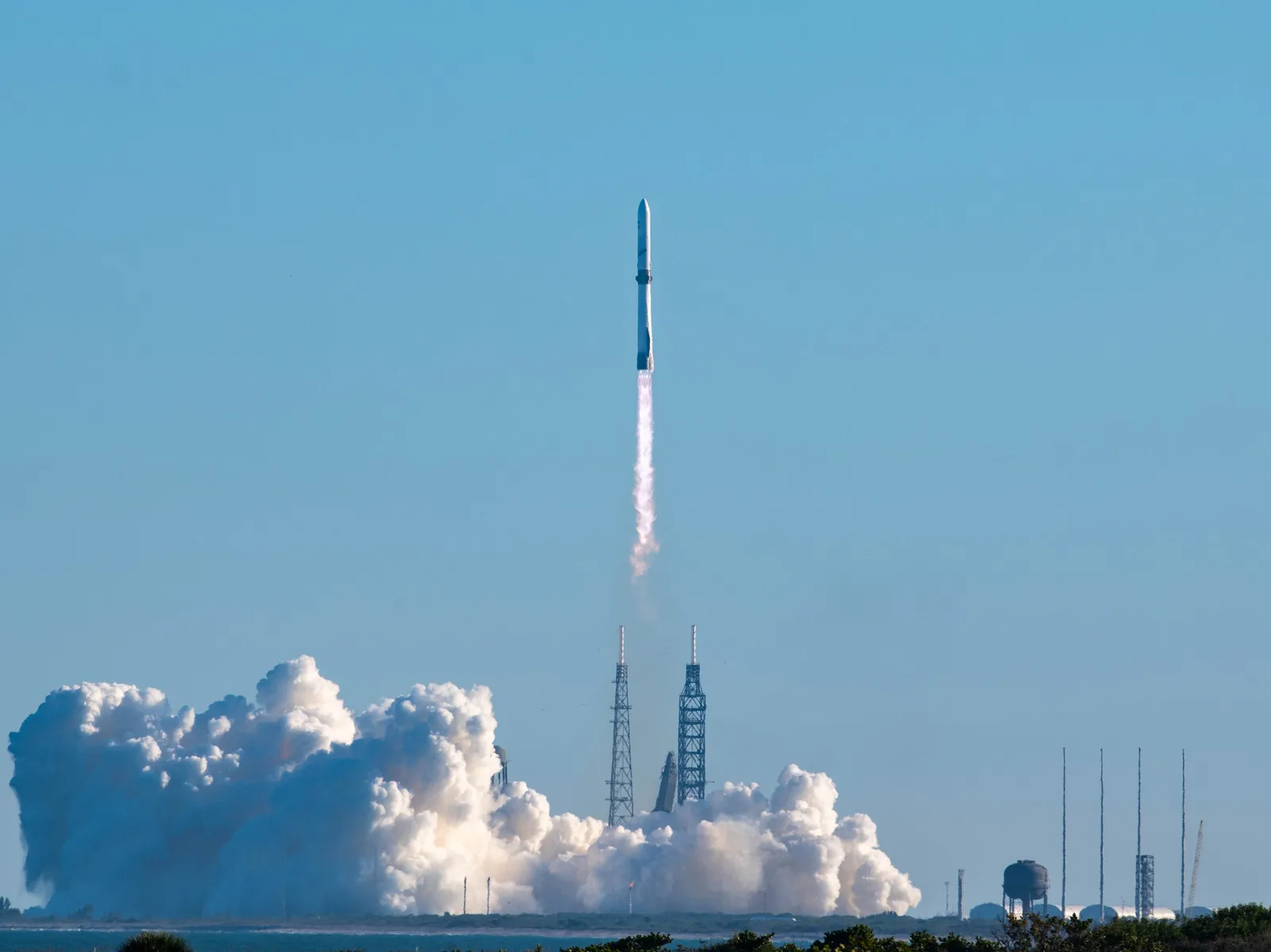
KA-01 — first operational Kuiper launch delivers 27 production satellites on ULA Atlas V from CCSFS SLC-41
KF-01, KF-02 and KF-03 — three SpaceX Falcon 9 missions deliver 24 satellites each in July, August and October 2025
Project Kuiper rebrands to 'Amazon Leo' (announced November 12, 2025) with the Leo Nano / Pro / Ultra terminal lineup; enterprise beta service launches in late 2025
ULA Vulcan Centaur achieves USSF NSSL certification (Mar 26) and flies its first NSSL mission USSF-106 (Aug 13) — maturing the vehicle that carries 38 of Amazon Leo's contracted launches
LE-01 — first Ariane 64 flight deploys 32 Amazon Leo satellites (February 12, 2026), first batch of the 18-launch Arianespace contract
Amazon files formal FCC request for a two-year extension of the 50% deployment deadline, citing launch-vehicle availability
FCC half-constellation deadline (July 30, 2026) — Amazon expected to be well below 1,618 satellites; extension decision pending
Amazon Leo commercial consumer service launch targeted mid-2026
FCC full-deployment deadline (July 30, 2029) for all 3,236 satellites — final regulatory milestone
Catalysts
| Date | Event | Sentiment |
|---|---|---|
| LE-01 — first Ariane 64 launch deploys 32 Amazon Leo satellites from Kourou, activating the 18-launch Arianespace contract[17] | bullish | |
| FCC deadline (July 30, 2026) requiring 50% (1,618 satellites) of Kuiper constellation operational; Amazon's January 2026 two-year extension request pending FCC decision[6] | bearish | |
| Amazon Leo commercial consumer service launch targeted; competes head-to-head with Starlink for residential broadband subscribers[12] | bullish | |
| Vulcan Centaur launch cadence acceleration is the critical-path supply lever for the constellation; 38 Vulcan missions must complete by 2028-2029[3] | bullish | |
| Full Ariane 6 manifest (18 launches) progressing toward completion; New Glenn cadence ramping in parallel[7] | neutral | |
| FCC full-deployment deadline (July 30, 2029) for all 3,236 satellites — final regulatory milestone[2] | neutral |
Risk Register
Competitive Landscape
Investability Map
| Ticker | Exposure | Note |
|---|---|---|
| AMZN | high | Amazon owns Project Kuiper directly through Kuiper Systems LLC; near-term P&L drag from Devices & Services operating losses, but successful launch + commercial service ramp by 2027-2028 would be a meaningful AWS-adjacent revenue stream and TAM expansion narrative. |
| BA | medium | Boeing owns 50% of ULA; 47 of Kuiper's contracted launches flow through Vulcan + Atlas V; meaningful franchise tailwind for ULA throughput and Boeing's space-launch joint-venture economics. |
| LMT | medium | Lockheed Martin owns the other 50% of ULA; same Vulcan + Atlas V Kuiper economic tailwind as Boeing — split equally; LMT also a backstop launch hedge against Vulcan delays. |
| EPA: AIR | low | Airbus is a 50% owner of ArianeGroup which controls Arianespace; 18 Ariane 6 Kuiper launches are the largest contract in Arianespace's history but a small slice of Airbus's ~€65B revenue base. |
| EPA: SAF | low | Safran is the other 50% owner of ArianeGroup; same Ariane 6 Kuiper tailwind as Airbus — split equally at the JV level. |
Not investment advice. Figures as-quoted from cited sources.
Sources
- [1] Amazon — Project Kuiper / Amazon Leo programme overview and launches (Official company site, accessed )
- [2] FCC — 'FCC Authorizes Kuiper Satellite Constellation' (July 2020 authorization order) (Agency budget doc, accessed )
- [3] Amazon — 'Amazon Secures Up to 83 Launches from Arianespace, Blue Origin, and United Launch Alliance for Project Kuiper' (Apr 5, 2022) (Official company site, accessed )
- [4] United Launch Alliance — 'Amazon Signs Contract with United Launch Alliance for 38 Project Kuiper Launches on Vulcan Centaur' (Apr 5, 2022) (Official company site, accessed )
- [5] FCC — Order DA 24-376 addressing Kuiper Systems orbital debris mitigation and deployment plan (Agency budget doc, accessed )
- [6] Space & Defense — 'Amazon to Miss FCC Deadline With Slow Roll Out of Project Kuiper' (Jan 2026 extension filing) (Industry trade press, accessed )
- [7] Blue Origin — 'Amazon Selects Blue Origin's New Glenn for up to 27 Project Kuiper Constellation Launches' (Official company site, accessed )
- [8] SpaceNews — 'Amazon signs multibillion-dollar Project Kuiper launch contracts' (ArianeGroup detail) (Industry trade press, accessed )
- [9] eoPortal — Project Kuiper mission description (KuiperSat-1/2 prototypes Oct 6, 2023) (Agency press / Congressional record, accessed )
- [10] Spaceflight Now — 'SpaceX to launch 24 Amazon Project Kuiper satellites on a Falcon 9' (KF-01 + summary of 3-mission contract) (Industry trade press, accessed )
- [11] Beyond Gravity (RUAG Space) — 'Contract from ULA for Amazon's Project Kuiper constellation launches' (satellite-hardware franchise context) (Official company site, accessed )
- [12] Amazon — Project Kuiper / Amazon Leo official mission and commercial-service updates (Official company site, accessed )
- [13] Quilty Space — 'Kuiper spending $10B on launch alone' (programme-cost analysis) (Industry trade press, accessed )
- [14] Federal Communications Commission — Kuiper Systems LLC license docket (Agency budget doc, accessed )
- [15] Arianespace — Ariane 6 launch services overview (18-launch Kuiper contract — largest in Arianespace history) (Official company site, accessed )
- [16] United Launch Alliance — Vulcan Centaur and Atlas V Kuiper missions (Official company site, accessed )
- [17] Amazon — Amazon Leo and Arianespace launch first mission satellites (LE-01, first Ariane 64, 32 satellites, Feb 12, 2026) (Official company site, accessed )
- [18] USSF Space Systems Command — USSF Certifies ULA Vulcan for National Security Space Launch Missions (Mar 26, 2025; first NSSL flight USSF-106 Aug 13, 2025) (Agency budget doc, accessed )