Full mission transcript
Every chapter of Demo-2, in sequence.
T−9 years
Nine Years Grounded
July 21, 2011 · 09:57 UTC
At 09:57 UTC on July 21, 2011, the wheels of Space Shuttle Atlantis stopped on the runway at Kennedy Space Center, and the United States stopped launching its own astronauts. For what stretched to nearly nine years, every NASA astronaut bound for the International Space Station rode a Russian Soyuz from Baikonur. The arrangement worked, and it stung — and it got steadily more expensive. NASA's Inspector General reported in November 2019 that Soyuz seats had averaged $55.4 million over the program's history and climbed as high as roughly $86 million; the single seat NASA bought for 2020 cost $90.25 million. Since 2017 alone, about a dozen extra seats had cost the agency on the order of a billion dollars.
The way back had been signed years earlier. In September 2014, NASA awarded Commercial Crew Transportation Capability contracts to two companies: $2.6 billion to SpaceX for Crew Dragon and $4.2 billion to Boeing for Starliner. The bet was radical by the standards of human spaceflight — NASA would buy a service, not own a vehicle, and the same Inspector General report estimated a Dragon seat at about $55 million. By the spring of 2020, after an uncrewed demo flight, a pad abort, an in-flight abort, and one Dragon capsule lost in a ground test explosion along the way, SpaceX's vehicle was ready to carry people.
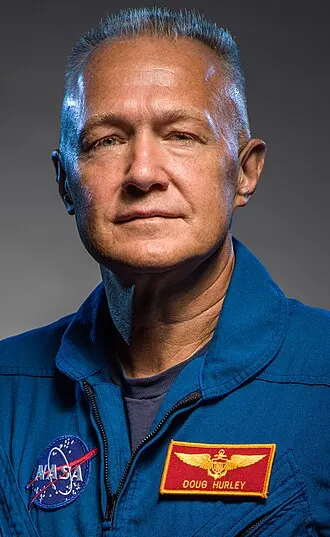
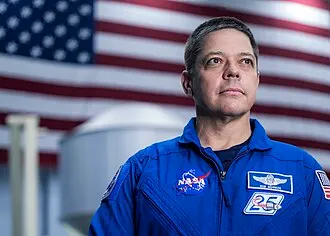
The people were Doug Hurley and Bob Behnken — both shuttle veterans, both test pilots, and Hurley the pilot of that final Atlantis flight in 2011. The man who had helped close the era was assigned to reopen it. On launch morning they walked out of the Neil Armstrong Operations and Checkout Building in SpaceX's white flight suits, waved to a thinned, masked, pandemic-era crowd, and rode to the pad in a Tesla — 3,249 days after the last crewed launch from Florida.
T+00:00:00
The Scrub and the Storm
May 30, 2020 · 19:22 UTC
The first try ended 16 minutes and 53 seconds before liftoff. On May 27, with Hurley and Behnken strapped in and Tropical Storm Bertha churning moisture over Florida, the launch weather team was still violating three rules — natural lightning, the electric field mill reading, and an attached anvil cloud — when the countdown hit the point of no return. A Falcon 9 carrying crew flies an instantaneous window: there is no holding to wait out weather. The scrub was called at T−16:53, and the astronauts climbed back out.
The country beneath the rocket was holding its breath in more ways than one: George Floyd had been killed in Minneapolis five days earlier, and launch weekend saw protests in dozens of American cities amid a global pandemic — the same screens carrying the countdown split with the demonstrations. The banners said Launch America; America that weekend was grieving, marching, and looking up all at once.
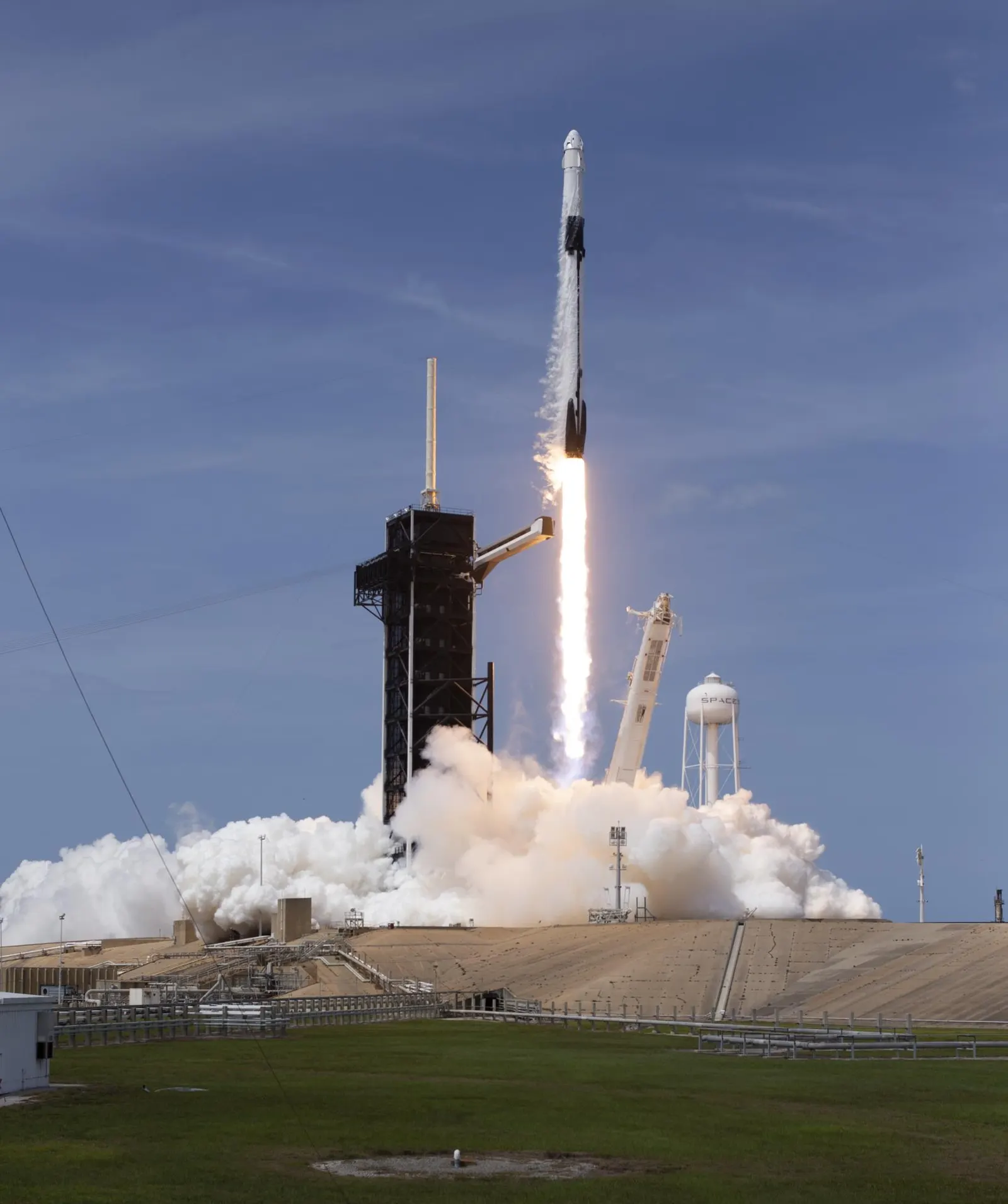
On May 30 the weather threaded the needle. At 19:22:45 UTC, the nine Merlin engines lit with about 1.7 million pounds of thrust, and Falcon 9 climbed off Launch Complex 39A — the pad that sent Apollo 11 to the Moon and hosted the shuttle for three decades. It was the first crewed orbital launch from US soil since STS-135 in July 2011. Moments before ignition, Hurley keyed his mic and reached back six decades, borrowing the words Alan Shepard had used as the first American in space in 1961.
Air-to-ground · NASA/SpaceX webcast - T−00:00:45 SpaceX (launch net): Dragon, SpaceX: Go for launch.
- T−00:00:40 Hurley: SpaceX, Dragon: We're go for launch.
- T−00:00:37 Hurley: Let's light this candle.
- T+00:00:00 Launch control: Ignition. Liftoff of the Falcon 9 and Crew Dragon! Go NASA, go SpaceX, Godspeed Bob and Doug!
- T+00:01:02 Launch control: Vehicle is supersonic.
- T+00:02:36 Launch control: We have MECO.
- T+00:02:39 Launch control: Falcon stage separation confirmed.
T+00:12:02
Falcon Rising
May 30, 2020 · 19:34 UTC
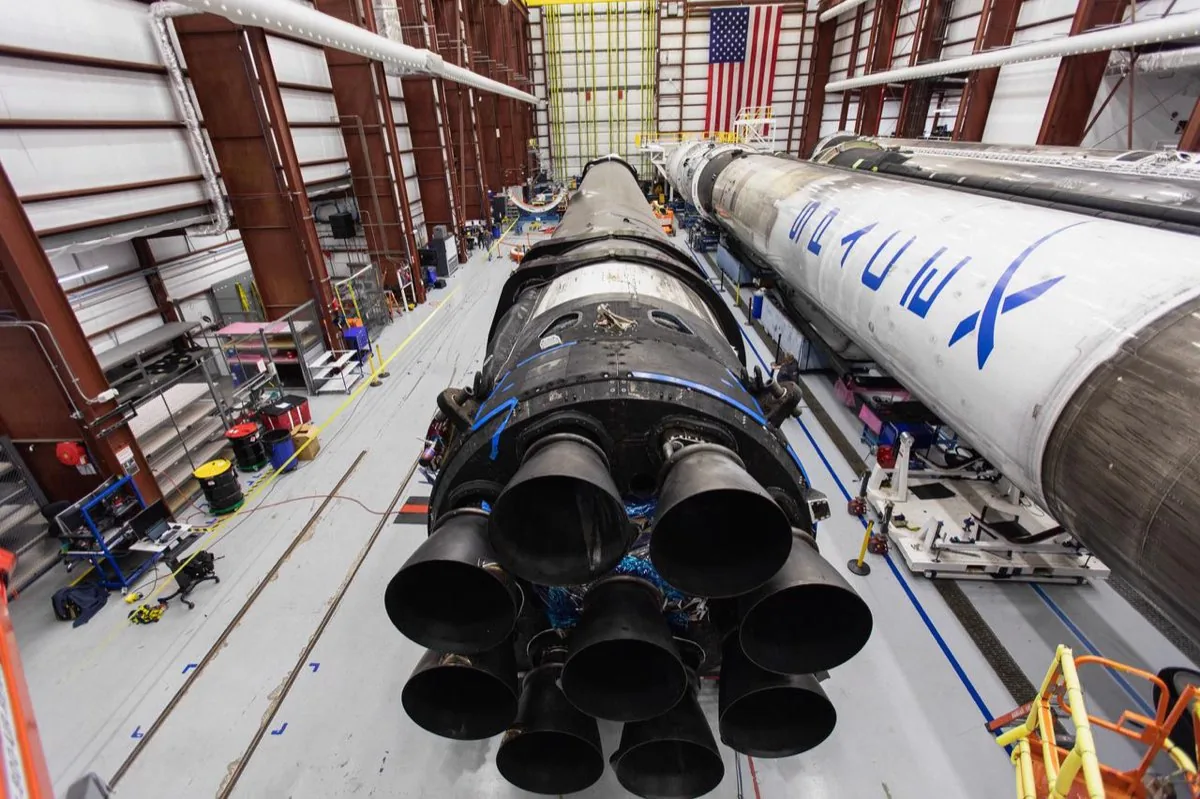
No Falcon 9 had ever flown with people aboard. This one — booster B1058, on its first flight — made it look routine: main engine cutoff at T+2:33, second-engine cutoff at T+8:44, and at about T+9:22 the first stage settled onto the drone ship Of Course I Still Love You downrange in the Atlantic, a routine SpaceX landing made newly remarkable by what it had just lifted. At T+12:02, Dragon separated from the second stage into an initial orbit near 190 kilometers. Hurley and Behnken were the first humans carried to orbit by a commercially developed and operated spacecraft — orbit being the operative word, since SpaceShipOne had carried a pilot on suborbital hops back in 2004.
On the ground, the man who had spent nearly two decades building toward this moment struggled to find words. 'I'm really quite overcome with emotion on this day, so it's kind of hard to talk, frankly,' Elon Musk said after liftoff. 'It's been 18 years working towards this goal, so it's hard to believe that it's happened.'
About three hours after launch, Hurley radioed down a piece of news the crew had kept to themselves: the capsule SpaceX knew as C206 now had a name. They called it Endeavour — a tribute, not a reincarnation: both men had flown their first spaceflights aboard Space Shuttle Endeavour, Behnken on STS-123 and Hurley on STS-127. Floating beside them was the mission's other passenger: Tremor, a sequined plush Apatosaurus serving as the zero-g indicator, chosen by their sons Theo, six, and Jack, ten, from the boys' combined dinosaur collection.
Air-to-ground · NASA broadcast - T+00:12:12 SpaceX (launch net): Dragon separation confirmed.
- T+00:13:14 Hurley: Copy all. Proud of you guys, and the rest of the team. Thank you so much for what you have done for us today, putting America back into low-Earth orbit from the Florida Coast.
T+18:54
Nineteen Hours to Station
May 31, 2020 · 14:16 UTC
Dragon was built to dock itself, but Demo-2 was a test flight, and test pilots test. Twice during the rendezvous — once in the far field, once in the near field — Hurley took manual control and flew the spacecraft by hand, commanding a vehicle through touchscreens where shuttle pilots had gripped a stick among switches and gauges. He hand-flew Dragon to the 220-meter hold point, pronounced the handling crisp, and handed the ship back to its computers for the part it was designed to do alone.
At 14:16 UTC on May 31, nineteen hours after leaving Florida — 18 hours and 54 minutes, to be precise — Endeavour's soft-capture ring kissed the International Docking Adapter on the forward port of the Harmony module, roughly 419 kilometers over the South Pacific. Eleven minutes later, twelve hooks drove home for hard capture. The shuttle had never docked itself; this spacecraft had just done it autonomously, with its crew watching.
The hatch opened at 17:02 UTC and Behnken floated in first, welcomed by Expedition 63: NASA's Chris Cassidy and cosmonauts Anatoli Ivanishin and Ivan Vagner. In the welcome ceremony, Hurley reflected that it had been a real honor to be a small part of a nine-year endeavor since the last time a United States spacecraft docked with the station. Cassidy, in Navy tradition, reached for the ship's bell.
T+27 days
Two Months Aboard
June 26, 2020 · 00:00 UTC
Demo-2 was open-ended by design — the crew would stay until the mission had proven what it needed to prove — and the stay became two working months. Over 62 days docked, Behnken and Cassidy went outside four times: June 26, July 1, July 16, and July 21, spacewalks of 6:07, 6:01, about six hours, and 5:29 — roughly 23 and a half hours in total. Their job was station upkeep of the most muscular kind: swapping twelve aging nickel-hydrogen batteries on the S6 truss for six new lithium-ion units, finishing a years-long upgrade of the station's power system.
The July 21 spacewalk was Behnken's tenth, bringing his career total to 61 hours and 10 minutes and tying the American record for spacewalk count shared by Michael López-Alegría and Peggy Whitson. Hurley, meanwhile, photographed his crewmate at work from the cupola — one half of a friendship the mission had quietly put on display. The two had been astronaut classmates since 2000, each married to an astronaut from that same class — Behnken to Megan McArthur, Hurley to Karen Nyberg. They stood in each other's weddings; Hurley was Bob's best man.
On August 1, at the farewell ceremony, Behnken turned to the youngest stakeholders in the flight. Tremor the Apatosaurus, having served his zero-g duties, was coming home to Jack and Theo — with their dads as escorts.
T+63d 23:25
The First Splashdown in 45 Years
August 2, 2020 · 18:48 UTC
Even the homecoming had to dodge a storm. Hurricane Isaias was raking the Atlantic coast of Florida, eliminating the eastern splashdown sites, so NASA and SpaceX picked the Gulf of Mexico off Pensacola. Endeavour undocked on August 1 at 23:35 UTC and began the long fall: a reentry near 17,500 miles per hour behind a heat shield seeing some 3,500 degrees Fahrenheit. Behnken described it afterward with a test pilot's candor — the capsule 'came alive,' he said, sounding 'like an animal' as it tore through thickening air.
The drogue parachutes bit at around 18,000 feet, hauling the capsule down from roughly 560 kilometers per hour, and the four mains unfurled near 6,000 feet. At 18:48:06 UTC on August 2, Endeavour settled onto a glassy Gulf — the first water landing by an American crew since the Apollo–Soyuz splashdown of July 24, 1975. The shuttle had spent three decades landing on runways; no American astronauts had come home to the ocean in 45 years. The ledger read 63 days, 23 hours, 25 minutes, 21 seconds; about 1,024 orbits; 27,147,284 statute miles. From mission control in Hawthorne, SpaceX engineer Mike Heiman made the welcome call, and Hurley answered that it had been truly their honor and privilege.
Then came the one part nobody had rehearsed. As the recovery ship GO Navigator moved in, a small flotilla of private boats — one flying a campaign flag — swarmed the scorched capsule despite Coast Guard warnings, circling close while hazardous propellant vapors were still being checked. NASA Administrator Jim Bridenstine admitted it was not what anyone had anticipated, and NASA and the Coast Guard established a roughly 16-kilometer keep-out zone for every splashdown since. Soon after, Hurley and Behnken were hoisted aboard and helped out of the capsule; Tremor was on his way back to Jack and Theo.
T+164 days
What It Proved
November 10, 2020 · 00:00 UTC
On November 10, 2020 — 164 days after liftoff — NASA formally certified the Falcon 9 and Crew Dragon system for operational crew flights. It was the first commercial human orbital transportation system ever certified, and the first new crew vehicle NASA had certified since the Space Shuttle four decades earlier. The paperwork mattered because of what it unlocked: six days later, on November 16 at 00:27 UTC, Crew-1 carried four astronauts to the station, and the test flight became a flight schedule.
The economics shifted with it. NASA stopped buying Soyuz seats outright — the $90 million checks to Roscosmos ended — and since July 2022 the two agencies have instead run a no-funds seat swap, flying one cosmonaut on each Dragon and one NASA astronaut on each Soyuz so that either vehicle alone can keep the station fully crewed. Redundancy, not dependence.
What Demo-2 proved kept compounding. By June 2026, crewed Dragons had flown 20 orbital missions: thirteen for NASA — Demo-2 and Crew-1 through Crew-12 — and seven fully commercial flights, from Inspiration4 and the Axiom missions to Polaris Dawn and Fram2, crews no government had selected riding a vehicle no government owned. The man photographed pacing Firing Room 4 on launch day had called it a new era; the manifest agreed.
T+6 years
The Era It Opened
January 15, 2026 · 00:00 UTC
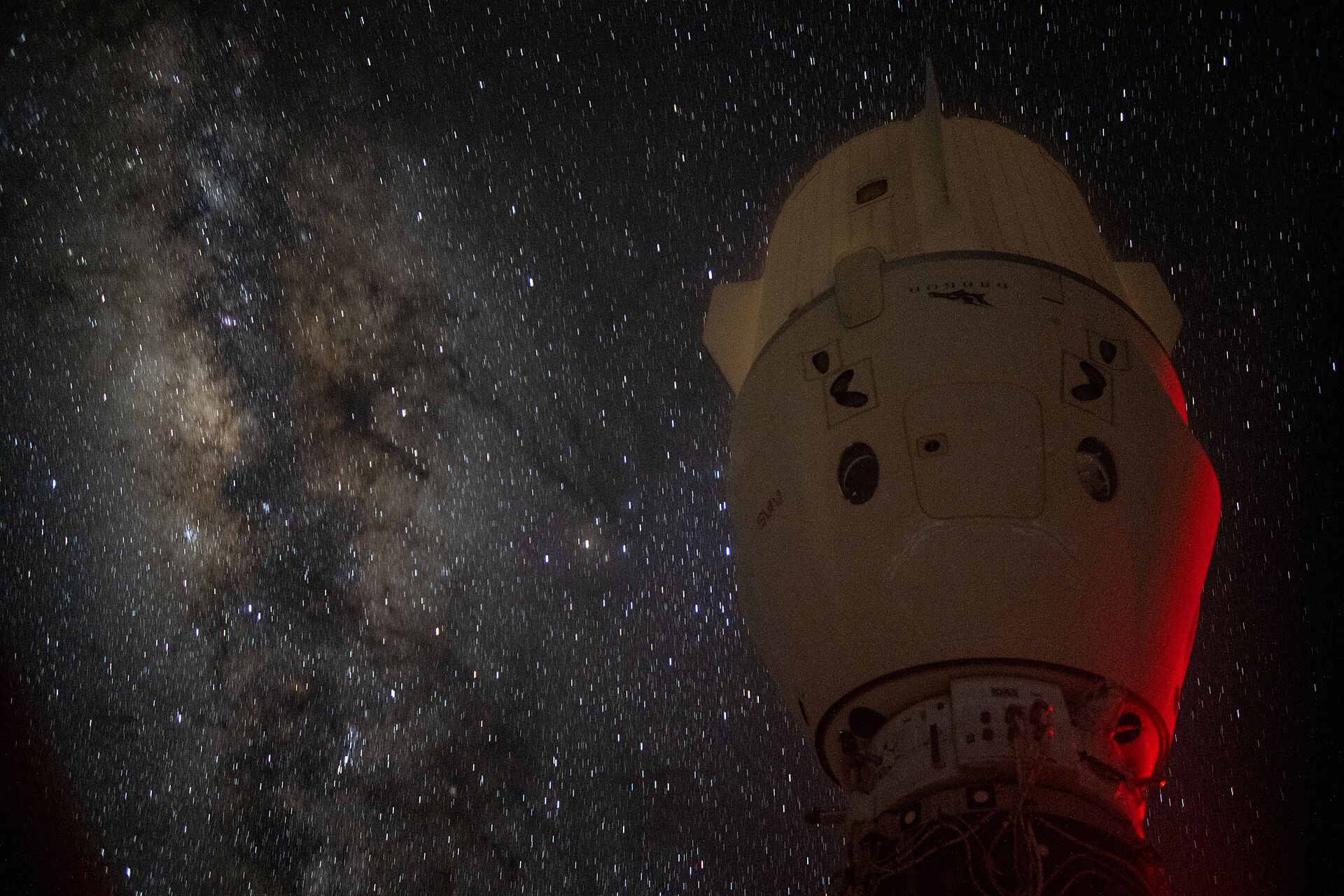
The hardware of Demo-2 kept making history after its crew went home. Capsule C206 — Endeavour — became the fleet leader of the Dragon fleet with six flights. On Crew-2 in April 2021, its second flight, one of the astronauts strapping in was Megan McArthur, Bob Behnken's wife, flying the same capsule her husband had ridden a year before. Then came Ax-1 in 2022, the first all-private mission to the ISS; Crew-6 in 2023; Crew-8 in 2024; and Crew-11, launched in August 2025, which closed Endeavour's sixth flight in January 2026 with a Pacific splashdown on NASA's first medical-evacuation Dragon return.
Booster B1058, the first Falcon 9 to carry people, went on to a record 19 flights — then was lost not to flight but to the sea, toppling on its drone ship during transport in heavy swells on December 25–26, 2023, after its nineteenth landing. It was never a landing failure; SpaceX answered it with self-leveling legs on the recovery fleet. The astronauts moved on too: Hurley retired from NASA in July 2021, Behnken in November 2022, their last spaceflight the one that restarted American spaceflight.
The era Demo-2 opened kept widening. Commercial crews now fly to orbit several times a year, private missions visit the station, and the pad at 39A cycles between cargo, crew, and customers. And in April 2026, Artemis II carried four astronauts around the far side of the Moon — launched by a NASA rocket, but from a spaceport whose rhythm, and whose confidence, the two months of Launch America helped restore. Sixty-four days, one borrowed name, one sequined dinosaur — and the United States has never been grounded since.
Sources: NASA Commercial Crew Blog — NASA's SpaceX Demo-2 Astronauts Safely Splash Down · NASA — NASA Certifies First Commercial Human Spaceflight System · NASA OIG — IG-20-005: NASA's Management of Crew Transportation to the International Space Station · Wikipedia — Crew Dragon Demo-2 (cross-check) · NASA Image and Video Library — Demo-2 imagery
The people who flew it
Meet the Demo-2 crew
The people who lived these seconds. Open a profile to read who they were.
Answers come only from the Demo-2 mission record above.
Continue your journey

Continue your journey
Moment
STS-135 Atlantis — final Space Shuttle mission
Continue your journey
The moment in history
Moment
Crew Dragon Demo-2 — first commercial human spaceflight
The moment in history
The mission file
Mission
SpaceX Demo-2
The mission file
Continue your journey
Program
Commercial Crew Program
Continue your journey
From the same era
Experience
DART
From the same era
From the same era
Experience
James Webb
From the same era