International · NASA / ESAmissionrobotic
April 24, 1990
Hubble Space Telescope launched
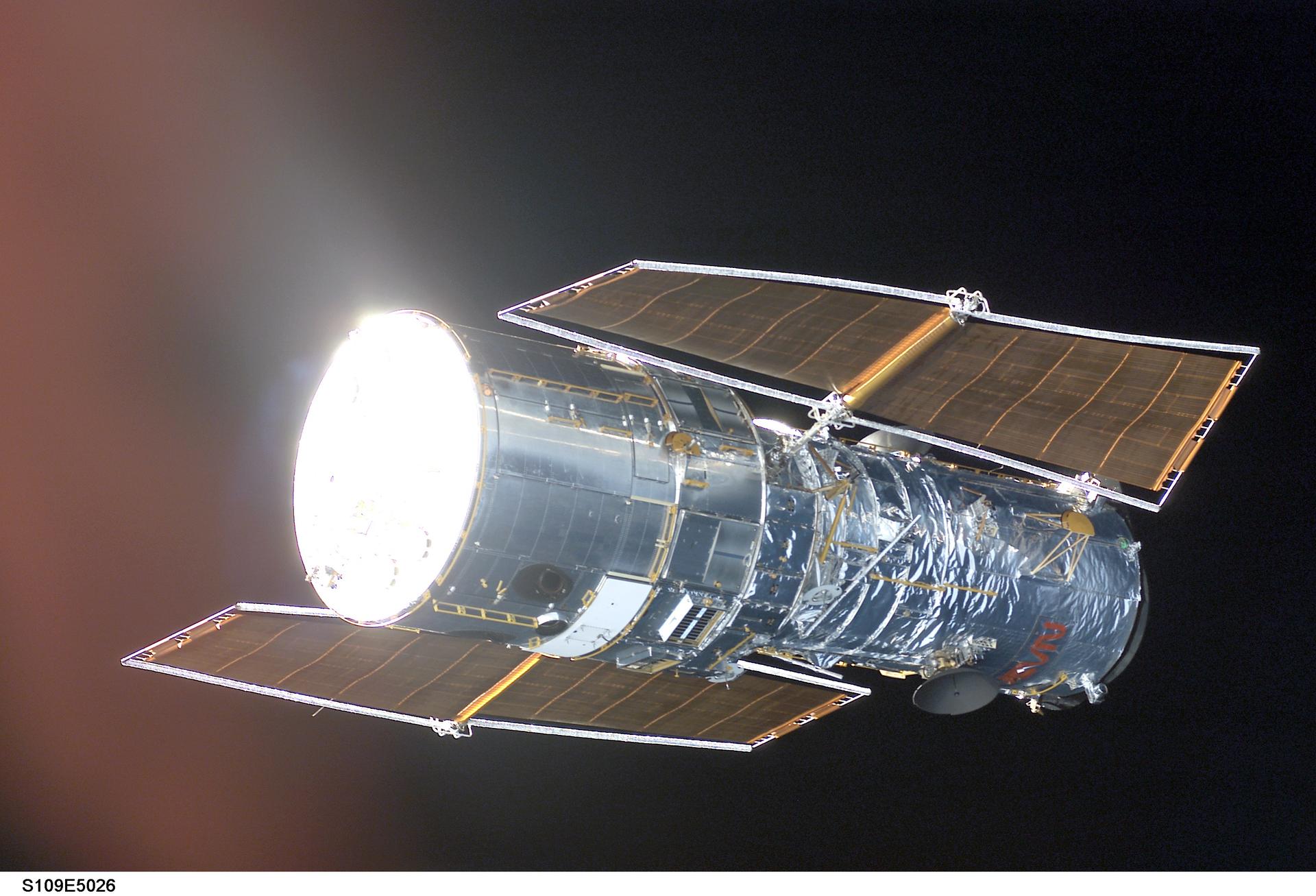
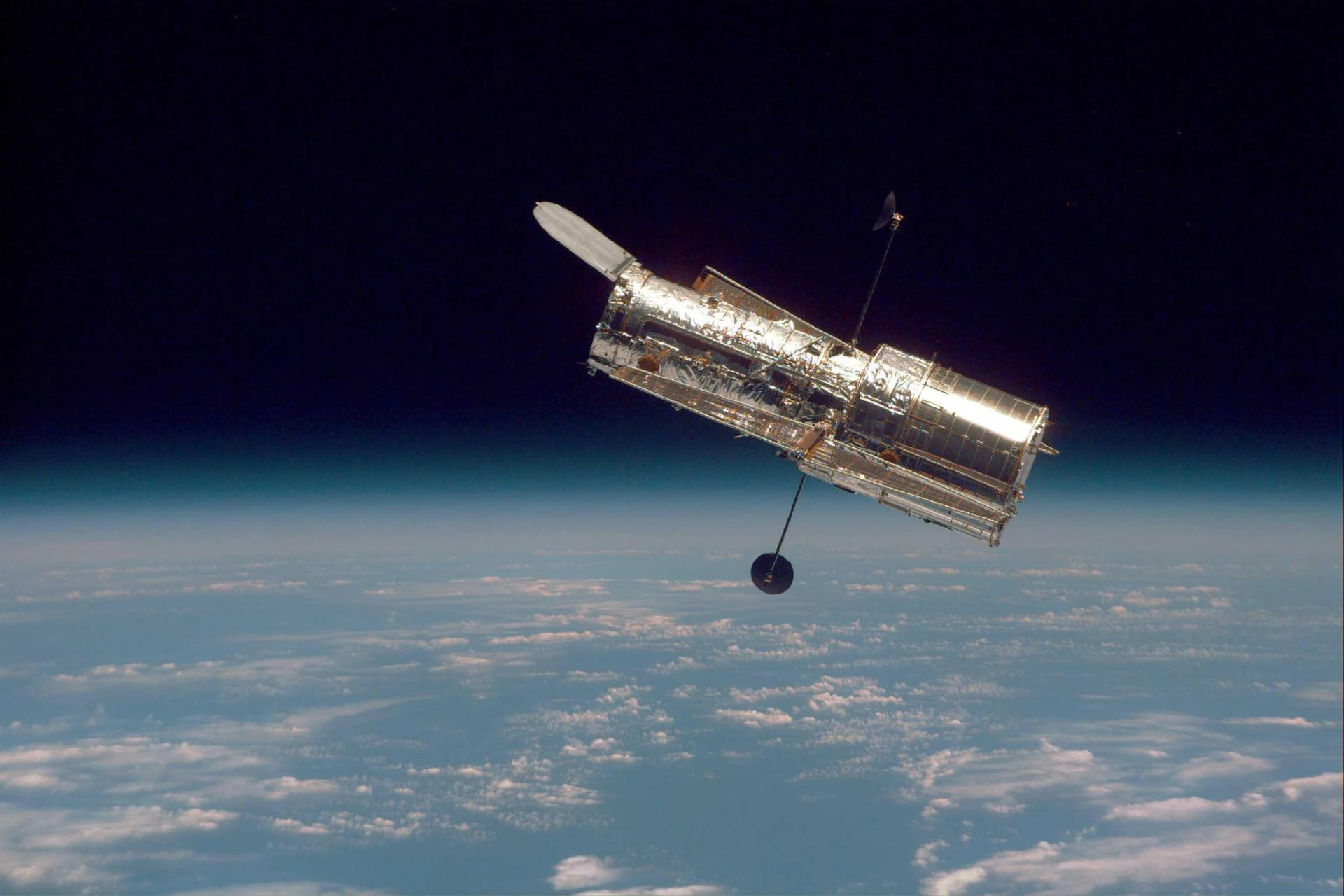
Experience this missionSpace Shuttle Discovery carried the Hubble Space Telescope into orbit on 24 April 1990. At 2.4 metres in diameter and 13.2 metres long, Hubble was the largest optical telescope placed in orbit — designed to observe objects 50 times fainter and with 10 times the resolution of ground-based telescopes, free from the blurring effect of Earth's atmosphere.
When the first images arrived, they were blurry. The primary mirror had been ground to the wrong shape — off by just 2.2 micrometres, about one-fiftieth the width of a human hair. The error had been introduced because the testing instrument was itself incorrectly assembled, and the mistake was not caught before launch.
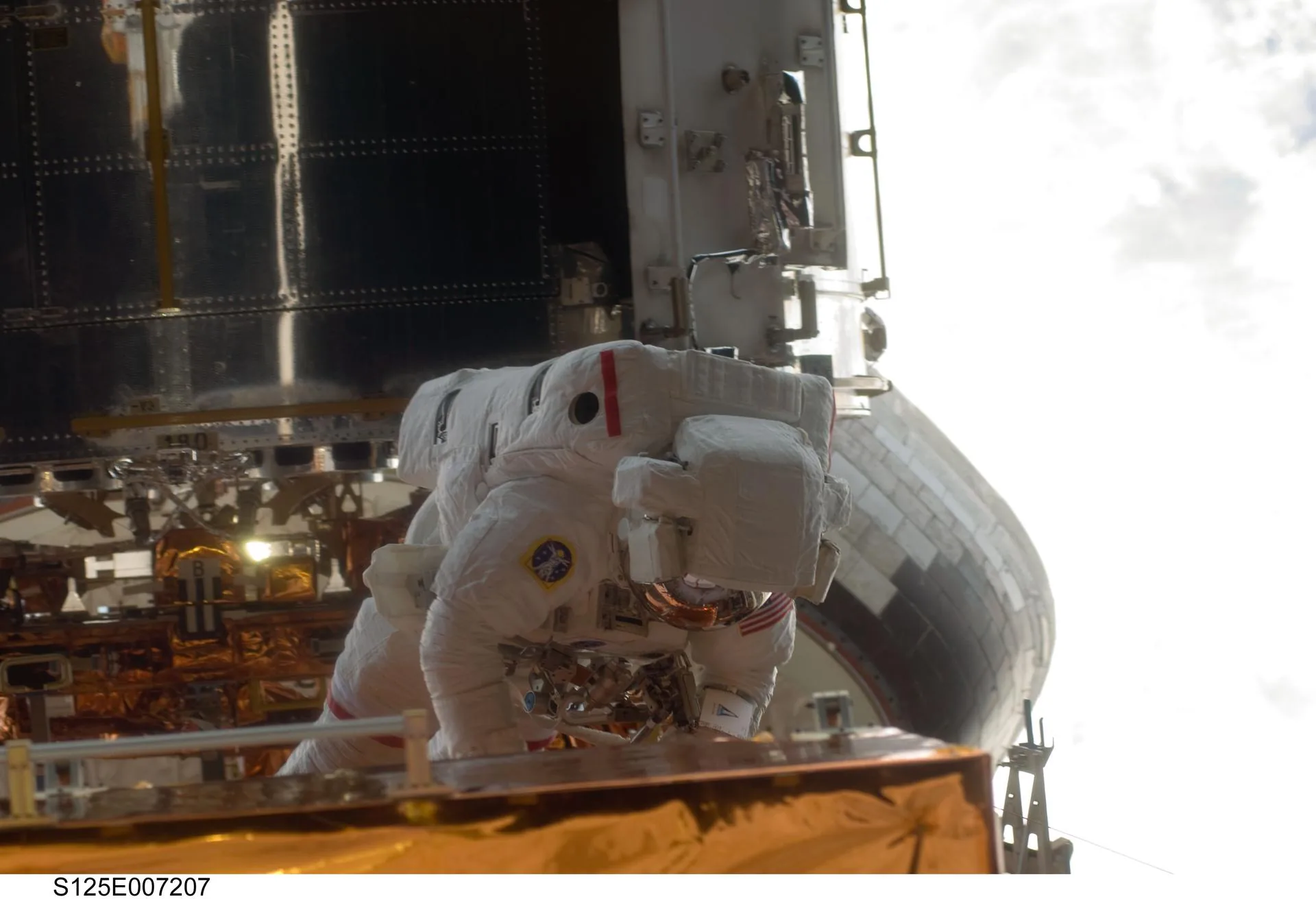
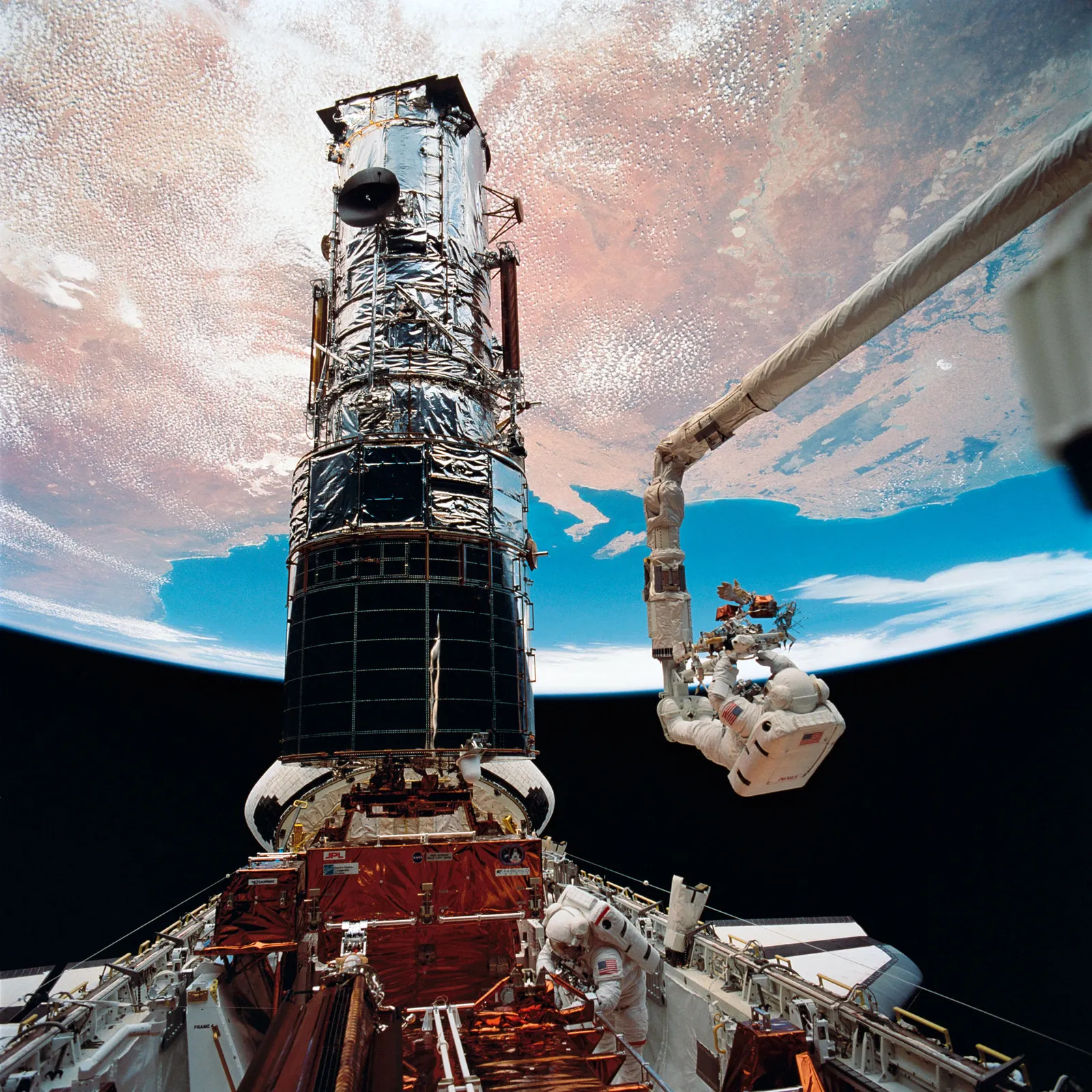
In December 1993, a seven-astronaut Shuttle crew installed corrective optics (COSTAR) and a new camera during a landmark servicing mission that required five consecutive days of spacewalks. Subsequent servicing missions in 1997, 1999, 2002, and 2009 replaced instruments and extended the telescope's life well beyond its original design.
By 2024, Hubble had made over 1.5 million observations of roughly 50,000 celestial objects and contributed to more than 21,000 peer-reviewed scientific publications, helping determine that the universe is 13.8 billion years old and that its expansion is accelerating — work that earned the 2011 Nobel Prize in Physics.
“Hubble has fundamentally changed our scientific understanding of the universe. We did not know the Hubble constant was 70 km/s/Mpc. We did not know the universe was 13.8 billion years old. Hubble gave us that.”
Mission Data
Launch date
24 Apr 1990
Altitude
547 km
Orbital period
95 min
Mirror diameter
2.4 m
Servicing missions
5 (1993–2009)
Observations
1.5 million+
Key Facts
Hubble's primary mirror was ground to the wrong shape — off by just 2.2 micrometres (1/50th the width of a human hair) — due to a flawed testing lens
The 1993 repair mission required five consecutive days of spacewalks — the most complex EVA sequence ever attempted at that time
By 2024, Hubble had contributed to more than 21,000 peer-reviewed scientific publications
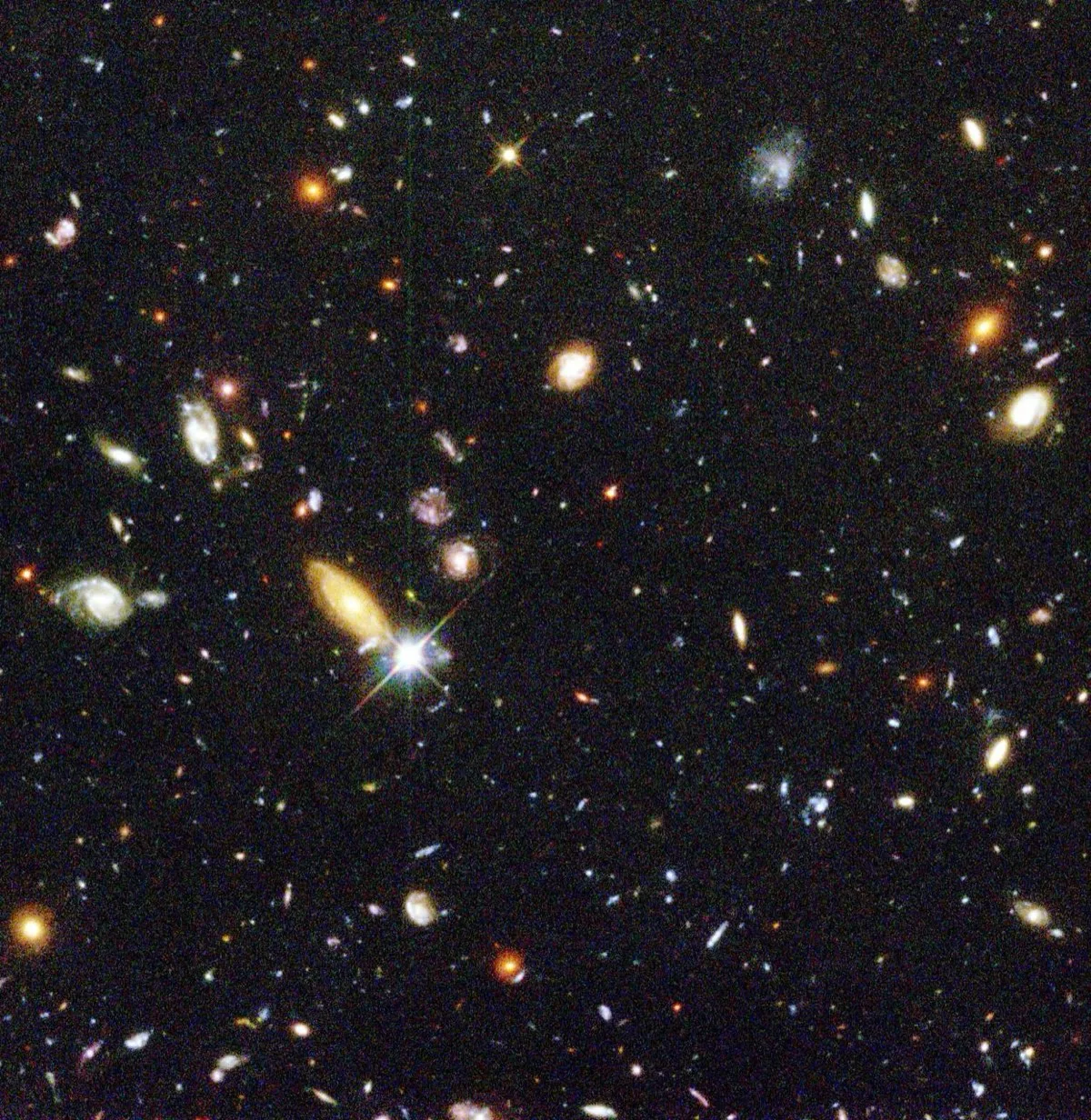
Hubble's Deep Field images (1995, 2003) showed thousands of galaxies in a patch of sky the size of a grain of sand held at arm's length
Its observations helped prove the universe is 13.8 billion years old and that its expansion is accelerating — work that earned the 2011 Nobel Prize in Physics
Why It Mattered
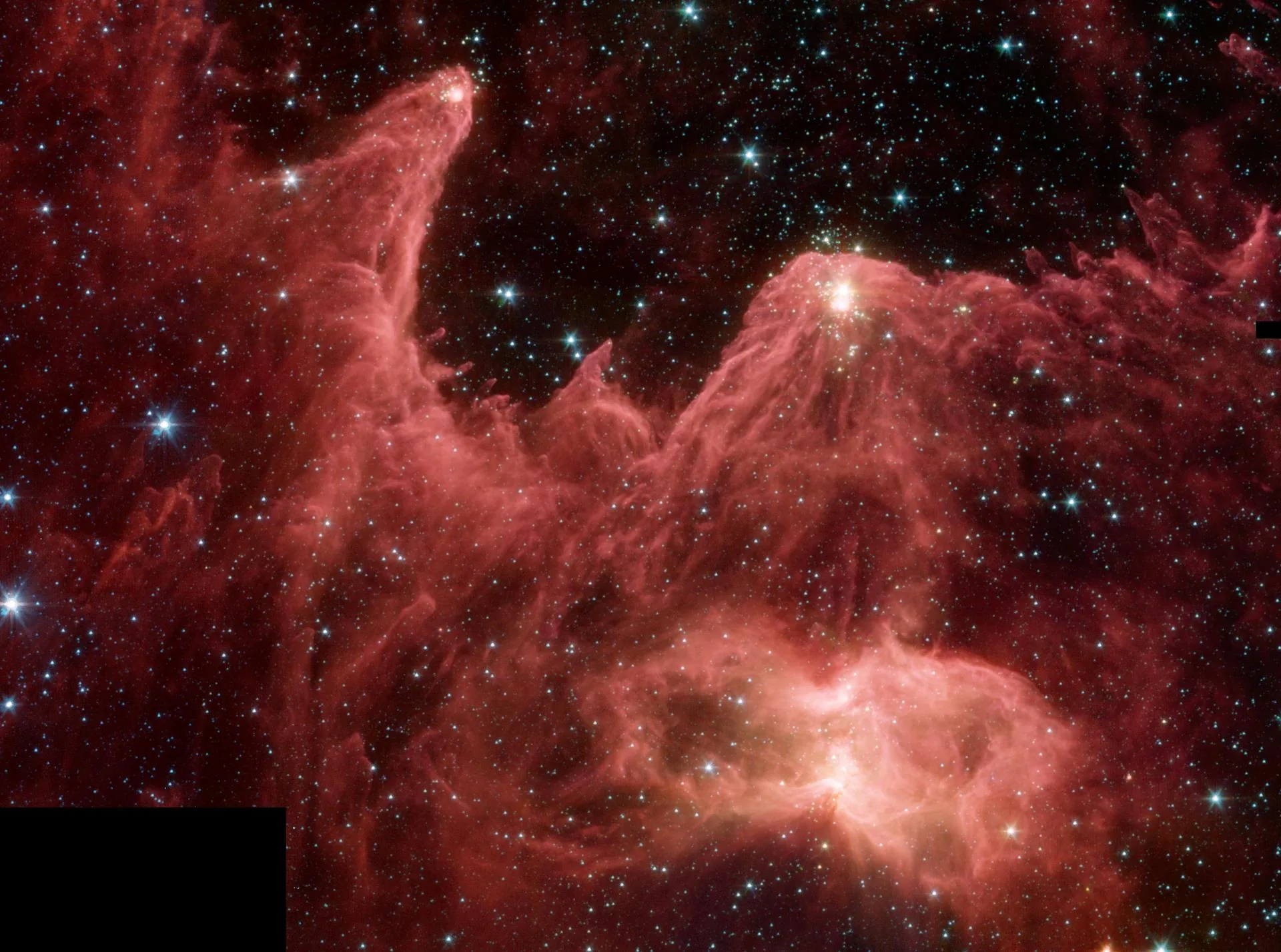
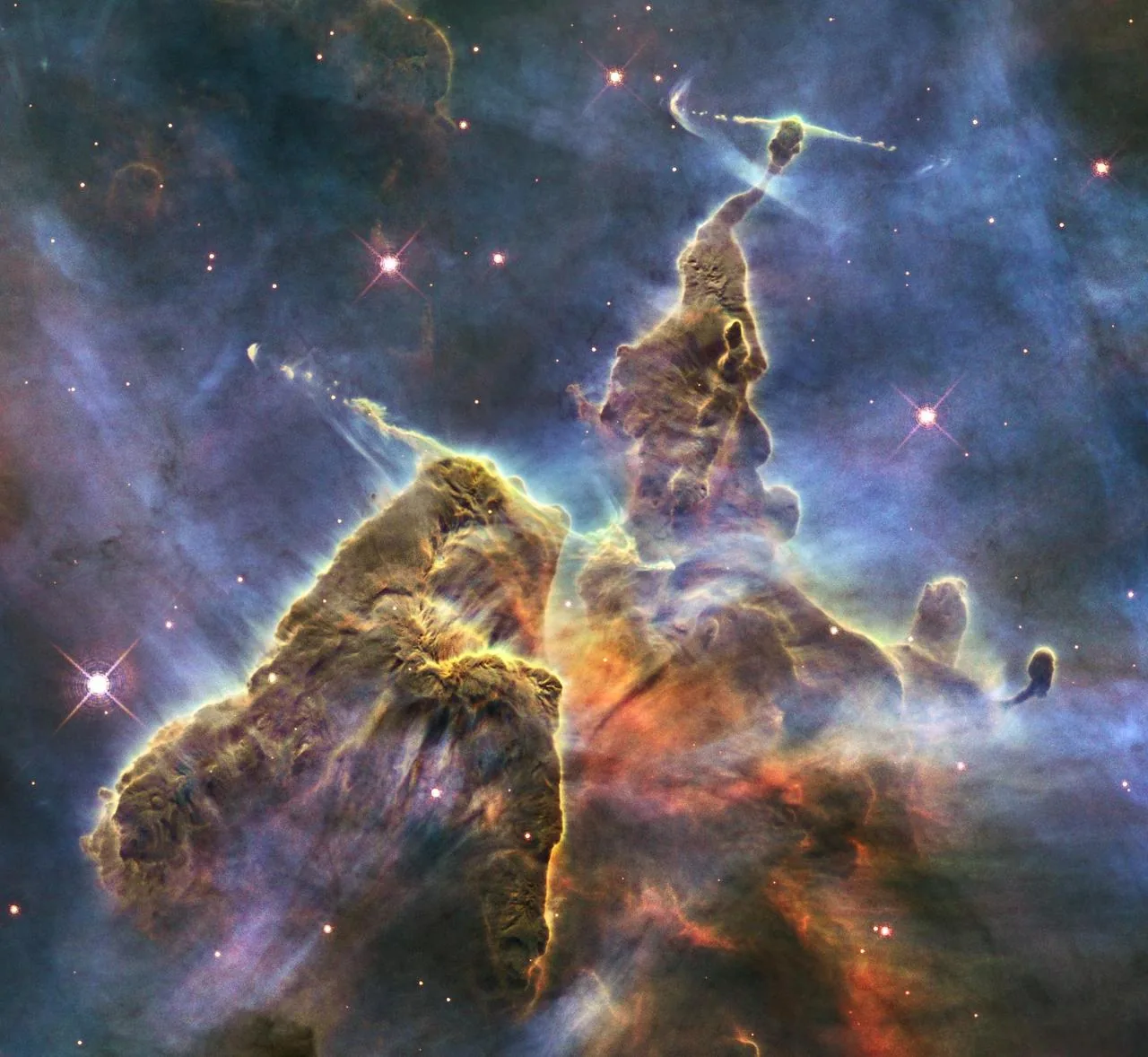
Hubble fundamentally changed what humanity knows about the universe — proving the Big Bang, measuring dark energy, and showing us galaxies 13 billion light-years away. Its Pillars of Creation and Deep Field images became the defining photographs of the 20th century.
Photo Gallery
Part of
Hubble Space Telescope
NASA / STScI
Official sourceContinue your journey
Experience this mission
Experience
Hubble
Experience this mission
The mission behind this moment
Mission
Hubble Space Telescope
The mission behind this moment

From the same era
Moment
Buran — first fully autonomous spaceplane orbital flight
From the same era

From the same era
Moment
Galileo launches to Jupiter
From the same era

From the same era
Moment
Valeri Polyakov returns after 437-day Mir stay
From the same era

From the same era
Moment
Mars Pathfinder & Sojourner — first wheeled rover on Mars
From the same era
Continue your mission
More tools to explore next