Image: NASA
Gemini 9A
Mission Profile
| Launch date | 1966-06-03 |
|---|---|
| Launch site | Cape Kennedy Air Force Station Launch Complex 19, Florida |
| Launch vehicle | Titan II GLV (s/n 62-12564) |
| Spacecraft | Gemini SC9 |
| Target | Low Earth Orbit |
| Type | Crewed |
| End date | 1966-06-06 |
| Recovery | USS Wasp (CV-18), Atlantic Ocean |
| Duration | 3 days, 0 hours, 20 minutes, 50 seconds (47 orbits) |
| Partners | McDonnell Aircraft (Gemini spacecraft and ATDA), Martin Company (Titan II GLV) |
Overview
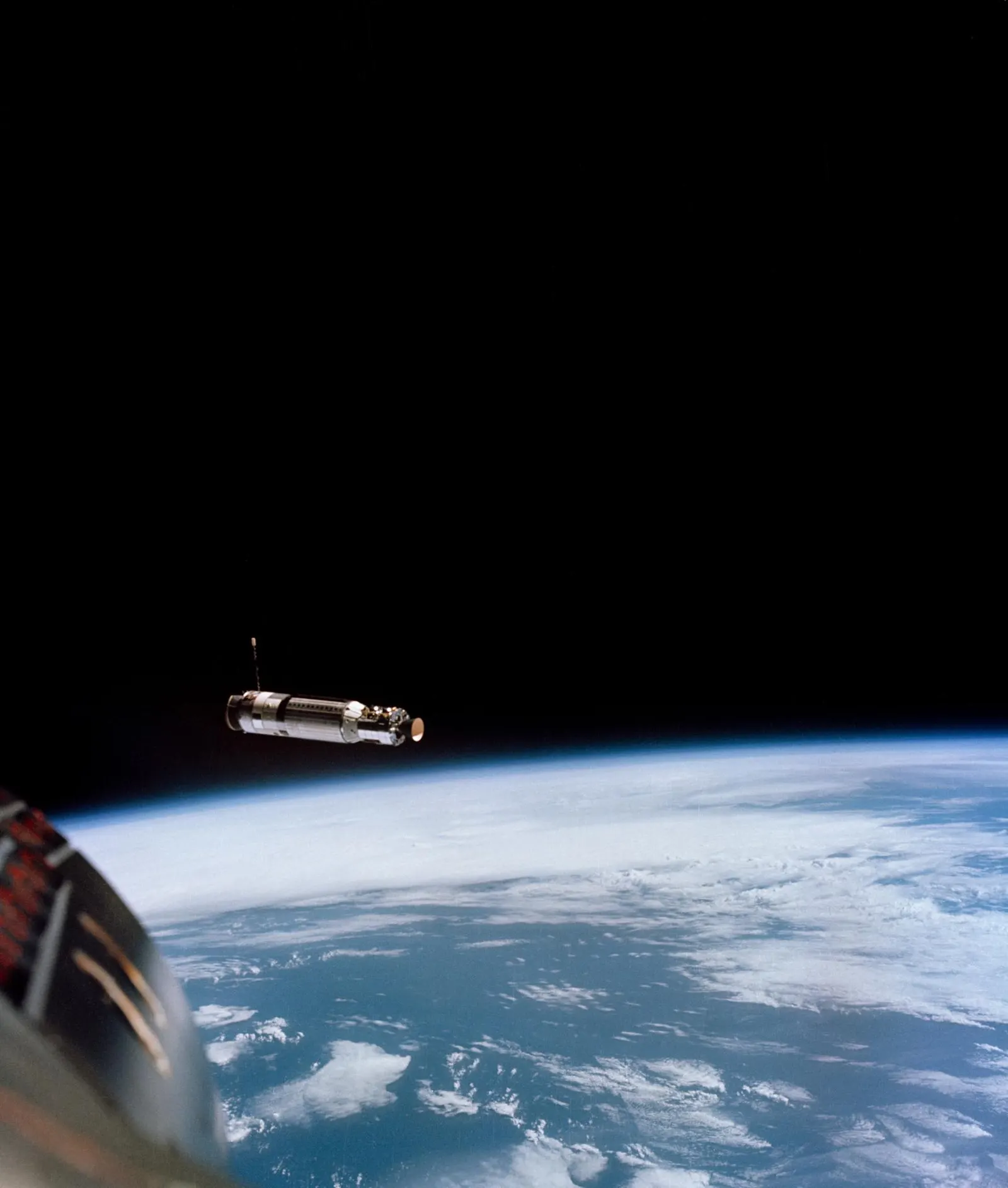
Gemini 9A was the program's hard-luck mission, and one of its most instructive. The original crew, Elliot See and Charles Bassett, died on February 28, 1966 when their T-38 crashed at the McDonnell plant in St. Louis, promoting backups Tom Stafford and Gene Cernan. Their Agena target then fell into the Atlantic after an Atlas failure on May 17. NASA substituted the Augmented Target Docking Adapter, launched June 1 — but when Stafford and Cernan reached it on June 3 they found its launch shroud jammed half-open and still attached, the two halves gaping like a giant jaw. "It looks like an angry alligator," Stafford reported. Docking was impossible, yet the crew extracted real value, rendezvousing three times — the final approach from above simulating the trajectory of an Apollo lunar module aborting its descent. On June 5 Cernan undertook the most ambitious spacewalk yet attempted: 2 hours and 7 minutes struggling toward the Astronaut Maneuvering Unit rocket pack mounted at the spacecraft's rear. Without handholds or foot restraints, his exertion overwhelmed the suit's air cooling; his visor fogged and the AMU test had to be abandoned. The chastening EVA rewrote NASA's spacewalk doctrine. Reentry on June 6 was the program's sharpest yet — splashdown just 700 meters from target, within sight of USS Wasp.
Crew
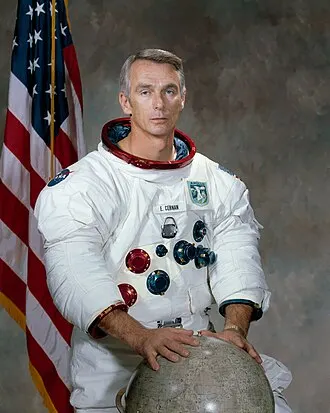
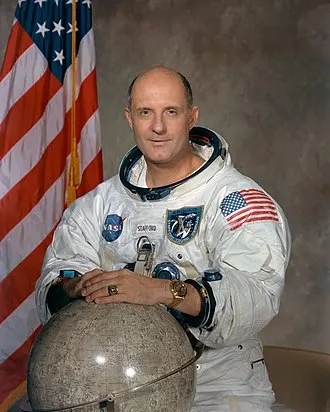
Tom Stafford
Command Pilot
Promoted from backup after the See-Bassett crash; later flew Apollo 10 and the Apollo-Soyuz Test Project
Gene Cernan
Pilot
His punishing EVA reshaped NASA spacewalk training; later the last man to walk on the Moon, on Apollo 17
Key Milestones
1966-02-28
Prime crew Elliot See and Charles Bassett killed in a T-38 crash; backups Stafford and Cernan promoted
1966-05-17
Agena target vehicle lost in an Atlas launch failure; the mission is redesignated Gemini 9A
1966-06-01
Backup target, the Augmented Target Docking Adapter, launched into a 298 km orbit on an Atlas SLV-3
1966-06-03
Liftoff at 13:39:33 UTC; rendezvous reveals the ATDA's shroud jammed half-open — the "angry alligator"
1966-06-05
Gene Cernan's 2-hour 7-minute EVA, the longest to date; fogged visor forces abandonment of the AMU rocket-pack test
1966-06-06
Splashdown at 14:00:23 UTC only 700 meters from target, within sight of USS Wasp
Key Achievements
Rendezvoused with the ATDA three times, including an approach from above simulating an Apollo lunar-module abort
Longest spacewalk to date — Gene Cernan's 2 hours and 7 minutes
Most precise splashdown of any crewed spacecraft to that point, 700 meters from target
EVA difficulties drove the adoption of handholds, foot restraints and underwater neutral-buoyancy training
Legacy & Significance
Gemini 9A is remembered for the surreal image of the "angry alligator" and for the spacewalk that nearly defeated Gene Cernan — and that is precisely its importance. The mission exposed how badly NASA had underestimated the physics of working in weightlessness: without restraints, every push sent the astronaut tumbling, and the air-cooled Gemini suit could not shed the heat of the struggle. The fixes — underwater neutral-buoyancy rehearsal, deliberate handholds and footholds, water-cooled Apollo garments — became permanent fixtures of human spaceflight. Its triple rendezvous, including the lunar-module-abort profile, quietly de-risked Apollo, and Stafford and Cernan flew together again on Apollo 10's dress rehearsal for the Moon landing.