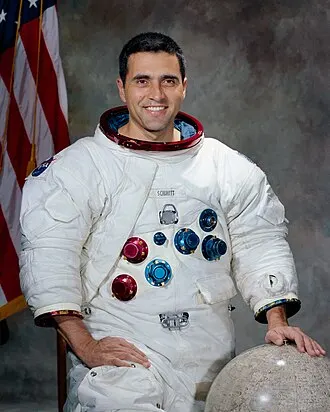
Image: NASA / Apollo 17 crew
Don't just read it — experience it
Relive Apollo 17, chapter by chapter
12 days · 8 chapters · The Last Footsteps on the Moon
Apollo 17
Mission Profile
| Launch date | 1972-12-07 |
|---|---|
| Launch site | Kennedy Space Center, Launch Complex 39A, Florida — first nighttime Apollo launch |
| Launch vehicle | Saturn V (SA-512) — final Saturn V flight |
| Spacecraft | CSM-114 "America" + LM-12 "Challenger" |
| Target | Moon |
| Type | Crewed |
| End date | 1972-12-19 |
| Recovery | USS Ticonderoga, South Pacific (~350 nm SE of American Samoa) |
| Landing site | 20.18809°N, 30.77475°E — Taurus-Littrow Valley |
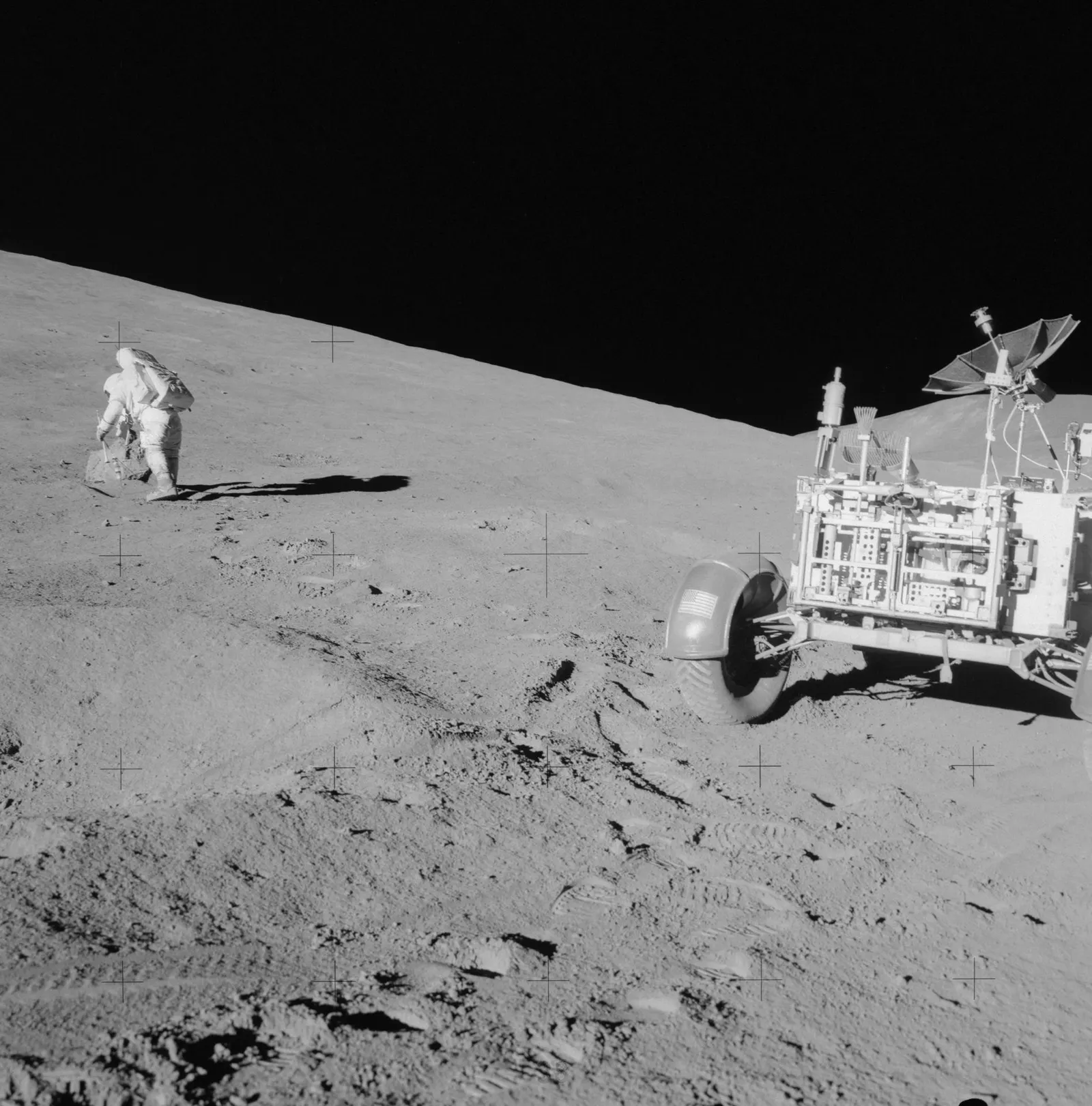
| Surface stay | ~74 hours 59 minutes (3 LRV EVAs totalling ~22h 4m); LRV traverse 35.9 km |
| Cost | Apollo program-wide ~$25.8B in 1969 dollars (~$257B in 2020 dollars per NASA/GAO accounting); per-mission cost not separately published |
| Mass | ~46,900 kg (CSM + LM combined) |
| Duration | 12 days, 13 hours, 51 minutes, 59 seconds |
| Partners | North American Rockwell (CSM), Grumman (LM), Boeing (LRV) |
| Instruments | LRV-3, ALSEP-5, Lunar Sounder (orbital radar), Lunar Ejecta and Meteorites experiment, SIM bay |
Overview
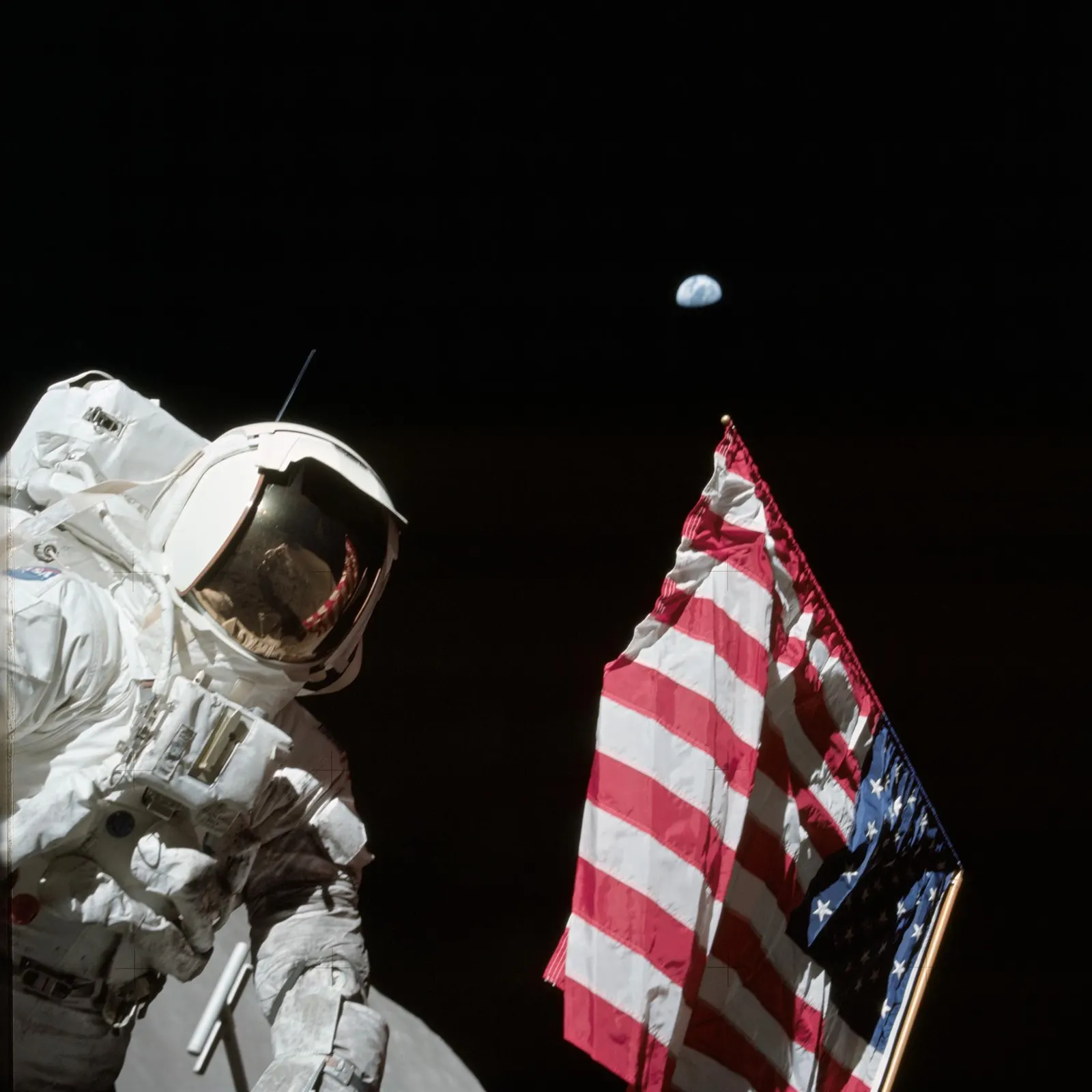
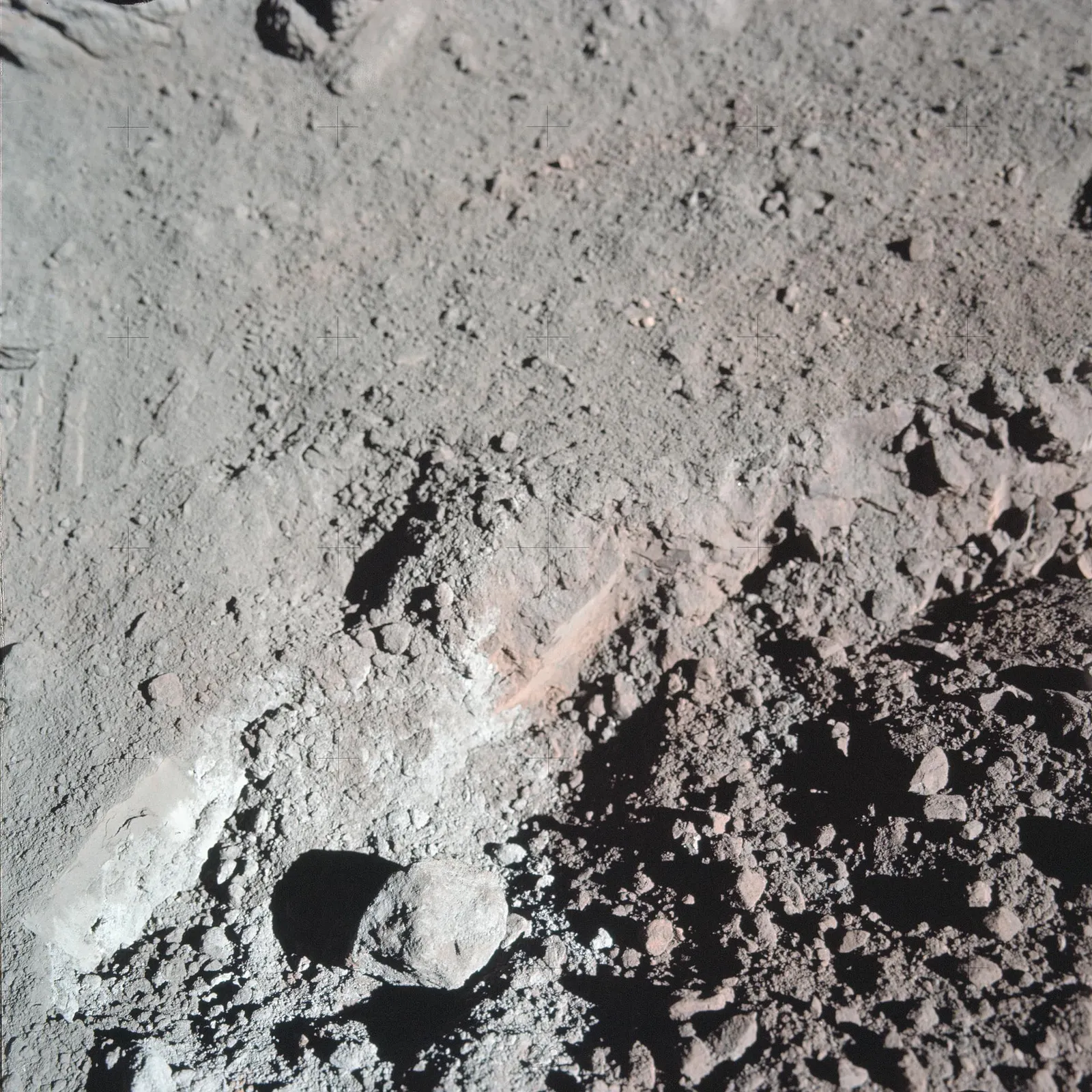
Apollo 17 was the final Apollo lunar landing — the last time humans walked on the Moon. Commander Eugene Cernan, Command Module Pilot Ron Evans, and Lunar Module Pilot Harrison "Jack" Schmitt (the only professional geologist to fly to the Moon) launched on the only Apollo night launch on December 7, 1972. Hours after launch, the crew captured the "Blue Marble" photograph (AS17-148-22727) — the most reproduced photograph in history. Cernan and Schmitt landed at Taurus-Littrow Valley on December 11 and stayed nearly 75 hours, the longest Apollo lunar stay. Across three LRV EVAs they traversed 35.9 km (22.3 mi), collected 110 kg (243 lb) of samples (more than any Apollo mission), and discovered "Orange Soil" — small volcanic glass beads ~3.64 billion years old — at Shorty Crater. After Cernan and Schmitt rejoined Evans in America, Evans performed a deep-space EVA on December 17. Cernan, before climbing back into Challenger for the last lunar ascent, spoke the closing words of the Apollo era: "...we leave as we came and, God willing, as we shall return: with peace and hope for all mankind."
Mission Objectives
Geological exploration of Taurus-Littrow Valley (highlands + mare boundary)
achieved
Investigate young volcanic features; collect both highland and mare samples
achieved
Deploy ALSEP-5; operate SIM bay; conduct lunar-orbit science
achieved
Crew
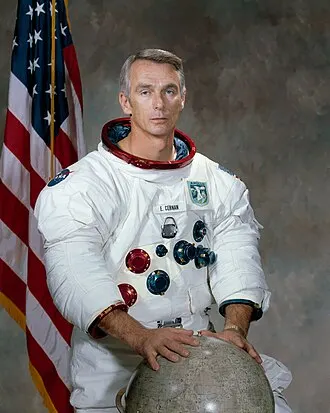
Eugene A. "Gene" Cernan
Commander
Veteran of Gemini 9A and Apollo 10. Last human to walk on the Moon. Died 2017.
Ronald E. Evans Sr.
Command Module Pilot
Performed transearth EVA; longest solo Apollo lunar-orbit time. Died 1990.
Harrison H. "Jack" Schmitt
Lunar Module Pilot
PhD geologist — only scientist astronaut to walk on Moon. Twelfth and last moonwalker.
Vehicle Specifications
Command/Service Module
"America"
- Mass
- ~30,400 kg
Lunar Module
"Challenger"
- Mass
- ~16,500 kg
Lunar Roving Vehicle (LRV-3)
- Mass
- ~210 kg dry
Traversed 35.9 km — Apollo LRV distance record.
Key Milestones
1972-12-07
Launch from LC-39A at 05:33 UTC — first nighttime Apollo launch
1972-12-07
"Blue Marble" photo (AS17-148-22727) taken ~5 hours after launch
1972-12-10
Lunar Orbit Insertion
1972-12-11
Lunar landing at 19:54:57 UTC, Taurus-Littrow Valley
1972-12-12
LRV EVA-1; deploy ALSEP-5
1972-12-13
LRV EVA-2: "Orange Soil" discovery at Shorty Crater
1972-12-14
LRV EVA-3; Cernan's closing words: "we leave as we came..."
1972-12-14
Lunar ascent at 22:54 UTC — last humans depart the Moon (to date)
1972-12-17
Evans transearth EVA
1972-12-19
Splashdown in South Pacific at 19:25 UTC; recovered by USS Ticonderoga
Key Achievements
Only professional geologist on the Moon (Schmitt)
Longest Apollo lunar stay: 74 hours 59 minutes surface time
Most LRV distance: 35.9 km (22.3 mi)
Most samples returned: 110 kg (243 lb)
"Orange Soil" — volcanic glass beads ~3.64 billion years old (Shorty Crater)
"Blue Marble" (AS17-148-22727) — most reproduced photograph in history
Last humans on the Moon (to date)
Photo Gallery
Legacy & Significance
Apollo 17 closed the Apollo lunar landing program with the most scientifically productive mission of the series. The Blue Marble photograph — Earth alone in space — became a cultural touchstone for environmentalism and globalism. Cernan's parting words have framed every American return-to-the-Moon discussion since, including Artemis: "...we leave as we came and, God willing, as we shall return: with peace and hope for all mankind." That return is the Artemis program, half a century later.