USSR · OKB-1disasterhuman
June 30, 1971
Soyuz 11 — first and only deaths in space
This mission ended in disaster with the loss of all crew members. Their names and stories are remembered here.
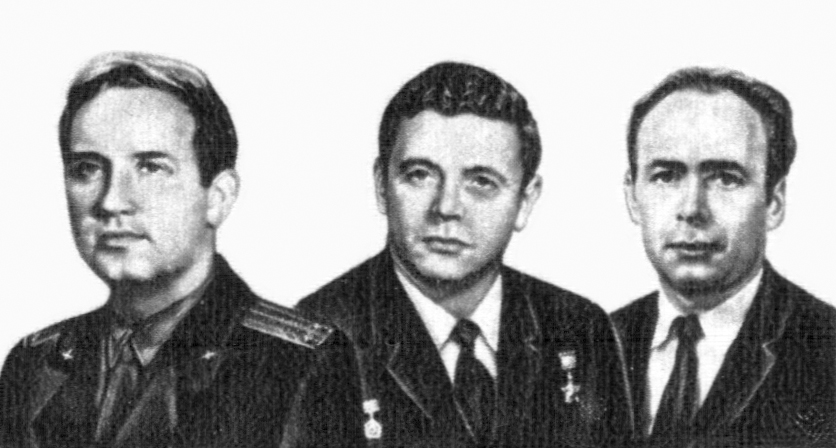
The descent module came down exactly where and how it should have on 30 June 1971, parachute deployed, hull intact on the Kazakh steppe about 500 kilometres east of Dzhezkazgan. Recovery crews found the capsule outwardly undamaged and opened the hatch to silence. Inside, Georgi Dobrovolski, Vladislav Volkov and Viktor Patsayev were still strapped in their couches. Attempts at resuscitation failed. The three men had just completed the longest spaceflight in history, and they had been dead since shortly after leaving orbit.
They were not even supposed to fly. Two days before launch, doctors found a suspicious spot on prime crew member Valery Kubasov's chest X-ray, and the entire backup crew was moved up in their place. Launched on 6 June 1971, they docked with Salyut 1 the next day and became the first crew ever to live aboard a space station. Over more than three weeks they shattered the 18-day endurance record, and Patsayev became the first person to operate a telescope in space and the first to mark a birthday there, turning 38 on 19 June.
The journey home began normally on the night of 29 June. Then, at module separation around 168 kilometres altitude, the simultaneous firing of explosive bolts jarred open a pressure equalization valve meant to stay closed until the final parachute descent. The cabin's air vented to space in under a minute, and the crew, flying without pressure suits because the cramped Soyuz of 1971 had no room for them with three aboard, lost consciousness within about two minutes. The automated systems flew the reentry and landing flawlessly, bringing home a capsule that could no longer be saved.
The Soviet Union honored the three cosmonauts with a state funeral on Red Square, their ashes interred in the Kremlin Wall, with NASA astronaut Thomas Stafford among those representing the United States. Crewed Soyuz flights halted for over two years while engineers rebuilt the spacecraft for two cosmonauts wearing pressure suits, and no Soyuz crew has flown unsuited through launch or landing since. Dobrovolski, Volkov and Patsayev remain the only human beings to have died in space itself, above the Kármán line.
Mission Data
Launch
6 Jun 1971, Baikonur
Docking with Salyut 1
7 Jun 1971
Mission duration
23 days 18 h — then a record
Valve failure altitude
approx. 168 km
Landing
30 Jun 1971, 02:17 UT, Kazakhstan
Crew lost
3
Key Facts
They were the backup crew, promoted just two days before launch after doctors found a suspicious spot on prime crew member Valery Kubasov's chest X-ray.
Viktor Patsayev became the first person to operate a telescope in space, Salyut's Orion 1, and the first to celebrate a birthday in orbit, turning 38 on 19 June 1971.
The fatal valve opened at about 168 kilometres altitude; the cabin emptied in under a minute and the unsuited crew lost consciousness within roughly two minutes.
The capsule landed automatically, on target and outwardly unscathed; recovery teams discovered the tragedy only when they opened the hatch.
Their names are among the fourteen on the Fallen Astronaut memorial that Apollo 15 left on the Moon barely a month later, in August 1971.
Why It Mattered
Soyuz 11 taught spaceflight its hardest lesson: the mission is not over until the hatch opens on Earth. The accident grounded Soviet crews for more than two years while the Soyuz was redesigned around two suited cosmonauts, and the rule it created, pressure suits for every launch and landing, remains universal in Russian spaceflight and was mirrored by NASA after Challenger. The three cosmonauts' deaths, the only ones ever to occur in space itself, permanently fused the triumph of the first space station with the cost of reaching it.
Mission Crew
Georgi T. DobrovolskiVladislav N. VolkovViktor I. Patsayev
USSR Post, public domain, via Wikimedia Commons
Official sourceContinue your journey
Astronaut
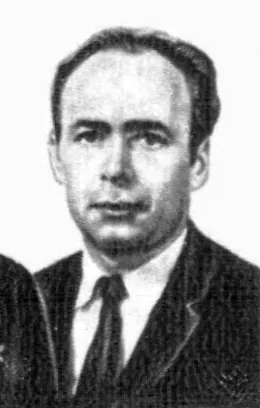
Viktor Patsayev
Flew on this mission
Astronaut
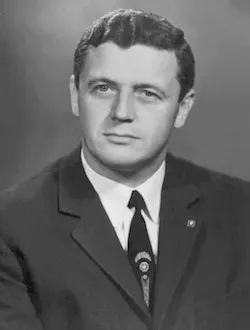
Vladislav Volkov
Flew on this mission

Mission
Soyuz 11
The mission behind this moment

Moment
Venera 7 — first soft landing on another planet
From the same era

Moment
Salyut 1 — first space station
From the same era

Moment
Apollo 15 — first crewed Lunar Roving Vehicle drive
From the same era