Image: NASA
Don't just read it — experience it
Relive Apollo 13, chapter by chapter
6 days · 8 chapters · Houston, We've Had a Problem
Apollo 13
Mission Profile
| Launch date | 1970-04-11 |
|---|---|
| Launch site | Kennedy Space Center, Launch Complex 39A, Florida |
| Launch vehicle | Saturn V (SA-508) |
| Spacecraft | CSM-109 "Odyssey" + LM-7 "Aquarius" |
| Target | Moon |
| Type | Crewed |
| End date | 1970-04-17 |
| Recovery | USS Iwo Jima, South Pacific Ocean (~21°38′S 165°22′W) |
| Cost | Apollo program-wide; mission-specific cost not separately published |
| Mass | ~43,500 kg (CSM + LM combined) |
| Duration | 5 days, 22 hours, 54 minutes, 41 seconds |
| Partners | North American Aviation (CSM), Grumman (LM), Beech Aircraft (oxygen tanks) |
| Instruments | Suite for Fra Mauro geological investigation — never deployed |
Overview
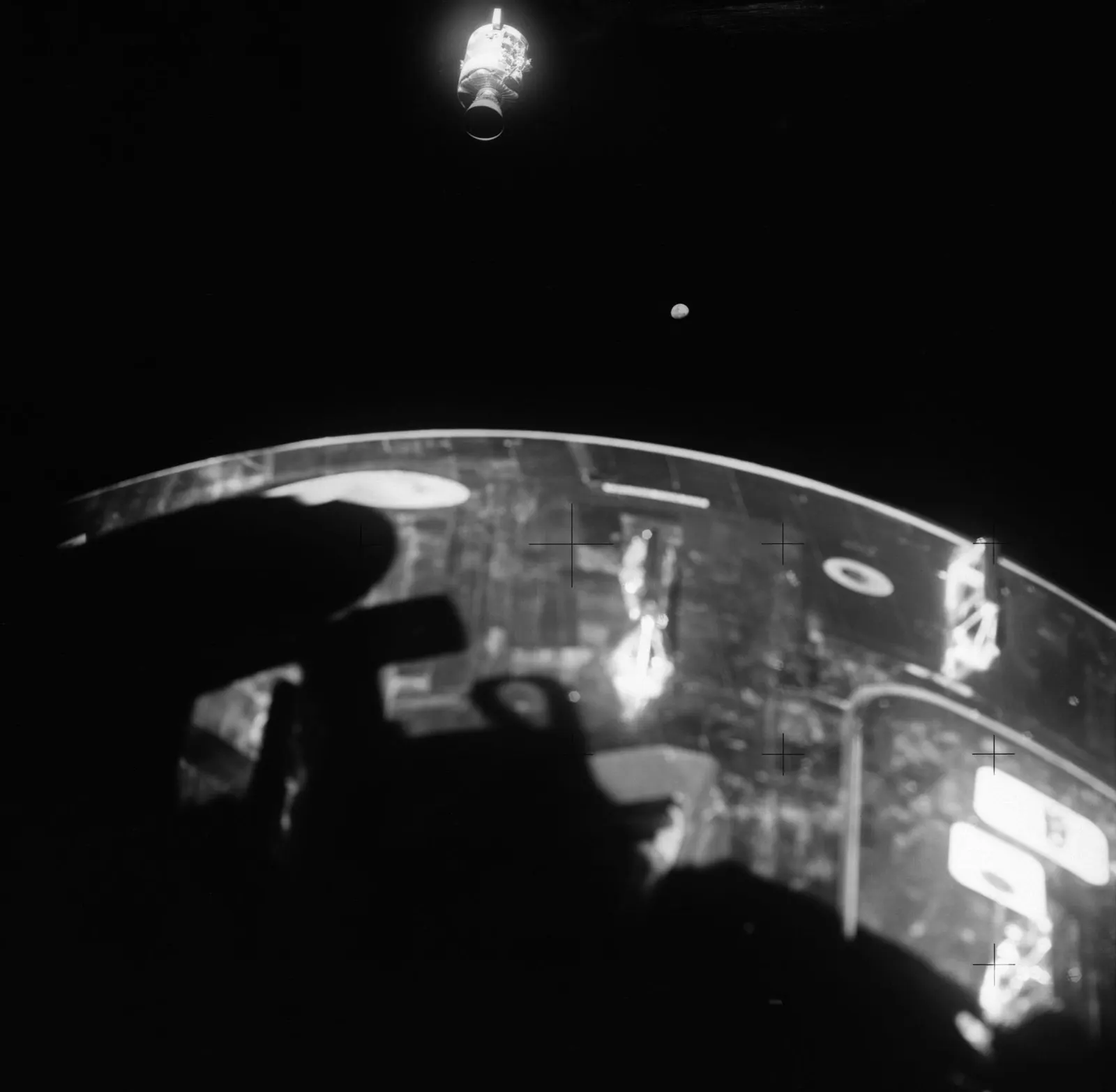
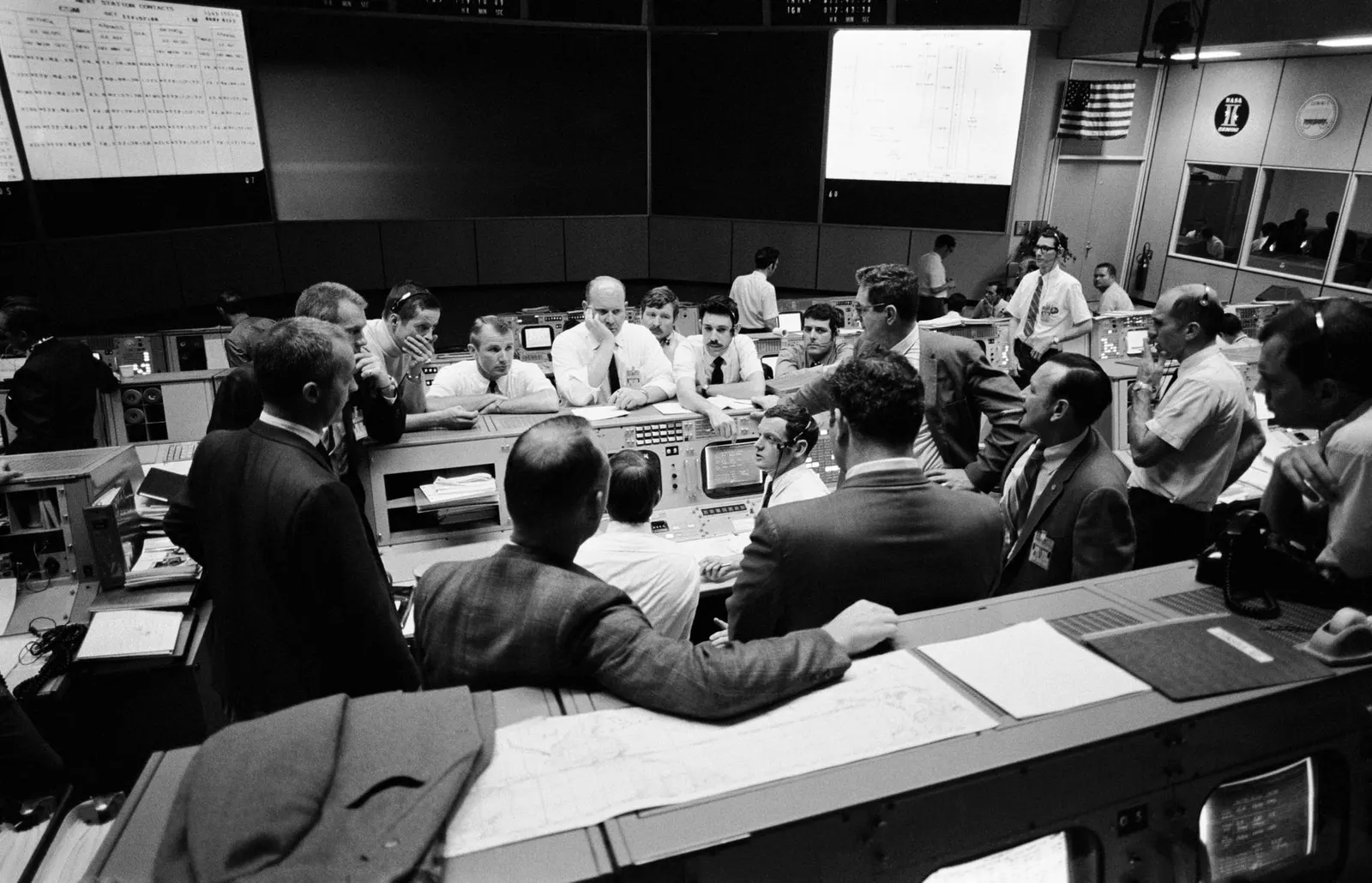
Apollo 13 was meant to be NASA's third lunar landing — a geological investigation of the Fra Mauro formation. Instead, it became the agency's defining "successful failure." Roughly 56 hours into the flight, on April 13, 1970, oxygen tank #2 in the Service Module ruptured after a wiring-insulation fire, crippling the Command Module's power, oxygen, and propulsion. Commander Jim Lovell, Command Module Pilot Jack Swigert, and Lunar Module Pilot Fred Haise abandoned the lunar landing and used the Lunar Module "Aquarius" as a lifeboat, surviving four days in the powered-down spacecraft as Mission Control and the crew jointly improvised solutions to compounding crises — a hand-built CO₂ scrubber adapter ("the mailbox"), course corrections without functioning guidance, and a freezing return through Earth's atmosphere. The crew splashed down safely 142 hours and 54 minutes after launch — the entire world watching live.
Mission Objectives
Third crewed lunar landing at Fra Mauro formation
not-met
Geological investigation of highlands ejecta
not-met
Deploy ALSEP-3
not-met
(Revised objective) Safely return the crew to Earth
achieved
Crew
James A. "Jim" Lovell Jr.
Commander
Veteran of Gemini 7, 12 and Apollo 8 — one of only three humans to fly to the Moon twice (without landing both times).
John L. "Jack" Swigert Jr.
Command Module Pilot
Replaced Ken Mattingly 72 hours before launch due to German measles exposure. Died 1982 of cancer.
Fred W. Haise Jr.
Lunar Module Pilot
Trained for lunar landing; never walked on the Moon. Later flew Space Shuttle Approach and Landing Tests.
Vehicle Specifications
Command/Service Module
"Odyssey"
- Mass
- ~30,300 kg
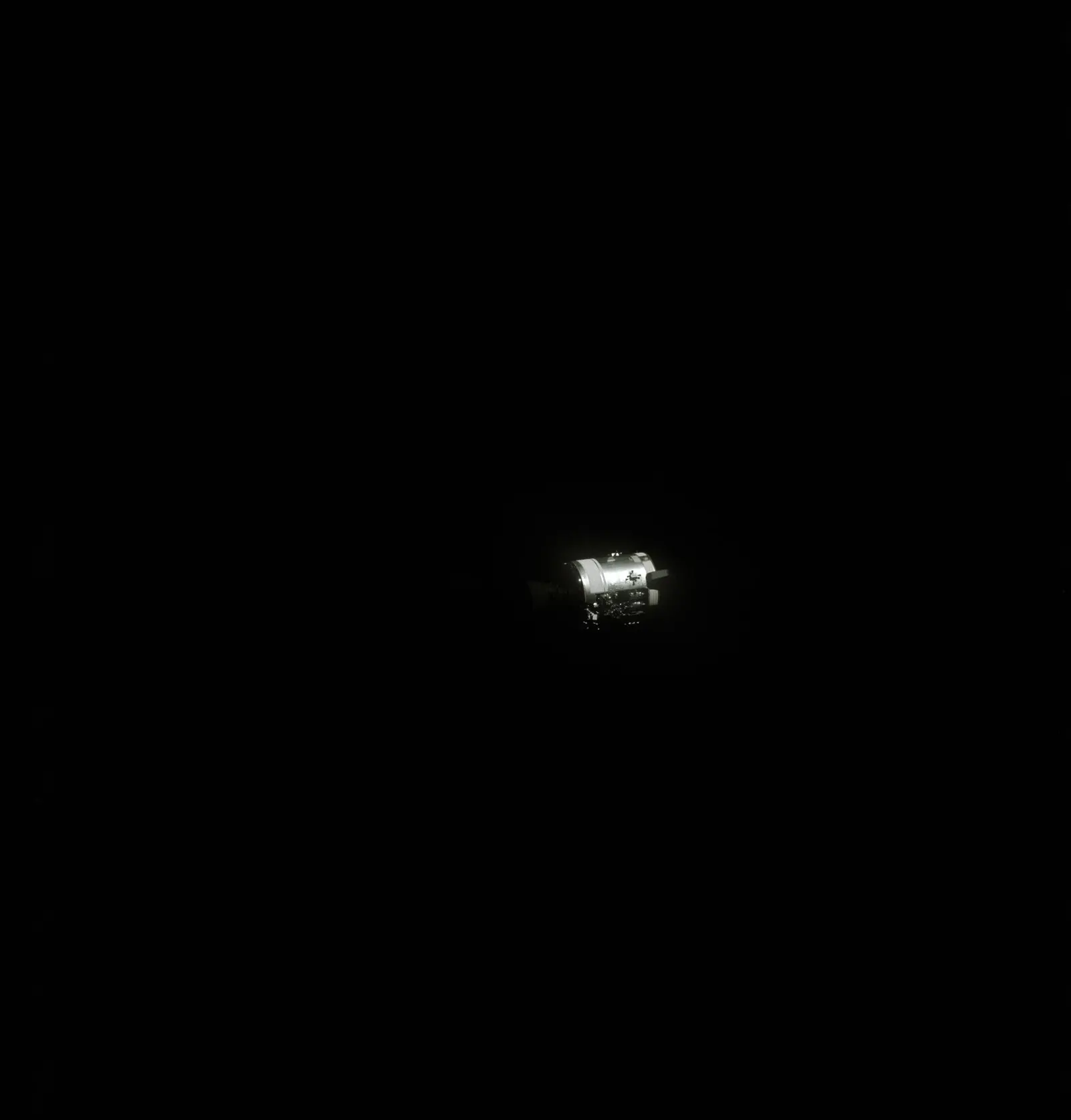
Oxygen tank #2 ruptured at GET 55:54:53; remained dormant for return.
Lunar Module
"Aquarius"
- Mass
- ~15,200 kg
Used as lifeboat for 4 days — life support, navigation, propulsion. Burned up during reentry as planned.
Key Milestones
1970-04-11
Launch from LC-39A at 19:13 UTC
1970-04-13
Oxygen tank #2 explosion at 03:08 UTC — "Houston, we've had a problem"
1970-04-15
Lunar far-side flyby (max altitude ~158 nm above surface)
1970-04-15
Maximum distance from Earth: 248,655 mi — held Guinness record until Artemis I (2022)
1970-04-17
Splashdown in South Pacific at 18:07 UTC; recovered by USS Iwo Jima
Key Achievements
Successful crew return after catastrophic Service Module failure 200,000+ mi from Earth
First use of the Lunar Module as a lifeboat (life support, power, propulsion)
Crew + ground built CO₂-scrubber adapter ("the mailbox") from onboard parts
Demonstrated free-return trajectory and improvised mid-course corrections without guidance computer
Held record for farthest humans from Earth until Artemis I in 2022
Photo Gallery
Legacy & Significance
Apollo 13 is NASA's "successful failure" — proof that the agency's training, ground-crew coordination, and engineering culture could turn a near-fatal accident into a rescue. The mission shaped subsequent NASA safety reviews and the broader idea that operational excellence is what separates successful crewed-spaceflight programs from catastrophes. Ron Howard's 1995 film and Lovell's memoir "Lost Moon" cemented the mission in global cultural memory.