Image: NASA
Apollo 14
Mission Profile
| Launch date | 1971-01-31 |
|---|---|
| Launch site | Kennedy Space Center, Launch Complex 39A, Florida |
| Launch vehicle | Saturn V (SA-509) |
| Spacecraft | CSM-110 "Kitty Hawk" + LM-8 "Antares" |
| Target | Moon |
| Type | Crewed |
| End date | 1971-02-09 |
| Recovery | USS New Orleans, South Pacific (~765 nm S of American Samoa) |
| Landing site | 3.64544°S, 17.47139°W — Fra Mauro formation |
| Surface stay | ~33 hours 30 minutes (2 EVAs totalling ~9h 23m) |
| Cost | Apollo program-wide; mission-specific cost not separately published |
| Mass | ~43,800 kg (CSM + LM combined) |
| Duration | 9 days, 0 hours, 1 minute, 58 seconds |
| Partners | North American Aviation (CSM), Grumman (LM) |
| Instruments | ALSEP-2 with active seismic experiment, MET hand cart, Modified six-iron (Shepard's golf club) |
Overview
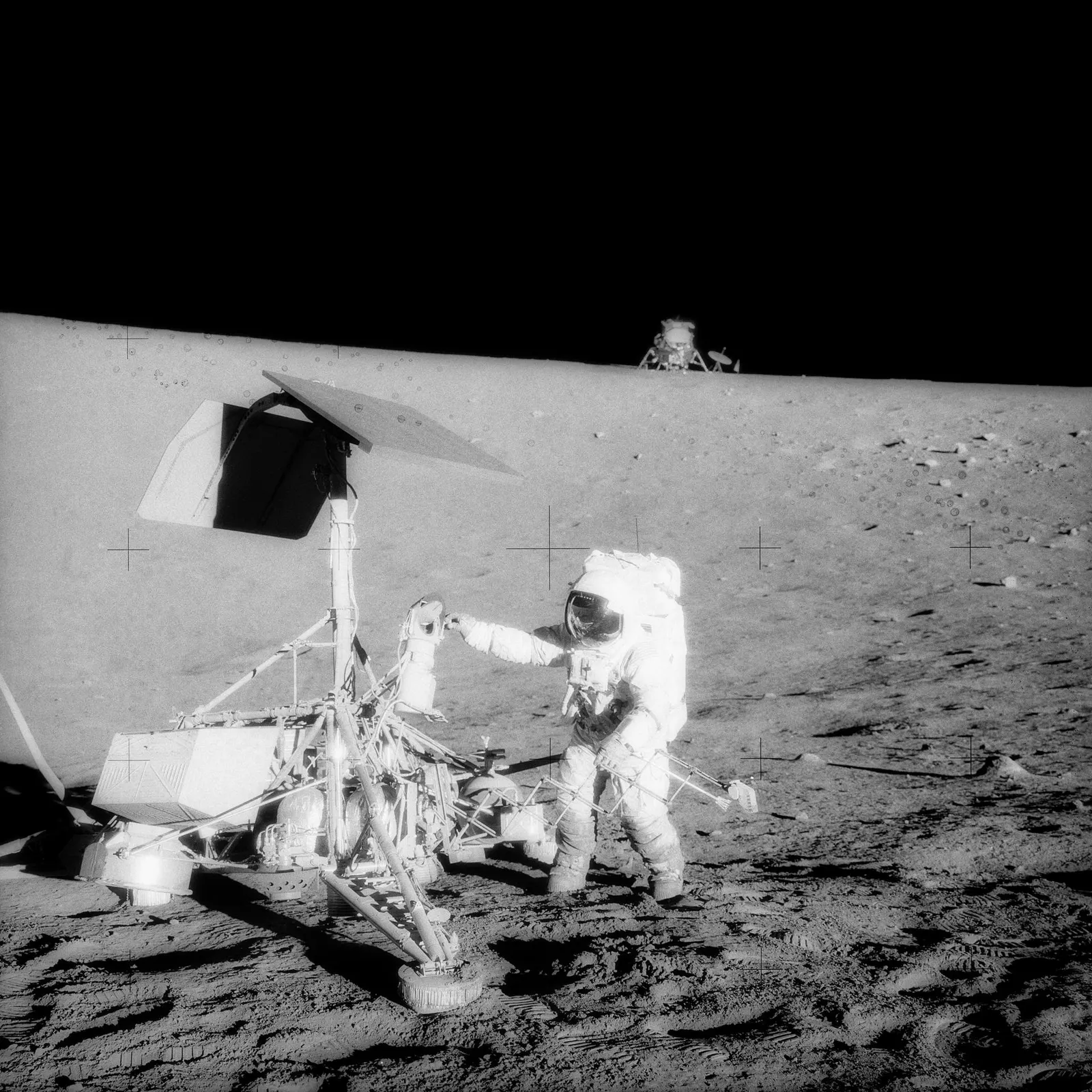
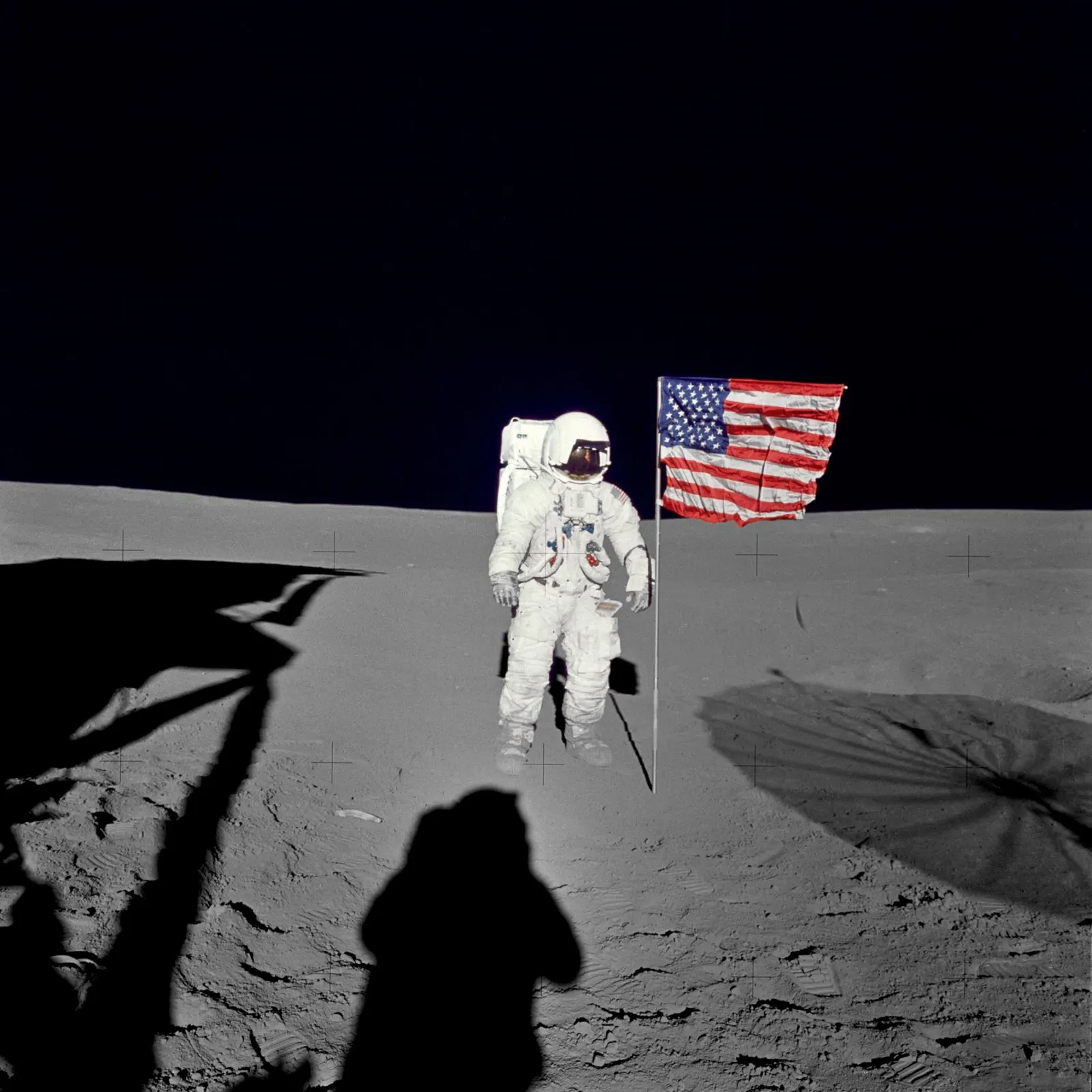
Apollo 14 completed the lunar landing that Apollo 13 had aborted — a geological investigation of the Fra Mauro formation, ancient ejecta thought to date from the Imbrium impact basin's formation. After a 40-minute weather delay, Alan Shepard (the first American in space and at 47 the oldest moonwalker), Stuart Roosa, and Edgar Mitchell launched January 31, 1971. The landing required a docking-system fix and a guidance-software patch en route, but Antares touched down precisely at Fra Mauro on February 5. Across two EVAs Shepard and Mitchell deployed ALSEP-2, conducted the first active seismic experiment on another world, and attempted to climb Cone Crater — turning back ~50 m short of the rim due to navigation difficulty in the rolling terrain. Shepard closed EVA-2 with two improvised one-handed golf shots using a six-iron head attached to a contingency-sample handle; the third shot traveled ~24 yards.
Mission Objectives
Complete the Apollo 13 mission profile at Fra Mauro
achieved
Deploy ALSEP-2 with active seismic experiment
achieved
Collect samples from Cone Crater (highlands ejecta)
partial
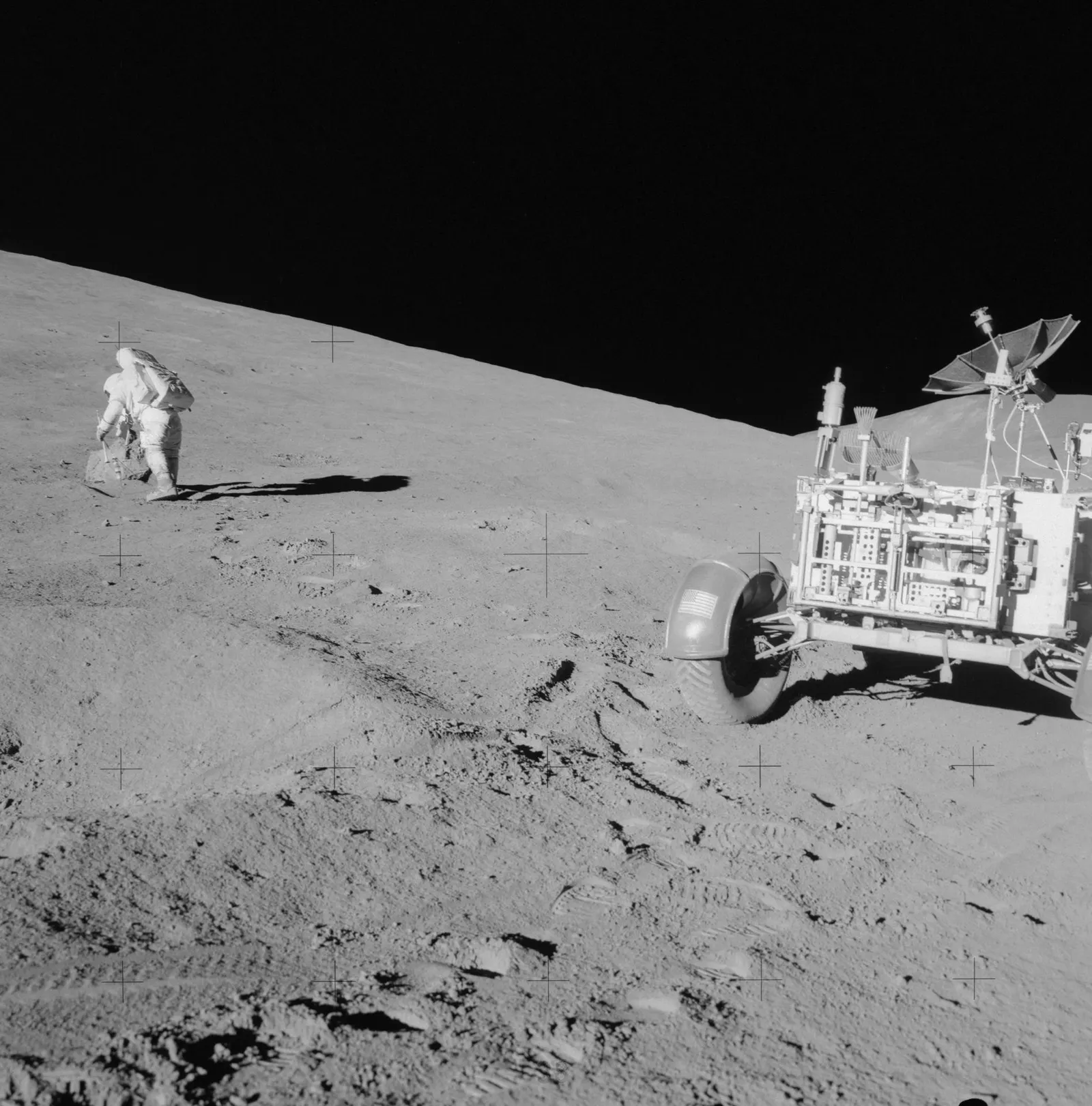
First use of Modular Equipment Transporter (MET, "rickshaw")
achieved
Crew
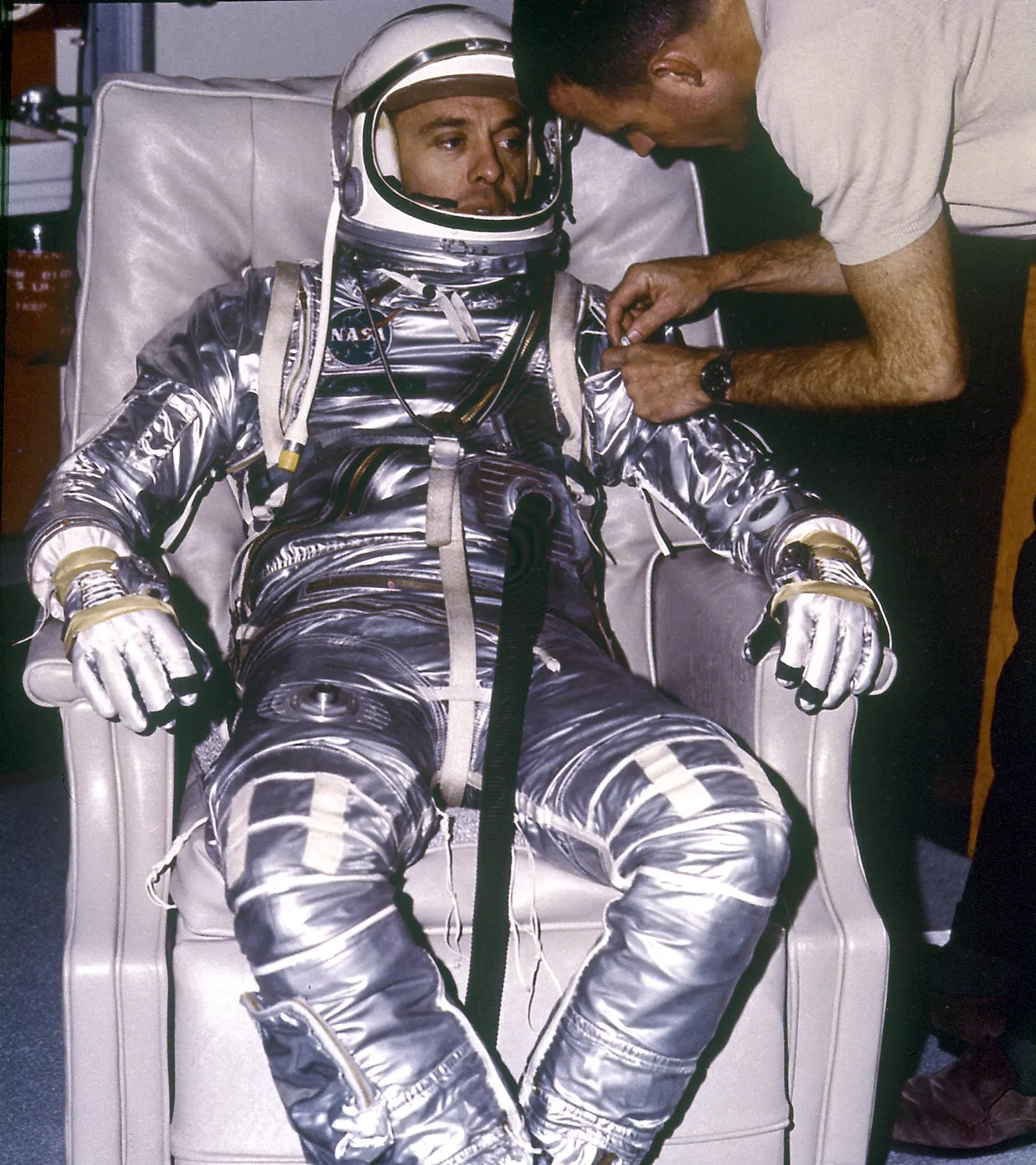
Alan B. Shepard Jr.
Commander
First American in space (Mercury-Redstone 3, 1961). Oldest person to walk on the Moon (age 47). Died 1998.
Stuart A. Roosa
Command Module Pilot
Carried tree seeds in orbit that were later planted on Earth ("Moon Trees"). Died 1994.
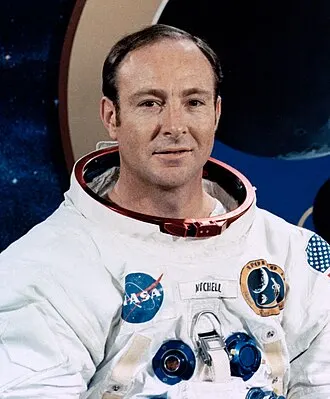
Edgar D. Mitchell
Lunar Module Pilot
Sixth human on the Moon; later founded the Institute of Noetic Sciences. Died 2016.
Vehicle Specifications
Command/Service Module
"Kitty Hawk"
- Mass
- ~28,500 kg
Lunar Module
"Antares"
- Mass
- ~15,300 kg
First landing on lunar highlands (older crustal material).
Modular Equipment Transporter (MET)
Hand-pulled cart for tools and samples — predecessor to the Lunar Roving Vehicle.
Key Milestones
1971-01-31
Launch from LC-39A at 21:03 UTC (40-minute weather delay)
1971-02-04
Lunar Orbit Insertion
1971-02-05
Lunar landing at 09:18 UTC, Fra Mauro formation
1971-02-05
EVA-1: deploy ALSEP, active seismic experiment
1971-02-06
EVA-2: Cone Crater traverse; Shepard's golf shots
1971-02-06
Lunar ascent and rendezvous with Kitty Hawk
1971-02-09
Splashdown in South Pacific; recovered by USS New Orleans
Key Achievements
First lunar mission targeting highlands (older crustal material)
First materials science experiments in space (CM electrophoresis)
First color TV camera on the lunar surface
Alan Shepard's two golf shots — only golf game on another world
Mitchell javelin-throw with solar-wind staff
94 lb (43 kg) of lunar samples returned
Photo Gallery
Legacy & Significance
Apollo 14 recovered the lunar science Apollo 13 had lost, gave America its first Mercury-7 moonwalker (Shepard, age 47), and demonstrated that even meticulously-trained crews can be defeated by terrain — the failed Cone Crater attempt informed later EVA traverse planning. Shepard's golf shots became a touchstone of the lighter side of Apollo: humans bringing humanity, not just science, to the Moon.