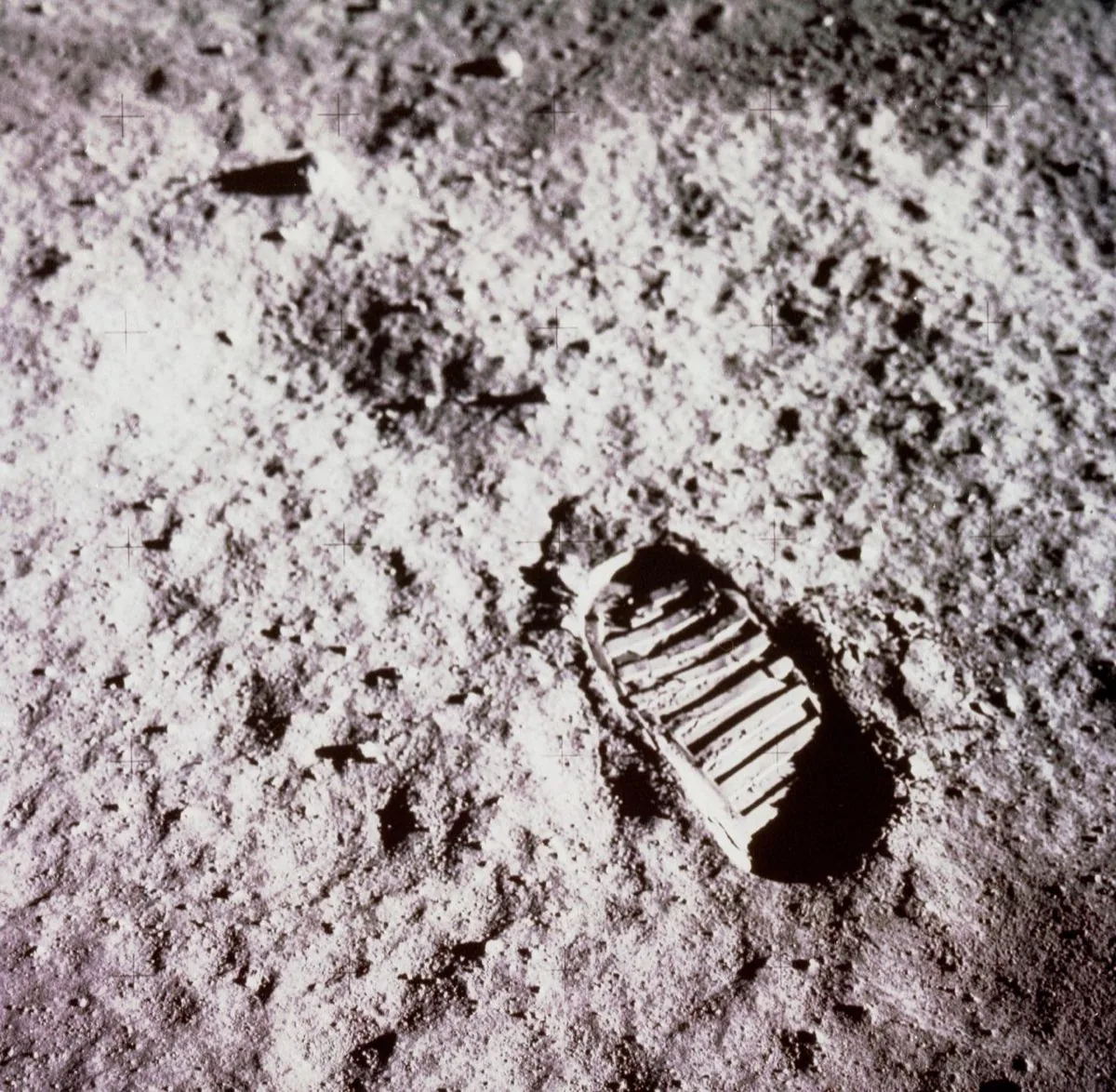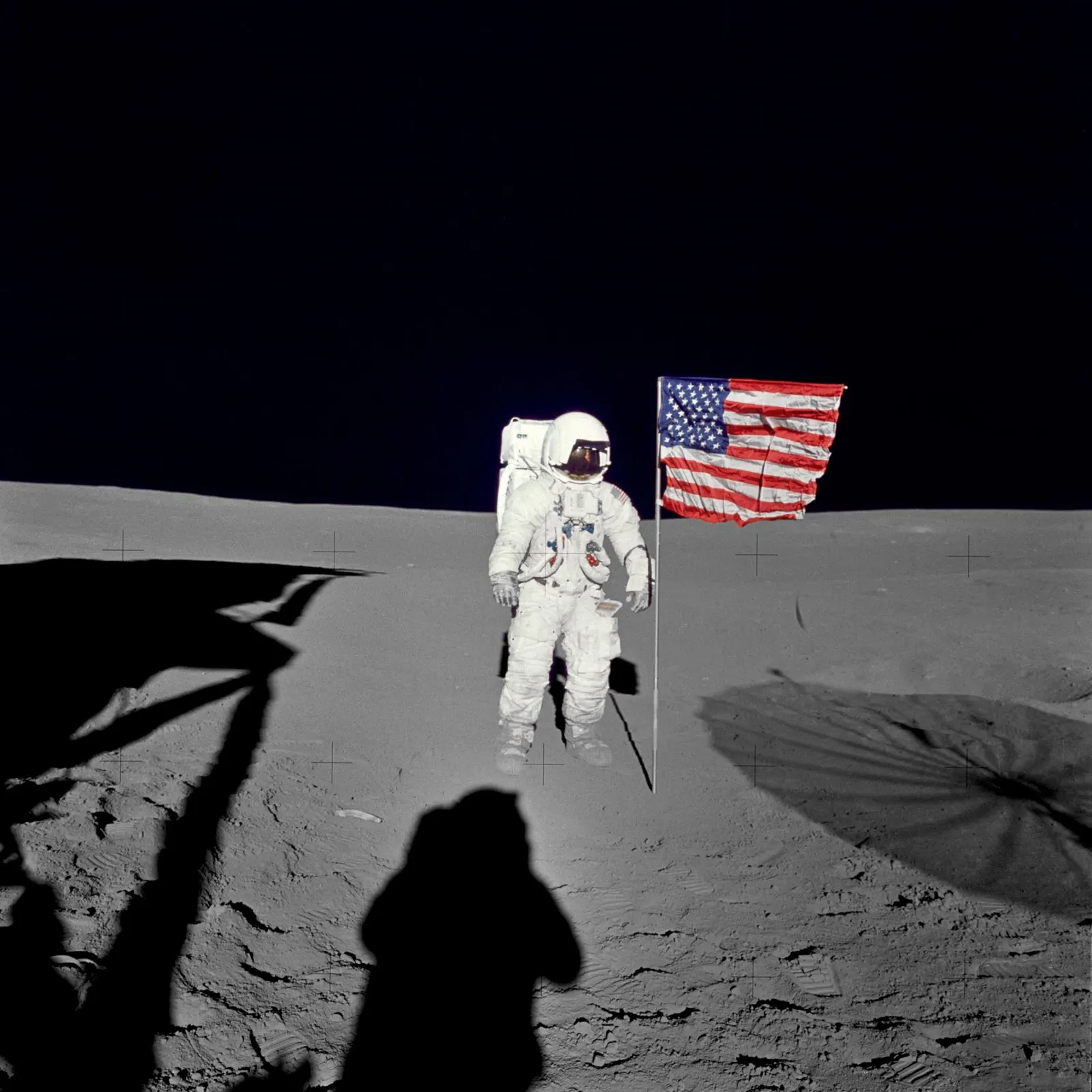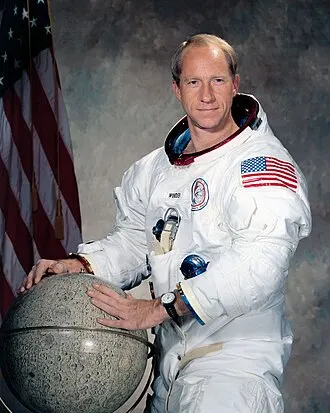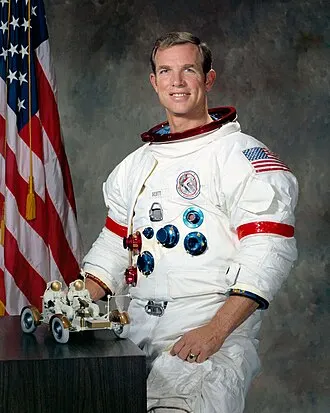
Image: NASA / Jim Irwin
Apollo 15
Mission Profile
| Launch date | 1971-07-26 |
|---|---|
| Launch site | Kennedy Space Center, Launch Complex 39A, Florida |
| Launch vehicle | Saturn V (SA-510) — first uprated "J-mission" configuration |
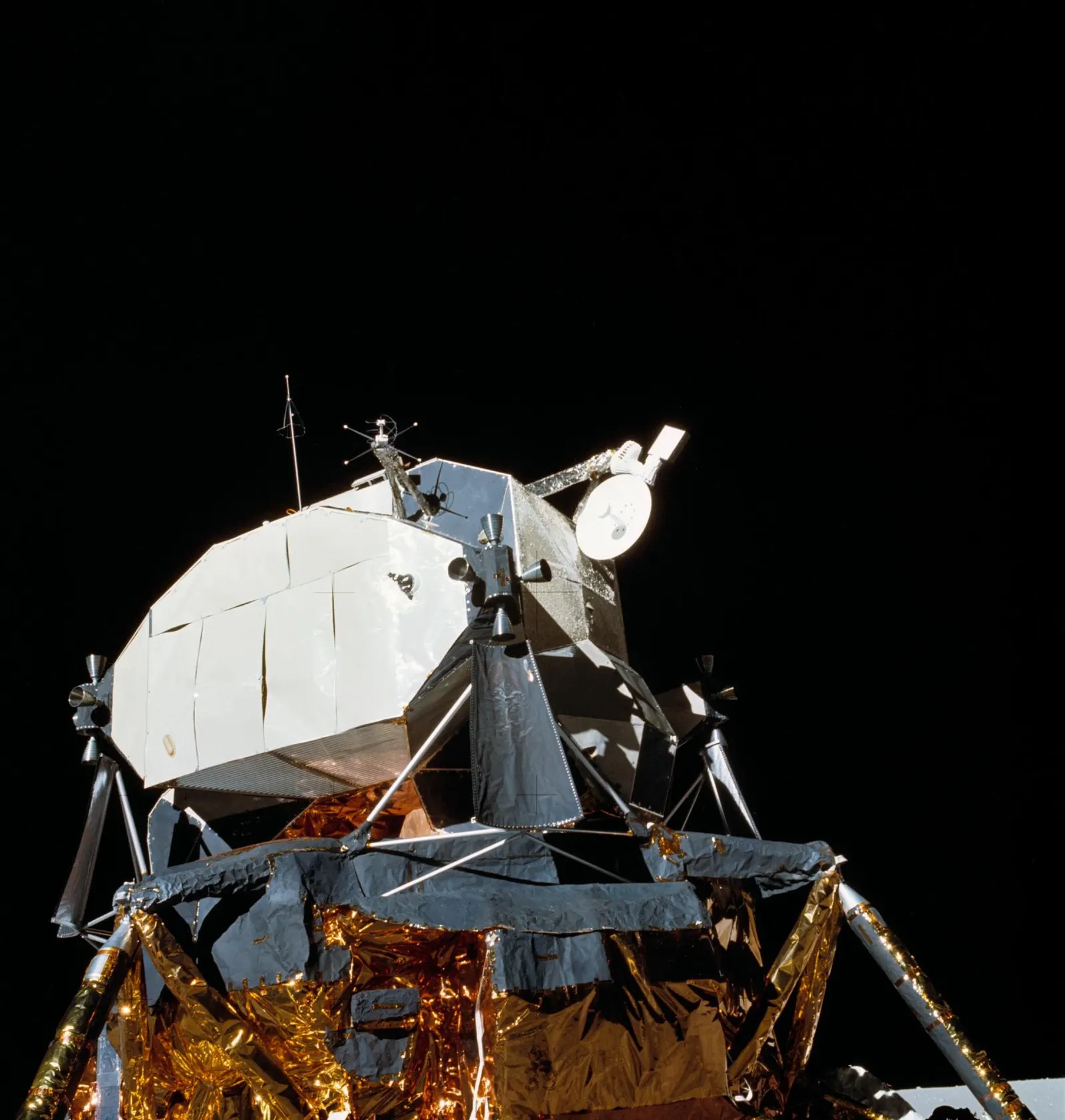
| Spacecraft | CSM-112 "Endeavour" + LM-10 "Falcon" |
| Target | Moon |
| Type | Crewed |
| End date | 1971-08-07 |
| Recovery | USS Okinawa, North Pacific Ocean |
| Landing site | 26.13224°N, 3.63400°E — Hadley-Apennine (Hadley Rille) |
| Surface stay | ~66 hours 55 minutes (3 LRV EVAs totalling ~18h 35m) |
| Cost | Apollo program-wide; mission-specific cost not separately published |
| Mass | ~46,700 kg (CSM + LM combined) |
| Duration | 12 days, 7 hours, 11 minutes, 53 seconds |
| Partners | North American Rockwell (CSM), Grumman (LM), Boeing (LRV) |
| Instruments | Lunar Roving Vehicle, SIM bay (panoramic + mapping cameras, laser altimeter, mass spectrometer), PFS-1 subsatellite |
Overview
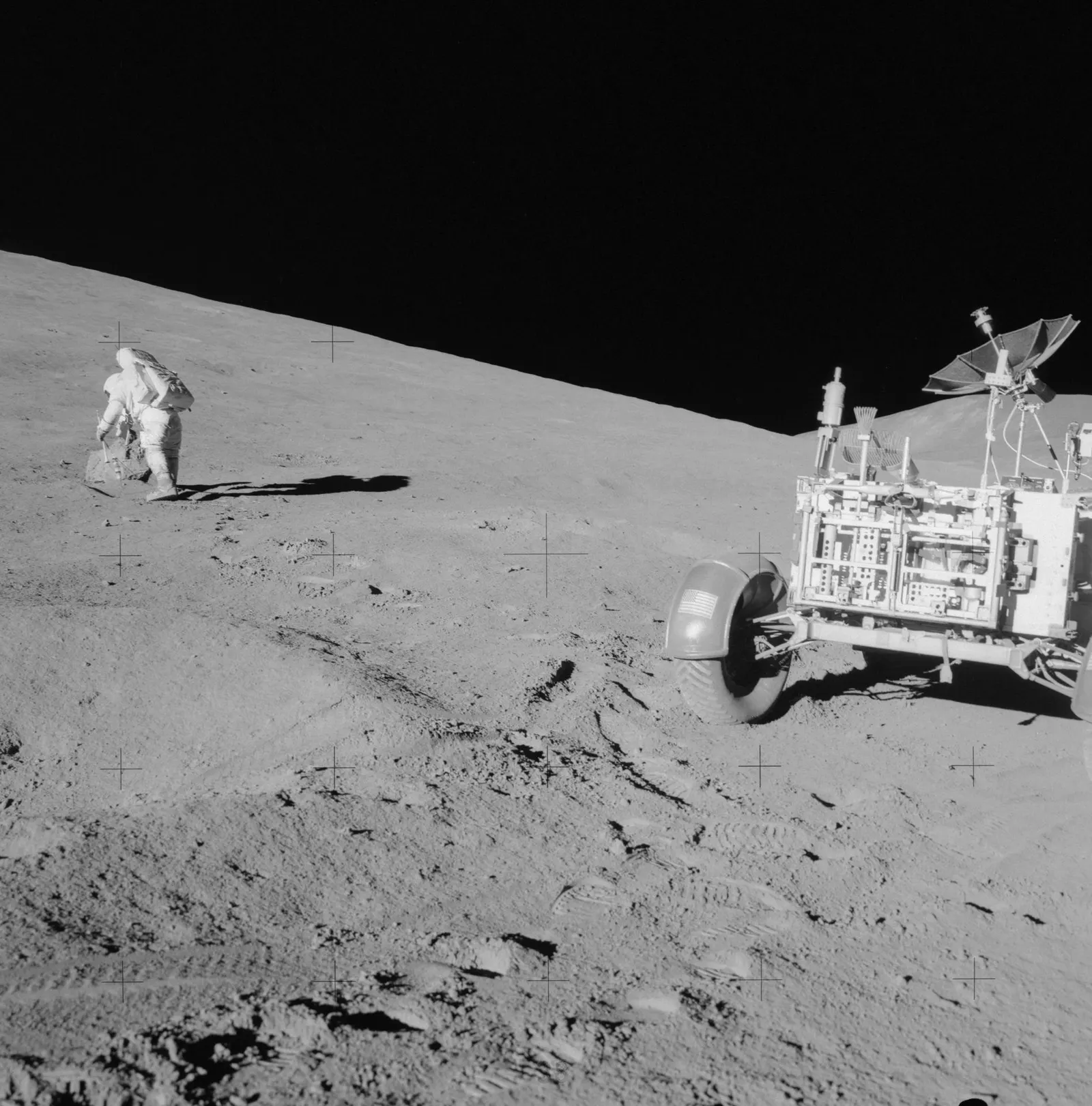
Apollo 15 was the first of the three Apollo "J-missions" — extended-duration, science-intensive expeditions enabled by upgraded Saturn V, Command/Service Module, and Lunar Module hardware. David Scott, Alfred Worden, and Jim Irwin landed at Hadley-Apennine on July 30, 1971 — the most geologically complex Apollo site, where a sinuous lunar rille met the Apennine mountain front. Scott and Irwin drove the first Lunar Roving Vehicle (LRV) 17.25 miles across three EVAs, collected the "Genesis Rock" anorthosite (~4.5 billion years old), and operated the longest surface EVA program to that date. In lunar orbit, Worden operated the Scientific Instrument Module bay and deployed the first lunar subsatellite (PFS-1). On Earth return, Worden performed the first transearth EVA — 38 minutes outside the spacecraft, ~196,000 miles from Earth. One of three main parachutes failed during descent; the crew splashed down safely on the remaining two.
Mission Objectives
First J-mission: extended surface stay with major science focus
achieved
Deploy and operate the Lunar Roving Vehicle (LRV) — first use
achieved
Investigate Hadley Rille and Apennine Front geology
achieved
Operate Scientific Instrument Module (SIM) bay in lunar orbit
achieved
Deploy subsatellite (PFS-1) in lunar orbit
achieved
Crew
David R. Scott
Commander
Veteran of Gemini 8 and Apollo 9; seventh person to walk on Moon.
Alfred M. Worden
Command Module Pilot
Operated SIM bay in lunar orbit; performed first transearth EVA. Died 2020.
James B. Irwin
Lunar Module Pilot
Eighth human on Moon. Founded High Flight Foundation. Died 1991.
Vehicle Specifications
Command/Service Module
"Endeavour"
- Mass
- ~30,300 kg
Scientific Instrument Module (SIM) bay added for orbital science.
Lunar Module
"Falcon"
- Mass
- ~16,400 kg
Extended landed mass for longer surface stay + LRV stowage.
Lunar Roving Vehicle (LRV)
- Mass
- ~210 kg dry
- Dimensions
- 3.1 m long × 2.3 m wide
First crewed wheeled vehicle on another world. Max speed ~14 km/h. Traversed 27.76 km total.
PFS-1 lunar subsatellite
- Mass
- ~36 kg
Deployed from CSM into lunar orbit for charged-particle measurements.
Key Milestones
1971-07-26
Launch from LC-39A at 13:34 UTC
1971-07-29
Lunar Orbit Insertion
1971-07-30
Lunar landing at 22:16 UTC, Hadley-Apennine
1971-07-31
LRV EVA-1: first lunar rover traverse
1971-08-01
LRV EVA-2: hammer-and-feather experiment (Galileo verification); Genesis Rock collected
1971-08-02
LRV EVA-3; deploy PFS-1 subsatellite from CSM
1971-08-02
Lunar ascent and rendezvous with Endeavour
1971-08-05
Worden transearth EVA — first deep-space EVA
1971-08-07
Splashdown in North Pacific (one of three main chutes failed); recovered by USS Okinawa
Key Achievements
First Lunar Roving Vehicle — drove 27.76 km (17.25 mi) total
Genesis Rock — anorthosite ~4.5 billion years old, sample of primordial lunar crust
First deep-space EVA (Worden, transearth coast, ~38 min)
First lunar subsatellite deployment (PFS-1)
Hammer-and-feather experiment on live TV confirming Galileo's prediction
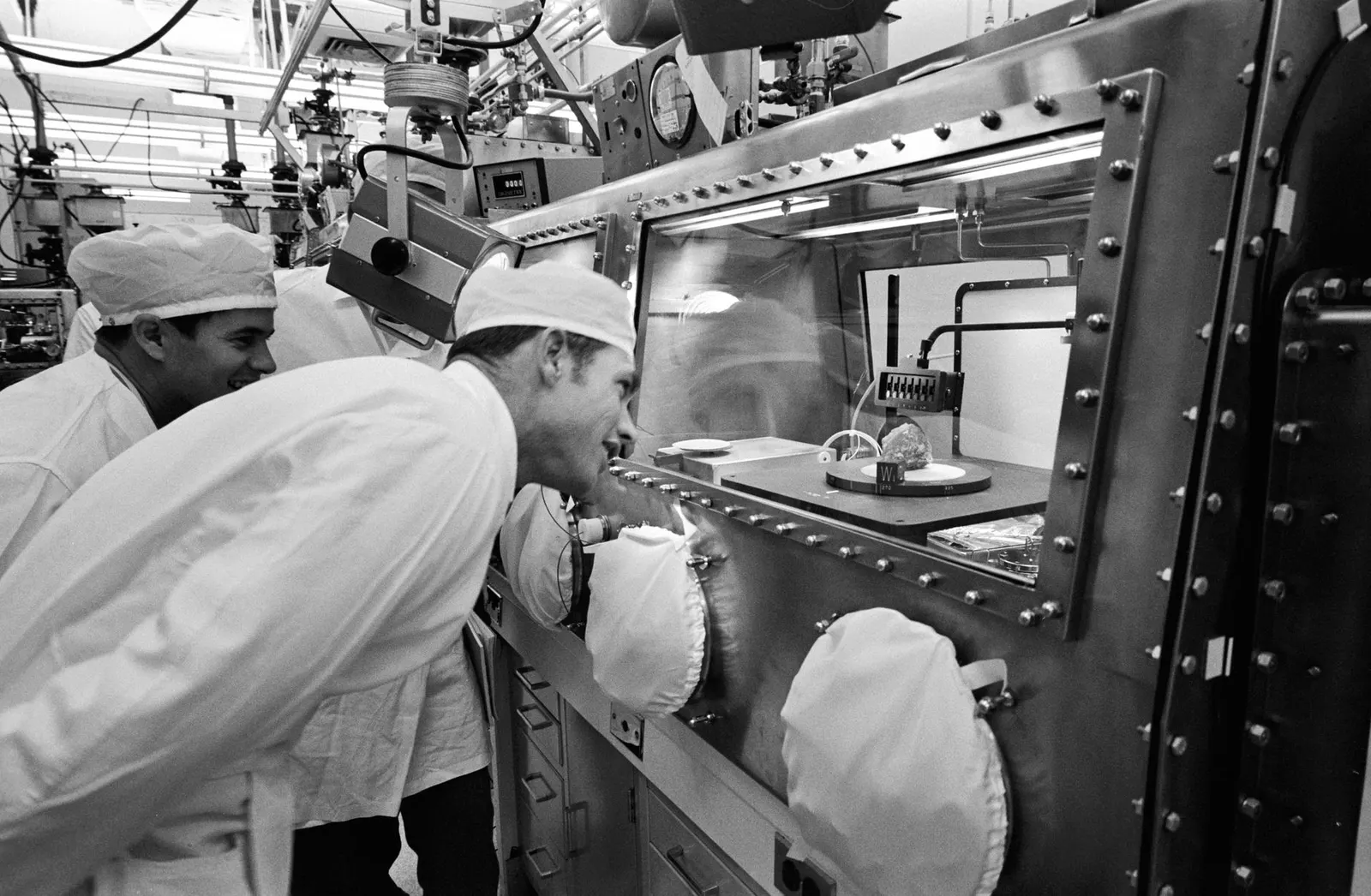
Returned 77 kg (170 lb) of lunar samples
Photo Gallery
Legacy & Significance
Apollo 15 transformed Apollo from "flags and footprints" into a serious geological field-science program. The combination of the Lunar Roving Vehicle, geologist-trained crews, and orbital remote sensing established the template for science-intensive crewed planetary exploration that NASA has aspired to ever since. The Genesis Rock — confirmed as ~4.5-billion-year-old primordial crust — directly informs models of how the Moon formed.