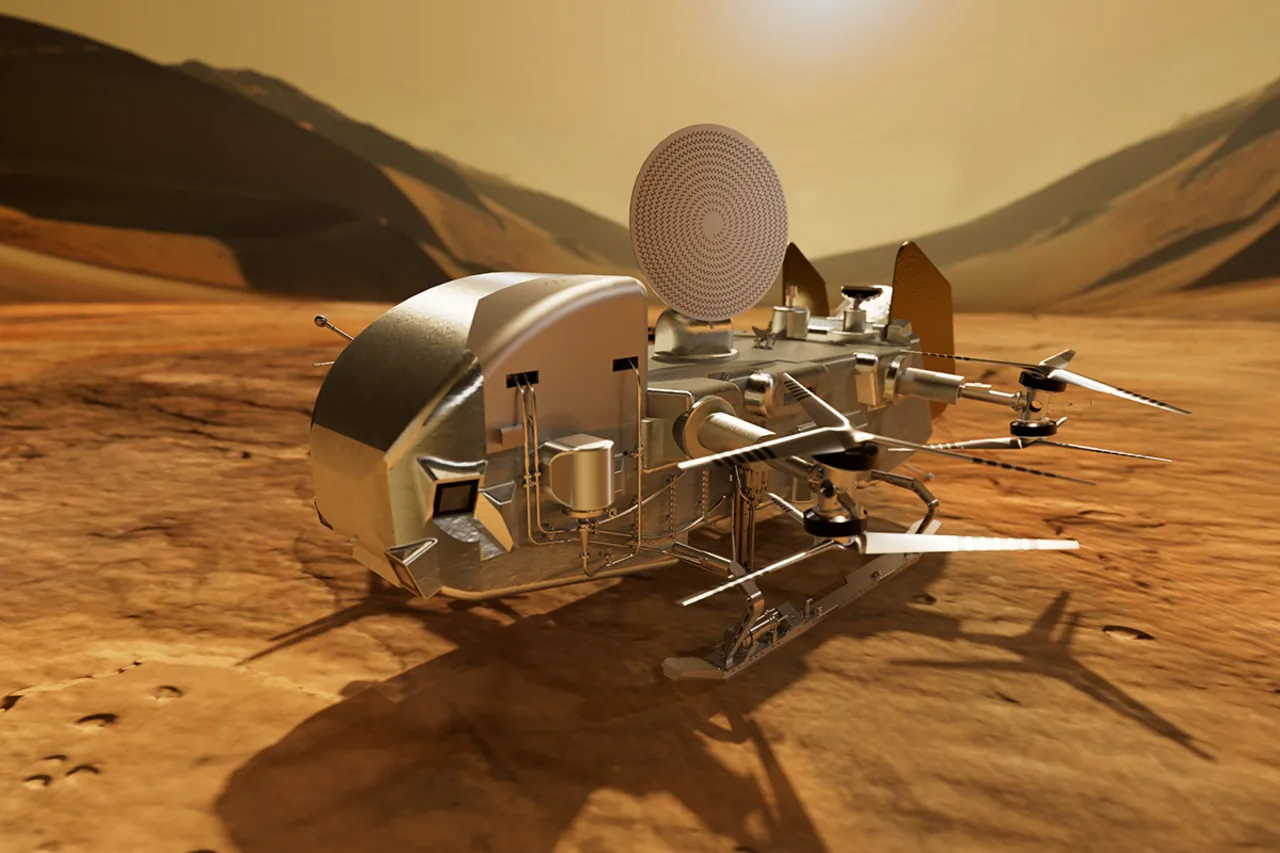
Image: NASA / Johns Hopkins APL
Dragonfly
Mission Profile
| Launch date | 2028-07-01 |
|---|---|
| Launch vehicle | Falcon Heavy |
| Spacecraft | Dragonfly rotorcraft (octocopter lander) |
| Target | Saturn |
| Type | Robotic |
| Cost | $3.35B life-cycle |
| Mass | ~875 kg dry; ~3,300 kg fueled with cruise stage |
| Duration | 6-year cruise + 3.3-year primary surface mission |
| Partners | Johns Hopkins APL (lead), NASA Goddard, Lockheed Martin |
| Instruments | DraMS (mass spectrometer), DraGNS (gamma/neutron spectrometer), DraGMet (geophysics/meteorology), DragonCam (cameras) |
Prime Contractors
Companies that built, launched, or operate this mission. Tickers link to their investor profile.
- Johns Hopkins APL
- Lockheed Martin
- Malin Space Science Systems
Overview
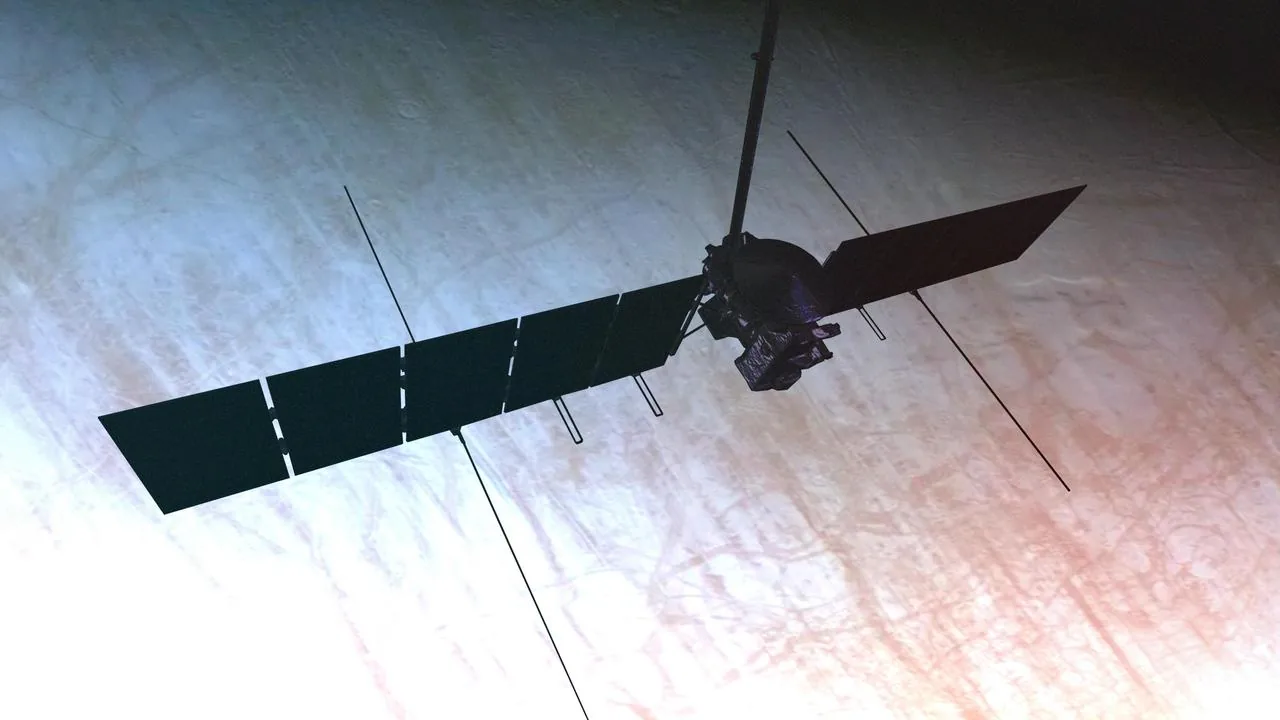
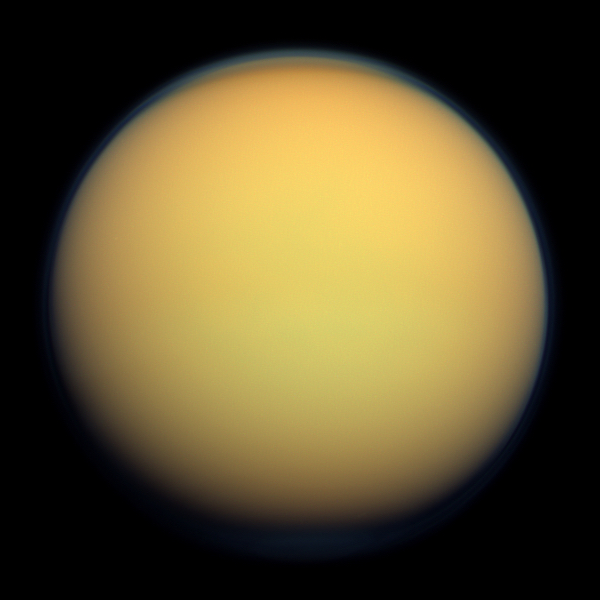
Dragonfly is the fourth mission in NASA's New Frontiers program, an ambitious nuclear-powered rotorcraft that will fly through the dense, cold atmosphere of Saturn's moon Titan. Built and operated by the Johns Hopkins Applied Physics Laboratory, Dragonfly is shaped like an oversize drone with eight coaxial rotor pairs and is designed to take advantage of Titan's unique flight conditions: an atmosphere four times denser than Earth's combined with gravity only one-seventh as strong. Those numbers make Titan one of the easiest places in the Solar System to fly. After arrival in 2034, Dragonfly will land in the Selk impact crater region — a site where liquid water once mixed with Titan's complex hydrocarbons, potentially driving prebiotic chemistry. Over a planned 3.3-year primary mission Dragonfly will hop from site to site, recharging its batteries from a Multi-Mission Radioisotope Thermoelectric Generator (MMRTG) between flights and traveling tens of kilometers. Its science payload includes a mass spectrometer (DraMS), gamma-ray and neutron spectrometer (DraGNS), geophysics and meteorology suite (DraGMet), camera suite (DragonCam), and seismometer. Dragonfly will be the first powered, sustained-flight aircraft on another world (Mars Ingenuity flew, but on a far smaller scale and only for about three years).
Key Milestones
2019-06-27
NASA selects Dragonfly as fourth New Frontiers mission
2020-09-30
Mission Concept Review
2023-11-28
Confirmation Review (KDP-C) and final design approval
2024-04-09
NASA confirms launch slip to July 2028
2034-08-01
Targeted Titan arrival and landing in Selk crater