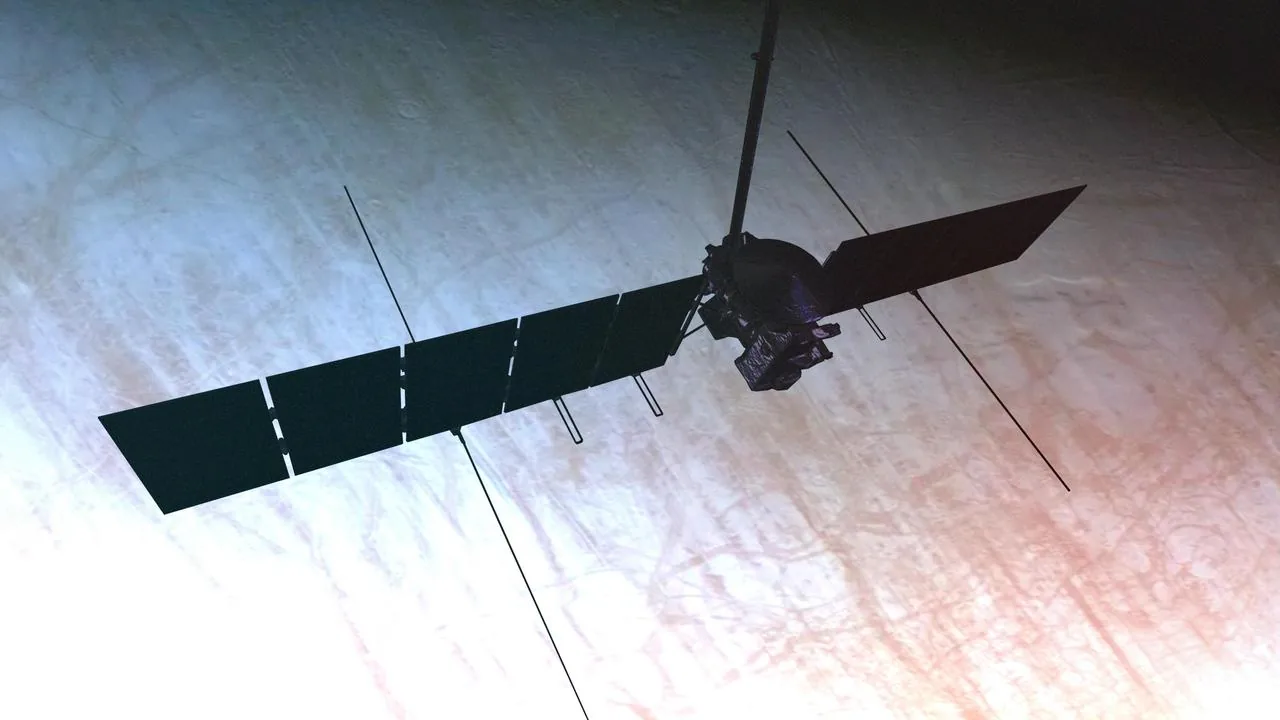
Image: NASA / JPL-Caltech
Europa Clipper
Mission Profile
| Launch date | 2024-10-14 |
|---|---|
| Launch vehicle | Falcon Heavy (expendable) |
| Spacecraft | Europa Clipper orbiter |
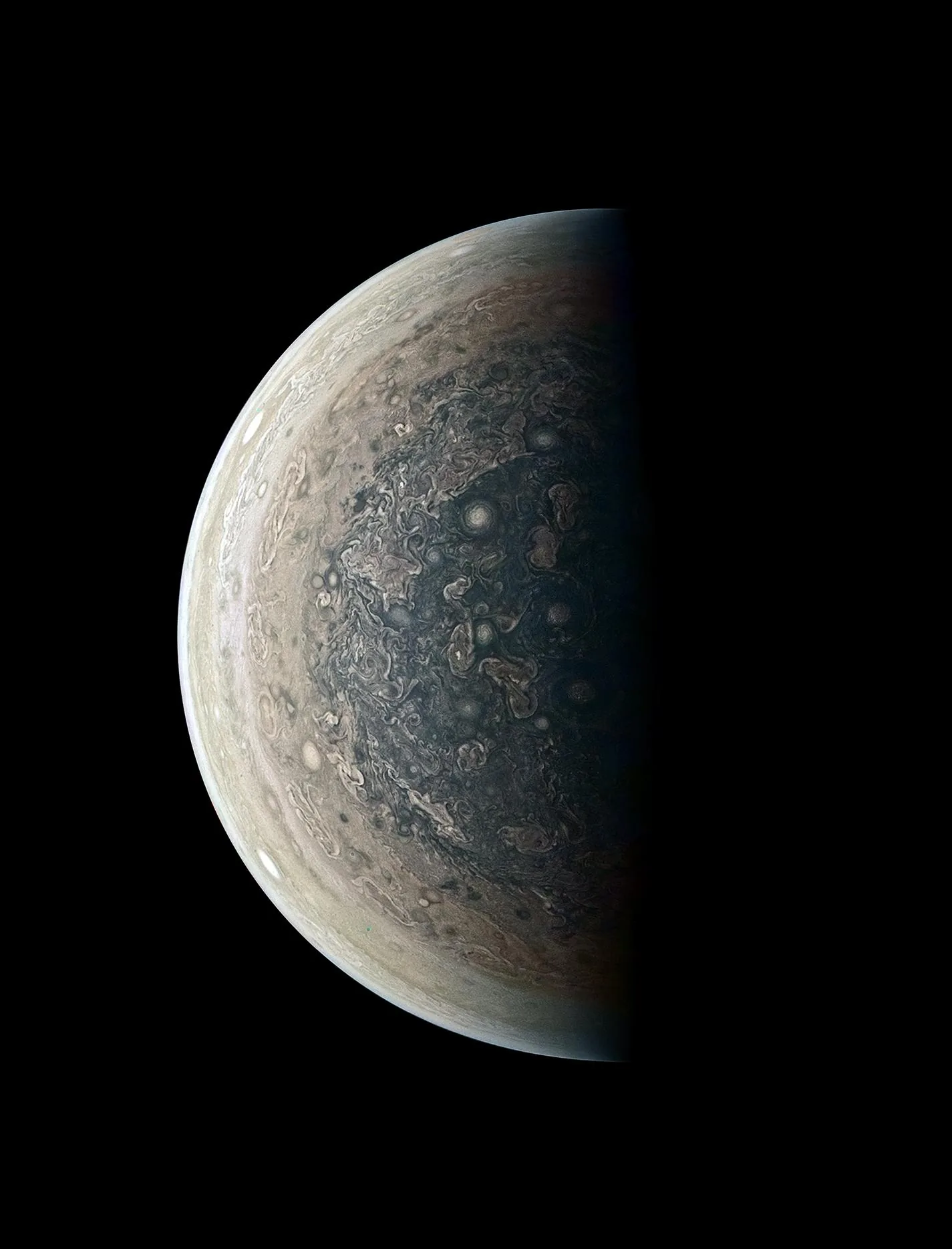
| Target | Jupiter |
| Type | Robotic |
| Cost | $5.2B life-cycle |
| Mass | 6,065 kg fueled at launch |
| Duration | 5.5-year cruise + 4-year primary science mission |
| Partners | NASA JPL (lead), APL, SwRI, Goddard Space Flight Center |
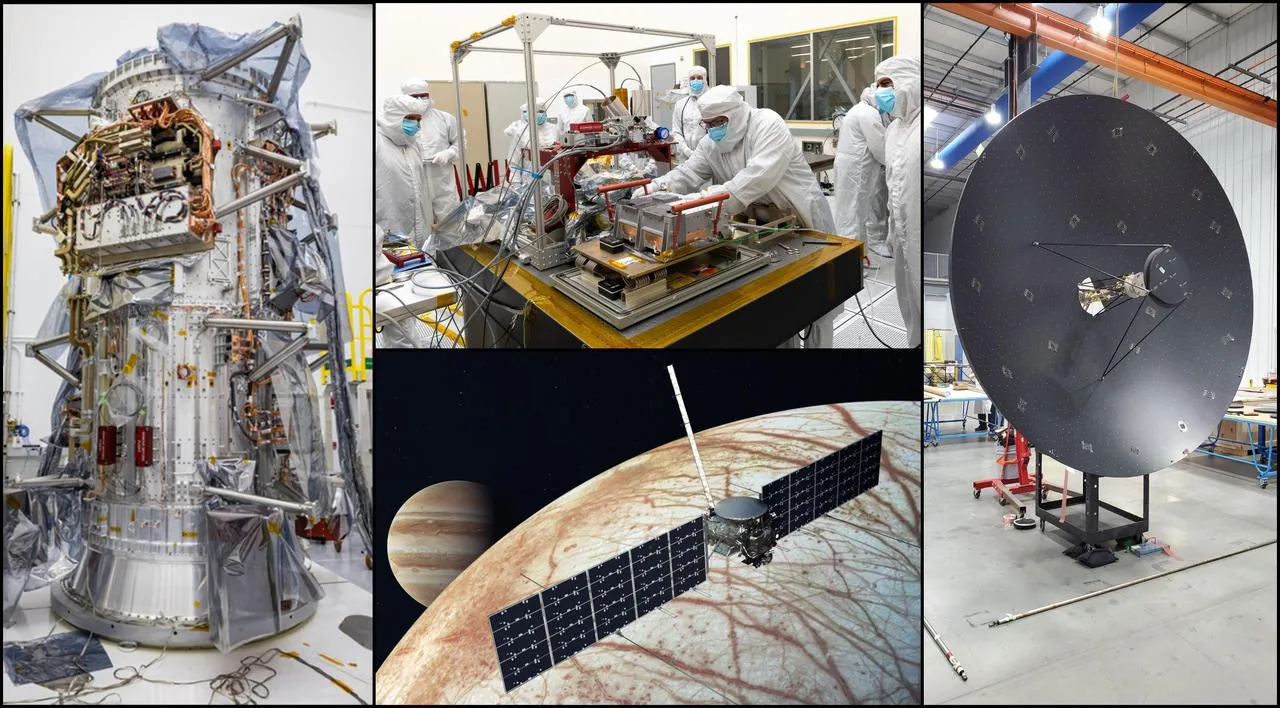
| Instruments | REASON (ice-penetrating radar), EIS (Imaging System), E-THEMIS (thermal imager), ECM (magnetometer), MASPEX (mass spectrometer), SUDA (dust analyzer), MISE (near-IR spectrometer), Europa-UVS |
Prime Contractors
Companies that built, launched, or operate this mission. Tickers link to their investor profile.
- NASA JPL
- Johns Hopkins APL
- SpaceX
Overview
Europa Clipper is NASA's flagship-class mission to investigate whether Jupiter's icy moon Europa could harbor conditions suitable for life. Launched on a Falcon Heavy from Kennedy Space Center on 14 October 2024, the spacecraft is on a Mars-Earth gravity-assist trajectory to Jupiter, with Jupiter Orbit Insertion targeted for April 2030. After arrival, Clipper will execute roughly 49 close flybys of Europa over a four-year primary mission, dipping as low as 25 km above the moon's surface to map its ice shell, characterize the subsurface ocean believed to lie beneath, and search for active plumes. The 6-tonne spacecraft is the largest planetary probe NASA has ever flown, dominated by enormous solar arrays roughly 30 m tip-to-tip — necessary because Jupiter receives only 1/25 the sunlight Earth does. Its instrument suite includes ice-penetrating radar (REASON), high-resolution cameras (EIS), thermal imaging (E-THEMIS), magnetometer (ECM), mass spectrometer (MASPEX), and dust analyzer (SUDA). Europa Clipper is intentionally not a life-detection mission, but rather a habitability assessment — it is designed to determine whether Europa has the three ingredients believed necessary for life: water, energy, and chemistry. Project cost is approximately $5.2B life-cycle.
Key Milestones
2015-05-26
NASA confirms Europa Clipper as a flagship mission
2019-08-19
Clipper passes Key Decision Point-C (final design)
2024-10-14
Launch on Falcon Heavy from KSC LC-39A
2025-03-01
Mars gravity-assist flyby
2026-12-03
Earth gravity-assist flyby (planned)
2030-04-11
Jupiter Orbit Insertion (planned)