I have been following astrobiology for over a decade, and I can say without hesitation that the period from 2023 to 2025 has been the most consequential stretch in the field's history. Not because we have found extraterrestrial life -- we have not, not yet -- but because the tools, the missions, and the discoveries are converging in a way that makes the search more focused, more sophisticated, and more tantalizingly close to an answer than ever before.
Astrobiology sits at the intersection of astronomy, biology, chemistry, geology, and planetary science. Its central question is deceptively simple: does life exist beyond Earth? Answering it requires understanding what life needs, where those conditions might exist, and how we can detect biological signatures across vast distances. In the past two years, every one of those pillars has seen remarkable progress.
What Life Needs -- and Where to Look
The classical requirements for life as we know it are a stable environment, liquid water, organic molecules, and an energy source. Earth satisfies all of these, obviously. But the more we study extremophiles -- organisms thriving in boiling hot springs, crushing ocean depths, acidic mine drainage, and even inside solid rock kilometers below the surface -- the more we appreciate that life is tenacious beyond our earlier assumptions. If biology can flourish in Earth's most hostile environments, the range of potentially habitable worlds in the cosmos expands dramatically.
The traditional "habitable zone" concept -- the orbital region where a planet receives enough stellar energy for liquid water on its surface -- remains useful, but modern astrobiology has moved well beyond it. Some of the most promising targets for finding life are not in any star's habitable zone at all. They are moons, far from the Sun, kept warm by tidal heating rather than starlight.
Enceladus: Phosphorus Changes Everything
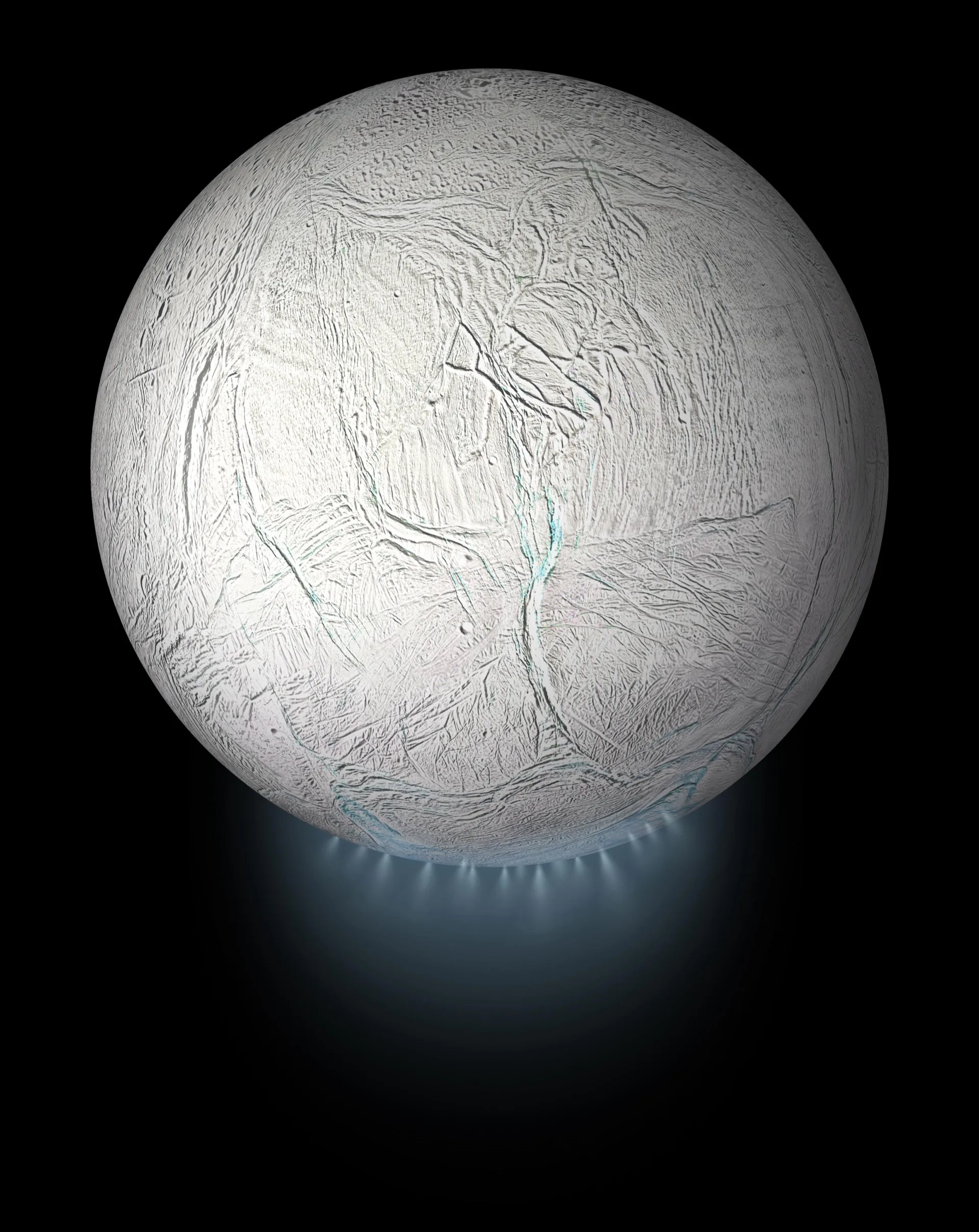
In 2023, a team led by Frank Postberg published a finding from Cassini data that sent shockwaves through the astrobiology community. Analyzing data from Cassini's Cosmic Dust Analyzer, collected during flybys of Saturn's moon Enceladus, the researchers detected sodium phosphates in ice grains ejected from the moon's subsurface ocean through its famous south polar geysers.
Why does this matter so much? Phosphorus is a critical element for life as we know it. It is a key component of DNA, RNA, ATP (the energy currency of cells), and cell membranes. Before this discovery, we knew that Enceladus's ocean contained water, organic molecules, salts, and silica -- suggestive of hydrothermal activity on the ocean floor. But phosphorus had been the missing piece. Its detection means that Enceladus's subsurface ocean now contains all six of the essential elements for life (carbon, hydrogen, nitrogen, oxygen, sulfur, and phosphorus) dissolved in liquid water, with hydrothermal energy sources at the bottom.
No other world beyond Earth has checked every single box on the "ingredients for life" list as clearly as Enceladus now does. That does not mean life is there -- the ingredients for a cake are not a cake -- but it means the conditions are remarkably favorable. Future missions to Enceladus, potentially flying through those geyser plumes and directly sampling the ocean material, could conceivably detect biosignatures without ever having to land or drill.
Europa Clipper: The Mission We Have Been Waiting For
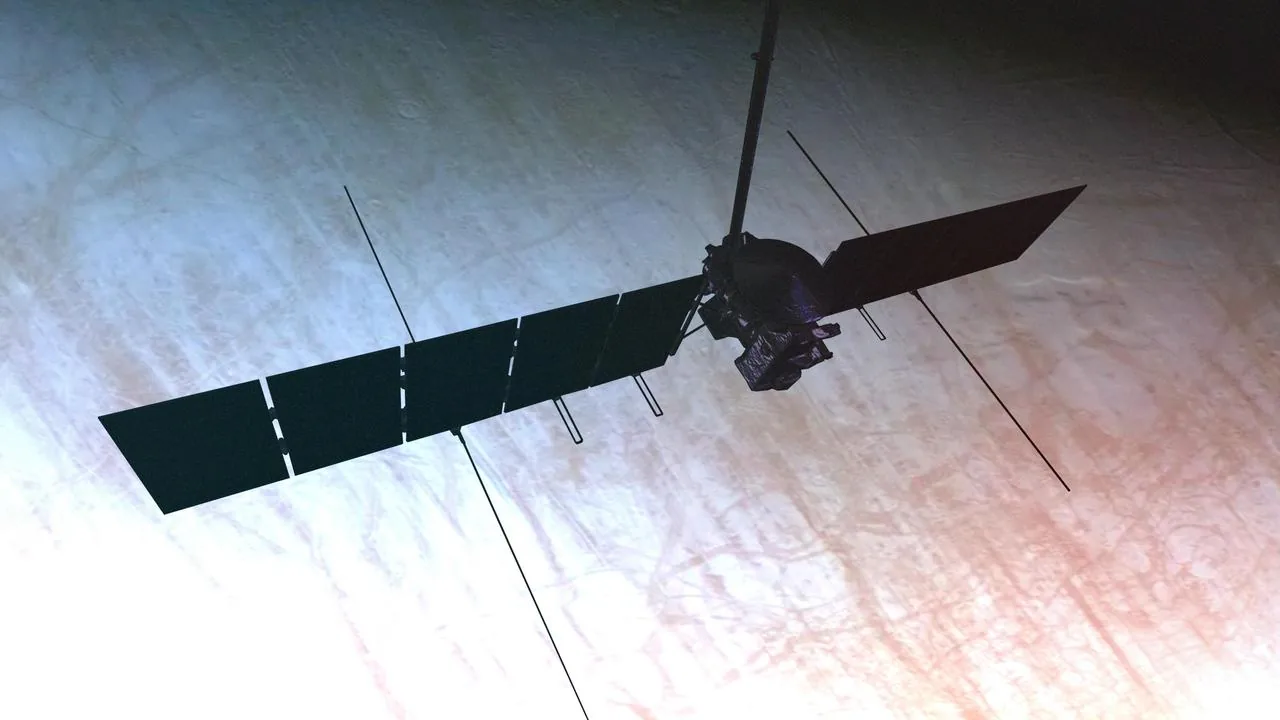
On October 14, 2024, NASA launched the Europa Clipper spacecraft aboard a SpaceX Falcon Heavy rocket, beginning a journey to Jupiter's moon Europa that represents one of the most ambitious astrobiology missions ever undertaken. Europa Clipper is expected to arrive at Jupiter in 2030, where it will conduct nearly 50 close flybys of Europa, swooping to within 25 kilometers of the moon's icy surface.
Europa has long been considered one of the solar system's most promising candidates for harboring life. Beneath its cracked, icy shell lies a global ocean containing roughly twice the water of all Earth's oceans combined. Tidal interactions with Jupiter generate internal heat that may drive hydrothermal systems on Europa's ocean floor -- environments analogous to the deep-sea vents on Earth where life thrives in total darkness.
Europa Clipper carries a sophisticated instrument suite designed to assess the moon's habitability. Its ice-penetrating radar (REASON) will map the ice shell's structure and thickness. A mass spectrometer (MASPEX) and a dust analyzer (SUDA) will sample material in Europa's tenuous atmosphere and any plumes of ocean material that may be venting into space. A thermal emission imaging system will identify warm spots on the surface that could indicate recent geological activity.
This mission will not directly detect life -- it was not designed to. But it will determine whether Europa's ocean has the chemical energy, organic chemistry, and environmental conditions necessary to support it. If the answer is yes, it will make the case for a future lander mission overwhelmingly compelling.
Mars: Perseverance and the Long Road to Sample Return
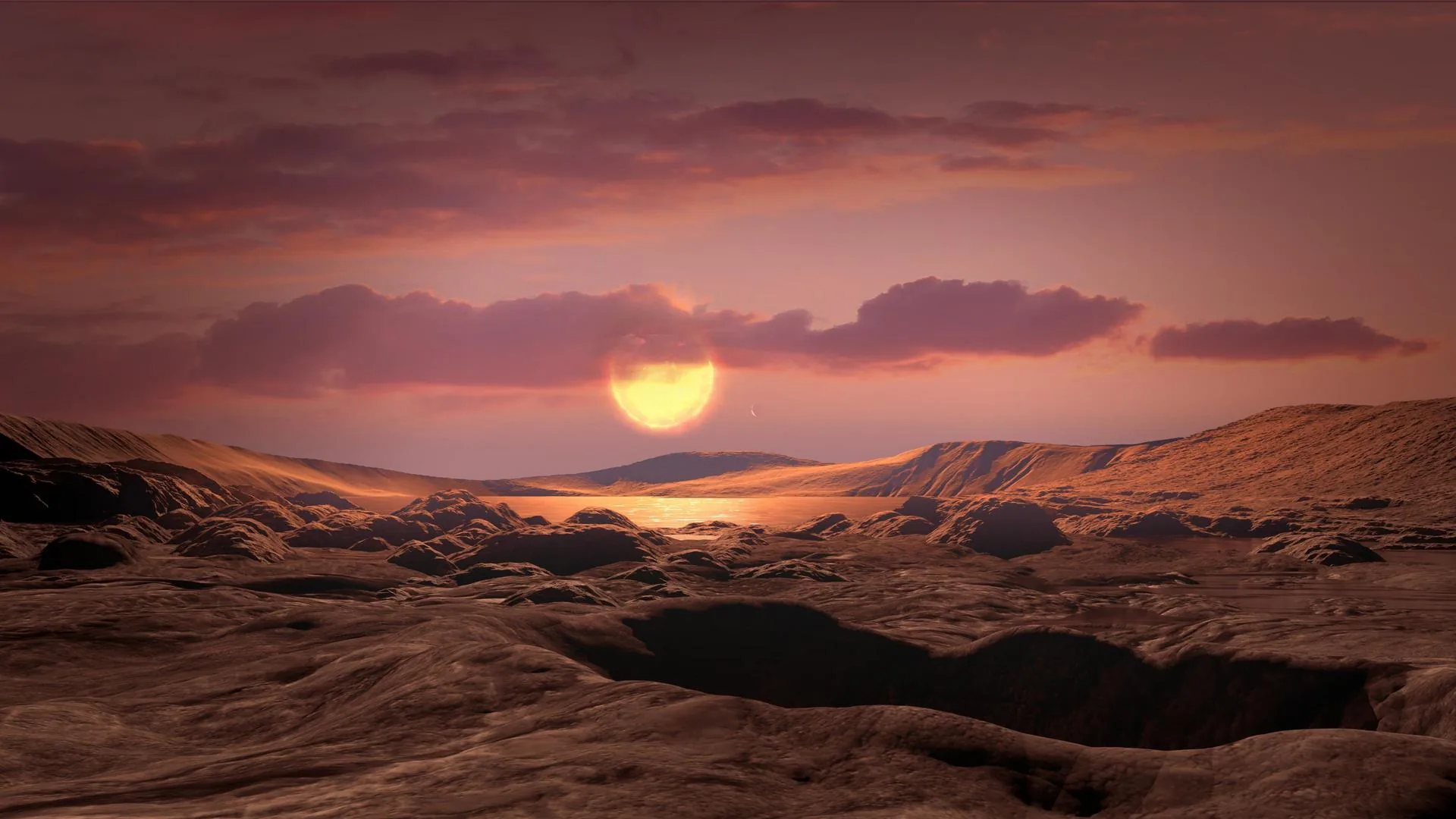
On Mars, NASA's Perseverance rover has been methodically exploring Jezero Crater since its February 2021 landing, and its work has been extraordinary. Jezero was chosen because orbital observations indicated it was once home to a lake fed by a river delta -- exactly the kind of environment where microbial life could have flourished billions of years ago when Mars was warmer and wetter.
Perseverance has confirmed that Jezero's geology matches expectations. The rover has identified igneous rocks, sedimentary layers consistent with lake deposits, and mineral signatures associated with past water activity. Most critically, Perseverance has been collecting and caching rock and soil samples in sealed titanium tubes, depositing them at designated locations on the Martian surface for future retrieval.
These cached samples are the key to Mars Sample Return (MSR), one of the most technically challenging missions ever conceived. The plan involves sending a lander to Mars to collect the tubes, launching them into Mars orbit via a small rocket (the Mars Ascent Vehicle), and then retrieving them with an orbiting spacecraft for transport back to Earth. The samples would be studied in terrestrial laboratories with instruments far more sensitive and versatile than anything a rover could carry.
The MSR program has faced budget pressures and timeline revisions, with NASA exploring revised architectures to reduce costs and complexity. As of early 2025, the agency is evaluating proposals that could return samples by the early 2030s. The scientific stakes are immense: these would be the first samples returned from another planet, and if any of them contain biosignatures -- molecular fossils, isotopic patterns, or microfossil structures -- the implications would be world-changing.
JWST: Searching for Biosignatures from Afar
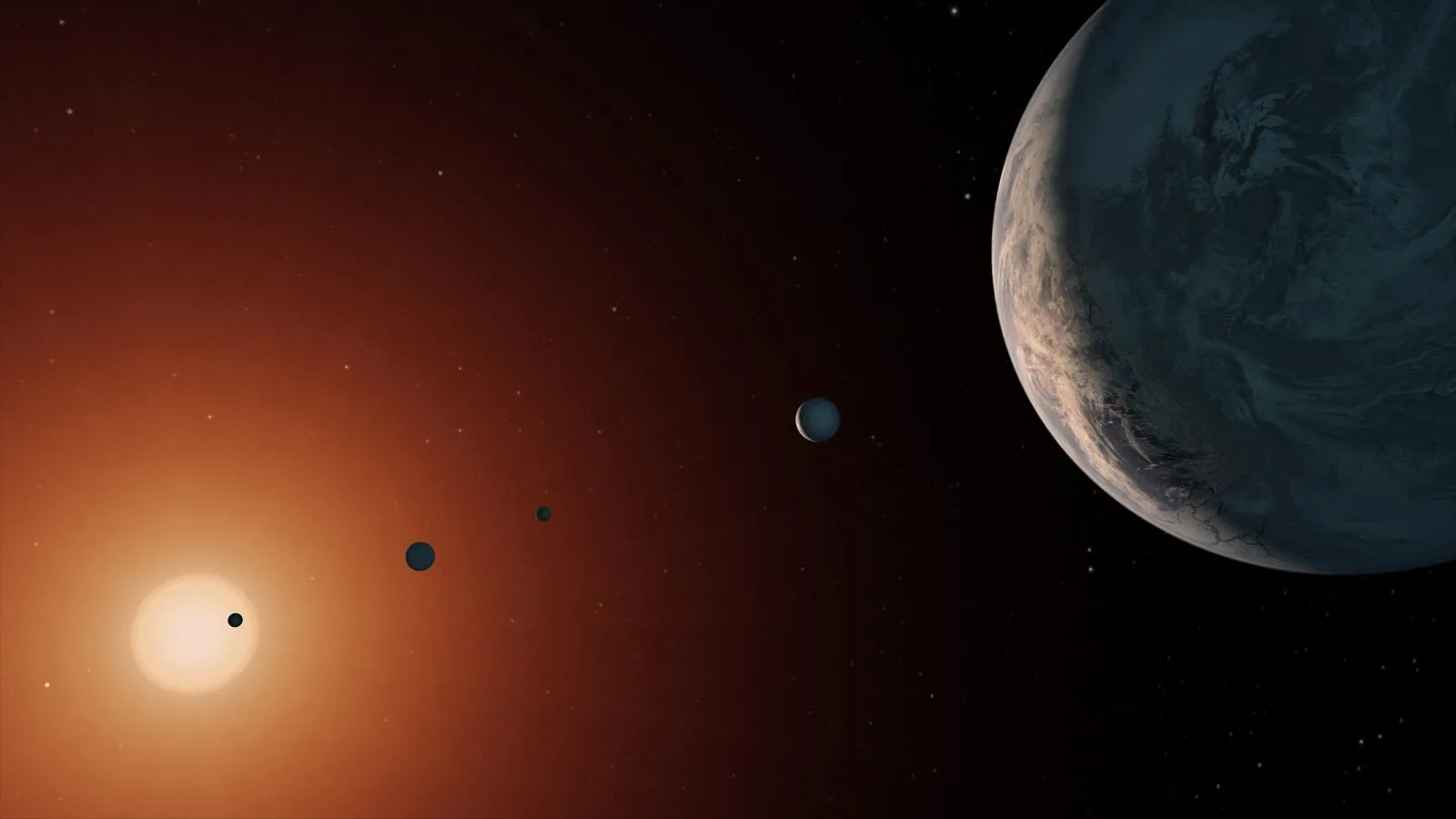
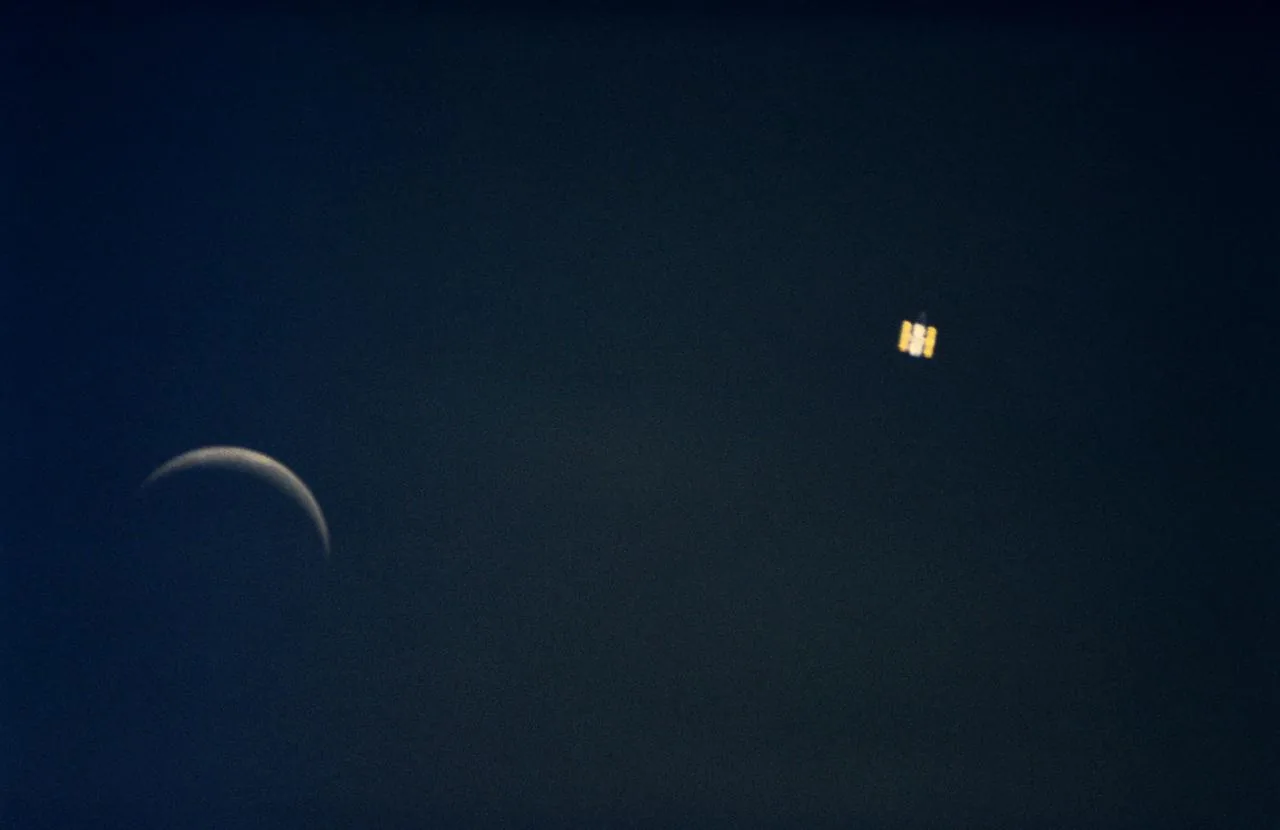
While missions to icy moons and Mars pursue life in our own solar system, the James Webb Space Telescope is hunting for biosignatures on worlds orbiting other stars. JWST's ability to perform transmission spectroscopy on exoplanet atmospheres -- analyzing starlight filtered through a planet's atmosphere during transit -- has opened a new chapter in remote biosignature detection.
The most headline-grabbing result came from observations of K2-18b, a sub-Neptune exoplanet roughly 120 light-years away orbiting in its star's habitable zone. In 2023, JWST detected carbon dioxide and methane in the planet's atmosphere, along with a tentative signal of dimethyl sulfide (DMS). On Earth, DMS is produced predominantly by marine phytoplankton, making it a potential biosignature gas. The detection remains preliminary and requires further confirmation, but it demonstrates that JWST has the sensitivity to search for biologically relevant molecules on worlds beyond our solar system.
JWST has also been characterizing the atmospheres of TRAPPIST-1 system planets, rocky worlds orbiting LHS 1140, and numerous other targets. Each observation refines our understanding of which atmospheric compositions are consistent with biological activity and which can be explained by purely geological or chemical processes -- a distinction that is essential for any credible biosignature claim.
Dragonfly: A Rotorcraft on Titan
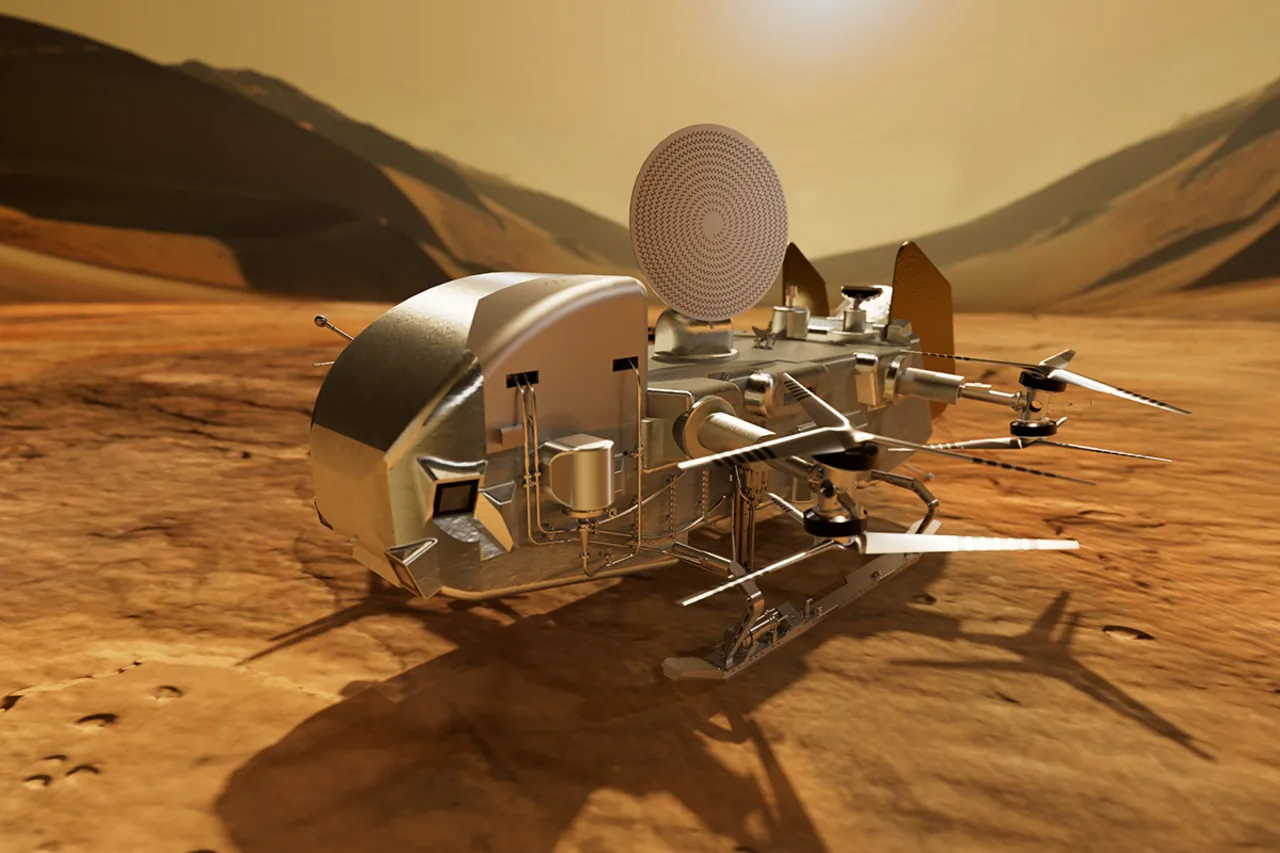
NASA's Dragonfly mission, targeting Saturn's largest moon Titan, represents one of the most creative and daring exploration concepts in the agency's history. Dragonfly is a nuclear-powered rotorcraft -- essentially a drone -- that will fly from site to site on Titan's surface, covering distances that would take a traditional rover months in a single flight.
Titan is a world of extraordinary chemical complexity. It has a thick nitrogen atmosphere with methane rain, lakes, and rivers of liquid hydrocarbons, and a surface covered in organic compounds. Beneath its icy crust, Titan also harbors a subsurface water ocean. Dragonfly will investigate Titan's prebiotic chemistry, studying how far organic chemistry can progress in an environment rich in the building blocks of life.
The Dragonfly mission was confirmed for development with a launch currently planned for mid-2028, with arrival at Titan expected in the mid-2030s. Its scientific return promises to be extraordinary, offering insights into chemistry that may mirror the prebiotic conditions that existed on early Earth.
The Significance of the Search
Every mission described here, every observation, every data point is part of a single grand endeavor: understanding whether biology is a cosmic phenomenon or a singular accident confined to one small planet. The convergence of Enceladus's complete ingredient list, Europa Clipper's imminent investigation, Perseverance's cached samples, JWST's atmospheric spectroscopy, and Dragonfly's chemical exploration means that we are pursuing this question on multiple fronts simultaneously, with the most capable instruments ever built.
We may not have an answer tomorrow, or next year. But the machinery of discovery is in motion, and the pace is accelerating. The question of whether we are alone in the universe has never been more scientifically tractable than it is right now. And personally, I find that thrilling beyond words.