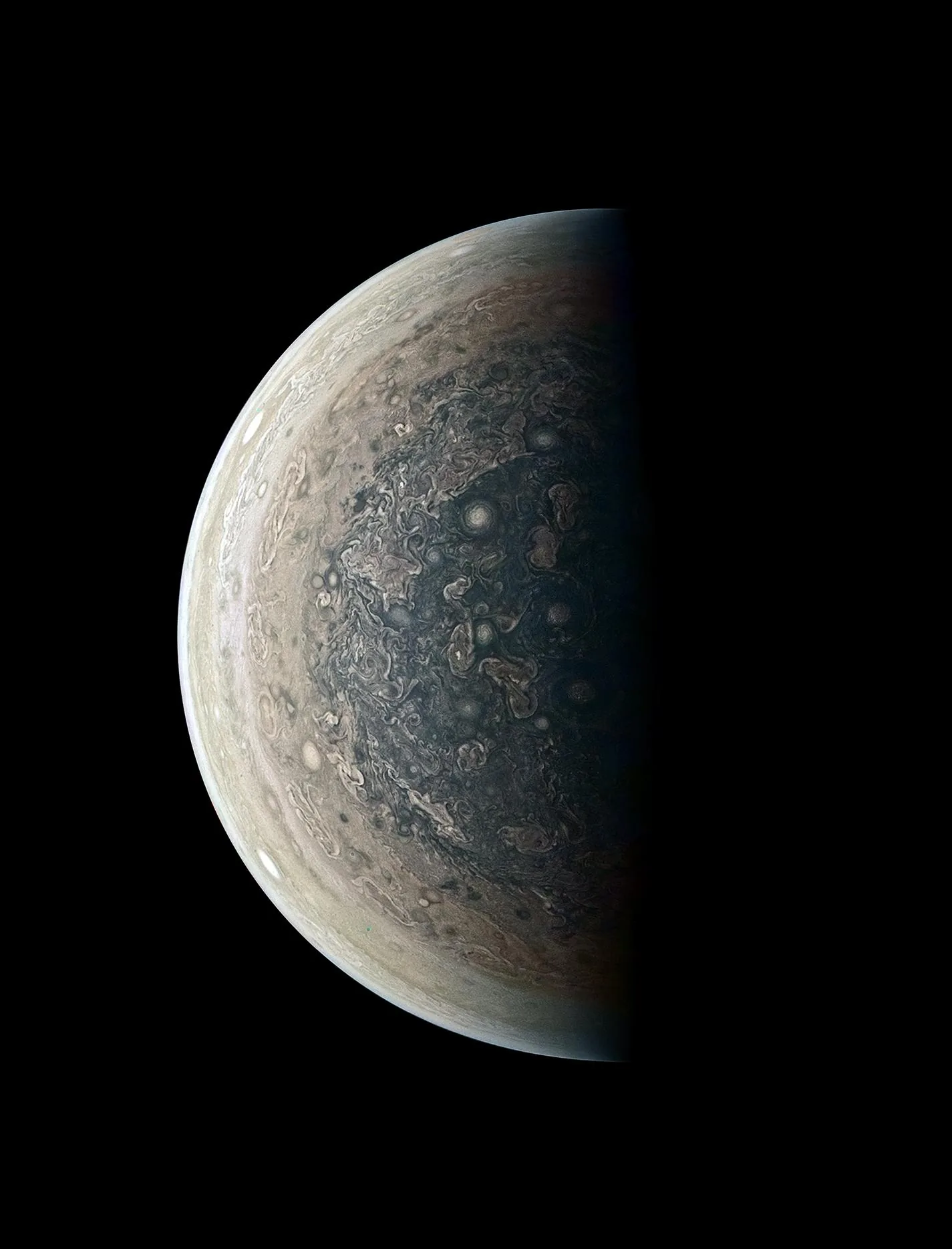
Image: NASA / JPL-Caltech / SwRI / MSSS
Juno
Mission Profile
| Launch date | 2011-08-05 |
|---|---|
| Launch vehicle | Atlas V 551 |
| Spacecraft | Juno orbiter |
| Target | Jupiter |
| Type | Robotic |
| Cost | $1.13B life-cycle |
| Mass | 3,625 kg at launch |
| Duration | 5-year cruise + primary mission 2016-2021; extended missions through September 2028 |
| Partners | Southwest Research Institute (PI), NASA JPL, Lockheed Martin (spacecraft) |
| Instruments | MWR (microwave radiometer), JIRAM (IR imager/spectrometer), MAG (magnetometer), Gravity Science, JADE, JEDI, UVS, Waves, JunoCam |
Overview
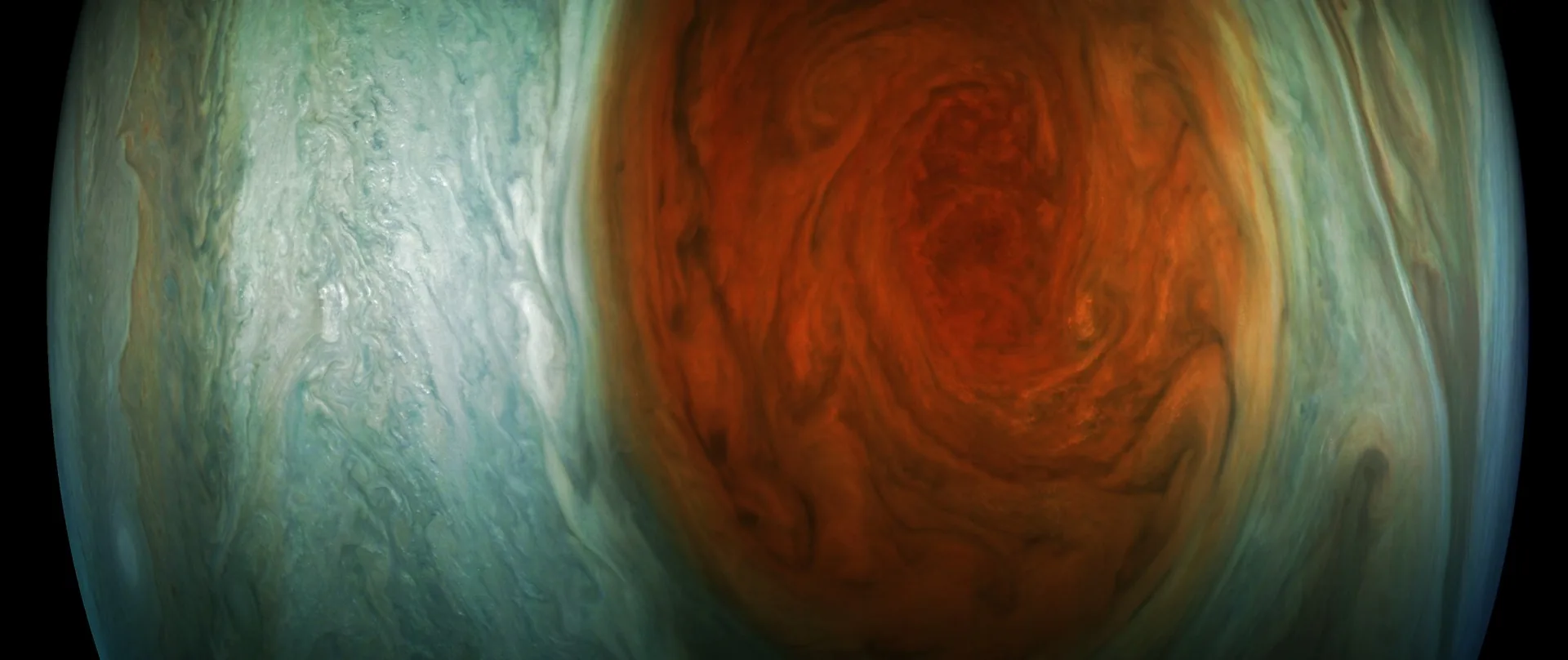
Juno is NASA's New Frontiers mission to Jupiter and the first solar-powered spacecraft ever flown to the outer Solar System. Launched in August 2011 and arriving with a dramatic Jupiter Orbit Insertion on 4 July 2016, Juno flies long, looping polar orbits that thread the narrow gap between Jupiter and its punishing radiation belts — mapping the planet's gravity and magnetic fields, probing the depth of its storms with a microwave radiometer, and returning citizen-processed JunoCam imagery. Its first extended mission turned Juno into a full Jovian-system explorer, with close flybys of Ganymede, Europa, and volcanic Io, including a 1,500-km Io pass on 30 December 2023 — the closest in over two decades. A second extended mission began on 1 October 2025 and runs through September 2028.
Key Milestones
2011-08-05
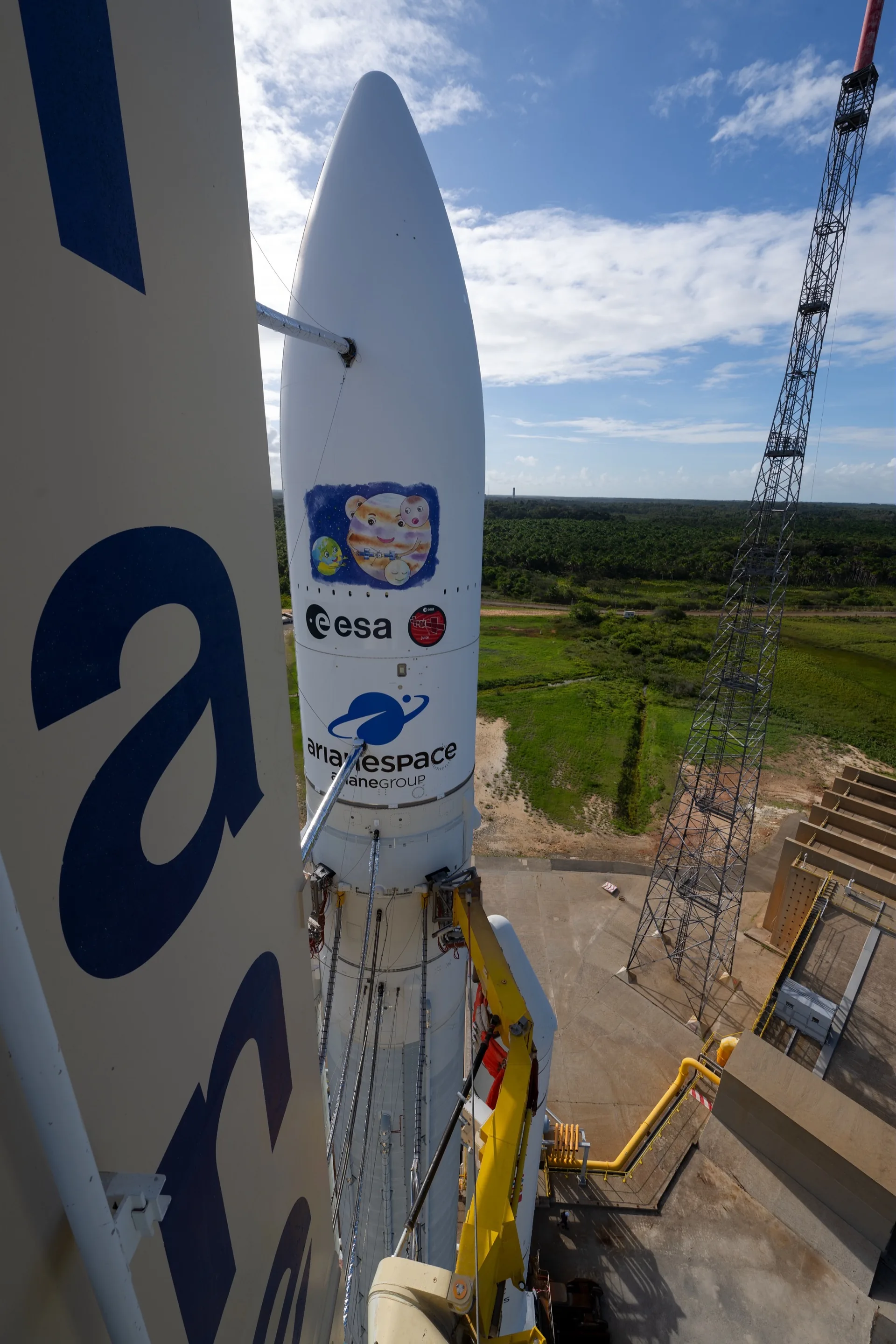
Launch on Atlas V 551 from Cape Canaveral
2016-07-04
Jupiter Orbit Insertion
2023-12-30
Io flyby at ~1,500 km — closest in over 20 years
2025-10-01
Second extended mission begins (through September 2028)