Image: NASA
Gemini 11
Mission Profile
| Launch date | 1966-09-12 |
|---|---|
| Launch site | Cape Kennedy Air Force Station Launch Complex 19, Florida |
| Launch vehicle | Titan II GLV |
| Spacecraft | Gemini SC11 |
| Target | Low Earth Orbit |
| Type | Crewed |
| End date | 1966-09-15 |
| Recovery | USS Guam (LPH-9), Atlantic Ocean |
| Duration | 2 days, 23 hours, 17 minutes, 9 seconds (44 orbits) |
| Partners | McDonnell Aircraft (Gemini spacecraft), Martin Company (Titan II GLV), Lockheed (Agena target vehicle) |
Overview
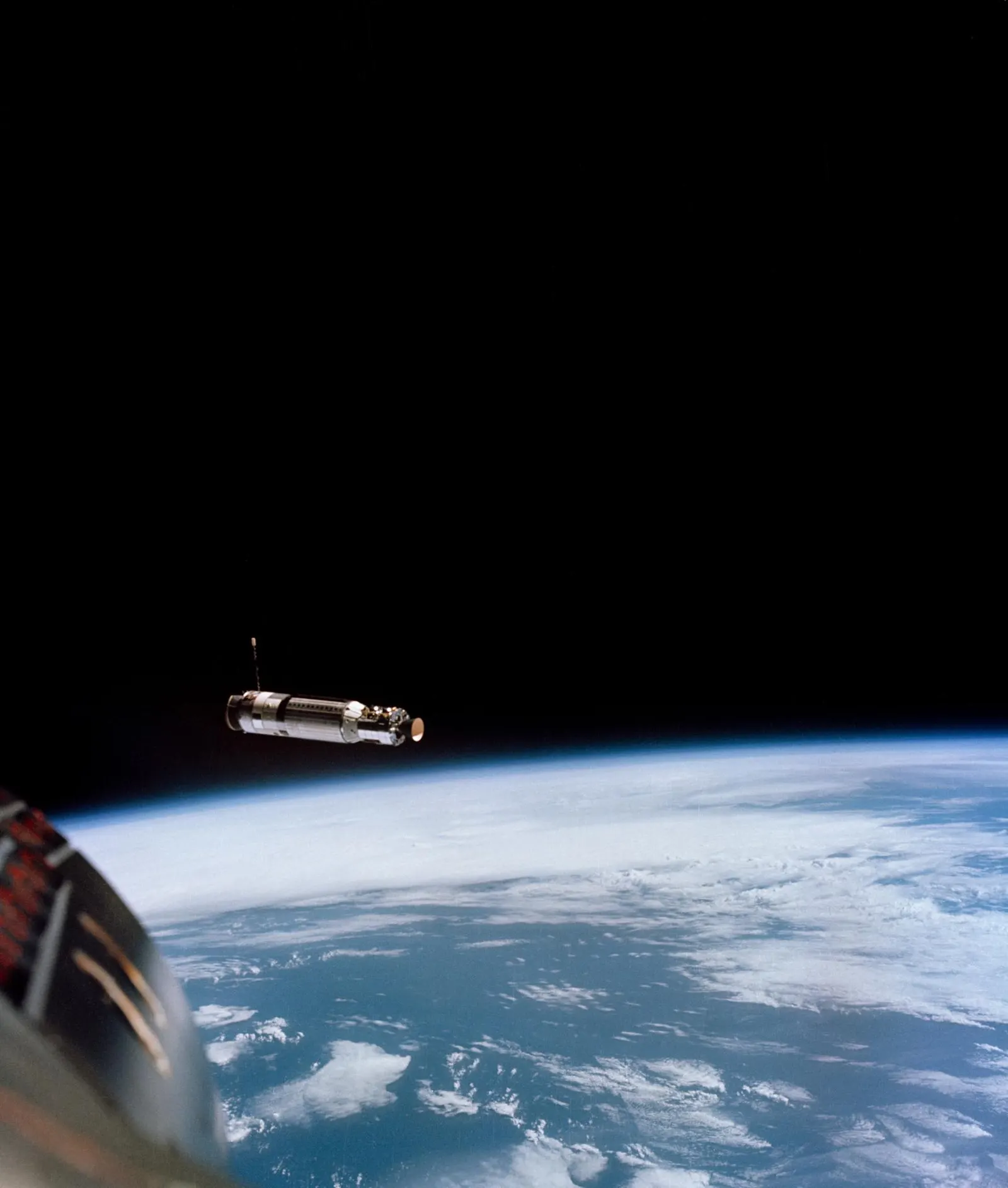
Gemini 11 compressed an entire rendezvous campaign into a single orbit, then flew higher than any Earth-orbiting crew would for the next 58 years. Launched on September 12, 1966 through a two-second window, Pete Conrad and Dick Gordon executed the first direct-ascent, first-orbit rendezvous, docking with their Agena target just 1 hour 34 minutes after liftoff — proof that a lunar module rising from the Moon could reach its command module quickly, with little margin for error. On September 13 Gordon's umbilical spacewalk attached a 30-meter tether between the two craft, but like earlier Gemini spacewalkers he fought exhausting workloads, and the excursion was cut to roughly half an hour; a calmer two-hour stand-up EVA followed the next day. On September 14 the Agena's main engine fired, hurling the docked stack to a 1,374-kilometer apogee — the highest crewed Earth orbit until SpaceX's Polaris Dawn in 2024 — with views taking in whole subcontinents. After undocking, the tethered spacecraft were set slowly cartwheeling, generating a slight artificial gravity by centrifugal force, a first in spaceflight. The mission closed with another first: a fully automatic, computer-controlled reentry that delivered the capsule within 2.8 miles (4.5 km) of USS Guam on September 15, after 44 orbits in just under three days.
Crew
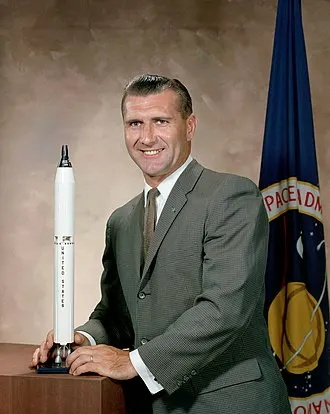
Pete Conrad
Command Pilot
Second Gemini flight after Gemini 5; later commanded Apollo 12 and the first Skylab crew
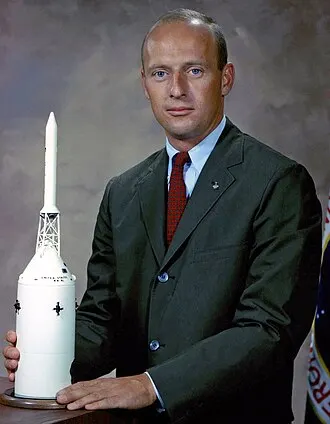
Dick Gordon
Pilot
Performed both EVAs and the tether attachment; later command module pilot of Apollo 12
Key Milestones
1966-09-12
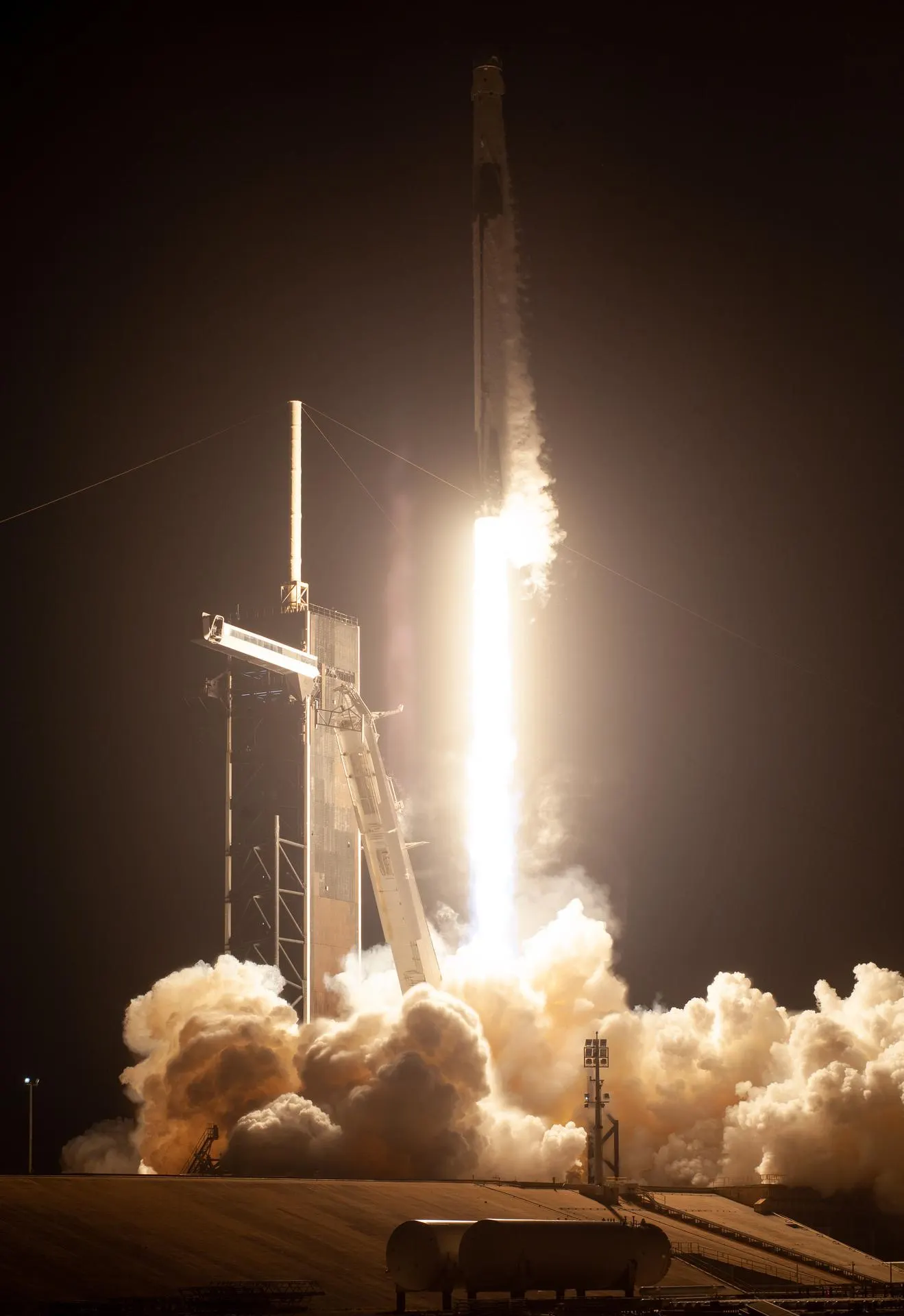
Liftoff at 14:42:26 UTC through a two-second launch window
1966-09-12
First direct-ascent rendezvous and docking with the Agena target, 94 minutes after launch
1966-09-13
Gordon's umbilical EVA attaches a 30-meter tether between Gemini and Agena; fatigue cuts the spacewalk to about half an hour
1966-09-14
Agena engine burn lifts the docked stack to a record 1,374 km apogee — unbeaten by an Earth-orbit crew until Polaris Dawn in 2024
1966-09-14
Tethered spin-up of the two spacecraft demonstrates artificial gravity by centrifugal force for the first time
1966-09-15
First fully automatic, computer-controlled US reentry; splashdown at 13:59:35 UTC, 2.8 miles from USS Guam
Key Achievements
First direct-ascent, first-orbit rendezvous and docking — 94 minutes from launch to hard dock
Crewed Earth-orbit altitude record of 1,374 km, unbroken until Polaris Dawn in 2024
First demonstration of artificial gravity, spinning two tethered spacecraft
First fully automatic, computer-controlled reentry by a US crewed spacecraft
Legacy & Significance
Gemini 11 was Project Gemini operating at the top of its game — a mission that took techniques invented over the previous eighteen months and executed them at lunar-mission tempo. The first-orbit rendezvous directly validated the rapid ascent-and-dock profile an Apollo lunar module would fly home from the Moon's surface, and the automatic reentry foreshadowed the trust in onboard computing that defines modern spaceflight. Its 1,374-kilometer apogee gave Conrad and Gordon views no Earth-orbiting human would match until Polaris Dawn in 2024, and the tether experiment remains a touchstone for every artificial-gravity concept since. Within three years, its crew flew together again — to the Moon on Apollo 12.