Image: NASA
Gemini 6A
Mission Profile
| Launch date | 1965-12-15 |
|---|---|
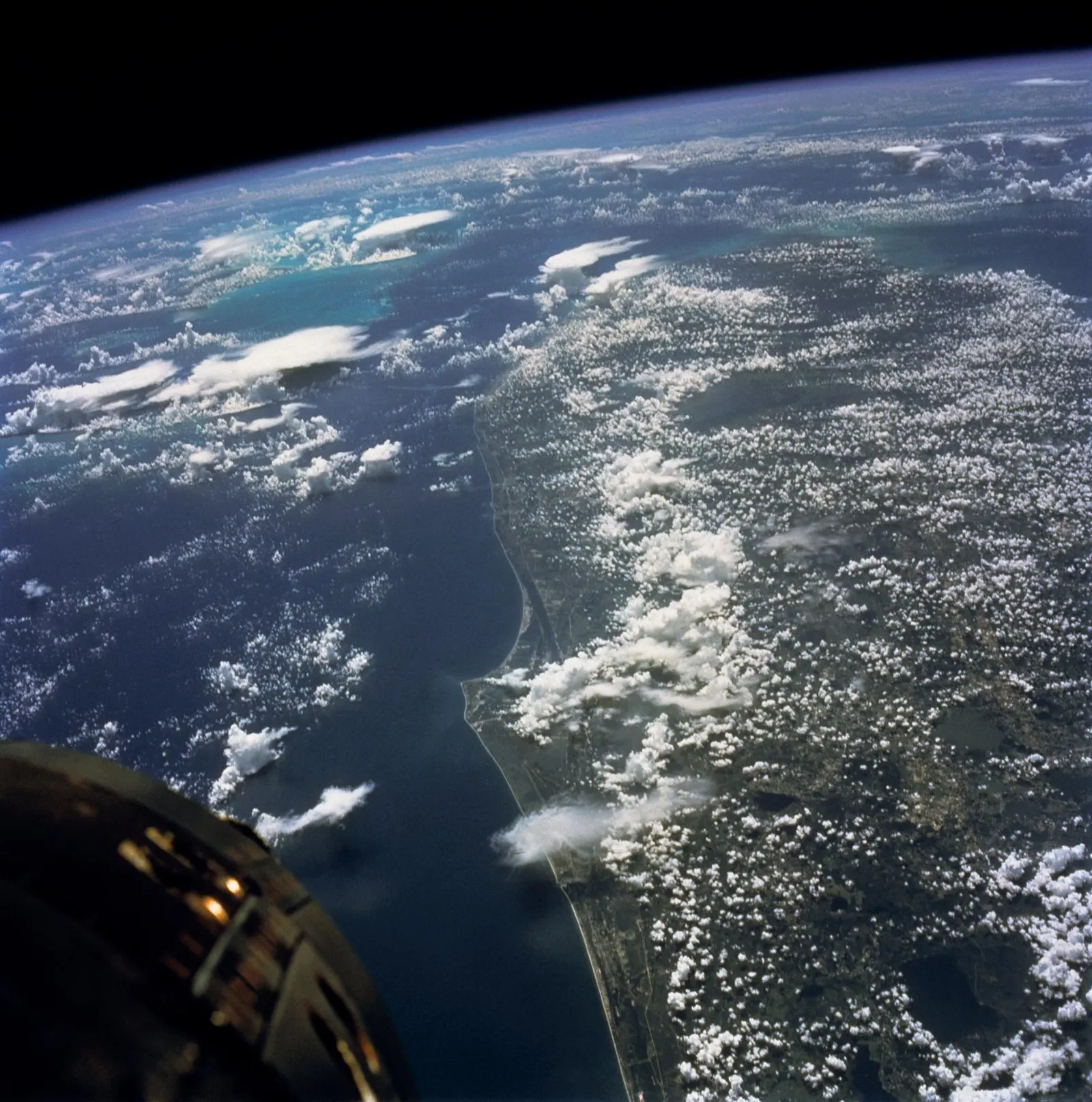
| Launch site | Cape Kennedy Air Force Station Launch Complex 19, Florida |
| Launch vehicle | Titan II GLV (s/n 62-12561) |
| Spacecraft | Gemini SC6 |
| Target | Low Earth Orbit |
| Type | Crewed |
| End date | 1965-12-16 |
| Recovery | USS Wasp (CV-18), Atlantic Ocean |
| Duration | 1 day, 1 hour, 51 minutes, 24 seconds (16 orbits) |
| Partners | McDonnell Aircraft (Gemini spacecraft), Martin Company (Titan II GLV) |
Overview
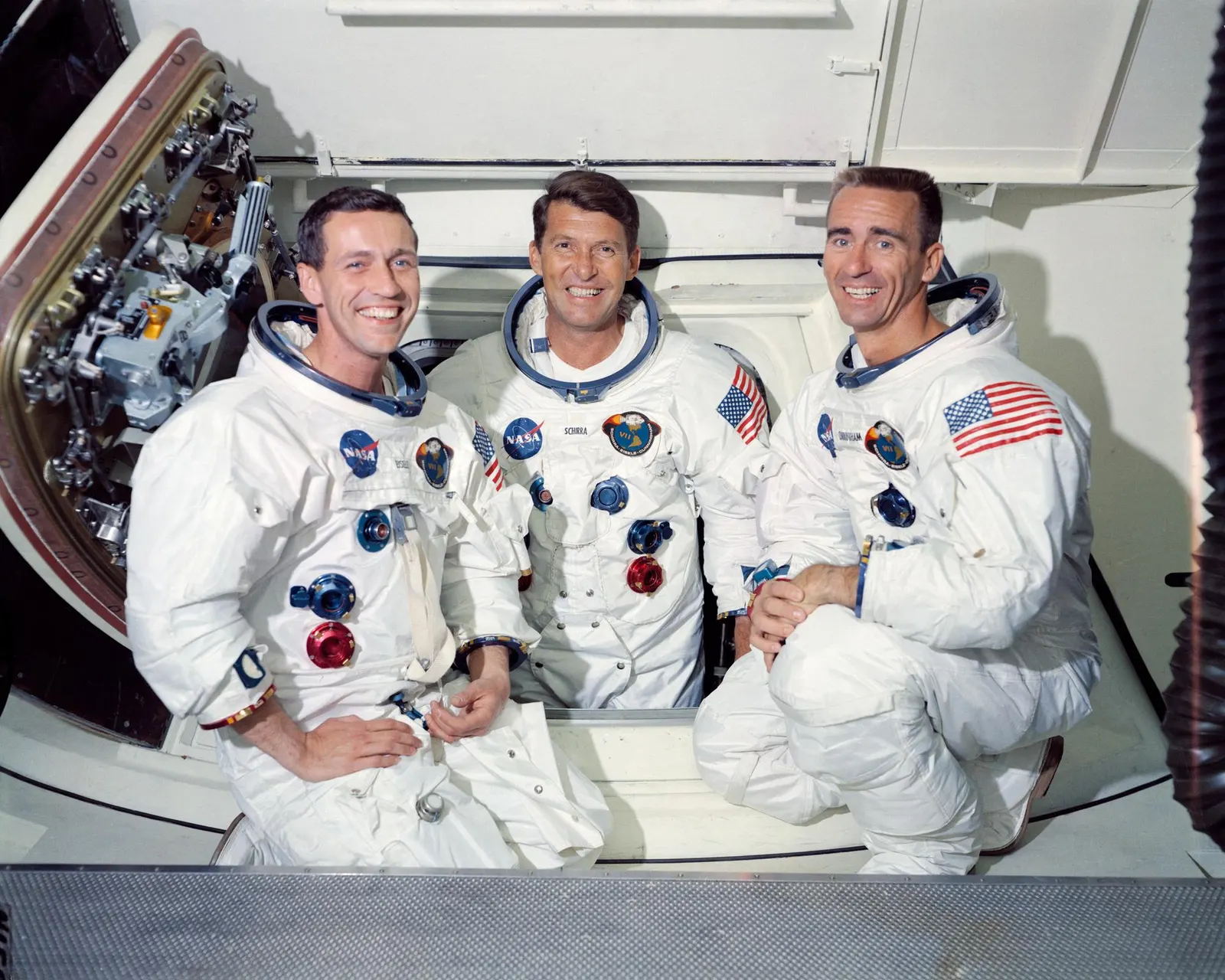
Gemini 6A achieved what no spacefarers had ever done: a true orbital rendezvous. The original Gemini 6 was to dock with an Agena target vehicle, but the Agena was lost in a launch failure on October 25, 1965. NASA improvised boldly — fly Gemini 7 on its fourteen-day marathon and send Wally Schirra and Tom Stafford to chase it. On December 12 the Titan's engines ignited and shut down 1.5 seconds later; with the mission clock running, the rules called for ejection, but Schirra, feeling no motion, kept his hand off the D-ring — a cool-headed judgment that saved the spacecraft and the mission. Three days later Gemini 6A launched and, over four orbits of carefully computed chase maneuvers, closed on Gemini 7, ultimately station-keeping for 270 minutes at distances as small as 30 centimeters. Unlike the earlier paired Soviet Vostok flights, which passed kilometers apart with no ability to maneuver, the two Geminis matched orbits and held formation — the essential proof of concept for Apollo's lunar-orbit rendezvous. Before retrofire on December 16, Schirra reported a mysterious object on a polar trajectory, then broke into "Jingle Bells" on a smuggled harmonica with Stafford on sleigh bells — the first musical instruments played in space. Splashdown came at 15:28 UTC, with recovery by USS Wasp after 16 orbits.
Crew
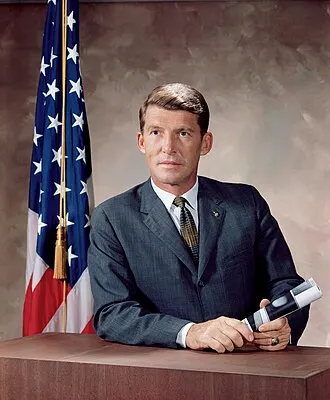
Wally Schirra
Command Pilot
Mercury Sigma 7 veteran; his decision not to eject on December 12 saved the mission; later commanded Apollo 7
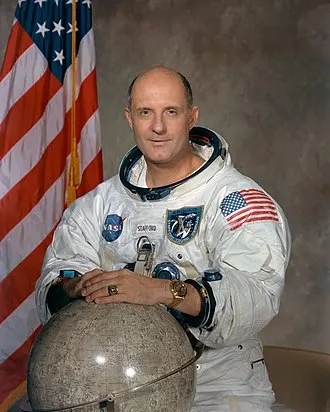
Tom Stafford
Pilot
Rendezvous specialist; went on to fly Gemini 9A, Apollo 10 and the Apollo-Soyuz Test Project
Key Milestones
1965-10-25
Agena target vehicle lost in a launch failure, scrubbing the original Gemini 6 docking mission
1965-12-12
Titan engines shut down 1.5 seconds after ignition; Schirra declines to eject, preserving the spacecraft
1965-12-15
Liftoff at 13:37:26 UTC on the third launch attempt
1965-12-15
First crewed orbital rendezvous in history: station-keeping with Gemini 7 as close as 30 cm for 270 minutes
1965-12-16
Schirra and Stafford perform "Jingle Bells" — the first musical instruments played in space
1965-12-16
Splashdown at 15:28:50 UTC after 16 orbits; recovery by USS Wasp
Key Achievements
First crewed orbital rendezvous, with Gemini 7 on December 15, 1965
Station-keeping as close as 30 centimeters across 270 minutes of formation flight
Survived an on-pad engine shutdown without ejection, enabling launch three days later
First musical performance in space — "Jingle Bells" on harmonica and sleigh bells
Legacy & Significance
Rendezvous was the make-or-break skill of the Apollo architecture — without it, lunar-orbit rendezvous was a paper theory — and Gemini 6A proved it could be flown with precision and even grace. The mission demonstrated something else NASA would prize for decades: disciplined human judgment under extreme pressure, as Schirra's split-second decision on the pad became a textbook case in crew resource management. Every docking since, from Apollo to the ISS and Tiangong, descends from the afternoon two Gemini capsules flew nose-to-nose a foot apart; the harmonica Schirra played now resides in the Smithsonian.