Image: NASA
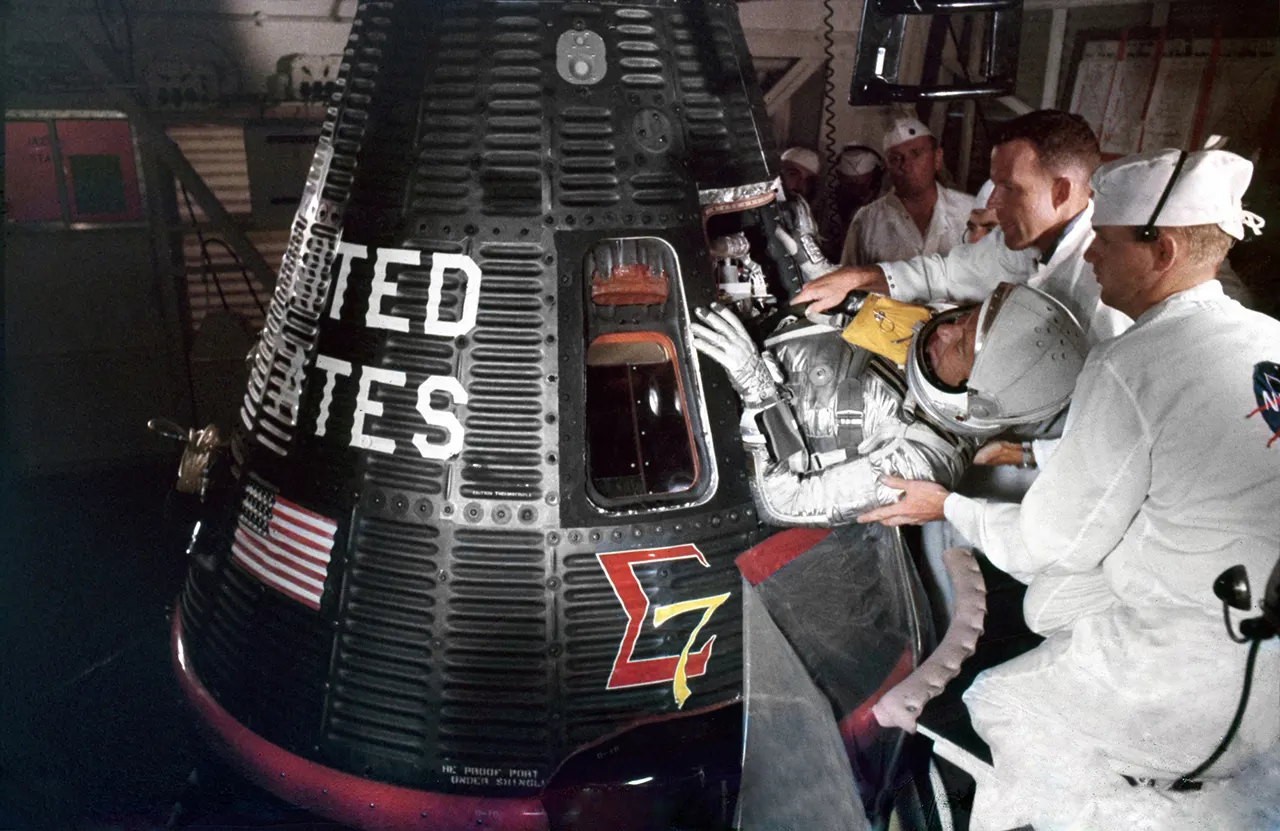
Mercury-Atlas 8 (Sigma 7)
Mission Profile
| Launch date | 1962-10-03 |
|---|---|
| Launch site | Cape Canaveral Air Force Station Launch Complex 14 (LC-14), Florida |
| Launch vehicle | Atlas LV-3B (113-D) |
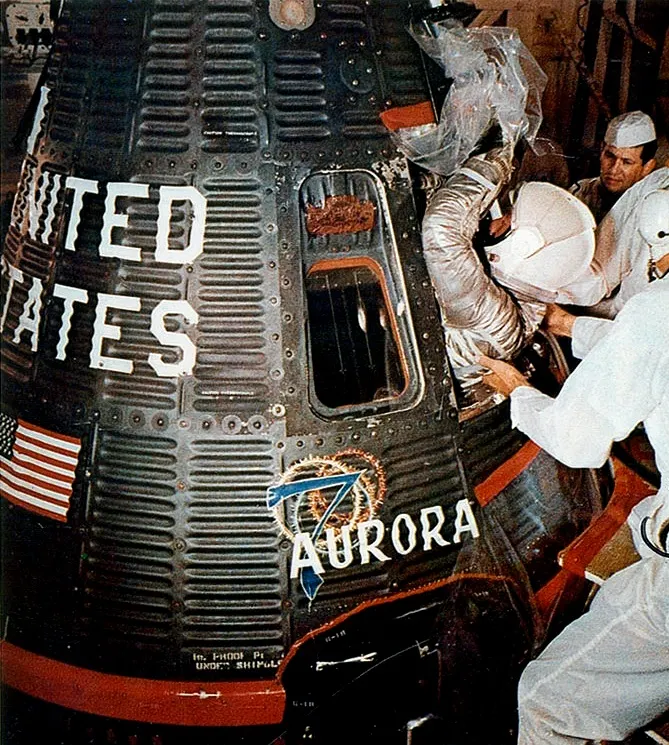
| Spacecraft | Mercury capsule No. 16 (Sigma 7) |
| Target | Low Earth Orbit |
| Type | Crewed |
| End date | 1962-10-03 |
| Recovery | USS Kearsarge (CVS-33), Pacific Ocean |
| Mass | 1,963 kg (4,329 lb) at launch |
| Duration | 9 hours, 13 minutes, 15 seconds |
Overview
Wally Schirra named his capsule Sigma — the engineer's symbol for summation — and flew Mercury-Atlas 8 as a pure engineering proof: the 'textbook flight' that Project Mercury needed after Aurora 7's fuel-starved drama. Launched from Cape Canaveral at 12:15 UTC on October 3, 1962, Schirra doubled the American orbital endurance record with six orbits over 9 hours, 13 minutes, and 15 seconds, circling between roughly 156 and 285 kilometers. His mission was an exercise in discipline rather than spectacle. Schirra spent long stretches in drifting flight with the thrusters silent, methodically chasing down an early spacesuit overheating problem and husbanding his hydrogen-peroxide attitude fuel so carefully that he ended the mission with the great majority of it unused — a pointed contrast with the two flights before his. He also exercised every control mode the spacecraft offered, checked tracking and communications across the worldwide network, and made the first live radio broadcast from an American spacecraft relayed to listeners below. Reentry was equally precise: Sigma 7 made Project Mercury's first Pacific splashdown, hitting the water within about five miles of the recovery carrier USS Kearsarge, which hoisted the capsule aboard with Schirra still inside. The flawless flight cleared the way for the day-long mission that would close out Mercury.
Crew
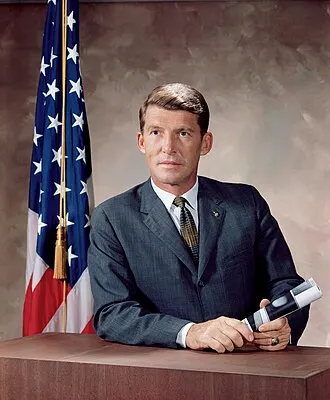
Wally Schirra
Pilot
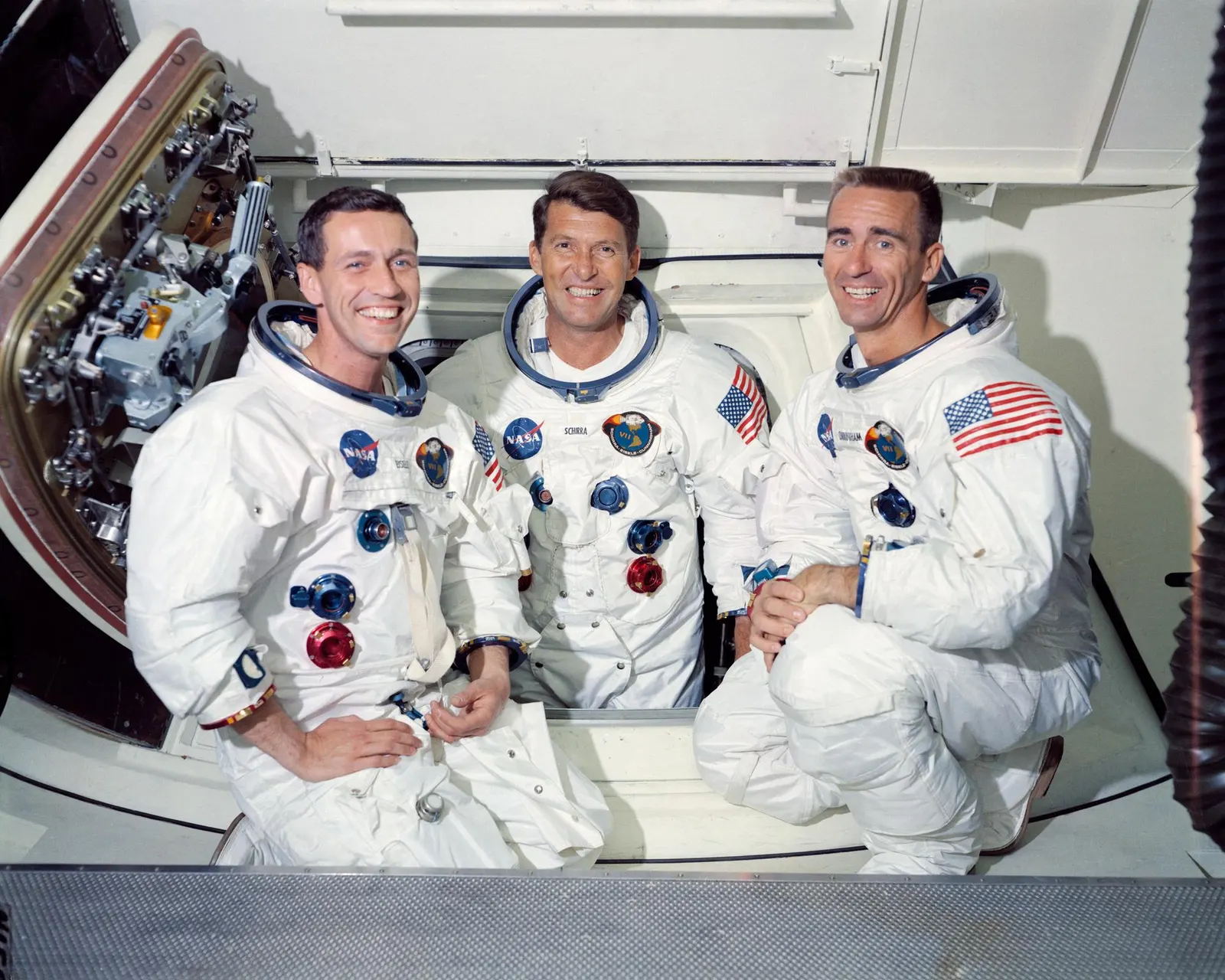
Flew the near-flawless 'textbook flight' of Project Mercury. The only astronaut to fly Mercury, Gemini (Gemini 6A), and Apollo (Apollo 7) missions.
Key Milestones
1962-10-03
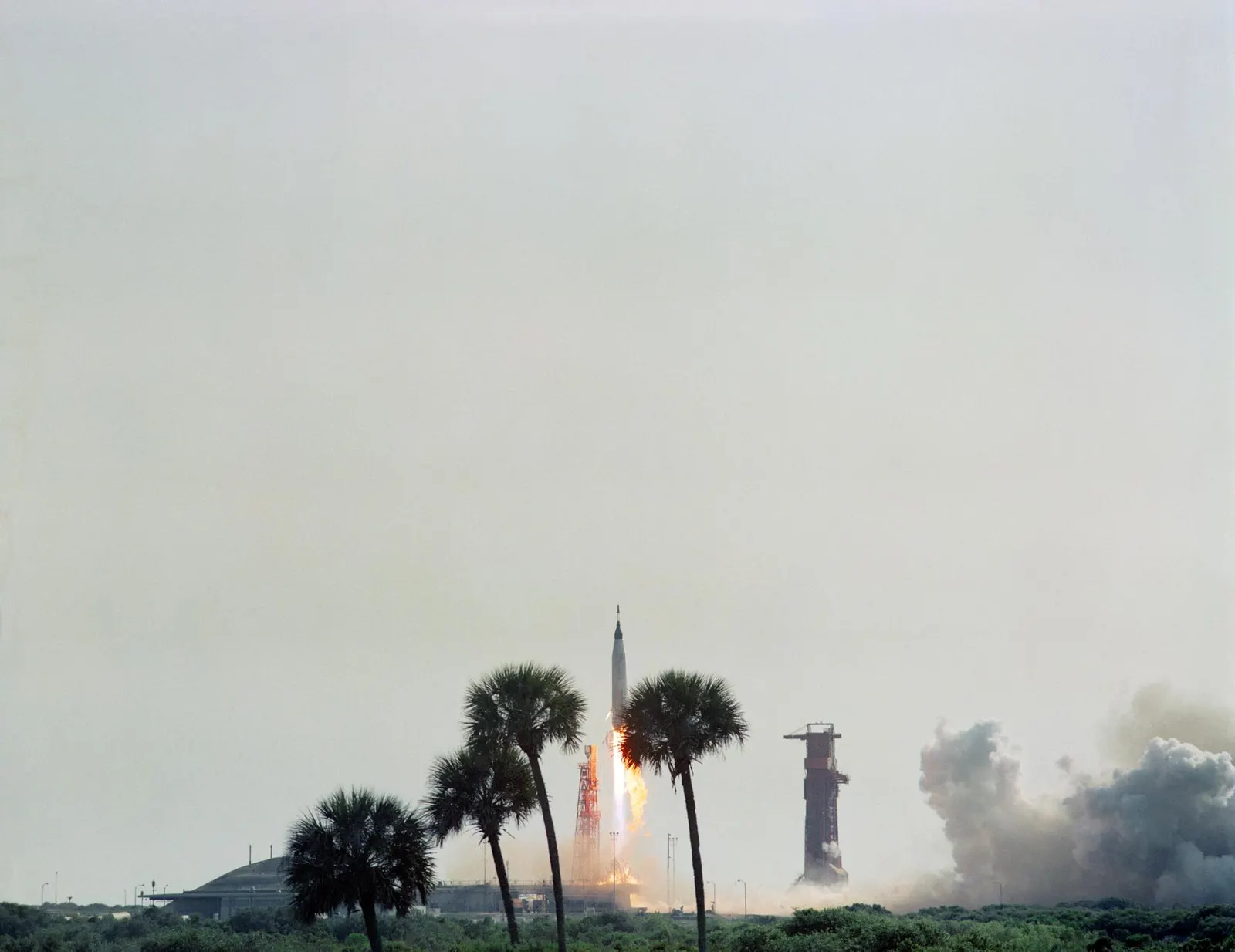
Liftoff from Cape Canaveral LC-14 at 12:15 UTC atop Atlas 113-D
1962-10-03
Schirra resolves an early spacesuit overheating problem through gradual cooling adjustments
1962-10-03
Doubles the U.S. orbital endurance record, completing six orbits in drifting, fuel-conserving flight
1962-10-03
Splashdown at 21:28 UTC — Project Mercury's first Pacific landing, within about five miles of USS Kearsarge
Key Achievements
Doubled the American orbital endurance record with six orbits in just over nine hours
Demonstrated near-perfect attitude-fuel management, finishing with most of the maneuvering propellant unused
Made Project Mercury's first Pacific Ocean splashdown, landing within about five miles of the recovery carrier
Exercised and validated every spacecraft control mode in preparation for the day-long Faith 7 mission
Established the 'textbook flight' standard cited throughout Gemini and Apollo planning
Legacy & Significance
Sigma 7 was the mission that made spaceflight look routine — exactly as intended. Schirra's obsessive fuel discipline and pinpoint Pacific landing answered the questions raised by Aurora 7 and convinced NASA that the Mercury spacecraft could safely stretch to a full day in orbit. His engineering-first approach to flying became a template for test-pilot professionalism in space, and Schirra himself went on to an unmatched career arc, commanding the first Gemini rendezvous flight and the first crewed Apollo mission. In the program's own ledger, Sigma 7 stands as Mercury's most efficient flight, the summation its name promised.