Jupiter is not just a planet. It is a statement. A world so massive that it contains more material than all other planets in the solar system combined, wrapped in bands of ammonia clouds and crowned by storms that have been raging since before humans invented the telescope. If you want to understand our solar system, you have to start with Jupiter, because Jupiter shaped everything.
And then there are its moons -- a miniature solar system in their own right, each one a world with its own personality, its own geology, and its own capacity to astonish. Let me take you on a tour of the most magnificent planetary system in our cosmic neighborhood.
The King Itself: A Gas Giant Like No Other
Jupiter has a mass 318 times that of Earth and a diameter eleven times wider. If you could somehow scoop out Jupiter's interior, you could fit more than 1,300 Earths inside. It rotates so fast -- one full spin in just under ten hours -- that it visibly bulges at the equator. This is not a subtle effect. Jupiter is measurably wider around its middle than from pole to pole.
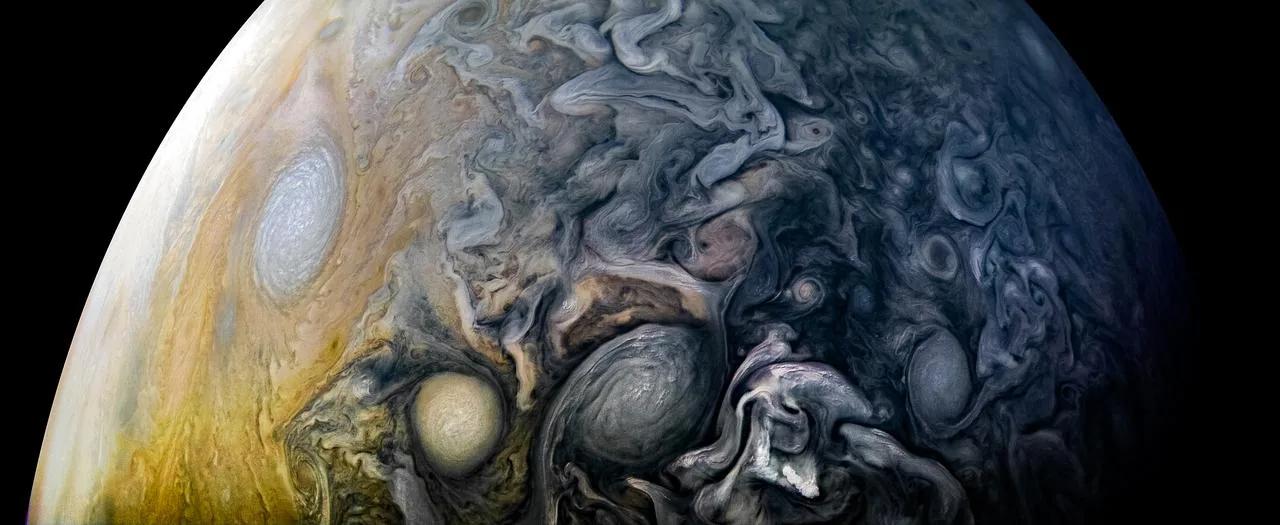
The atmosphere is a turbulent masterpiece. Bands of ammonia ice clouds race around the planet at hundreds of miles per hour, driven by internal heat that radiates more energy into space than Jupiter receives from the Sun. Embedded in these bands are dozens of storms, some larger than Earth, churning and merging in a chaotic dance that atmospheric scientists are still working to fully model.
And then there is the Great Red Spot.
The Great Red Spot: A Shrinking Giant
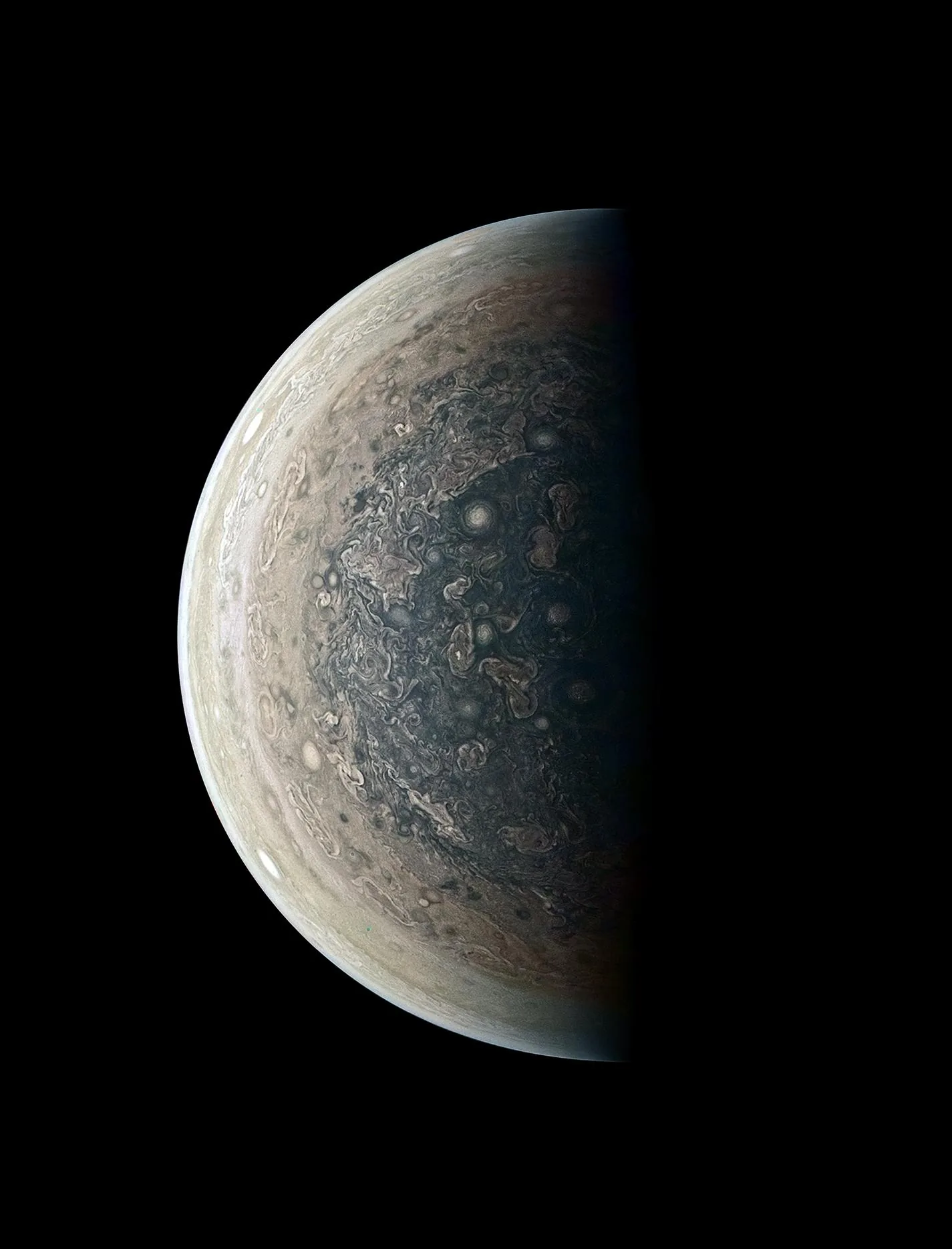
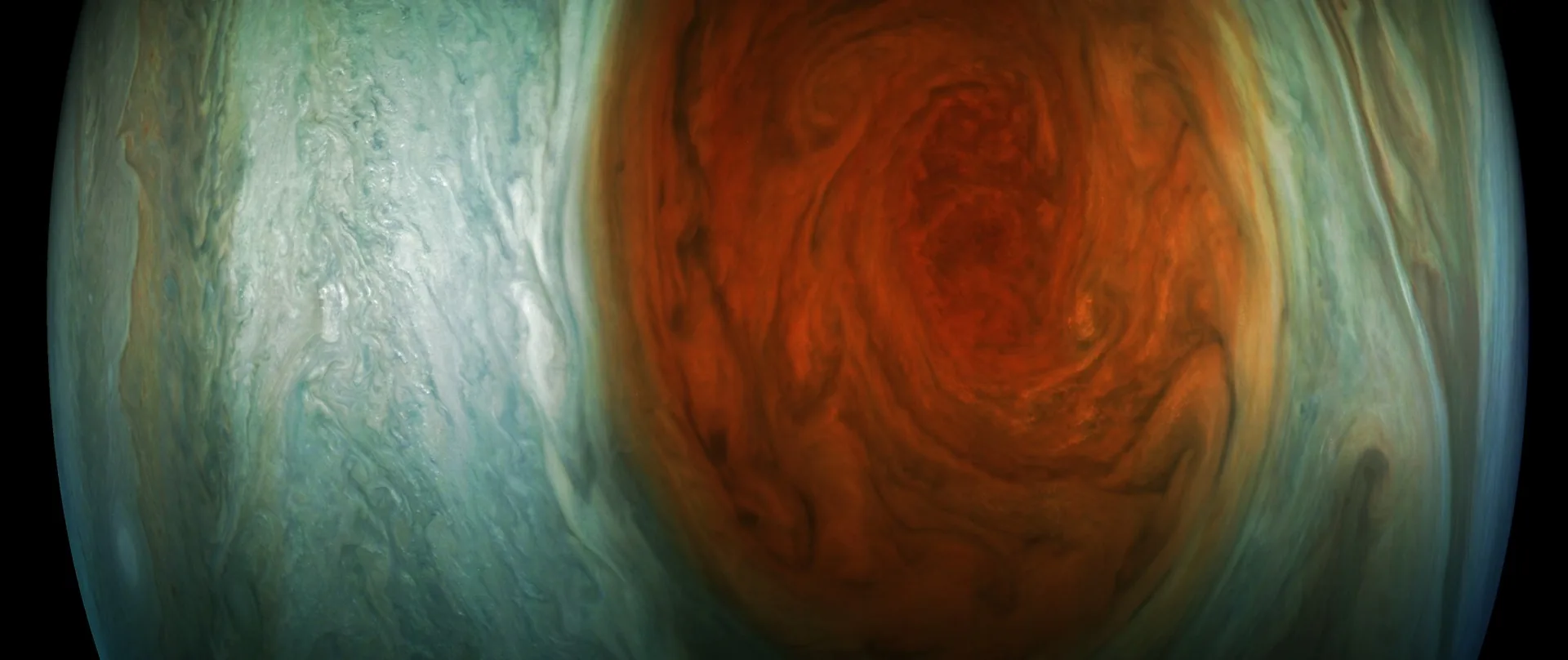
The Great Red Spot is the most famous storm in the solar system -- a massive anticyclonic vortex that has been observed continuously since at least 1831, and possibly since 1665 when Giovanni Cassini noted a permanent spot on Jupiter. At its peak, the storm was large enough to swallow three Earths side by side.
But the Great Red Spot is shrinking. Observations over the past century and a half show that the storm has been steadily losing width. In the late 1800s, it spanned roughly 40,000 kilometers. By the time the Voyager spacecraft flew past in 1979, it was down to about 23,000 kilometers. Today, it measures roughly 13,000 kilometers across -- still larger than Earth, but noticeably more compact and more circular than its historically oval shape.
NASA's Juno spacecraft, which has been orbiting Jupiter since 2016, has given us our most detailed look yet at the storm's structure. Juno's microwave radiometer revealed that the Great Red Spot extends at least 300 kilometers deep into Jupiter's atmosphere, and possibly much deeper. It is not just a surface phenomenon -- it has roots that plunge far below the visible cloud tops.
Will it disappear entirely? Some atmospheric scientists think it might, perhaps within our lifetimes. Others believe it will stabilize at a smaller size. Either way, we are watching one of the solar system's most iconic features evolve in real time. That is both humbling and a reminder that even giants are not permanent.
Io: The Most Volcanically Active World We Know
Move out from Jupiter itself and you encounter its four Galilean moons, discovered by Galileo in 1610 and each one a world that defies expectations. The innermost is Io, and Io is absolute chaos.
Io is the most volcanically active body in the solar system. It is not even close. More than 400 active volcanoes have been identified on its surface, and at any given time, dozens are erupting simultaneously. Some of these eruptions are spectacular -- volcanic plumes reaching 500 kilometers above the surface, fountains of sulfur and sulfur dioxide that paint the moon in vivid yellows, oranges, reds, and blacks.
The energy source for all this fury is tidal heating. Io orbits so close to Jupiter that the giant planet's immense gravity literally kneads the moon's interior, flexing its rocky body and generating enormous amounts of frictional heat. This tidal interaction is amplified by a gravitational resonance with Europa and Ganymede -- for every four orbits Io makes, Europa completes two and Ganymede completes one. This orbital dance keeps Io's orbit slightly elliptical, ensuring that the tidal squeezing never lets up.
The result is a world that is constantly resurfacing itself. Io has no impact craters because lava flows bury them faster than they can accumulate. Its surface is geologically newborn at all times -- a world perpetually remaking itself from the inside out.
Europa: An Ocean World Hiding Beneath Ice
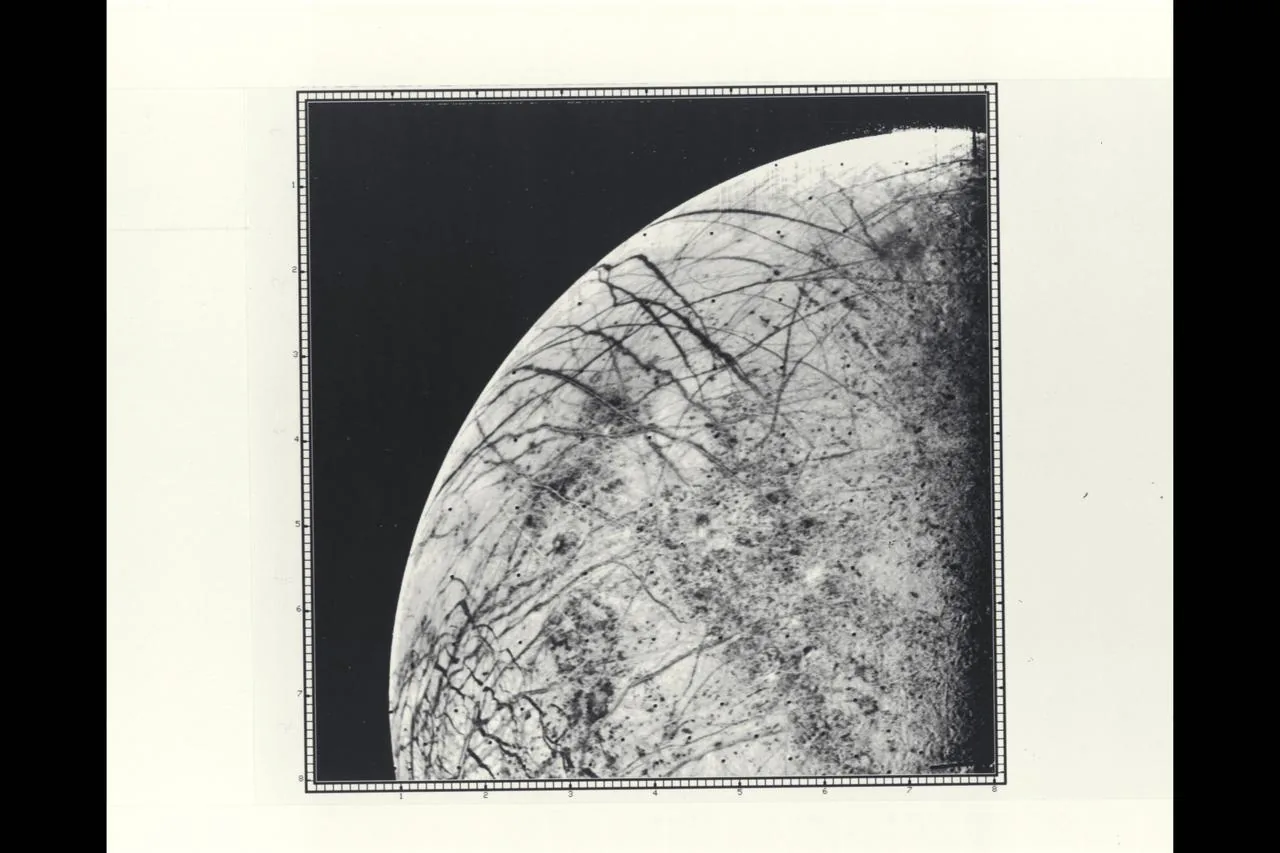
Europa is the moon that keeps planetary scientists awake at night, and for good reason. Beneath its smooth, cracked, icy shell lies a global ocean of liquid saltwater that contains roughly twice as much water as all of Earth's oceans combined.
The evidence for this ocean is compelling and comes from multiple sources. The Galileo spacecraft, which orbited Jupiter from 1995 to 2003, detected perturbations in Europa's magnetic field that are best explained by a conductive layer -- saltwater -- beneath the ice. The moon's surface is covered in a web of cracks and ridges that are consistent with a floating ice shell shifting above a liquid layer. And the surface is remarkably young, geologically speaking, with very few impact craters, suggesting that the ice is being recycled or resurfaced.
The ice shell is estimated to be 15 to 25 kilometers thick, and the ocean beneath may be 60 to 150 kilometers deep. At the bottom of that ocean, the rocky seafloor may host hydrothermal vents -- cracks where heated water, enriched with minerals and chemical energy, pours into the surrounding sea. On Earth, hydrothermal vents support thriving ecosystems of organisms that live entirely without sunlight, powered by chemical energy from the planet's interior.
Could something similar be happening on Europa? That is the question that drives the upcoming Europa Clipper mission, which will make dozens of close flybys to study the moon's ice shell, ocean, and geology in unprecedented detail. If Europa's ocean has the right chemistry, the right energy sources, and has been stable for billions of years, then it is one of the most promising places to search for life beyond Earth.
Ganymede: The Moon with Its Own Magnetic Field
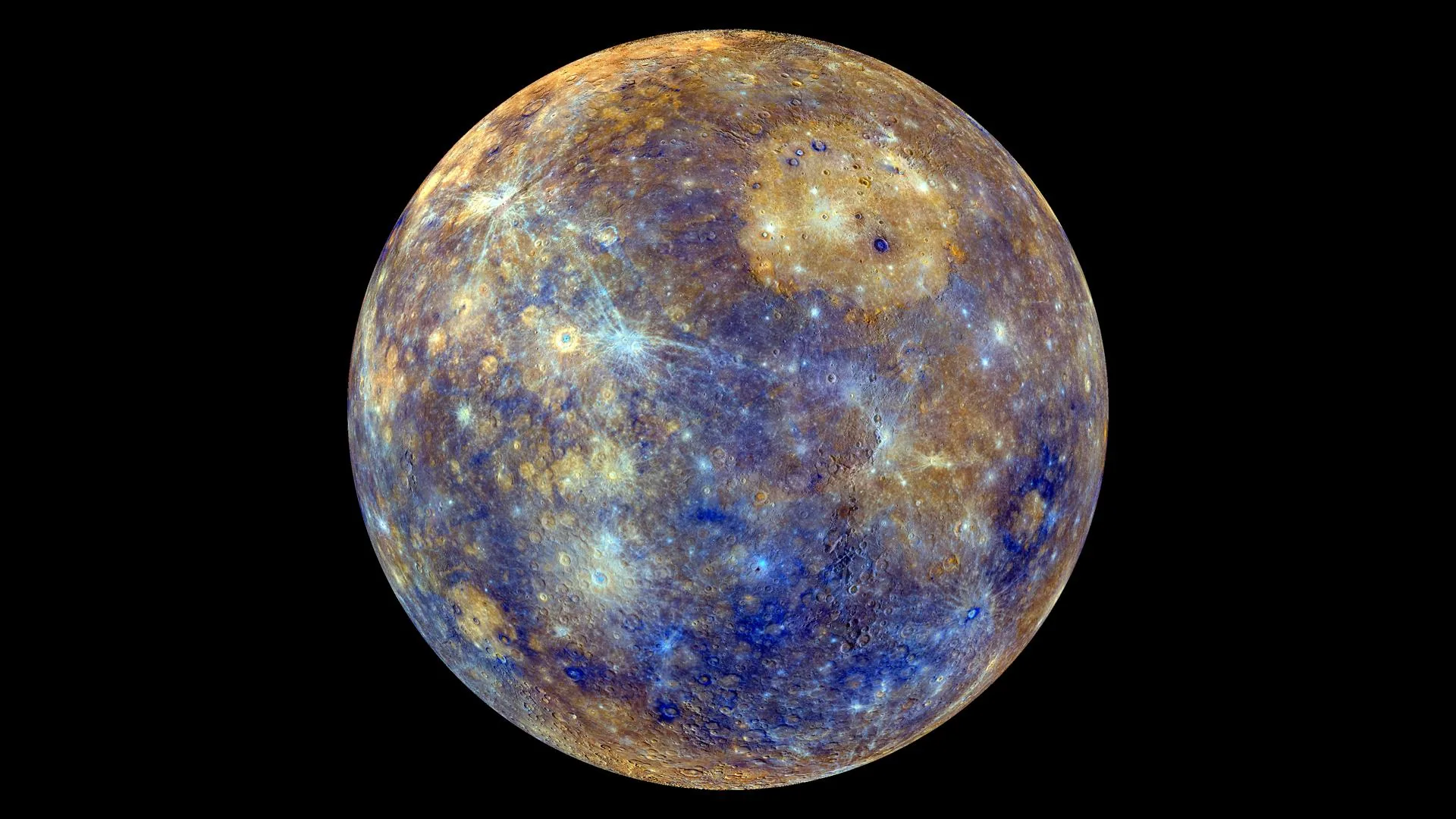
Ganymede is the largest moon in the solar system -- larger than the planet Mercury, in fact. But size is not what makes Ganymede unique. This moon is the only moon known to generate its own magnetic field, creating a miniature magnetosphere embedded within Jupiter's much larger one.
That magnetic field implies that Ganymede has a liquid iron core, something that sets it apart from virtually every other moon. It also has a layered interior that may include a subsurface ocean sandwiched between layers of ice at different pressures. The Hubble Space Telescope provided indirect evidence for this ocean in 2015 by observing how Ganymede's auroras -- yes, it has auroras -- respond to Jupiter's changing magnetic field. The rocking motion of the auroras was dampened, consistent with a conductive ocean beneath the surface.
Ganymede's surface tells two stories. About one-third is ancient, dark, heavily cratered terrain that dates back billions of years. The remaining two-thirds is younger, lighter terrain marked by grooves and ridges that suggest the surface was tectonically active at some point in its past. Understanding what drove that tectonic activity and whether it continues today is one of the key goals of the ESA's JUICE mission.
Callisto: The Ancient One
Callisto, the outermost Galilean moon, is in many ways the opposite of Io. While Io is geologically hyperactive, Callisto appears to be essentially dead. Its surface is the most heavily cratered in the solar system -- a battered landscape that has remained largely unchanged for four billion years. There are no volcanoes, no tectonic ridges, no signs of internal geological activity.
And yet, Callisto may also harbor a subsurface ocean. Magnetic field data from the Galileo spacecraft suggested a conductive layer deep beneath Callisto's icy crust. If confirmed, this would be remarkable because Callisto is too far from Jupiter to experience significant tidal heating. How a geologically dead world could maintain a liquid ocean is a puzzle that remains unsolved.
Callisto's ancient surface makes it a valuable record of the bombardment history of the outer solar system. Its largest impact feature, Valhalla, is a massive multi-ring impact basin nearly 4,000 kilometers across -- a scar from a collision that must have been cataclysmic.
Juno: Rewriting the Textbook
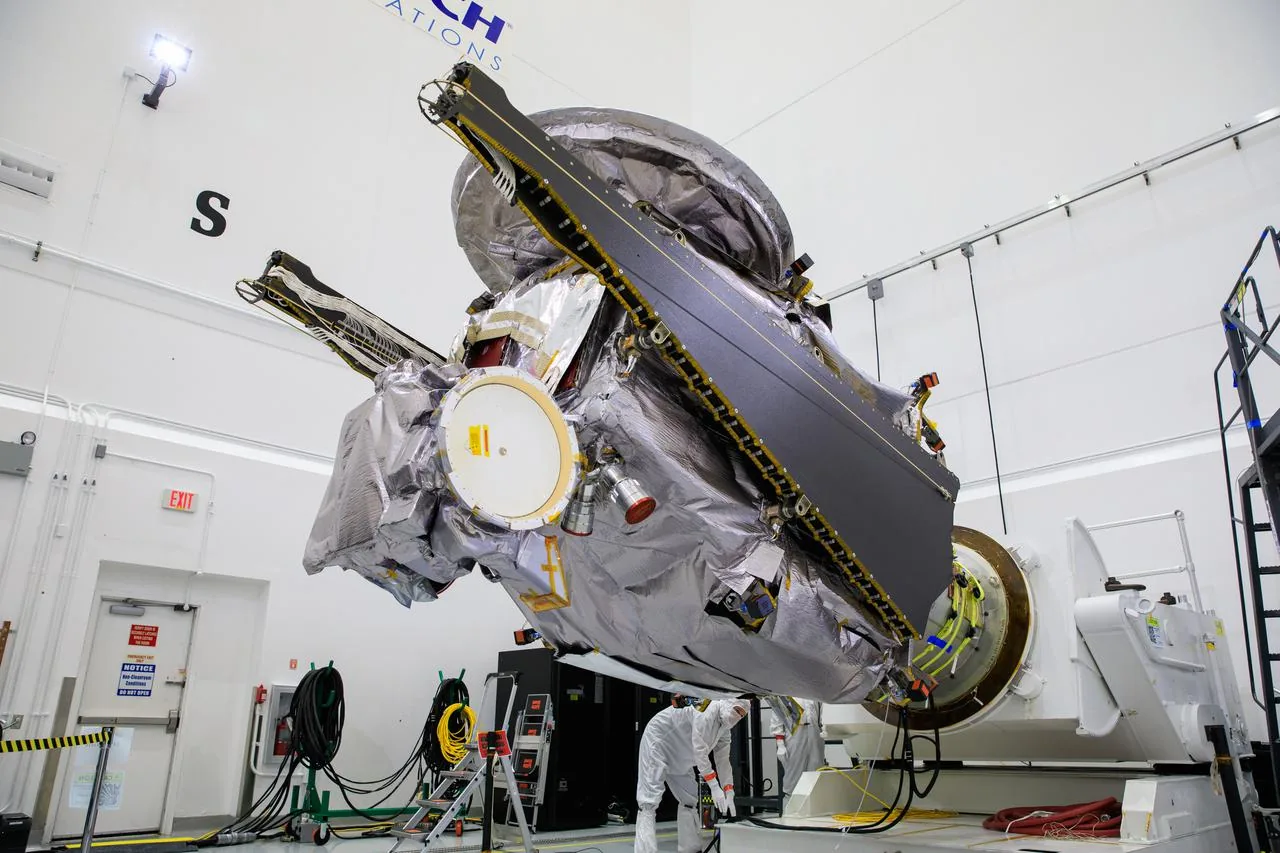
NASA's Juno spacecraft has been orbiting Jupiter since July 4, 2016, and its extended mission continues to deliver groundbreaking science. Juno was designed to peer beneath Jupiter's clouds using a suite of instruments that include a microwave radiometer, gravity science experiments, and a magnetometer.
Among Juno's most surprising findings is the structure of Jupiter's interior. The planet does not have a neat, compact core as many models predicted. Instead, Juno's gravity measurements suggest that Jupiter has a dilute core -- a region where heavy elements are mixed gradually into the surrounding hydrogen and helium rather than concentrated in a dense ball at the center. This has major implications for how Jupiter formed and how giant planets evolve.
Juno has also revealed that Jupiter's magnetic field is far more complex and asymmetric than expected, with a concentrated patch of intense magnetic flux near the equator that scientists have dubbed the Great Blue Spot. The spacecraft has flown close to several of Jupiter's smaller moons, capturing detailed images of Ganymede, Europa, and Io during its extended mission phase.
JUICE: The Next Chapter Begins
The European Space Agency's JUICE (Jupiter Icy Moons Explorer) spacecraft launched in April 2023 and is currently on its long journey to Jupiter, where it will arrive in 2031. JUICE will conduct detailed studies of Ganymede, Europa, and Callisto, with a particular focus on their subsurface oceans and the conditions that might support habitability.
The mission will culminate with JUICE entering orbit around Ganymede in 2034, making it the first spacecraft to orbit a moon other than our own. This will allow sustained, close-range study of Ganymede's magnetic field, interior structure, and surface geology.
Between Europa Clipper and JUICE, the next decade promises to revolutionize our understanding of Jupiter's moon system. We are on the verge of answering questions that humanity has been asking since Galileo first pointed his telescope at Jupiter and saw four tiny points of light moving from night to night.
Jupiter and its moons are not just objects in the sky. They are worlds -- dynamic, complex, and full of surprises. The King of Planets has ruled our solar system for 4.5 billion years, and we are only now beginning to understand the full extent of its kingdom.