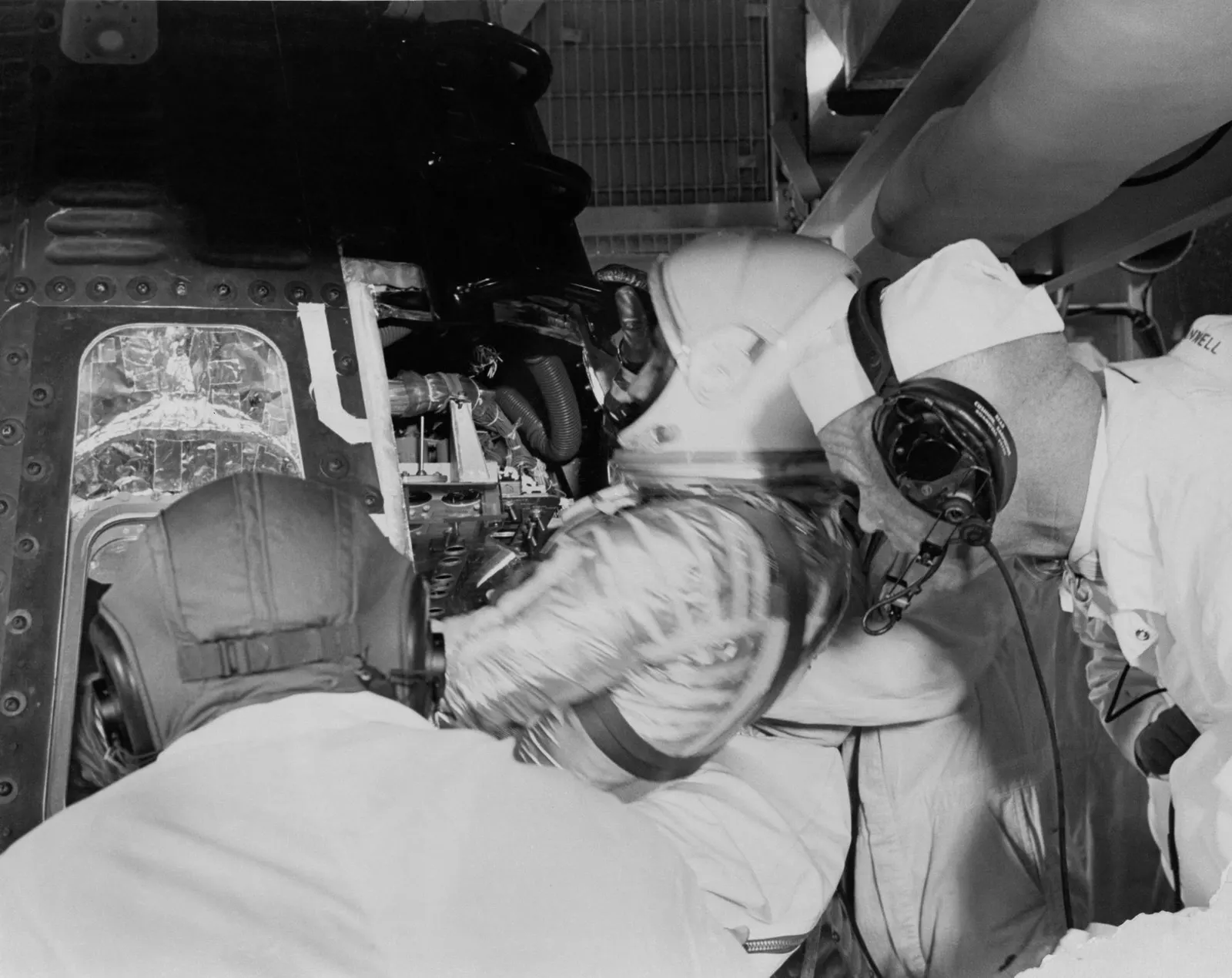
Image: NASA
Mercury-Redstone 4 (Liberty Bell 7)
Mission Profile
| Launch date | 1961-07-21 |
|---|---|
| Launch site | Cape Canaveral Air Force Station Launch Complex 5 (LC-5), Florida |
| Launch vehicle | Mercury-Redstone Launch Vehicle (MR-8) |
| Spacecraft | Mercury capsule No. 11 (Liberty Bell 7) |
| Target | Low Earth Orbit |
| Type | Crewed |
| End date | 1961-07-21 |
| Recovery | USS Randolph (CVS-15) — Grissom recovered by helicopter; the capsule sank and was raised from the Atlantic floor in 1999 |
| Mass | 1,286 kg (2,835 lb) at launch |
| Duration | 15 minutes, 37 seconds |
Overview
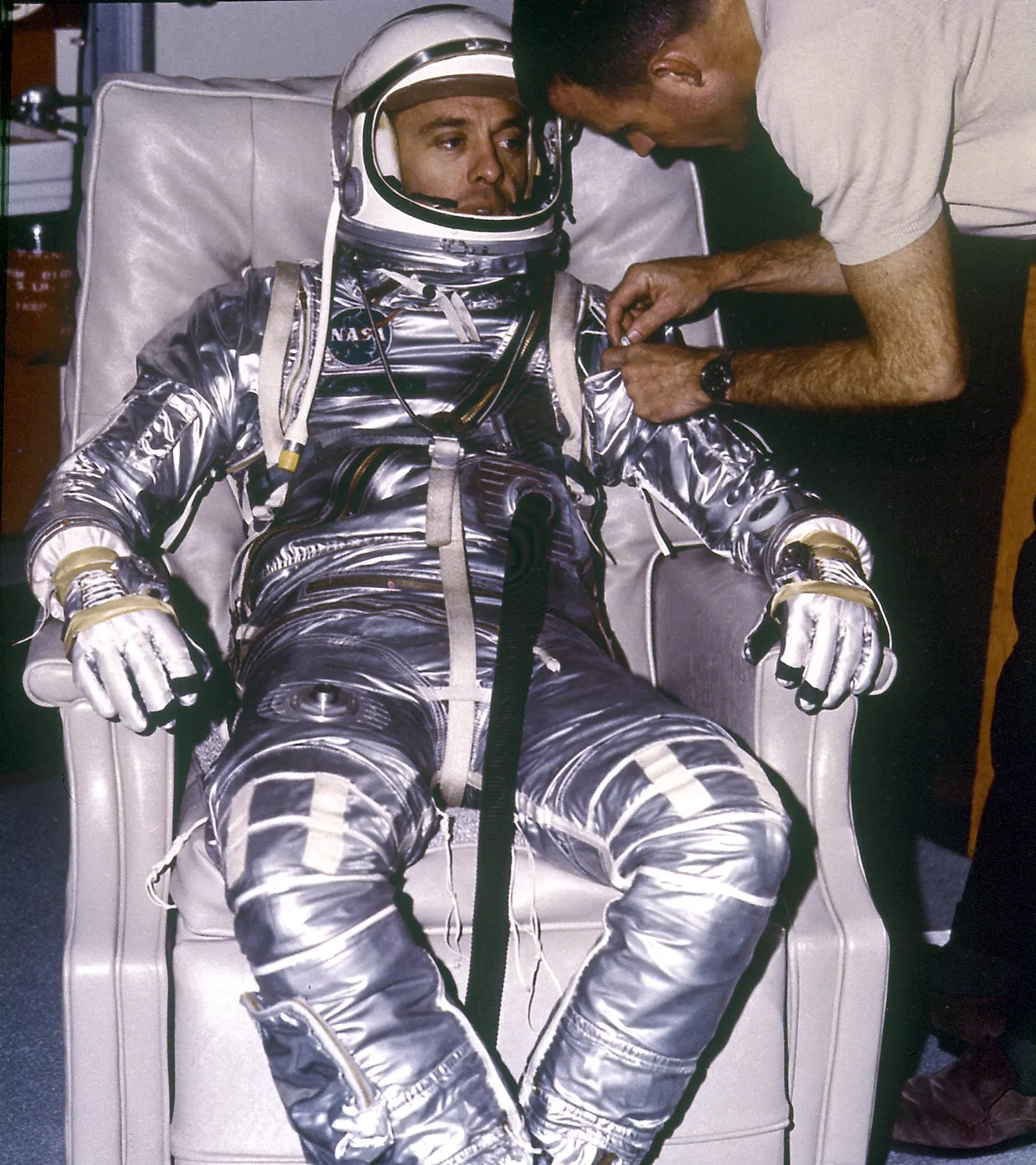
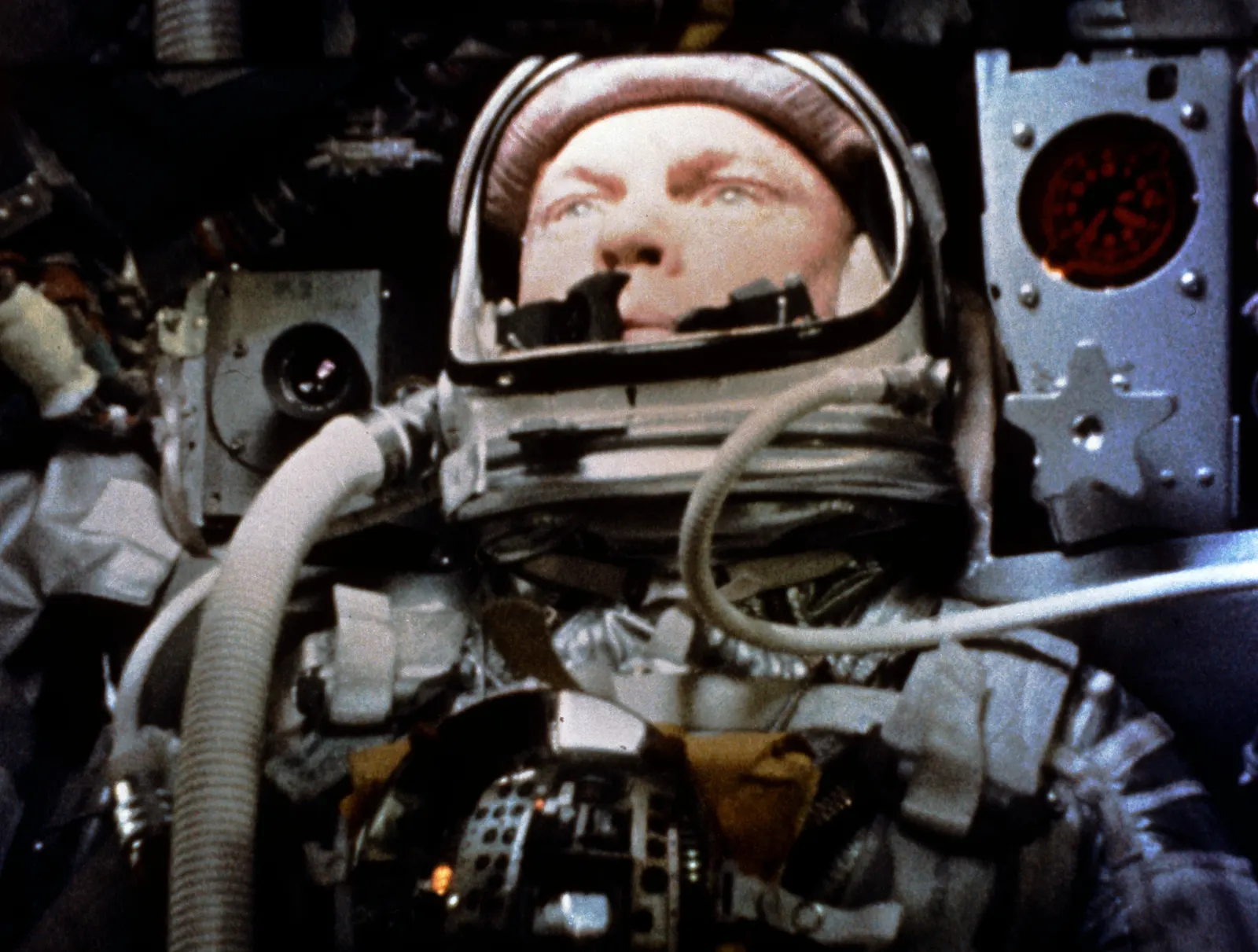
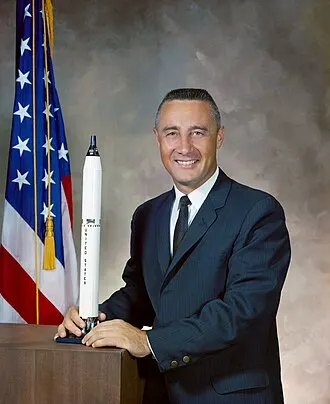
Gus Grissom's Liberty Bell 7 repeated and refined Alan Shepard's suborbital profile, lifting off from Cape Canaveral at 12:20:36 UTC on July 21, 1961. The upgraded capsule — Mercury No. 11 — introduced a large trapezoidal window in place of side portholes and a new explosive side hatch designed for faster emergency egress. The 15-minute, 37-second flight itself went almost flawlessly: Grissom evaluated manual controls, took in the view through the new window, and rode reentry to a clean Atlantic splashdown. Then the mission nearly turned fatal. While Grissom awaited helicopter pickup, the explosive hatch blew prematurely. Seawater poured into the capsule, and Grissom scrambled out as Liberty Bell 7 wallowed. A recovery helicopter latched onto the flooding spacecraft but could not hold its waterlogged weight and was forced to release it; the capsule sank in roughly 4,900 meters (about 16,000 feet) of water. Grissom himself, his suit slowly filling through an open inlet port, was plucked from the swells and flown to USS Randolph. Grissom maintained that the hatch had fired on its own, and engineering reviews never established that he had triggered it. Thirty-eight years later, on July 20, 1999, an expedition led by Curt Newport raised Liberty Bell 7 from the Atlantic floor.
Crew
Gus Grissom
Pilot
Second American in space; later commanded Gemini 3 and was named to command Apollo 1, where he died in the 1967 launch pad fire.
Key Milestones
1961-07-21
Liftoff from Cape Canaveral LC-5 at 12:20:36 UTC atop Redstone MR-8
1961-07-21
Capsule reaches suborbital apogee above 100 nautical miles; Grissom exercises manual attitude control
1961-07-21
Splashdown in the Atlantic at 12:36 UTC after 15 minutes 37 seconds of flight
1961-07-21
Explosive hatch fires prematurely; Liberty Bell 7 floods and sinks in ~4,900 m of water
1961-07-21
Grissom rescued by helicopter and delivered to USS Randolph
1999-07-20
Liberty Bell 7 raised from the Atlantic seafloor by a recovery expedition led by Curt Newport
Key Achievements
Made Gus Grissom the second American in space
First crewed flight of the upgraded Mercury capsule with the large trapezoidal window and explosive side hatch
Completed all primary flight-test objectives despite the post-splashdown loss of the spacecraft
Prompted hardware and recovery-procedure changes that protected later Mercury crews
Became the only flown Mercury spacecraft recovered from the deep ocean, raised intact in 1999
Legacy & Significance
Liberty Bell 7 is remembered as the flight that nearly drowned an astronaut after a textbook mission, and the controversy over its blown hatch shadowed Gus Grissom for years — unfairly, as engineering analysis never showed pilot error, and Grissom went on to fly first on Gemini and to lead the first Apollo crew. The sinking forced NASA to rethink post-landing procedures and egress hardware, lessons embedded in every subsequent American capsule. The spacecraft's dramatic 1999 recovery from nearly three miles down returned a missing piece of spaceflight history to public display and renewed appreciation for the risks the Mercury Seven accepted.