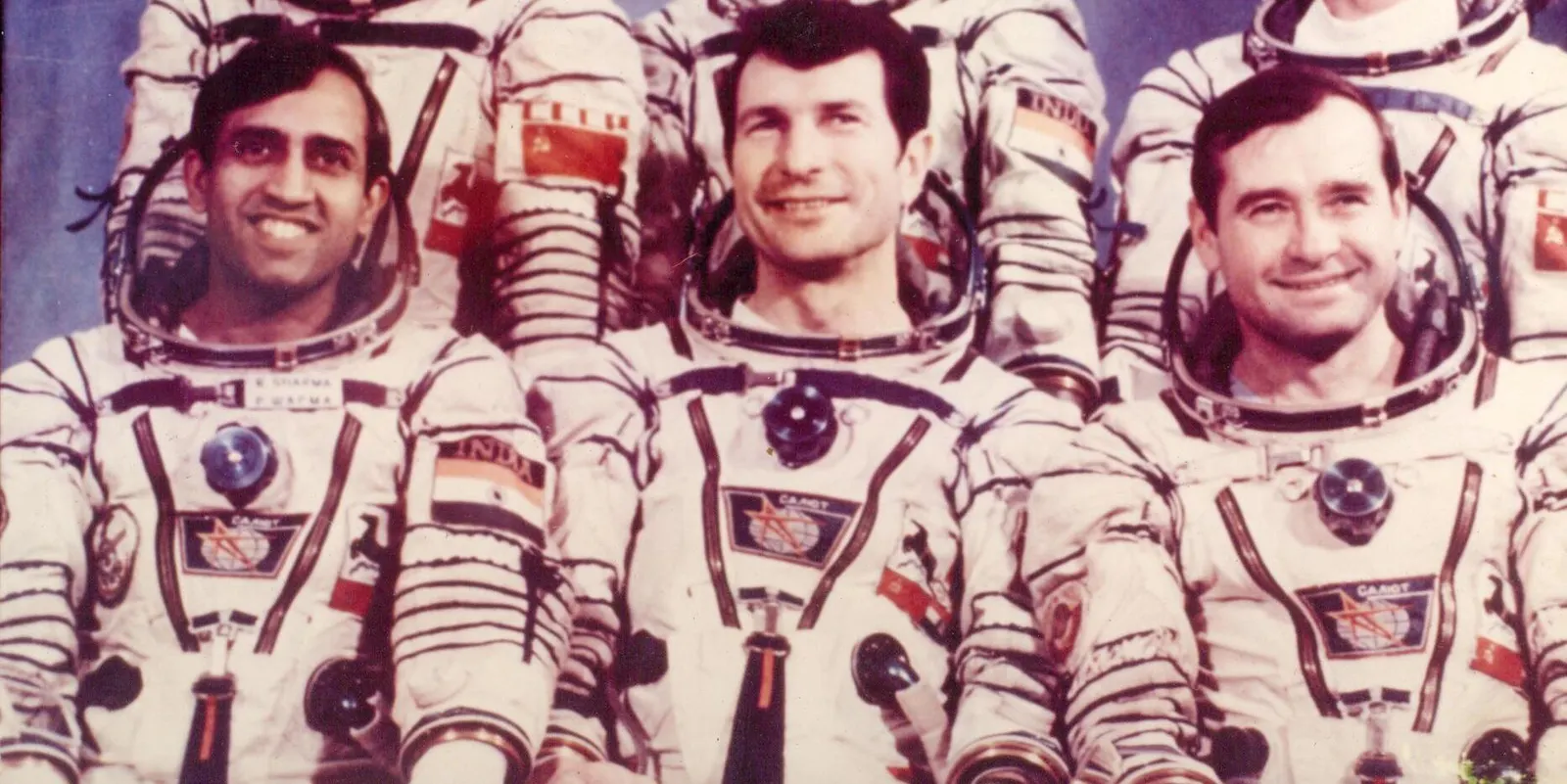
Image: Soviet space programme archive, via Wikimedia Commons
Soyuz T-11
Mission Profile
| Launch date | 1984-04-03 |
|---|---|
| Launch site | Baikonur Cosmodrome, Site 31/6 |
| Launch vehicle | Soyuz-U |
| Spacecraft | Soyuz-T |
| Target | Low Earth Orbit |
| Type | Crewed |
| End date | 1984-10-02 |
| Recovery | Soviet recovery forces, Kazakh steppe — launch crew landed 46 km east of Arkalyk aboard Soyuz T-10 on 11 April 1984 |
| Mass | 6,850 kg at launch |
| Duration | 181 days, 21 hours, 48 minutes (spacecraft); 7 days, 21 hours, 40 minutes (launch crew, returned aboard Soyuz T-10) |
| Partners | Interkosmos (USSR), Indian Space Research Organisation / Indian Air Force |
Overview
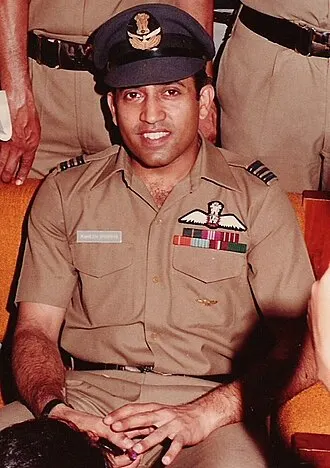
Soyuz T-11 carried the first Indian into orbit. Squadron Leader Rakesh Sharma of the Indian Air Force, flying under the Soviet Interkosmos framework alongside commander Yury Malyshev and flight engineer Gennady Strekalov, lifted off from Baikonur's Site 31/6 on 3 April 1984 at 13:08 UTC and docked with the Salyut 7 station a day later — joining residents Leonid Kizim, Vladimir Solovyov and Oleg Atkov to make six aboard. During nearly eight days in orbit, Sharma carried out an Indo-Soviet science programme that included multispectral photography of the Indian subcontinent for resource mapping and a pioneering set of zero-gravity yoga exercises studied as a countermeasure to space adaptation. In the flight's most remembered moment, Prime Minister Indira Gandhi asked Sharma over a live television link how India looked from space; he replied 'Sāre jahāṅ se acchā' — 'better than the whole world.' The visiting crew returned to Earth on 11 April aboard the older Soyuz T-10 craft, landing 46 kilometres east of Arkalyk after 7 days, 21 hours and 40 minutes, while their fresher Soyuz T-11 stayed docked as the residents' lifeboat. It finally came home on 2 October 1984, returning Kizim, Solovyov and Atkov from their then-record 237-day expedition.
Crew
Yury Malyshev
Commander
Second spaceflight; had commanded Soyuz T-2 in 1980
Gennady Strekalov
Flight Engineer
Survivor of the 1983 Soyuz T-10a pad-abort; later flew to Mir
Rakesh Sharma
Research Cosmonaut
First Indian in space; Indian Air Force pilot flying under the Interkosmos programme
Key Milestones
1984-04-03
Launch at 13:08 UTC from Baikonur Site 31/6; Rakesh Sharma becomes the first Indian in space
1984-04-04
Docking with Salyut 7, joining the resident Kizim–Solovyov–Atkov crew — six aboard the station
1984-04-11
Visiting crew lands 46 km east of Arkalyk aboard Soyuz T-10 after 7 days, 21 hours, 40 minutes
1984-10-02
The Soyuz T-11 spacecraft itself lands, returning the resident crew from their then-record 237-day expedition
Key Achievements
Carried Rakesh Sharma, the first Indian citizen, into space
Conducted the Indo-Soviet science programme aboard Salyut 7, including remote-sensing photography of India and the first yoga experiments in orbit
Brought Salyut 7's resident population to six during the week-long joint flight
Served six months as the station lifeboat before returning the resident crew from a then-record 237-day expedition
Legacy & Significance
Soyuz T-11 made Rakesh Sharma a national icon and planted the seed of Indian human spaceflight: his reply to Indira Gandhi is among the most quoted lines in India's modern history, and his flight remained the only spaceflight by an Indian citizen for 41 years, until Shubhanshu Shukla reached orbit on Axiom Mission 4 in 2025. As India prepares its own crewed Gaganyaan missions, the 1984 Indo-Soviet flight is consistently invoked as the founding moment of the country's astronaut tradition.